
The world of stock investing can appear daunting from the outside, a complex labyrinth of charts, jargon, and headlines that seem to swing wildly with every economic tremor. Yet, for many, it represents one of the most powerful avenues for wealth creation and financial growth over the long term. If you’ve found yourself asking, “How do I start buying stocks?” you’re on the cusp of embarking on a journey that could fundamentally reshape your financial future. This guide aims to demystify the process, providing a clear, professional, and insightful roadmap for beginners eager to make their first foray into the stock market.
Starting to buy stocks isn’t about chasing quick riches; it’s about disciplined planning, informed decision-making, and a long-term perspective. It’s about understanding how businesses grow and how you can participate in that growth. From understanding the basics of what a stock truly represents to choosing the right investment vehicle and making your first thoughtful purchase, we’ll cover the essential steps to empower you to begin investing with confidence and a solid foundation.
Understanding the Fundamentals of Stock Investing
Before you even think about placing an order, it’s crucial to grasp the bedrock principles of stock investing. This foundational knowledge will serve as your compass, guiding you through market fluctuations and helping you make rational decisions.
What is a Stock?
At its core, a stock (also known as equity) represents a fractional ownership interest in a company. When you buy a share of stock, you literally own a tiny piece of that corporation. As an owner, you have a claim on the company’s assets and earnings. Publicly traded companies issue stocks to raise capital for growth, expansion, or operations. The value of your stock typically fluctuates based on the company’s performance, industry trends, economic conditions, and investor sentiment. Shares are traded on stock exchanges, facilitating the buying and selling between investors.
Why Invest in Stocks?
People invest in stocks primarily for capital appreciation and potential income from dividends. Capital appreciation occurs when the value of your shares increases over time, allowing you to sell them for more than you paid. Dividends are a portion of the company’s profits distributed to shareholders, often on a quarterly basis. Historically, stocks have outperformed other asset classes like bonds and cash over long periods, offering a powerful hedge against inflation and a significant pathway to building wealth. The potential for growth, coupled with the opportunity to participate in the success of innovative and well-managed companies, makes stock investing an attractive proposition.
Understanding Risk and Reward
Every investment carries a degree of risk, and stocks are no exception. The value of stocks can decline, and there is always a possibility of losing money, even your entire investment in a single company if it fails. Key risks include market risk (the overall market declines), company-specific risk (a particular company performs poorly), and liquidity risk (difficulty selling shares quickly). However, with higher risk often comes the potential for higher reward. Understanding your risk tolerance – how much financial loss you are comfortable with – is paramount. A diversified portfolio, investing in a mix of different companies and industries, is a common strategy to mitigate company-specific risk without sacrificing potential returns.
Preparing for Your Investment Journey
Successful investing isn’t just about picking the right stocks; it begins long before you open a brokerage account. It requires thoughtful preparation and a clear understanding of your personal financial landscape.
Define Your Financial Goals
What are you investing for? Retirement? A down payment on a house? Your children’s education? A clear articulation of your financial goals will influence your investment strategy, including how much you invest, how aggressively, and over what timeframe. Short-term goals (under 5 years) are generally not suitable for significant stock market exposure due to market volatility. Long-term goals (10+ years) benefit most from the stock market’s growth potential.
Assess Your Risk Tolerance
As mentioned, risk tolerance is crucial. Are you comfortable with significant fluctuations in your portfolio’s value for the sake of higher potential returns, or do you prefer a more conservative approach with less volatility but potentially lower returns? Your age, income stability, existing savings, and personality all play a role in determining your appropriate risk level. There are many online questionnaires that can help you gauge your risk tolerance.
Build an Emergency Fund
Before investing in stocks, ensure you have a robust emergency fund. This typically means having 3 to 6 months’ worth of living expenses saved in an easily accessible, liquid account, like a high-yield savings account. An emergency fund prevents you from being forced to sell your investments at an inopportune time (e.g., during a market downturn) to cover unexpected expenses like job loss or medical emergencies.
Educate Yourself
The best investment you can make is in yourself. Before diving into individual stock picking, take the time to learn. Read books, follow reputable financial news sources, listen to podcasts, and understand basic financial concepts like P/E ratios, market capitalization, and dividend yields. Familiarize yourself with different investment philosophies, such as value investing, growth investing, or index investing. The more you know, the more confident and capable you’ll be in making informed decisions.
Opening Your Investment Account
Once you’ve laid the groundwork, the next practical step is to open an investment account. This is your gateway to the stock market.
Choosing a Brokerage Account
To buy stocks, you’ll need an account with a brokerage firm. These firms act as intermediaries, executing buy and sell orders on behalf of investors. When choosing a broker, consider factors such as:
- Fees and Commissions: Many brokers now offer commission-free trading for stocks and ETFs, but check for other fees like account maintenance, transfer fees, or charges for mutual funds.
- Investment Options: Does the broker offer access to all the types of investments you’re interested in (stocks, ETFs, mutual funds, options, international markets)?
- Research and Tools: Look for robust research tools, analytical resources, and educational materials that can aid your investment decisions.
- Customer Service: Good customer support is vital, especially for beginners.
- Platform Usability: Is the website and mobile app user-friendly and intuitive?
- Minimum Deposit: Some brokers have minimum deposit requirements to open an account or to access certain features.
Popular online brokerage firms include Charles Schwab, Fidelity, Vanguard, E*TRADE, and Interactive Brokers, among many others.

Types of Brokerage Accounts
You generally have a few options for the type of account you can open:
- Taxable Brokerage Account: This is a standard investment account where gains are subject to capital gains tax in the year they are realized. There are typically no contribution limits, offering maximum flexibility.
- Individual Retirement Account (IRA): A tax-advantaged account designed specifically for retirement savings.
- Traditional IRA: Contributions may be tax-deductible, and taxes are paid upon withdrawal in retirement.
- Roth IRA: Contributions are made with after-tax money, but qualified withdrawals in retirement are tax-free.
- 401(k) or 403(b): Employer-sponsored retirement plans. While you typically don’t directly “buy stocks” in the same way as a brokerage account, these plans often offer a selection of mutual funds and ETFs that hold stocks. If your employer offers a match, contribute at least enough to get the full match – it’s essentially free money.
For beginners, starting with a taxable brokerage account or a Roth IRA (if you qualify based on income and prioritize tax-free growth in retirement) can be excellent choices.
The Account Opening Process
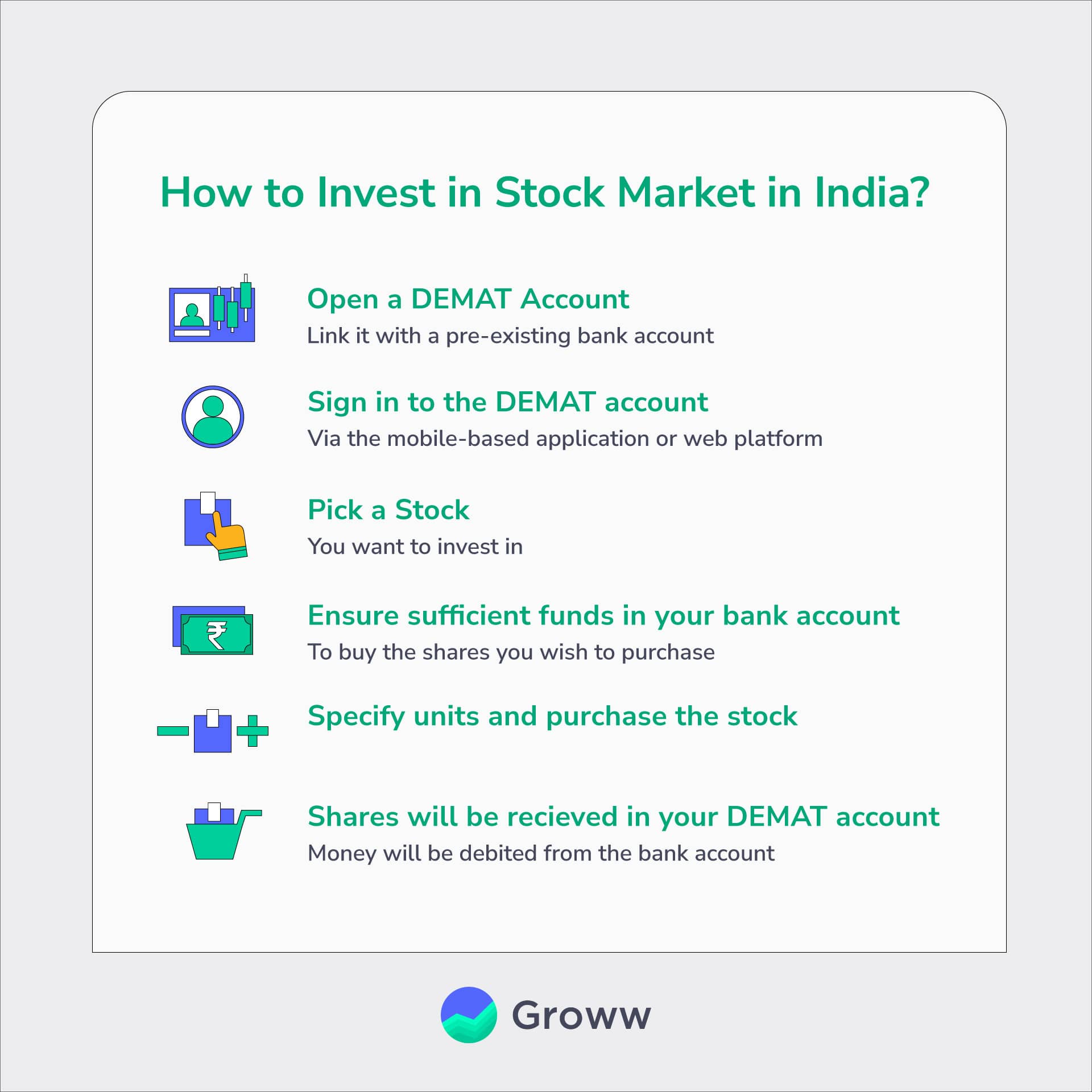
Opening an account is relatively straightforward. You’ll typically need to provide personal information such as your Social Security number, address, and employment details. The broker will verify your identity, and you’ll link your bank account to fund your new brokerage account. This process usually involves electronically transferring funds from your checking or savings account.
Making Your First Stock Purchase
With your account funded and your research complete, you’re ready to make your first investment. This is where your preparation pays off.
Researching Companies
Before buying individual stocks, conduct thorough research. Don’t invest in something you don’t understand.
- Understand the Business: What does the company do? How does it make money? What are its products or services?
- Financial Health: Look at key financial statements (income statement, balance sheet, cash flow statement). Are revenues growing? Is it profitable? Does it have manageable debt?
- Competitive Landscape: Who are its competitors? What is its competitive advantage (moat)?
- Management Team: Is the leadership experienced and reputable?
- Industry Trends: Is the industry growing or declining? Are there disruptive technologies or regulations on the horizon?
For beginners, rather than picking individual stocks, a common and highly recommended approach is to start with Exchange-Traded Funds (ETFs) or mutual funds. These funds hold a basket of many different stocks, providing immediate diversification with a single purchase. For example, an S&P 500 index ETF tracks the performance of the 500 largest U.S. companies, offering broad market exposure.
Diversification Strategies
“Don’t put all your eggs in one basket” is the golden rule of investing. Diversification means spreading your investments across various assets, industries, and geographies to reduce risk. If one company or sector performs poorly, the impact on your overall portfolio is mitigated by the performance of others. ETFs and mutual funds are excellent tools for instant diversification. If you choose to invest in individual stocks, aim for a portfolio of at least 10-15 different companies across various sectors.
Placing Your First Order
Once you’ve decided what to buy, navigate to the “Trade” or “Invest” section of your brokerage platform. You’ll typically enter the ticker symbol (a unique abbreviation for a company, e.g., AAPL for Apple), the number of shares you wish to buy (or the dollar amount, if your broker offers fractional shares), and the order type.
Understanding Order Types
- Market Order: This tells your broker to buy or sell shares immediately at the best available current price. It offers speed but no price guarantee, meaning the price you pay might be slightly different than what you saw just moments before due to market fluctuations.
- Limit Order: This allows you to specify the maximum price you’re willing to pay (for a buy order) or the minimum price you’re willing to accept (for a sell order). Your order will only execute if the stock reaches your specified price or better. Limit orders offer price control but no guarantee of execution. For beginners, a limit order can provide peace of mind that you won’t overpay significantly.
Review your order carefully before confirming, and then hit “Place Order.” Congratulations, you’re now a stock investor!
Long-Term Strategies and Mindset
Investing in stocks is not a one-time event; it’s an ongoing journey that requires patience, discipline, and a long-term perspective.
The Power of Compounding
Albert Einstein reportedly called compounding the “eighth wonder of the world.” Compounding is the process where the returns you earn on your investments also start earning returns themselves. Reinvesting dividends and letting your capital gains grow over many years can lead to exponential wealth accumulation. The longer your money is invested, the more powerful compounding becomes.
Dollar-Cost Averaging
Dollar-cost averaging (DCA) is a strategy where you invest a fixed amount of money at regular intervals (e.g., $100 every month), regardless of the stock’s price. When prices are high, your fixed amount buys fewer shares; when prices are low, it buys more shares. Over time, this strategy helps to average out your purchase price and reduces the risk of investing a large lump sum at an unfortunate market peak. DCA is particularly effective for beginners and long-term investors, as it automates investing and removes emotional decision-making.
Continuous Learning and Adaptation
The financial markets are dynamic and constantly evolving. Stay informed about economic trends, industry developments, and company news. While it’s important to stick to your long-term plan, be open to learning and adapting your strategy as your financial situation changes or new investment opportunities emerge. However, avoid constant tinkering based on daily news cycles; focus on fundamental changes.

Avoiding Emotional Decisions
One of the biggest pitfalls for new investors is allowing emotions like fear and greed to dictate decisions. During market downturns, fear can lead investors to sell at a loss, missing out on subsequent recoveries. During market booms, greed can lead to chasing hot stocks or taking on excessive risk. Stick to your predefined investment plan, based on your goals and risk tolerance. Remember that market volatility is normal, and corrections are a natural part of the investment cycle. A calm, rational approach is your most valuable asset.
Starting to buy stocks is a significant step towards taking control of your financial future. By understanding the fundamentals, preparing diligently, choosing the right tools, and adopting a long-term, disciplined mindset, you can build a robust investment portfolio that serves your goals for years to come. Begin small, learn continuously, and enjoy the journey of watching your wealth grow.
aViewFromTheCave is a participant in the Amazon Services LLC Associates Program, an affiliate advertising program designed to provide a means for sites to earn advertising fees by advertising and linking to Amazon.com. Amazon, the Amazon logo, AmazonSupply, and the AmazonSupply logo are trademarks of Amazon.com, Inc. or its affiliates. As an Amazon Associate we earn affiliate commissions from qualifying purchases.