
Embarking on the journey of an Amazon ecommerce business is a strategic decision for those looking to tap into a vast marketplace for online income generation. Amazon, with its immense global reach and established logistics infrastructure, offers a compelling platform for entrepreneurs to launch and scale their ventures. This guide delves into the essential financial considerations, strategic decisions, and operational insights necessary to not just start, but thrive, in the competitive Amazon ecosystem, strictly through the lens of maximizing profitability and ensuring financial sustainability.
Laying the Financial Foundation: Essential Business Setup & Cost Considerations
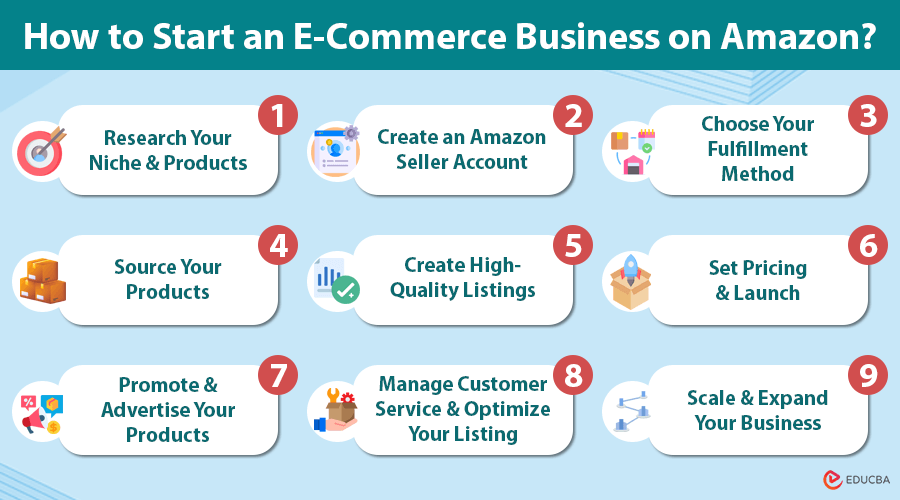
Starting an ecommerce business on Amazon isn’t merely about listing products; it begins with a robust financial blueprint. Understanding the capital required, the various operational costs, and the legal and tax implications from the outset is paramount to building a sustainable and profitable enterprise. Without a clear financial vision, even the most promising product can lead to unforeseen challenges.
Understanding Initial Investment & Operating Capital
The first step in your Amazon journey is to quantify your initial investment. This isn’t just the cost of your first batch of inventory; it encompasses a broader spectrum of expenses that contribute to getting your business off the ground. Initial capital requirements typically include product sourcing, shipping costs from manufacturer to Amazon warehouse (if using FBA), professional photography, initial marketing spend (especially for Amazon Ads), and essential business tools or software subscriptions. Beyond the initial outlay, it’s crucial to allocate operating capital – a buffer for recurring expenses such as Amazon seller fees, storage fees, potential returns, and ongoing marketing efforts. A common pitfall for new sellers is underestimating these ongoing costs, leading to cash flow issues. Financial modeling, even basic spreadsheet projections, can help forecast these expenses and ensure you have adequate reserves to navigate the initial months of operation, which are often characterized by fluctuating sales and higher upfront costs relative to revenue.
Amazon Seller Account Options: Professional vs. Individual (Cost Analysis)
Amazon offers two primary seller account types: Individual and Professional. The choice between these two has direct financial implications. The Individual plan is suitable for sellers moving fewer than 40 units per month, charging a $0.99 fee per item sold, with no monthly subscription. While seemingly cost-effective for low volume, this plan lacks access to advanced selling tools, bulk listing options, and crucial shipping discounts, which can significantly impact profit margins. The Professional plan, on the other hand, comes with a flat monthly subscription fee (currently $39.99 in the US) but waives the per-item fee. It unlocks a suite of powerful tools including inventory management, order reports, API integration, and eligibility for the Buy Box – a critical component for driving sales.
From a financial perspective, if you intend to scale and sell more than 40 items a month, the Professional plan quickly becomes the more economical choice, as the per-item fees on the Individual plan would surpass the monthly subscription. More importantly, the advanced features of the Professional plan are instrumental in optimizing operations, controlling costs, and ultimately increasing sales velocity and profitability, making it an investment rather than just an expense for serious sellers.
Legal & Tax Implications for Your Amazon Venture
Operating an ecommerce business, even a small one, brings with it a set of legal and tax obligations that must be addressed proactively. Ignoring these can lead to significant financial penalties and legal troubles. Structuring your business (e.g., Sole Proprietorship, LLC, S-Corp) has implications for personal liability, taxation, and administrative complexity. An LLC (Limited Liability Company), for instance, offers personal asset protection and can simplify tax filings, making it a popular choice for many Amazon sellers.
Beyond business structure, understanding sales tax obligations is critical. Amazon collects sales tax on behalf of sellers in many states, but the ultimate responsibility for remittance can vary. Furthermore, you’ll need to account for income tax on your profits. Keeping meticulous financial records, separating business and personal finances, and potentially consulting with an accountant specializing in ecommerce are non-negotiable steps. These professional services might seem like an added cost, but they are an invaluable investment in ensuring compliance, minimizing tax liabilities, and ultimately safeguarding your financial future as an Amazon seller.
Strategic Product Selection for Profitability on Amazon
The bedrock of any successful Amazon ecommerce business, from a financial standpoint, is meticulous product selection. This isn’t about passion or personal preference; it’s about identifying products that offer a strong profit potential, can compete effectively, and contribute positively to your bottom line. Data-driven decisions are key to minimizing risk and maximizing returns on investment.
Identifying High-Demand, High-Margin Niches
The search for a profitable product begins with market research focused on demand and margin. High-demand products ensure a steady flow of potential customers, but high demand often correlates with high competition, which can drive down prices and margins. Therefore, the sweet spot lies in identifying products within niches that have robust demand but perhaps less intense, or less effective, competition, allowing for healthier profit margins. Tools for product research (e.g., Jungle Scout, Helium 10) are indispensable for analyzing sales velocity, average selling prices, Amazon fees, and estimated profit margins for thousands of products.
Look for products with consistent sales trends, a selling price that allows for a healthy margin after all Amazon fees, shipping, and cost of goods sold (COGS), and manageable dimensions/weight to keep fulfillment costs down. Products that solve a specific problem, cater to a passionate hobby, or offer a unique value proposition often perform well. The goal is to find a product where the revenue generated significantly exceeds the sum of all associated costs, allowing for a substantial net profit per unit.
Supplier Sourcing & Cost-Effective Inventory Management
Once a promising product is identified, sourcing becomes the next critical financial component. The cost of goods sold (COGS) is a primary determinant of profit margins. Negotiating favorable terms with suppliers, whether from domestic manufacturers or international markets like China (e.g., Alibaba), directly impacts your profitability. When evaluating suppliers, consider not only the unit cost but also minimum order quantities (MOQ), lead times, shipping costs, and quality control. A slightly higher unit cost for superior quality can reduce returns and enhance customer satisfaction, indirectly boosting long-term profitability and brand reputation.
Effective inventory management is equally vital. Overstocking ties up capital in unsold goods, incurs higher storage fees, and increases the risk of obsolescence. Understocking, conversely, leads to missed sales opportunities and potential stock-out penalties from Amazon. Implementing inventory management strategies – such as just-in-time ordering where feasible, or leveraging sales forecasting tools – helps maintain optimal inventory levels. This balance minimizes holding costs while ensuring product availability, directly impacting cash flow and overall financial health.
Competitive Pricing Strategies & Profit Margin Analysis
Pricing is an art and a science that directly impacts sales volume and profit margins. A pricing strategy for Amazon needs to be dynamic, considering competitor pricing, Amazon fees, your COGS, and your desired profit margin. Going too low can create a race to the bottom, eroding profits, while pricing too high can deter buyers.
A thorough profit margin analysis must be conducted for each product. This involves calculating every cost associated with the product: COGS, inbound shipping, Amazon referral fees, FBA fulfillment fees (picking, packing, shipping), storage fees, and advertising costs. Only by understanding the true cost per unit can you set a competitive price that still yields a desirable net profit. Consider strategies like competitive pricing (matching or slightly undercutting rivals), value-based pricing (justifying a higher price with superior quality or features), or even loss leader strategies for new products to gain initial traction, recouping profits on subsequent sales or complementary items. Regularly review and adjust your pricing strategy based on market dynamics, competitor actions, and your own sales performance to continuously optimize profitability.
Optimizing Listings and Operations for Financial Growth
Beyond selecting a profitable product, the sustained financial success of an Amazon business hinges on optimizing every aspect of the sales funnel and operational workflow. Each optimization, from how a product is presented to how it’s fulfilled, has direct implications for conversion rates, customer satisfaction, and ultimately, your bottom line.
FBA vs. FBM: A Cost-Benefit Analysis for Fulfillment
One of the most critical operational decisions with significant financial ramifications is choosing between Fulfillment by Amazon (FBA) and Fulfillment by Merchant (FBM).
FBA involves storing your products in Amazon’s fulfillment centers. Amazon then handles picking, packing, shipping, customer service, and returns. The benefits include eligibility for Prime shipping (a massive sales driver), enhanced trust from customers, and scalability. However, FBA comes with a range of fees: fulfillment fees (based on product size and weight), monthly storage fees, and potentially long-term storage fees. A detailed cost analysis is essential to determine if FBA fees eat too deeply into your profit margins, especially for heavy, bulky, or slow-moving items.
FBM means you, the seller, are responsible for storing, packing, and shipping products to customers. This grants greater control over the fulfillment process and avoids Amazon’s FBA fees. It’s often suitable for sellers with their own warehousing and logistics capabilities, unique or custom products, or items with very high margins where individual shipping costs are manageable. The downside is missing out on Prime eligibility and the associated customer preference, and the operational overhead can be substantial. For new sellers, weighing the cost savings of FBM against the sales velocity and operational ease of FBA is a crucial financial exercise. Often, a hybrid model, using FBA for bestsellers and FBM for niche or oversized items, can be the most financially astute approach.
The Economics of Product Listing Optimization for Conversions
A financially successful product on Amazon isn’t just about having a great item; it’s about making sure potential customers find it and are compelled to buy it. This is where product listing optimization plays a crucial role, directly impacting conversion rates and, subsequently, revenue and profit. Every element of your listing has an economic value.
- Keywords: Strategic use of relevant keywords in your title, bullet points, and product description ensures your product appears in search results for high-intent buyers. More visibility for the right audience means more potential sales without additional advertising spend.
- High-Quality Images: Professional product photography and infographics visually communicate value, build trust, and answer customer questions before they’re asked. Higher-quality images lead to higher conversion rates and fewer returns (saving on return processing costs).
- Compelling Copy: Clear, concise, and persuasive bullet points and product descriptions highlight benefits, address pain points, and differentiate your product. This direct communication enhances perceived value, leading to increased purchases.
- Customer Reviews: A strong base of positive customer reviews is perhaps the most powerful conversion driver on Amazon. They act as social proof, significantly reducing buyer hesitation and directly impacting sales volume. Investing in product quality and customer service to generate these reviews is a long-term financial strategy.
Each optimization reduces the “cost” of acquiring a customer (lower ad spend needed per sale) and increases the likelihood of a sale, thereby boosting overall profitability.
Leveraging Amazon Ads: Budgeting for Profitable Growth
Amazon Ads (Sponsored Products, Sponsored Brands, Sponsored Display) are powerful tools for increasing product visibility and driving sales, but they require careful budgeting and strategic management to ensure a positive return on investment (ROI). Without a disciplined approach, ad spend can quickly erode profits.
Start with a clear advertising budget, defining how much you are willing to spend daily or monthly. Focus on highly relevant keywords that target buyers with strong purchase intent. Monitor key metrics such as:
- ACOS (Advertising Cost of Sales): This shows how much you spend on ads to generate $1 in sales. A low ACOS is generally desirable, but the “good” ACOS varies by product and profit margin.
- TACoS (Total Advertising Cost of Sales): This metric provides a broader view of ad spend efficiency against total sales (organic + ad sales), helping assess the impact of ads on overall business growth.
- Conversion Rate: The percentage of ad clicks that result in a sale.
- Return on Ad Spend (ROAS): The revenue generated for every dollar spent on advertising.
The goal isn’t just to generate sales, but to generate profitable sales. Experiment with different ad campaigns, targeting strategies, and bid amounts. Gradually scale up successful campaigns and pause underperforming ones. Reinvesting a portion of your profits into targeted advertising can accelerate growth, but it must be done with constant analysis to ensure that every dollar spent on ads is contributing to a net positive financial outcome.
Managing Finances and Scaling Your Amazon Empire
Sustained success on Amazon requires diligent financial management and a clear strategy for growth. It’s not enough to make sales; you must understand where your money is going, how profitable you truly are, and how to intelligently reinvest to expand your reach and revenue streams.
Tracking Key Performance Indicators (KPIs) for Financial Health
To effectively manage and scale your Amazon business, you must consistently track and analyze key financial and operational performance indicators (KPIs). These metrics provide a real-time pulse on your business’s health and inform strategic decision-making. Essential KPIs include:
- Net Profit Margin: The percentage of revenue left after all expenses (COGS, Amazon fees, shipping, advertising, operating costs) are deducted. This is the ultimate indicator of your business’s profitability.
- Cash Flow: The movement of money in and out of your business. Positive cash flow is crucial for covering operational expenses, reinvesting in inventory, and sustained growth.
- Return on Investment (ROI): Measures the profitability of an investment in relation to its cost. For product inventory, this is critical for evaluating product success.
- Inventory Turnover Rate: How quickly you sell through your inventory. A healthy turnover rate means less capital tied up in stock and lower storage fees.
- Average Order Value (AOV): The average amount spent by a customer per order. Strategies to increase AOV (e.g., bundling, upsells) directly boost revenue without proportionally increasing acquisition costs.
Regularly reviewing these KPIs through Amazon Seller Central reports, combined with your own accounting software, allows for proactive adjustments, identifies areas for cost reduction, and highlights opportunities for profit optimization.
Reinvesting Profits for Sustainable Expansion
Once your Amazon business begins to generate consistent profits, the strategic decision of how to reinvest those earnings becomes paramount for sustainable growth. Simply withdrawing all profits might feel rewarding, but it stifles the potential for expansion. Smart reinvestment can fuel further growth and compound returns.
Consider reinvesting in:
- Additional Inventory: Purchasing more stock of best-selling products to avoid stock-outs and capture greater market share.
- New Product Development: Researching and launching new products that complement existing offerings or tap into new, profitable niches. This diversifies your product portfolio and reduces reliance on a single item.
- Enhanced Marketing & Advertising: Increasing your budget for Amazon Ads, or even exploring off-Amazon marketing channels (social media ads, influencer marketing) to drive external traffic to your listings.
- Business Tools & Software: Investing in advanced analytics, inventory management, or customer service software can streamline operations, save time, and improve efficiency, indirectly boosting profitability.
- Team Expansion: As your business grows, hiring virtual assistants or specialized staff can free up your time for higher-level strategic tasks, fostering greater overall productivity.
The key is to reinvest in areas that demonstrably contribute to increased sales, improved efficiency, or stronger profit margins, treating each reinvestment as a calculated financial decision designed to generate further returns.
Diversifying Revenue Streams Beyond Amazon
While Amazon offers an incredible platform, relying solely on a single sales channel carries inherent risks. Algorithm changes, policy updates, increased competition, or even account suspensions can significantly impact your revenue. Therefore, a forward-thinking financial strategy includes diversifying revenue streams beyond Amazon.
Consider building your own independent ecommerce website (e.g., using Shopify). This gives you full control over your brand, customer data, and sales process, allowing for direct relationships with customers and potentially higher profit margins by avoiding Amazon’s referral fees. You can also explore other marketplaces like eBay, Walmart Marketplace, or Etsy, depending on your product niche.
Diversification also encompasses exploring different business models, such as wholesale distribution, dropshipping (though less emphasis on “business” ownership here), or even developing your own physical product for retail. Building an email list of your Amazon customers (within Amazon’s TOS) or collecting customer data from your own website allows for direct marketing, reducing reliance on Amazon’s internal advertising mechanisms. This multi-channel approach creates a more resilient business, cushions against potential downturns on any single platform, and ultimately leads to a more robust and scalable financial enterprise.

Conclusion
Starting an ecommerce business on Amazon is a journey rich with financial opportunity, demanding both strategic vision and meticulous execution. From the initial capital allocation and astute product selection to the continuous optimization of operations and diligent financial management, every decision has a direct impact on profitability and long-term sustainability. By grounding your approach in a clear understanding of costs, revenue streams, and growth strategies, you can navigate the complexities of the Amazon marketplace, build a resilient business, and unlock its vast potential for generating consistent online income. The success stories are many, but they are invariably built on a foundation of sound financial planning and disciplined execution.
aViewFromTheCave is a participant in the Amazon Services LLC Associates Program, an affiliate advertising program designed to provide a means for sites to earn advertising fees by advertising and linking to Amazon.com. Amazon, the Amazon logo, AmazonSupply, and the AmazonSupply logo are trademarks of Amazon.com, Inc. or its affiliates. As an Amazon Associate we earn affiliate commissions from qualifying purchases.