
Embarking on the journey of starting an online business is an exciting venture, brimming with potential for financial independence and wealth creation. Unlike traditional brick-and-mortar establishments, the digital landscape offers unprecedented flexibility, lower overheads, and a global reach, making it an attractive path for aspiring entrepreneurs. However, the allure of online success is often met with the critical question: “How do I start?” This guide is designed to provide a comprehensive, financially-focused roadmap, breaking down the essential steps, considerations, and strategies required to transform an idea into a profitable online enterprise. From initial capital allocation to sustainable revenue generation and long-term financial health, we will delve into the core monetary aspects that underpin every successful online business.
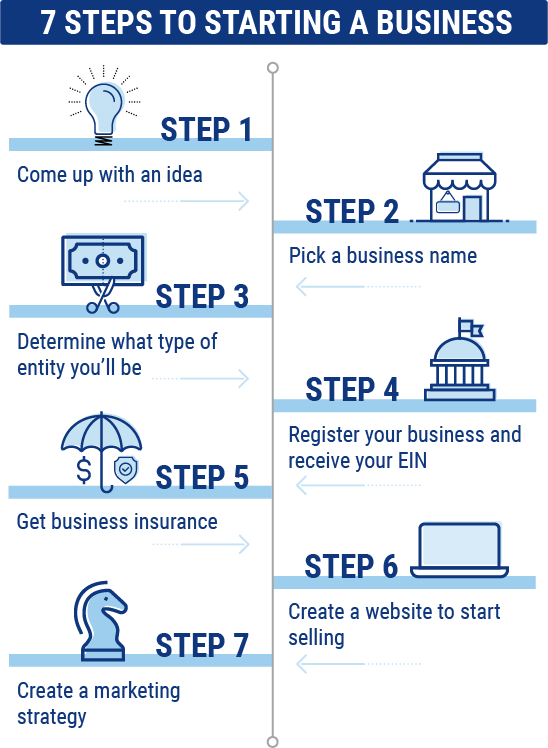
Laying the Financial Foundation: From Idea to Viable Business Model
The very first step in establishing an online business isn’t just about an idea; it’s about validating that idea’s financial viability. Without a solid financial foundation, even the most innovative concept can flounder. This initial phase demands rigorous market research, meticulous planning, and a clear understanding of the financial landscape you’re entering.
Identifying Profitable Niches and Market Gaps
Before investing time, effort, or capital, it’s crucial to identify a niche that not only aligns with your passion or expertise but also demonstrates clear market demand and profitability potential. A profitable niche is characterized by a specific audience with an identifiable problem or unmet need, for which they are willing to pay. This isn’t merely about finding a gap; it’s about finding a profitable gap. Research tools for keyword analysis, competitor analysis, and trend forecasting can help uncover areas where demand outstrips supply or where existing solutions are inadequate. Consider the average transaction value, the frequency of purchases, and the size of the target market. A small niche with high-value transactions and loyal customers can often be more lucrative than a broad market with fierce competition and low margins. The goal here is to ensure that there’s a discernible path to revenue generation once your business is operational.
Crafting a Robust Business Plan with Financial Projections
A business plan serves as your financial blueprint. It outlines your business objectives, strategies, and – critically – your financial forecasts. This document isn’t just for investors; it’s your internal compass. Key financial components include:
- Startup Costs: Detail every initial expense, from domain registration and website development to initial inventory, software subscriptions, and legal fees. Be exhaustive.
- Revenue Model: Clearly define how your business will make money. Will you sell products, subscriptions, advertising, services, or a combination? Project realistic sales volumes and average selling prices.
- Operating Expenses: Account for ongoing costs such as marketing, hosting, payment processing fees, customer service, and any recurring software or service charges.
- Cash Flow Projections: Forecast the inflow and outflow of cash over a specific period (e.g., 1-3 years). This is vital for understanding liquidity and identifying potential shortfalls.
- Profit and Loss (P&L) Statement: Project your revenues, costs of goods sold (COGS), and operating expenses to estimate your net profit.
- Break-Even Analysis: Determine the sales volume required to cover all your costs. Understanding your break-even point is fundamental to setting realistic targets and assessing risk.
A well-articulated business plan, especially its financial section, provides clarity, helps secure funding if needed, and serves as a benchmark for measuring performance.
Understanding Startup Costs and Funding Options
Every online business, regardless of how “lean” it aims to be, requires some level of initial investment. While often lower than physical businesses, these startup costs can still be significant. Common expenses include website development (platform, theme, plugins), domain and hosting, initial inventory or product development, marketing and advertising, legal entity formation, business insurance, and essential software subscriptions.
Regarding funding, several options exist:
- Bootstrapping: Using personal savings or reinvesting early profits. This offers maximum control but limits growth potential based on personal resources.
- Friends and Family: Often a source of early-stage capital with potentially more flexible terms, but it’s crucial to formalize agreements to avoid personal strain.
- Small Business Loans: Traditional banks or online lenders offer various loan products, often requiring a solid business plan and collateral.
- Crowdfunding: Platforms like Kickstarter or Indiegogo can provide capital while simultaneously validating your product or service and building a community.
- Angel Investors/Venture Capital: For high-growth potential businesses, these investors provide significant capital in exchange for equity.
Carefully evaluate each option based on your business model, risk tolerance, and long-term financial goals. Securing adequate initial funding is critical for launching and sustaining operations until profitability is achieved.
Monetization Strategies and Product Development
Once the financial groundwork is laid, the focus shifts to how your business will actually generate income. This involves strategic decisions about what you sell, how you price it, and how you manage the associated operational costs to ensure maximum profitability.
Choosing Your Revenue Streams: Products, Services, or Content
The internet offers a multitude of ways to monetize your expertise, products, or creativity. Your choice of revenue stream will fundamentally shape your business model and financial projections.
- E-commerce (Physical Products): Selling tangible goods through an online store. This requires managing inventory, shipping, and returns. Profitability depends on product sourcing, pricing, and efficient logistics.
- Digital Products: E-books, online courses, software, templates, or digital art. These often have high-profit margins after initial development costs, as they can be replicated and sold infinitely without additional inventory.
- Services: Consulting, coaching, freelance work (writing, design, development), virtual assistance. This model trades time for money, making scalability a key consideration. Pricing is typically hourly, project-based, or package-based.
- Subscriptions: Offering recurring access to premium content, software, products, or services. This creates predictable recurring revenue (MRR – Monthly Recurring Revenue) and fosters customer loyalty.
- Affiliate Marketing: Earning commissions by promoting other companies’ products or services. This is a low-overhead model but relies heavily on traffic generation and conversion rates.
- Advertising: Monetizing content through display ads, sponsored posts, or native advertising. This typically requires significant audience volume to be lucrative.
Selecting the right revenue stream, or a combination thereof, depends on your niche, expertise, resources, and target market. Each has distinct financial implications concerning startup costs, ongoing expenses, and potential for scale.
Pricing Your Offerings for Profitability
Setting the right price for your products or services is a delicate balance between perceived value, market competitiveness, and your own cost structure. Underpricing can leave money on the table and devalue your offerings, while overpricing can deter potential customers.
Key pricing strategies include:
- Cost-Plus Pricing: Calculating all costs associated with a product/service and adding a desired profit margin. Simple, but might not reflect market value.
- Value-Based Pricing: Setting prices based on the perceived value to the customer, rather than just the cost of production. Often used for premium products or services.
- Competitor-Based Pricing: Aligning your prices with those of your competitors. Useful for understanding market benchmarks, but shouldn’t be the sole determinant.
- Psychological Pricing: Utilizing pricing tactics like charging $9.99 instead of $10.00 to influence customer perception.
- Tiered Pricing/Bundling: Offering different packages or combinations of products/services at varying price points to cater to different customer segments and encourage upsells.
Consider your target customer’s budget, the unique selling proposition of your offering, and the overall market demand. Regularly review and adjust your pricing strategy based on market feedback, sales data, and changes in your cost structure. Your pricing strategy is a powerful lever for profitability.
Building an Efficient Operational Budget
An operational budget is a crucial tool for managing the day-to-day finances of your online business. It projects all recurring expenses required to keep the business running smoothly. This includes website hosting, software subscriptions (CRM, email marketing, accounting software), advertising spend, payment processing fees, content creation costs, customer support tools, and any salaries or contractor fees.
An efficient budget allows you to:
- Control Spending: Identify areas where costs can be reduced without compromising quality or growth.
- Allocate Resources Effectively: Ensure that funds are directed towards activities that generate the highest return on investment.
- Monitor Cash Flow: Prevent unexpected shortfalls by anticipating upcoming expenses.
- Track Performance: Compare actual spending against budgeted amounts to identify discrepancies and inform future financial decisions.
Regularly review and update your operational budget, ideally monthly or quarterly, to reflect changes in business activity, market conditions, and strategic priorities. Financial discipline in operational spending directly impacts your bottom line.
Navigating Legal and Financial Setup

Beyond the conceptualization and initial planning, establishing an online business requires adherence to legal and financial regulations. This involves formalizing your business, setting up proper banking channels, and implementing sound accounting practices, all of which are critical for legitimacy, compliance, and long-term financial health.
Legal Structures and Tax Implications for Online Businesses
Choosing the correct legal structure for your online business is a foundational decision with significant financial and legal implications, particularly concerning taxation and personal liability. Common structures include:
- Sole Proprietorship: Simple to set up, but offers no personal liability protection. Business income and expenses are reported on your personal tax return.
- Partnership: Similar to a sole proprietorship but involves two or more owners. Again, personal liability can be an issue.
- Limited Liability Company (LLC): Offers personal liability protection for owners, separating business assets from personal ones. Income can be taxed as a pass-through entity (like a sole proprietorship/partnership) or as a corporation, offering flexibility.
- Corporation (S-Corp, C-Corp): Provides the strongest personal liability protection. More complex to set up and maintain, with specific requirements for meetings and record-keeping. Tax implications differ significantly between S-Corps (pass-through) and C-Corps (double taxation).
The choice impacts how you pay taxes (self-employment taxes, income tax), the paperwork you need to file, and your exposure to business debts or lawsuits. Consult with a legal and tax professional to determine the most suitable structure for your specific business, considering your risk tolerance, growth aspirations, and potential tax advantages.
Setting Up Business Bank Accounts and Payment Gateways
Separating personal and business finances is paramount for clarity, professionalism, and tax purposes. Opening a dedicated business bank account is a non-negotiable step. This simplifies accounting, makes it easier to track income and expenses, and ensures you’re ready for tax season.
Equally important is selecting reliable payment gateways to process online transactions. Your choice will depend on your business model, target audience, and geographic location. Popular options include:
- Stripe: A developer-friendly platform for processing credit card payments directly on your website.
- PayPal: Widely recognized and trusted, offering various payment solutions for businesses of all sizes.
- Square: Often associated with in-person payments but also offers online invoicing and e-commerce solutions.
- Shopify Payments: Integrated payment processing for Shopify store owners.
Consider transaction fees, payout schedules, ease of integration, fraud protection features, and customer support when making your selection. The goal is to ensure a smooth, secure, and cost-effective payment experience for your customers while efficiently funneling revenue into your business.
Essential Financial Tools and Accounting Practices
Effective financial management is the backbone of a sustainable online business. This necessitates utilizing appropriate financial tools and adopting sound accounting practices from day one.
- Accounting Software: Tools like QuickBooks Online, Xero, FreshBooks, or Wave (free) automate bookkeeping, track income and expenses, generate financial reports (P&L, balance sheet), and simplify tax preparation.
- Budgeting Software: While a spreadsheet can work, dedicated budgeting tools can offer more robust forecasting and expense tracking.
- Invoice Management: For service-based businesses, a system for creating, sending, and tracking invoices is essential for timely payments.
- Expense Tracking Apps: Tools like Expensify or Receipt Bank help digitize receipts and categorize expenses on the go.
- Payroll Software: If you hire employees or contractors, dedicated payroll solutions ensure compliance with tax laws and efficient payment processing.
Implementing robust accounting practices ensures accuracy, compliance, and provides invaluable insights into your business’s financial health. Regular reconciliation of bank accounts, categorization of transactions, and timely review of financial reports are non-negotiable for informed decision-making and strategic growth.
Strategic Growth and Sustainable Profitability
Launching an online business is just the beginning. The real challenge, and the true mark of success, lies in achieving sustainable growth and profitability. This requires continuous monitoring of financial performance, strategic reinvestment, and proactive risk management.
Measuring Key Financial Performance Indicators (KPIs)
To understand if your online business is thriving or merely surviving, you must track specific financial KPIs. These metrics provide critical insights into your business’s health and highlight areas for improvement.
Key financial KPIs for online businesses include:
- Customer Acquisition Cost (CAC): How much it costs to acquire a new customer. (Total marketing/sales spend ÷ Number of new customers). A low CAC indicates efficient marketing.
- Customer Lifetime Value (CLV): The total revenue a business can expect from a single customer account over their business relationship. (Average purchase value × Average purchase frequency × Average customer lifespan). A high CLV signifies loyal, profitable customers.
- Conversion Rate: The percentage of website visitors who complete a desired action (e.g., make a purchase, sign up for a newsletter). Directly impacts revenue.
- Average Order Value (AOV): The average amount spent each time a customer places an order. Strategies like bundling or upsells can increase AOV.
- Gross Profit Margin: The percentage of revenue left after deducting the cost of goods sold. (Gross Profit ÷ Revenue). Indicates the profitability of your products/services.
- Net Profit Margin: The percentage of revenue left after all expenses, including operating costs, interest, and taxes, have been deducted. The ultimate measure of profitability.
- Churn Rate: The percentage of customers who stop using your service or products over a given period. High churn significantly impacts recurring revenue models.
Regularly analyzing these KPIs allows you to identify trends, optimize marketing spend, refine pricing, improve customer retention strategies, and make data-driven decisions to boost your financial performance.
Reinvesting for Scale and Future Growth
Once your online business begins to generate consistent profits, a critical financial decision emerges: how to allocate those earnings. While personal withdrawals are tempting, strategic reinvestment is often the catalyst for exponential growth. Reinvestment means channeling profits back into the business to expand operations, enhance offerings, and reach a wider audience.
Areas for strategic reinvestment include:
- Product Development: Enhancing existing products, developing new ones, or expanding service offerings to capture new market segments.
- Marketing and Advertising: Increasing your budget for paid ads, content marketing, SEO, or social media campaigns to reach more potential customers.
- Technology and Infrastructure: Upgrading your website, investing in more robust software, or improving your e-commerce platform’s capabilities to handle increased traffic and transactions.
- Team Expansion: Hiring skilled personnel (e.g., customer service, marketing specialists, developers) to support growth and improve operational efficiency.
- Inventory Expansion: For e-commerce businesses, increasing inventory to meet growing demand and prevent stockouts.
The key is to reinvest wisely, focusing on initiatives that offer a clear return on investment (ROI) and align with your long-term growth objectives. This involves a delicate balance between present profitability and future potential.
Managing Cash Flow and Minimizing Financial Risks
Cash flow is the lifeblood of any business, online or off. Even a profitable business can fail if it runs out of cash. Effective cash flow management involves monitoring the money coming into and going out of your business and ensuring a healthy balance.
Strategies for robust cash flow management:
- Forecasting: Regularly project your expected income and expenses to anticipate periods of surplus or deficit.
- Invoice Management: For service businesses, send invoices promptly and follow up on overdue payments. Offer incentives for early payment.
- Expense Control: Continuously review and optimize operational expenses. Negotiate better terms with suppliers.
- Building a Cash Reserve: Maintain a contingency fund to cover unexpected expenses or lean periods. Aim for 3-6 months of operating expenses.
- Diversifying Revenue Streams: Reduce reliance on a single product or service, creating a more stable income base.
Minimizing financial risks goes hand-in-hand with cash flow management. This includes protecting your business with appropriate insurance (e.g., general liability, cyber liability), staying compliant with tax regulations, having clear terms and conditions for customers, and diversifying your payment processors to avoid single points of failure. Proactive risk assessment and mitigation are essential for safeguarding your financial future.
Beyond the Launch: Long-Term Financial Health
Building an online business is a marathon, not a sprint. Achieving sustainable long-term financial health requires continuous adaptation, strategic planning, and an eye toward future opportunities, including potential exit strategies.
Diversifying Income Streams for Stability
Relying on a single source of income or a single product line can be precarious. Market shifts, technological changes, or increased competition can quickly erode your revenue. Diversifying your income streams is a powerful strategy to build financial resilience and ensure stability.
Consider expanding into related offerings:
- Product Line Extension: If you sell digital courses, add a complementary e-book or a coaching service. If you sell physical products, introduce accessories or a subscription box.
- Geographic Expansion: If your business is local, consider targeting national or international markets.
- New Revenue Models: If you primarily sell products, explore affiliate marketing, advertising, or creating premium content.
- Strategic Partnerships: Collaborate with complementary businesses to offer bundled services or cross-promotion, tapping into new customer bases.
Diversification spreads your risk and opens new avenues for growth, making your business more robust against unforeseen challenges and market fluctuations.

Exit Strategies and Valuation for Online Businesses
While the immediate focus is on building and growing, it’s prudent to consider potential exit strategies for your online business. This long-term financial planning can influence decisions made today regarding your business structure, intellectual property, and documentation.
Common exit strategies include:
- Selling the Business: Transferring ownership to another individual or company. This requires a clear understanding of your business’s valuation.
- Merging with Another Company: Combining operations with a complementary business to achieve synergies and greater market share.
- Passing it On: Transferring ownership to a family member or employee.
- Liquidating Assets: Closing the business and selling off its assets, often a last resort.
Understanding how online businesses are valued is critical. Valuation typically considers factors like annual revenue, net profit, customer acquisition costs, customer lifetime value, market share, brand recognition, intellectual property, and the scalability of the business model. Well-documented processes, clear financial records, and a strong brand presence significantly enhance a business’s attractiveness and valuation. Planning for an exit doesn’t mean you’re giving up; it means you’re building an asset with a clear future, whether that future involves your continued stewardship or a profitable transition to new ownership.
In conclusion, starting an online business is a multifaceted endeavor, but by approaching it with a strong financial mindset from the outset, you lay the groundwork for lasting success. From meticulously planning your finances and selecting profitable niches to diligently managing cash flow and strategically reinvesting profits, every decision you make has financial implications. By focusing on these core money principles, you can transform your entrepreneurial vision into a thriving online enterprise that generates sustainable income and builds long-term wealth.
aViewFromTheCave is a participant in the Amazon Services LLC Associates Program, an affiliate advertising program designed to provide a means for sites to earn advertising fees by advertising and linking to Amazon.com. Amazon, the Amazon logo, AmazonSupply, and the AmazonSupply logo are trademarks of Amazon.com, Inc. or its affiliates. As an Amazon Associate we earn affiliate commissions from qualifying purchases.