
Today’s financial headlines often deliver a stark reality: markets are volatile. When the stock market experiences a significant downturn, it naturally triggers a wave of questions and concerns among investors, from seasoned professionals to first-time traders. Understanding the myriad factors that contribute to such movements is crucial for making informed financial decisions and maintaining a long-term perspective. A market decline is rarely attributable to a single cause; instead, it’s typically the confluence of several interconnected economic, corporate, geopolitical, and psychological elements. Diving deep into these drivers can demystify the seemingly chaotic nature of market corrections and crashes, providing clarity and a framework for navigating uncertainty. This article aims to unpack the primary reasons behind a stock market decline, focusing exclusively on the money and finance aspects that dictate such shifts.
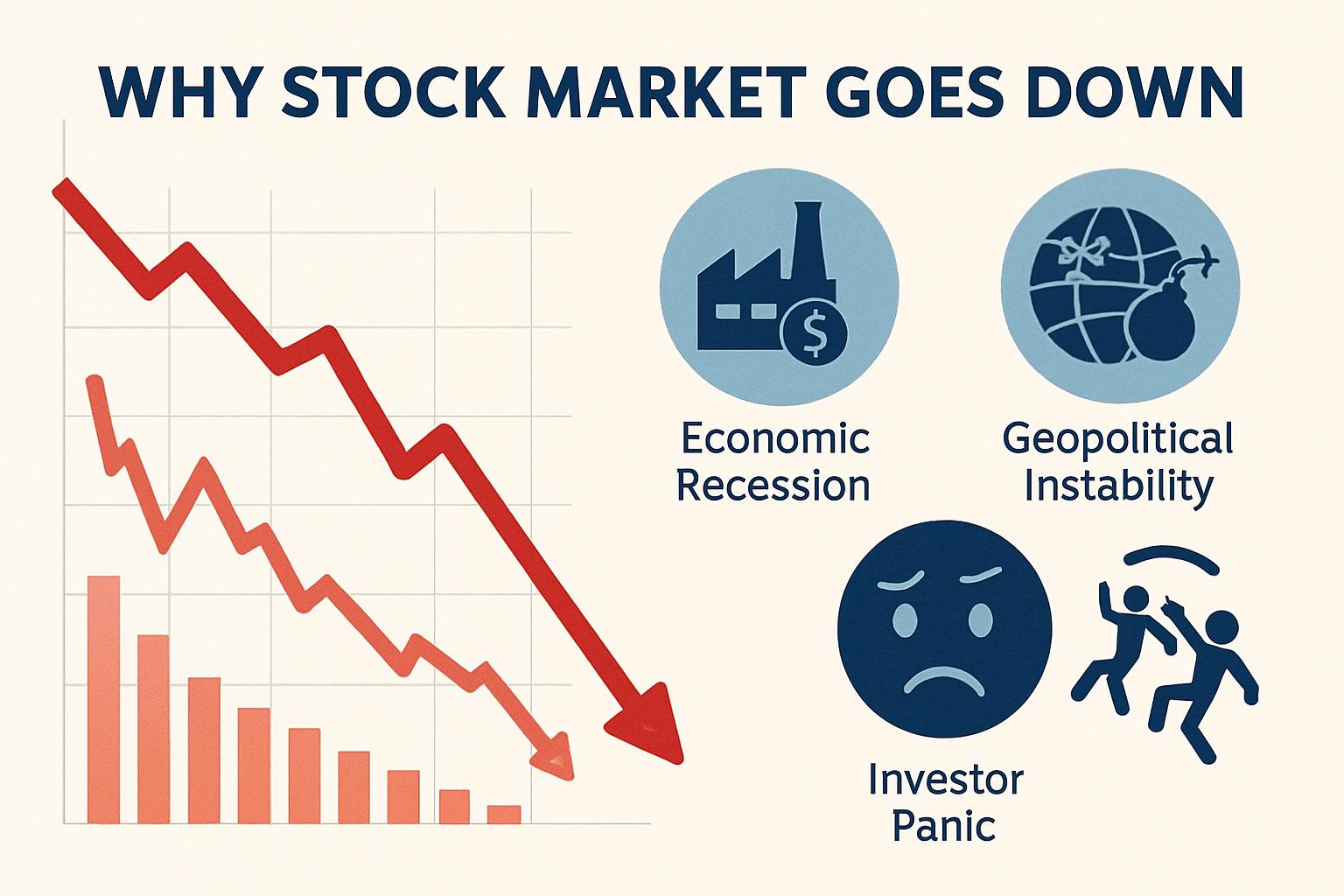
Unpacking Macroeconomic Headwinds
The broader economic landscape forms the bedrock upon which the stock market stands. When this foundation shows cracks, the entire structure can sway, leading to widespread investor apprehension and selling pressure. Macroeconomic indicators provide a critical pulse of the economy, and any deviation from positive trends can signal troubled waters ahead.
The Specter of Inflation and Rising Interest Rates
Perhaps one of the most potent forces behind recent market volatility is inflation. When the cost of goods and services rises persistently, it erodes the purchasing power of consumers and increases the operational costs for businesses. Central banks, like the Federal Reserve in the United States, typically combat high inflation by raising interest rates. While intended to cool down an overheating economy, this action has direct and often negative implications for the stock market. Higher interest rates increase the cost of borrowing for companies, impacting their profitability and slowing down expansion plans. For investors, bonds become more attractive as their yields rise, potentially diverting capital away from riskier equity investments. Furthermore, higher discount rates used in valuation models reduce the present value of future corporate earnings, making stocks appear less attractive, particularly growth stocks whose earnings are heavily weighted in the future. The expectation of further rate hikes or an aggressive tightening cycle can send shivers through the market, prompting widespread selling as investors brace for tougher economic conditions.
GDP Growth and Recession Fears
Gross Domestic Product (GDP) is the broadest measure of economic activity, representing the total value of goods and services produced within a country. A slowdown in GDP growth, or worse, consecutive quarters of negative growth indicating a recession, is a major red flag for the stock market. During an economic contraction, consumer spending typically wanes, businesses cut back on investments, and corporate earnings decline. Investors, anticipating reduced profitability and increased risk, often sell off their holdings. Recession fears can become a self-fulfilling prophecy, as market declines can further dampen consumer and business confidence, exacerbating the economic downturn. The market often acts as a forward-looking indicator, meaning it might begin to price in a recession long before it is officially declared, leading to pre-emptive sell-offs.
Employment Data and Consumer Spending
The health of the labor market and consumer spending are intrinsically linked and serve as vital barometers for economic stability. Robust job growth and low unemployment rates typically signal a strong economy, as more people working generally translates to higher disposable income and increased consumer spending, which fuels corporate revenues. Conversely, weak employment reports, such as rising unemployment or slowing wage growth, can spark concerns about future consumer demand. Since consumer spending accounts for a significant portion of GDP in many developed economies, any indication that it might falter can trigger market jitters. Companies that rely heavily on consumer discretionary spending are particularly vulnerable to these shifts, and their stock performance can drag down broader market indices. Investors closely monitor metrics like non-farm payrolls, unemployment rates, and consumer confidence indices for clues about the economy’s trajectory and its potential impact on corporate earnings.
Corporate Performance and Sector-Specific Shocks
While macroeconomic factors paint the big picture, the individual performance of companies and specific industry sectors often provides the immediate catalysts for market movements. The market is, after all, a collection of individual stocks, and their collective health dictates the overall trend.
Disappointing Earnings Reports
Corporate earnings are the lifeblood of the stock market. When companies report financial results that fall short of analyst expectations, or when their forward guidance for future quarters is pessimistic, it can trigger a sharp sell-off in their stock. If a major bellwether company or several companies within a key sector deliver disappointing news, the ripple effect can spread across the entire market. This is because poor earnings suggest underlying challenges such as weakening demand, rising costs, or increased competition, all of which can erode shareholder value. Investors constantly try to forecast future earnings, and when actual results or future projections fail to meet these expectations, it forces a recalibration of stock valuations, often leading to a downward adjustment.
Supply Chain Disruptions and Commodity Volatility
In an increasingly interconnected global economy, disruptions to supply chains can have far-reaching consequences. Issues like port congestion, labor shortages, geopolitical conflicts, or even natural disasters can severely impede the flow of goods and raw materials. This can lead to production delays, increased manufacturing costs, and ultimately, lower profits for companies. Similarly, significant volatility in commodity prices, such as oil, natural gas, metals, or agricultural products, can drastically impact corporate margins. A sudden spike in oil prices, for instance, affects transportation costs for virtually every industry, while a surge in semiconductor prices can cripple technology manufacturers. Companies unable to absorb these increased costs or pass them on to consumers will see their profitability suffer, which is reflected in their stock prices and contributes to broader market declines.
Sectoral Weakness and Valuation Concerns
Sometimes, the market downturn is not universal but originates from specific sectors that face unique challenges or have become overvalued. For example, a tech sector correction might occur if investors perceive that valuations for certain high-growth tech companies have become unsustainable, or if regulatory scrutiny intensifies. Similarly, a downturn in the real estate sector due to rising interest rates or oversupply can have spillover effects on financial institutions and construction companies. When a particular sector, especially one with significant market capitalization, experiences a substantial correction, it can drag down broader indices. Valuation concerns, in particular, often precipitate these sectoral weaknesses. If stock prices have risen significantly faster than underlying earnings growth, creating high price-to-earnings (P/E) ratios or other valuation metrics, investors may deem these stocks overvalued. A collective realization of overvaluation can trigger a rapid re-pricing, leading to sharp declines.
Geopolitical Instability and Market Sentiment
Beyond the purely economic and corporate factors, global events and the collective mood of investors play a significant role in dictating market direction. Geopolitical tensions and shifts in market psychology can introduce uncertainty, which markets inherently dislike.

International Conflicts and Trade Tensions
Geopolitical events, ranging from regional conflicts and acts of terrorism to major trade disputes between economic superpowers, can quickly unsettle financial markets. Such events introduce a high degree of uncertainty regarding future economic conditions, supply chains, and international relations. For example, a war in a key resource-producing region can send commodity prices soaring, while trade wars can disrupt global supply chains, impose tariffs, and reduce international trade volumes, negatively impacting the profitability of multinational corporations. Investors typically react to these events by seeking safe-haven assets, such as government bonds or gold, and by selling off riskier equities. The unpredictable nature of geopolitical events makes them particularly potent drivers of market volatility and fear.
Domestic Political Gridlock and Policy Uncertainty
While international events grab headlines, domestic political situations can also significantly impact market sentiment. Political gridlock, where opposing parties cannot agree on crucial legislation (e.g., budget bills, debt ceiling increases, infrastructure spending), creates an environment of uncertainty for businesses and investors. Businesses become hesitant to invest and expand when the regulatory and fiscal future is unclear. Similarly, sudden shifts in government policy, such as changes in taxation, industrial regulation, or healthcare policy, can have profound implications for corporate profitability and entire industries. For example, new environmental regulations might heavily impact energy companies, while changes to healthcare policy could reshape the pharmaceutical sector. This uncertainty translates into investor apprehension, often leading to a conservative stance and selling pressure.
The Psychology of Fear and Panic Selling
Financial markets are not purely rational entities; human psychology plays a massive role. During periods of uncertainty or negative news, fear can quickly become a dominant emotion among investors. This fear can lead to panic selling, where investors offload their holdings, often indiscriminately, to cut losses or avoid further declines. This herd mentality can exacerbate a market downturn, pushing prices far below their intrinsic value. The media, social media, and financial news cycles can amplify this sentiment, creating a feedback loop where negative news triggers selling, which further confirms the negative outlook, leading to more selling. Understanding that market cycles include periods of irrational exuberance and irrational fear is critical. These emotional drivers can cause rapid and significant market movements that may not always align with fundamental economic realities.
Central Bank Interventions and Monetary Policy Shifts
Central banks are powerful entities with the ability to significantly influence economic activity and, by extension, financial markets through their monetary policy tools. Their actions are closely watched by investors around the globe.
The Impact of Quantitative Tightening
Quantitative easing (QE), where central banks purchase government bonds and other securities to inject liquidity into the financial system, has been a common policy tool in recent decades to stimulate economies. The reverse process, quantitative tightening (QT), involves reducing the central bank’s balance sheet by letting bonds mature without reinvesting the proceeds, or by actively selling assets. This withdraws liquidity from the financial system, effectively making money “tighter.” A reduction in the money supply can lead to higher borrowing costs, lower asset prices (including stocks and bonds), and slower economic growth. Markets often react negatively to the prospect of QT because it implies less readily available capital for investment and can signal an end to an era of easy money. The shift from an expansive monetary policy to a restrictive one can be a significant headwind for equity markets.
Forward Guidance and Market Expectations
Central banks don’t just act; they also communicate their intentions and outlook through “forward guidance.” This involves providing clear signals about the future path of monetary policy, such as interest rate decisions, asset purchase programs, and economic forecasts. Markets often react strongly to these communications, sometimes even more so than to the actual policy changes themselves. If a central bank’s forward guidance suggests a more hawkish stance (e.g., higher interest rates, faster pace of QT) than the market had anticipated, it can lead to immediate selling pressure. Conversely, dovish guidance (e.g., slower rate hikes, pause in QT) can spur buying. The market constantly tries to price in future central bank actions, and any divergence between expectations and the central bank’s stated intentions can cause significant volatility and contribute to market downturns.
Navigating the Volatility: A Long-Term Perspective
While understanding the reasons for a stock market decline is essential, an equally important aspect for investors is how to react to such volatility. Panic can lead to poor decisions, whereas a well-thought-out strategy can mitigate risks and even uncover opportunities.
The Importance of Diversification
One of the most fundamental principles of investing is diversification. Spreading investments across various asset classes (equities, bonds, real estate, commodities), different industries, and geographical regions can help cushion the blow of a downturn in any single area. When one part of your portfolio struggles, another might perform relatively better, reducing overall portfolio risk. During market declines, a well-diversified portfolio is less likely to suffer catastrophic losses than a concentrated one, providing a level of resilience against the unpredictable nature of market movements. It ensures that not all your eggs are in one basket, minimizing the impact of sector-specific shocks or company-specific failures.
Dollar-Cost Averaging and Long-Term Investing
Market downturns, while unsettling, can present opportunities for long-term investors. Dollar-cost averaging, a strategy where you invest a fixed amount of money at regular intervals regardless of the market price, is particularly effective during volatile periods. When prices are low, your fixed investment buys more shares, and when prices are high, it buys fewer. Over time, this strategy helps to average out the purchase price and reduces the risk of investing a large sum at a market peak. For those with a long-term investment horizon, market corrections are often viewed not as threats, but as chances to acquire quality assets at reduced prices, aligning with the philosophy that markets tend to recover and grow over the long run. Patience and discipline are key to leveraging this approach.
Avoiding Emotional Decisions
Perhaps the hardest but most crucial advice during a market downturn is to avoid making emotional decisions. Fear can lead to panic selling at the worst possible time, locking in losses and preventing participation in the subsequent recovery. Similarly, excessive greed during market highs can lead to irrational buying. Successful investing often requires detaching from short-term market noise and sticking to a pre-defined investment plan based on long-term financial goals and risk tolerance. Reviewing your portfolio regularly, rebalancing as necessary, and remembering that market corrections are a normal, albeit uncomfortable, part of the investment cycle can help maintain a rational perspective. Trusting in the long-term growth trajectory of the economy and focusing on the fundamentals of your investments rather than daily price fluctuations is paramount for navigating volatility and achieving financial success.
aViewFromTheCave is a participant in the Amazon Services LLC Associates Program, an affiliate advertising program designed to provide a means for sites to earn advertising fees by advertising and linking to Amazon.com. Amazon, the Amazon logo, AmazonSupply, and the AmazonSupply logo are trademarks of Amazon.com, Inc. or its affiliates. As an Amazon Associate we earn affiliate commissions from qualifying purchases.