
The Dow Jones Industrial Average (DJIA), often simply referred to as “the Dow,” stands as one of the most widely watched barometers of the U.S. stock market and, by extension, the broader American economy. Representing 30 large, publicly traded companies that are leaders in their respective industries, its movements are frequently interpreted as a pulse check on corporate health and investor sentiment. When the Dow experiences an upward swing, it signals a collective sense of optimism, often underpinned by a confluence of economic, corporate, and geopolitical factors. Pinpointing the precise reasons for a daily rally requires a nuanced understanding of these interconnected forces, as markets are complex ecosystems where various drivers interact in real-time. Today’s ascent is likely a culmination of several positive catalysts, ranging from encouraging economic data and strong corporate performance to shifting monetary policy expectations and improved investor confidence. Delving into these aspects reveals the intricate machinery behind market movements and offers valuable insights for both seasoned investors and curious observers alike.

The Economic Bedrock: Indicators Driving Market Optimism
The health of the broader economy serves as the fundamental underpinning for stock market performance. Positive economic indicators instill confidence in investors, suggesting a stable or growing environment for corporate profits. When such data surprises on the upside, it often translates directly into market gains, with the Dow reflecting this renewed optimism.
Favorable Inflation and Interest Rate Expectations
One of the most potent drivers of market sentiment in recent times has been the trajectory of inflation and the subsequent response from central banks. Today’s upward movement in the Dow could very well be a reaction to fresh data indicating a further cooling of inflationary pressures. When inflation readings, such as the Consumer Price Index (CPI) or Producer Price Index (PPI), come in below expectations, it signals to the market that the Federal Reserve’s aggressive rate-hiking cycle might be nearing its end, or even that future rate cuts could be on the horizon. Lower inflation not only preserves consumer purchasing power but also reduces the likelihood of the Fed needing to tighten monetary policy further, which is generally seen as detrimental to corporate earnings and economic growth.
The anticipation of stable or falling interest rates significantly impacts corporate borrowing costs, making it cheaper for companies to invest, expand, and manage debt. This improved financial outlook often translates into higher stock valuations. Moreover, lower interest rates can make fixed-income investments, like bonds, less attractive, pushing investors towards equities in search of better returns. The market often discounts future events, meaning that even hints of a more dovish stance from the Fed, or a belief that a “soft landing” (taming inflation without triggering a recession) is increasingly achievable, can spark a rally. Today’s Dow strength might therefore reflect a collective sigh of relief and a forward-looking embrace of a potentially less restrictive monetary policy environment.
Robust Employment Figures and Consumer Confidence
Another critical pillar supporting market gains is a strong labor market. A healthy job market, characterized by low unemployment rates, consistent job creation, and stable wage growth, indicates a resilient economy with robust consumer spending potential. If recent employment reports have shown unexpected strength – perhaps non-farm payrolls exceeding forecasts or initial jobless claims falling – it signals underlying economic vigor. Employed consumers are more likely to spend, boosting demand for goods and services across various sectors, which directly benefits the companies comprising the Dow.
Alongside employment, consumer confidence surveys offer valuable insights into household spending intentions. When confidence indicators, such as the Conference Board Consumer Confidence Index or the University of Michigan Consumer Sentiment Index, register an uptick, it suggests that consumers feel secure about their financial future and the broader economic outlook. This optimism is a powerful catalyst for economic activity, as consumer spending accounts for a significant portion of GDP. Today’s Dow rally could be bolstered by data that reinforces the narrative of a robust job market and a confident consumer base, underpinning expectations for sustained corporate revenues and earnings growth into the foreseeable future. Such indicators mitigate recessionary fears and pave the way for a more optimistic market outlook.
Corporate Performance and Sectoral Tailwinds
While macroeconomic trends set the stage, the individual performance of the companies within the Dow is what truly drives its day-to-day movements. Strong corporate earnings reports and positive outlooks, particularly from bellwether companies, can significantly fuel a market rally.
Stellar Earnings Reports and Positive Guidance
A primary catalyst for a Dow surge is often a series of better-than-expected earnings reports from its constituent companies, or even from key firms outside the index that influence broader sentiment. When companies not only beat analysts’ quarterly profit and revenue estimates but also provide optimistic guidance for future quarters, it signals a strong operational performance and a healthy demand environment. Such reports alleviate investor concerns about slowing growth or margin compression, validating current valuations and potentially justifying higher ones.
For instance, if a major Dow component, such as an industrial giant like Caterpillar, a tech leader like Apple, or a financial powerhouse like JPMorgan Chase, reports robust profits driven by efficiency gains, new product cycles, or expanding market share, it can have a ripple effect. These positive surprises can lift the entire sector, and given the diversified nature of the Dow, contribute significantly to the index’s overall gain. Furthermore, strong guidance from management teams, indicating confidence in future revenue growth, cost management, and capital expenditure plans, provides a clear roadmap for investors and often leads to upward revisions in analyst price targets, thereby attracting more buyers. Today’s upward trend might very well be punctuated by several such positive disclosures, reassuring the market about the profitability and resilience of America’s leading corporations.
Sector-Specific Strength and Innovation
Beyond individual company performance, the outperformance of specific sectors can also contribute significantly to the Dow’s rise. The Dow is composed of companies across various industries, including technology, industrials, healthcare, financials, and consumer goods. When several of these key sectors experience tailwinds – whether due to innovative breakthroughs, favorable regulatory environments, or increased demand – it can collectively lift the index.
For example, a sudden acceleration in technological advancements or increased adoption rates for digital services could bolster technology components within the Dow, such as Salesforce or Microsoft. Similarly, a surge in manufacturing orders or infrastructure spending could benefit industrial giants. Positive developments in healthcare, such as new drug approvals or medical device innovations, might boost pharmaceutical or medical tech companies. These sector-specific strengths are often driven by underlying trends: perhaps a burgeoning demand for AI-driven solutions, a rebound in global trade, or government initiatives promoting specific industries. When multiple sectors are firing on all cylinders, it suggests a broad-based economic recovery or expansion, rather than just isolated pockets of growth. Today’s robust performance in the Dow could be a testament to a generalized uplift across several key economic pillars, where innovation and strategic execution are translating into tangible financial results for market-leading companies.
Monetary Policy and Global Economic Dynamics
Central bank actions and the broader global economic landscape play an undeniable role in shaping investor sentiment and market direction. The prospect of easing financial conditions or improved international trade relations can provide powerful impetus for equity markets.
Central Bank Commentary and Dovish Signals
The Federal Reserve’s stance on monetary policy is arguably the single most influential factor in financial markets. Investors meticulously scrutinize every statement, speech, and meeting minute from Fed officials for clues about future interest rate movements and balance sheet policy. Today’s Dow rally could be a direct response to recent commentary from the Federal Reserve that signals a more dovish, or accommodative, posture. This could manifest as hints that the rate-hiking cycle is definitively over, that the Fed is open to cutting rates sooner than previously anticipated, or even simply a less aggressive tone regarding inflation fighting.
Such signals are often interpreted by the market as a green light for risk assets like stocks. Lower interest rates reduce the cost of capital for businesses, stimulating investment and expansion. They also typically lead to lower bond yields, making the dividend yields and growth prospects of equities more attractive by comparison. The “Fed pivot” narrative – the idea that the central bank is shifting from tightening to easing – is a powerful one that can unleash significant bullish sentiment. If today’s market has absorbed news or interpreted recent data in a way that suggests a higher probability of future rate cuts or a prolonged pause, it would naturally inspire confidence and drive stock prices higher, as the economic environment becomes more favorable for corporate profitability and valuation multiples.
Geopolitical Stability and Global Growth Outlook
Beyond domestic monetary policy, the state of global affairs significantly influences investor appetite for risk. Periods of geopolitical stability, coupled with an optimistic outlook for international economic growth, tend to foster a more confident investment environment. Conversely, escalating tensions or fears of a global recession can quickly dampen enthusiasm.
Today’s positive movement in the Dow might be bolstered by recent developments that suggest a de-escalation of international conflicts, progress in trade negotiations, or signs of robust economic recovery in major global economies like China or Europe. For instance, if trade disputes between major economic powers show signs of resolution, or if data from key export markets indicates stronger demand, it bodes well for multinational corporations within the Dow that rely heavily on international sales and supply chains. Reduced uncertainty on the global stage encourages cross-border investment and trade, ultimately benefiting corporate revenues and profits. An improving global growth outlook means a larger market for goods and services, mitigating risks of slowdowns and offering new avenues for expansion. Therefore, any positive news regarding geopolitical stability or an upward revision of global growth forecasts can serve as a strong tailwind, contributing to the Dow’s ascent as investors anticipate a more harmonious and prosperous international economic landscape.
Investor Sentiment and Technical Market Dynamics
Ultimately, stock market movements are also a reflection of collective human psychology and technical trading patterns. Investor sentiment, often amplified by news flow, can create self-fulfilling prophecies, while technical indicators provide insights into the market’s internal momentum.
Surging Investor Confidence and Risk Appetite
Market sentiment is a powerful, albeit often intangible, force. When investors are confident about the future – believing that economic conditions will improve, corporate earnings will grow, and inflation will remain manageable – their willingness to take on risk increases. This “risk-on” mentality leads them to buy stocks, driving prices higher. Today’s Dow rally could be a manifestation of this surging confidence. Perhaps a series of positive news events across economic, corporate, and geopolitical fronts has collectively shifted the prevailing mood from cautious optimism to outright bullishness.
This confidence can be seen in various gauges, such as the CBOE Volatility Index (VIX) moving lower, indicating reduced market fear, or increased trading volumes as more capital flows into equities. When institutional investors, who manage vast sums of money, become more optimistic, their buying power can significantly move markets. Retail investors, often following these larger trends, can further amplify the momentum. A strong day for the Dow often reflects a broad-based increase in risk appetite, where investors are no longer content with playing it safe but are actively seeking growth opportunities in the stock market. This positive feedback loop—good news leading to confidence, leading to buying, leading to higher prices—is a fundamental aspect of market dynamics.
Technical Breakouts and Momentum Trading
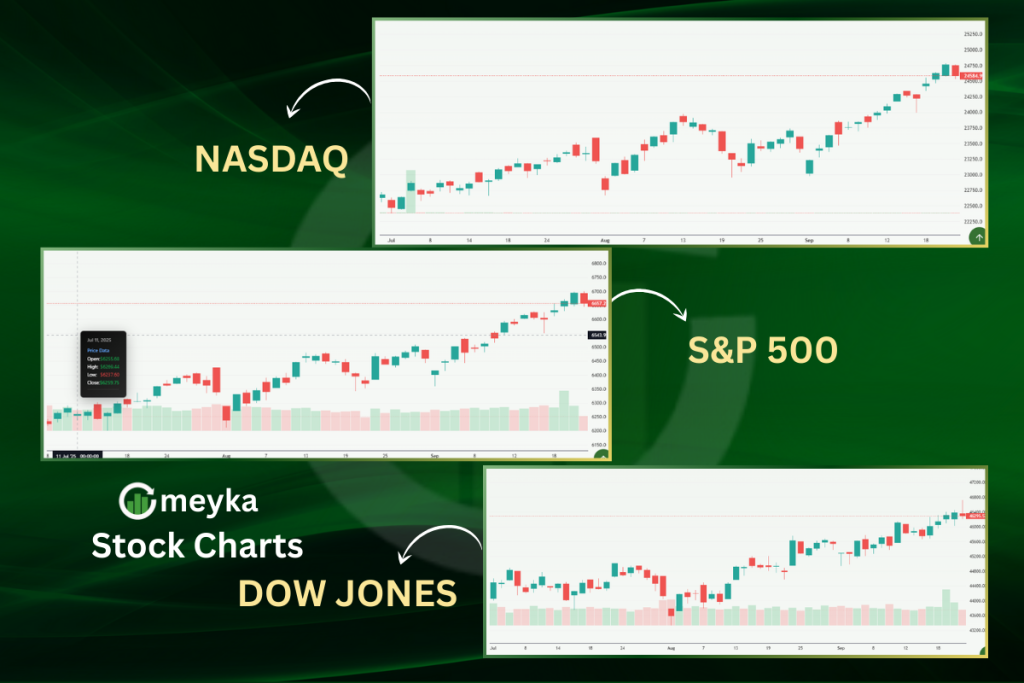
Beyond fundamental news, technical analysis plays a crucial role in how professional traders and algorithmic systems react to price movements. A “technical breakout” occurs when a stock index, like the Dow, surpasses a significant resistance level that it had previously struggled to overcome. When the Dow breaks above such a level, it can trigger automatic buying orders and attract momentum traders who believe the upward trend is set to continue.
These resistance levels are often based on historical price points, moving averages, or trend lines that technical analysts closely monitor. A decisive move above such a barrier suggests that selling pressure at that level has been exhausted and that buyers are now firmly in control. This can create a domino effect, as more traders jump on board, pushing the index even higher. Furthermore, positive momentum can be self-reinforcing. As the Dow climbs, it might trigger other technical indicators that suggest strength, such as a “golden cross” (a shorter-term moving average crossing above a longer-term one), further signaling bullishness. Today’s climb might therefore not only be fundamentally driven but also technically validated, with the Dow breaking through key levels that signal a strengthening uptrend. This combination of fundamental catalysts and technical confirmation often creates the most powerful and sustained rallies, encouraging both short-term traders and long-term investors to participate in the market’s upward trajectory.
In conclusion, the reasons for the Dow’s ascent on any given day are multifaceted, weaving together the threads of economic data, corporate performance, central bank policy, global events, and the intricate psychology of investors. Today’s rally is likely a testament to a combination of these elements, fostering an environment where optimism takes precedence and capital finds its way into the leading companies that form the bedrock of the American economy. Understanding these drivers is key to navigating the complex and ever-evolving landscape of financial markets.
aViewFromTheCave is a participant in the Amazon Services LLC Associates Program, an affiliate advertising program designed to provide a means for sites to earn advertising fees by advertising and linking to Amazon.com. Amazon, the Amazon logo, AmazonSupply, and the AmazonSupply logo are trademarks of Amazon.com, Inc. or its affiliates. As an Amazon Associate we earn affiliate commissions from qualifying purchases.