
Investing in the stock market can often seem complex, a realm reserved for financial wizards and seasoned professionals. However, a cornerstone strategy for wealth building, accessible to almost anyone, lies in investing in the S&P 500 Index. This guide will demystify the process, offering a clear, actionable pathway for individuals looking to harness the power of America’s leading companies for their financial future. The S&P 500 represents a diversified portfolio of 500 of the largest U.S. publicly traded companies, spanning various sectors and industries. It is widely considered one of the best gauges of large-cap U.S. equities and the overall health of the American stock market. For decades, it has served as a benchmark for investment performance, consistently delivering robust long-term returns. Understanding how to tap into this powerful index is not just about choosing a financial product; it’s about adopting a strategic, long-term approach to wealth accumulation that minimizes complexity while maximizing potential.
Understanding the S&P 500 and Its Appeal
Before diving into the “how-to,” it’s crucial to grasp what the S&P 500 is and why it holds such a prominent position in the investment world. Its design as a market-capitalization-weighted index means that companies with larger market values have a greater impact on the index’s performance, reflecting the true scale and influence of major corporations in the economy.
What is the S&P 500 Index?
The S&P 500, or the Standard & Poor’s 500, is a stock market index maintained by S&P Dow Jones Indices. It comprises 500 of the largest publicly traded companies in the United States, selected by a committee based on criteria such as market size, liquidity, and sector representation. Unlike some other indices that are simply based on the largest companies by market cap, the S&P 500’s selection process aims for a balanced reflection of the broad U.S. economy. Companies included range from technology giants like Apple and Microsoft to consumer staples like Coca-Cola and Procter & Gamble, alongside financial powerhouses, healthcare innovators, and industrial stalwarts. This diverse composition mitigates the risk associated with investing in a single company or even a single sector, as the performance of one struggling company is offset by the success of others within the vast portfolio.
Why Consider S&P 500 Investing?
The allure of S&P 500 investing stems from several key advantages that make it an attractive option for both novice and experienced investors alike:
- Diversification: By investing in an S&P 500 index fund, you gain instant exposure to 500 companies across 11 major sectors. This inherent diversification significantly reduces idiosyncratic risk – the risk associated with a specific company’s poor performance. If one company falters, the overall impact on your portfolio is minimal due to the sheer breadth of your holdings.
- Historical Performance: Over the long term, the S&P 500 has demonstrated remarkable resilience and growth. Historically, its average annual return has been approximately 10-12% since its inception, though past performance is not indicative of future results. This robust track record makes it a powerful engine for compounding wealth over decades, outpacing inflation and most other asset classes.
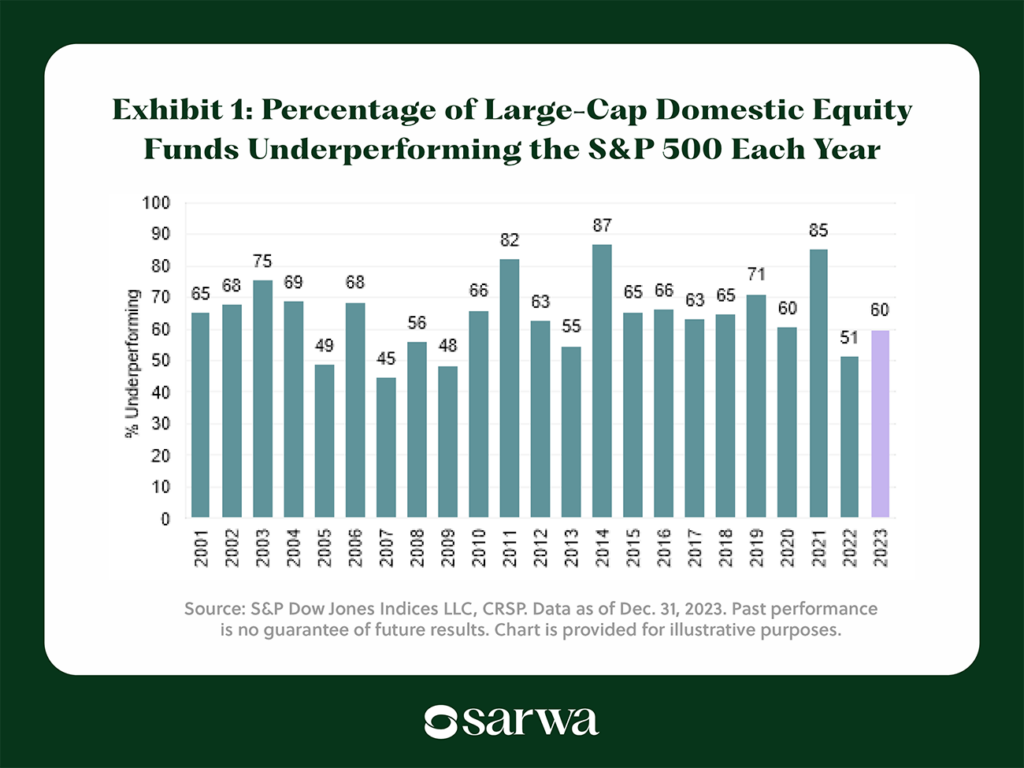
- Simplicity and Low Cost: Investing in an S&P 500 index fund is perhaps one of the simplest investment strategies. You don’t need to research individual stocks, analyze company financials, or time the market. Fund managers track the index automatically, allowing for a passive, hands-off approach. Furthermore, due to their passive nature, S&P 500 index funds typically have very low expense ratios compared to actively managed funds, meaning more of your money stays invested and works for you.
- Access to Economic Growth: By holding a stake in the largest U.S. companies, you are directly investing in the growth and innovation of the American economy. As these companies grow, innovate, and expand globally, their success is reflected in the value of your S&P 500 investment.
Primary Avenues for S&P 500 Exposure
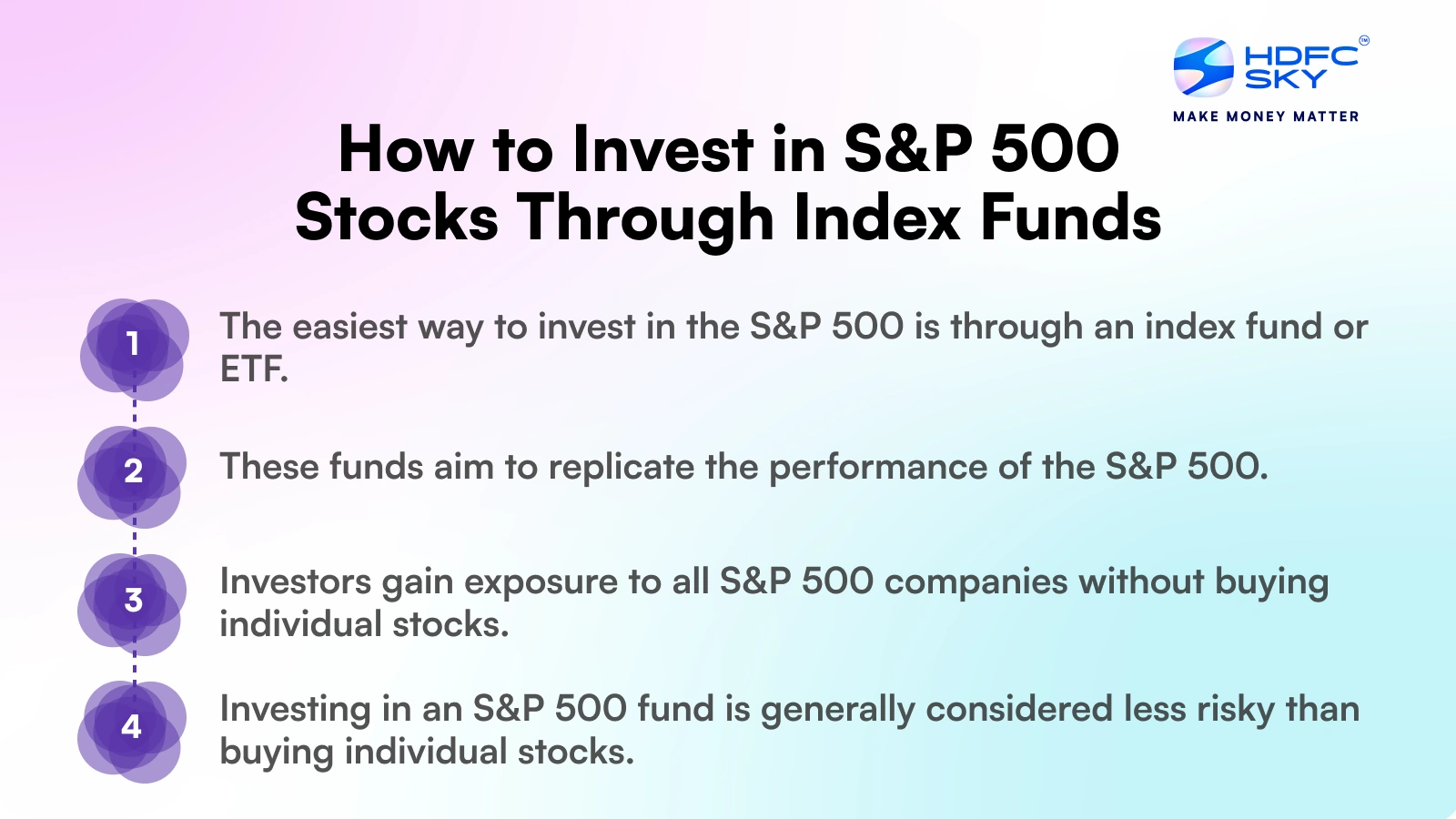
While you cannot directly “invest in the index” itself, you can invest in financial products designed to mirror its performance. These products offer varying levels of flexibility and management, catering to different investor preferences.
S&P 500 Index Exchange-Traded Funds (ETFs)
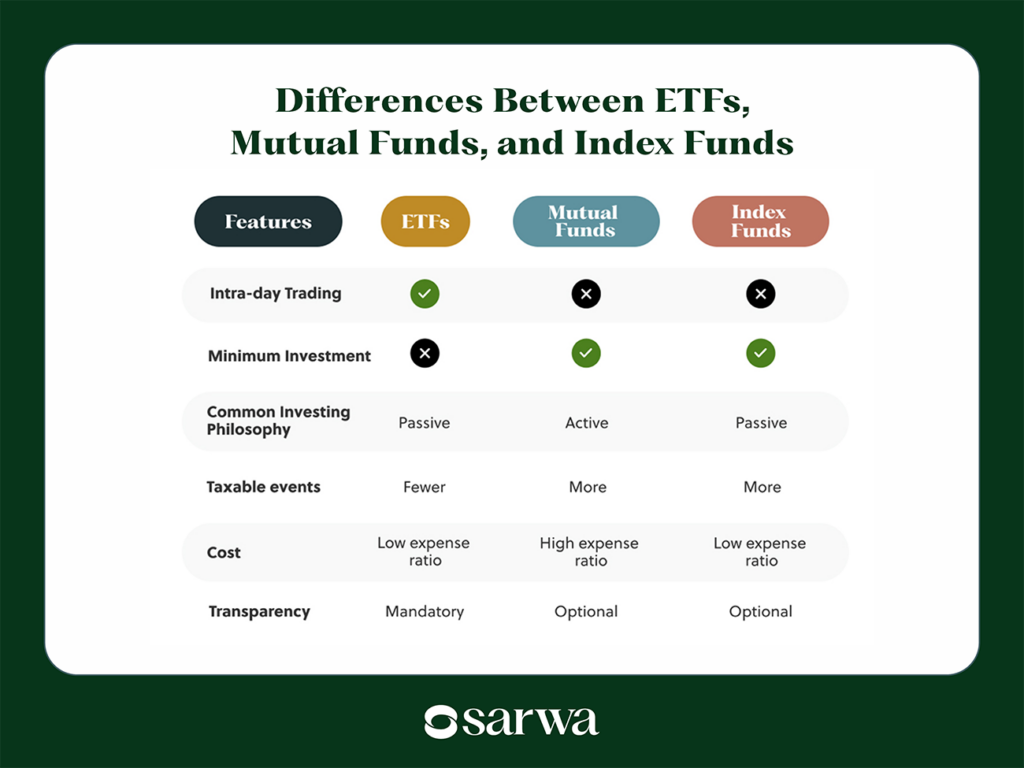
Exchange-Traded Funds (ETFs) are arguably the most popular and accessible way to invest in the S&P 500. An S&P 500 ETF is a type of investment fund that holds assets like stocks, commodities, or bonds and trades on stock exchanges just like regular stocks. For an S&P 500 ETF, the assets it holds are primarily the stocks of the 500 companies in the S&P 500 index, weighted similarly to the index.
Advantages of S&P 500 ETFs:
- Flexibility: ETFs can be bought and sold throughout the trading day at market prices, offering more flexibility than mutual funds which only execute trades once daily after market close.
- Low Expense Ratios: Like index mutual funds, S&P 500 ETFs are passively managed and thus have very low expense ratios, often below 0.10%.
- Tax Efficiency: ETFs are generally more tax-efficient than mutual funds in terms of capital gains distributions, which is beneficial for investors in taxable accounts.
- Accessibility: Most brokerage platforms offer a wide array of S&P 500 ETFs, making them easy to purchase. Popular examples include SPDR S&P 500 ETF Trust (SPY), iShares Core S&P 500 (IVV), and Vanguard S&P 500 ETF (VOO).
S&P 500 Index Mutual Funds
S&P 500 index mutual funds are another excellent way to gain exposure to the index. These funds pool money from many investors to invest in a portfolio of securities that tracks the performance of the S&P 500 index. They are managed by fund companies and are priced once a day after the market closes.
Advantages of S&P 500 Index Mutual Funds:
- Automatic Reinvestment: Many mutual funds offer automatic reinvestment of dividends and capital gains, allowing your investments to compound without manual intervention.
- Dollar-Cost Averaging: They are well-suited for investors who want to make regular, consistent investments (e.g., monthly contributions), as shares are bought at the fund’s daily net asset value (NAV).
- Simplicity: For those who prefer a “set it and forget it” approach and aren’t concerned with intra-day trading, mutual funds can be simpler.
- Low Minimums (for some): While some mutual funds have high initial investment minimums (e.g., $3,000), many popular S&P 500 index funds from providers like Fidelity and Vanguard offer lower minimums or no minimums for subsequent investments.
Robo-Advisors and Managed Portfolios
For investors who prefer a hands-off approach and don’t want to choose specific ETFs or mutual funds, robo-advisors offer an automated solution. These digital platforms use algorithms to build and manage diversified portfolios based on your financial goals, risk tolerance, and time horizon. Many robo-advisors prominently feature S&P 500 index ETFs within their model portfolios, providing broad market exposure as a core component.
Advantages of Robo-Advisors:
- Automation: They automate portfolio rebalancing, dividend reinvestment, and tax-loss harvesting, taking the guesswork out of investing.
- Low Fees: Robo-advisors typically charge lower management fees than traditional human financial advisors, often around 0.25% to 0.50% of assets under management, in addition to the underlying ETF expense ratios.
- Goal-Based Investing: They can help you align your S&P 500 investments with specific financial goals, such as retirement planning or saving for a down payment.
- Accessibility: Most robo-advisors have very low initial investment minimums, making professional-grade portfolio management accessible to new investors.
Practical Steps to Begin Your S&P 500 Investment Journey
Once you understand the mechanisms, the actual process of getting started is straightforward. It involves a few key decisions and actions.
Choosing a Brokerage Account
The first step is to open an investment account with a reputable brokerage firm. This can be a traditional online brokerage (e.g., Fidelity, Schwab, Vanguard, E*TRADE, Interactive Brokers) or a robo-advisor platform (e.g., Betterment, Wealthfront).
Key factors to consider when choosing a brokerage:
- Fees and Commissions: Look for brokerages with $0 commissions on stock and ETF trades. Check for any account maintenance fees or minimum balance requirements.
- Investment Options: Ensure the brokerage offers the specific S&P 500 ETFs or mutual funds you’re interested in, or a diverse selection if you’re exploring options.
- User Experience: A user-friendly platform with robust research tools and customer support can make a big difference.
- Account Types: Decide what type of account you need. For retirement savings, consider an Individual Retirement Account (IRA) – Roth or Traditional. For non-retirement savings, a taxable brokerage account is appropriate. Each has different tax implications.
Funding Your Investment Account
After opening your account, you’ll need to fund it. Most brokerages offer several ways to deposit money:
- Electronic Funds Transfer (EFT): Linking your bank account allows for easy transfers. This is typically the most common method.
- Wire Transfer: For larger sums, wire transfers offer speed but usually come with fees.
- Check Deposit: You can mail a physical check.
- Rollover: If you have an old 401(k) or IRA from a previous employer, you might be able to roll it over into your new account.
It’s wise to start with an amount you’re comfortable investing, even if it’s small, and then commit to regular contributions.
Selecting the Right Investment Vehicle
Based on your preferences for flexibility, management, and cost, you’ll choose between an S&P 500 ETF, an S&P 500 index mutual fund, or a robo-advisor solution.
- For maximum control and intra-day trading: An S&P 500 ETF is ideal. Research popular, low-cost options like VOO, IVV, or SPY.
- For long-term, set-and-forget investing with automatic features: An S&P 500 index mutual fund (e.g., Vanguard 500 Index Fund Admiral Shares – VFIAX, Fidelity 500 Index Fund – FXAIX) could be a better fit, especially if you plan regular contributions.
- For automated portfolio management and hands-off investing: A robo-advisor will simplify the process entirely, building and managing a diversified portfolio that includes S&P 500 exposure.
Key Considerations for Long-Term Success
Investing in the S&P 500 is a powerful long-term strategy, but success also hinges on understanding a few critical ongoing considerations.
Understanding Fees and Expense Ratios
Fees, even small ones, can significantly erode your returns over decades due to the power of compounding. When selecting an S&P 500 ETF or index mutual fund, pay close attention to the expense ratio. This is the annual fee charged by the fund as a percentage of your investment. For S&P 500 index funds, expense ratios are typically very low, often under 0.10%. For example, an expense ratio of 0.03% means you pay $3 annually for every $10,000 invested. Avoid funds with significantly higher expense ratios if a similar, lower-cost alternative is available, as these fees directly cut into your profits. If using a robo-advisor, factor in their advisory fees in addition to the underlying fund fees.
The Power of Dollar-Cost Averaging (DCA)
Dollar-Cost Averaging (DCA) is an investment strategy where you invest a fixed amount of money at regular intervals (e.g., monthly, quarterly), regardless of the market’s current price. This strategy helps to mitigate the risk of investing a lump sum at an inopportune time when prices are high. When prices are low, your fixed contribution buys more shares; when prices are high, it buys fewer shares. Over time, DCA can lead to a lower average cost per share and reduce the emotional stress of trying to “time the market.” For S&P 500 investing, especially through mutual funds or automatic ETF purchases, DCA is a highly recommended approach.
Tax Efficiency and Account Types
The type of account you use to invest in the S&P 500 can have significant tax implications:
- Tax-Advantaged Accounts (IRAs, 401(k)s): These accounts offer tax benefits, such as tax-deductible contributions (Traditional IRA/401(k)) or tax-free withdrawals in retirement (Roth IRA/401(k)). Investing in the S&P 500 within these accounts allows your investments to grow and compound without being taxed annually on dividends or capital gains, deferring or eliminating taxes until retirement.
- Taxable Brokerage Accounts: These accounts offer liquidity and flexibility but are subject to capital gains taxes when you sell an investment for a profit, and dividends are taxed in the year they are received. For long-term S&P 500 ETF investors, these are generally tax-efficient, especially if holding for over a year to qualify for lower long-term capital gains rates.
Understanding the tax implications of each account type is crucial for optimizing your overall returns and planning for your financial future.
Maintaining a Long-Term Perspective
Perhaps the most important consideration for S&P 500 investing is adopting a long-term mindset. The stock market, and by extension the S&P 500, experiences volatility. There will be periods of decline, corrections, and even bear markets. It’s during these times that many investors panic and sell, often locking in losses. However, historically, the S&P 500 has recovered from every downturn and continued its upward trajectory over extended periods. For most investors, a time horizon of 10 years or more allows enough time for market fluctuations to smooth out and for the power of compounding to truly work its magic. Avoid the temptation to check your portfolio daily or react emotionally to short-term news. Consistent contributions, patience, and unwavering adherence to your long-term strategy are the hallmarks of successful S&P 500 investing.
In conclusion, investing in the S&P 500 index is not just a sophisticated strategy for the elite; it’s a foundational, accessible, and historically proven method for building substantial wealth over time. By understanding what the index represents, choosing the right investment vehicle, taking practical steps to get started, and maintaining a disciplined, long-term approach, you can effectively harness the collective power of America’s leading companies to achieve your financial goals.
aViewFromTheCave is a participant in the Amazon Services LLC Associates Program, an affiliate advertising program designed to provide a means for sites to earn advertising fees by advertising and linking to Amazon.com. Amazon, the Amazon logo, AmazonSupply, and the AmazonSupply logo are trademarks of Amazon.com, Inc. or its affiliates. As an Amazon Associate we earn affiliate commissions from qualifying purchases.