
In the increasingly complex tapestry of the modern technological landscape, few companies elicit as much discussion, intrigue, and occasional apprehension as Palantir Technologies. Often shrouded in a veil of secrecy due to its origins and primary clientele, Palantir has carved out a unique niche as a purveyor of sophisticated data integration and analysis platforms. To truly understand Palantir is to delve deep into its technological core, exploring the innovative software that powers intelligence agencies, government bodies, and a growing roster of global enterprises. Far from a mere software vendor, Palantir positions itself as an operating system for the modern organization, enabling decision-makers to transform disparate data into actionable intelligence at unprecedented scale and speed. This exploration will peel back the layers to reveal the technical architecture, capabilities, and profound impact of Palantir’s groundbreaking technology, firmly anchoring our discussion within the realm of software innovation, data science, AI tools, and digital security.

The Enigma Unveiled: Palantir’s Foundational Technology
At its heart, Palantir is a software company built to solve some of the world’s most intractable data problems. Its genesis lies in the aftermath of 9/11, driven by a vision to create software that could help intelligence analysts connect seemingly unrelated pieces of information across vast, siloed datasets – a challenge that commercial databases and traditional analytics tools were ill-equipped to handle. This foundational mission shaped the very essence of its platforms.
Origins and Mission: Addressing Complex Data Challenges
Founded in 2003, Palantir emerged from the realization that while data was proliferating, the ability to synthesize, contextualize, and operationalize it remained a significant hurdle for governments and large organizations. The company’s initial focus was on combating terrorism, building tools that could integrate structured and unstructured data from diverse sources – phone records, financial transactions, travel manifests, intelligence reports – into a single, cohesive analytical environment. This was not merely about aggregation; it was about creating a semantic layer that understood the relationships between entities, events, and locations, allowing analysts to uncover hidden patterns and potential threats that would otherwise remain obscured. Their mission transcended simple data warehousing; it was about engineering a system capable of human-in-the-loop intelligence amplification, where software augments, rather than replaces, human judgment and intuition.
The Core Platforms: Foundry and Gotham Explained
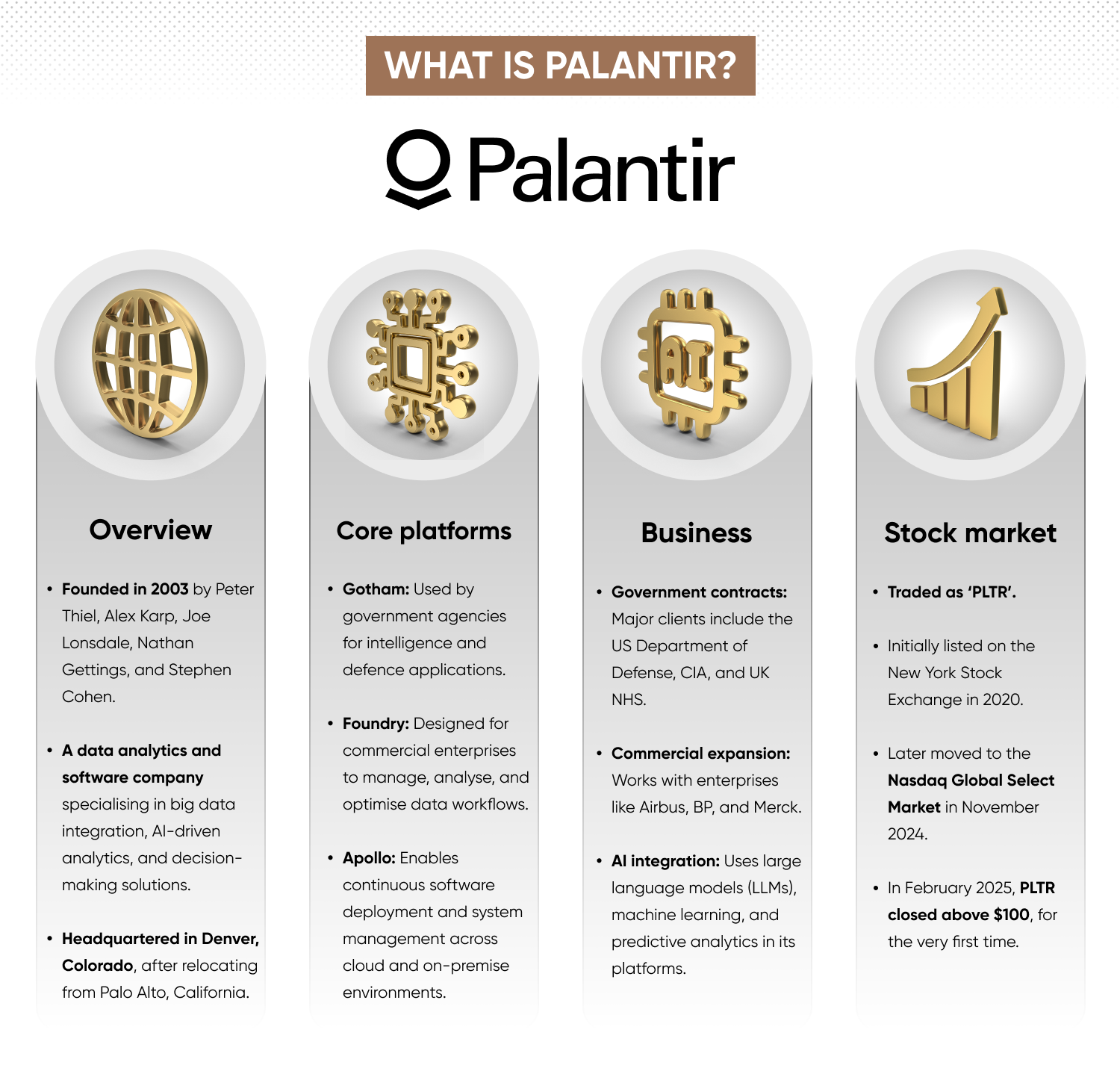
Today, Palantir’s technological offerings are primarily embodied in two flagship platforms: Gotham and Foundry. While sharing a common philosophical approach to data integration and operational intelligence, they cater to distinct, albeit sometimes overlapping, use cases.
Palantir Gotham is the company’s original platform, developed specifically for government intelligence, defense, and law enforcement communities. Gotham excels at integrating highly sensitive, often classified, and disparate datasets to support counter-terrorism, fraud detection, and complex criminal investigations. It provides a sophisticated graph-based analytical environment where users can visualize relationships between entities, trace networks, and perform advanced data mining. Its strength lies in its ability to handle “dirty” or incomplete data, impose structure where little exists, and facilitate collaborative analysis among geographically dispersed teams, all while adhering to stringent security and privacy protocols crucial for its demanding clientele. Gotham’s interface is designed for investigative workflows, allowing analysts to construct narratives and hypotheses directly from the data.
Palantir Foundry, on the other hand, represents the evolution of Palantir’s technology for the commercial sector and an expanding array of government applications beyond intelligence. Launched to bring similar data integration and operational capabilities to enterprises facing challenges like supply chain optimization, financial risk management, and scientific research, Foundry is a more comprehensive enterprise operating system. It provides a centralized, dynamic data asset that allows organizations to integrate data from virtually any source – ERP systems, CRMs, IoT devices, external market data – into a unified “ontology.” This ontology is a dynamic, semantic model of the organization’s real-world entities, relationships, and processes. Once data is integrated and modeled within Foundry, users across different departments can build applications, perform complex analytics, run simulations, and deploy AI/ML models directly on this coherent data foundation, transforming data into truly operational software. Foundry’s strength lies in its ability to drive decision-making and automate workflows across an entire organization, fostering a data-driven culture and accelerating digital transformation.
Deconstructing Palantir’s Technological Prowess
What distinguishes Palantir from conventional data analytics platforms or business intelligence tools is its unique approach to data integration, the sophisticated application of AI and machine learning, and its commitment to a human-machine teaming paradigm.
Data Integration and Fusion at Scale
Palantir’s core technological innovation lies in its capacity for “data fusion.” Unlike traditional data warehousing, which often requires extensive upfront data cleaning and schema definition, Palantir’s platforms are designed to ingest data in its native format – structured databases, unstructured text documents, sensor feeds, images, video – and intelligently integrate it. This is achieved through several key mechanisms:
- Ontology-Driven Data Modeling: At the heart of Foundry, in particular, is the concept of an “ontology.” This is not merely a database schema; it’s a rich, semantic model of the real-world entities (e.g., people, products, locations, events), their properties, and the relationships between them. This dynamic, user-defined model allows the platform to understand the meaning of the data, rather than just its structure. As new data sources are integrated, they are mapped to this evolving ontology, instantly becoming interoperable and accessible across the entire system. This eliminates the need for endless ETL (Extract, Transform, Load) processes and data siloing, creating a truly unified data asset.
- Graph-Based Data Representation: Both Gotham and Foundry leverage powerful graph databases to represent relationships between entities. This is crucial for uncovering non-obvious connections that might be missed in traditional relational databases. For example, connecting a person to a phone number, to a financial transaction, to a specific location, and then to other associated individuals, can quickly build a complex network visible at a glance.
- Automated Data Harmonization: Palantir’s platforms employ advanced techniques to automatically identify, normalize, and reconcile conflicting or redundant data points from various sources. This includes fuzzy matching, natural language processing (NLP) for unstructured text, and machine learning models to infer relationships and attributes, significantly reducing the manual effort typically required to prepare data for analysis.
AI, Machine Learning, and Predictive Analytics
While data integration provides the robust foundation, Palantir’s true power is unlocked through its embedded AI and machine learning capabilities. These are not merely add-ons but are deeply interwoven into the fabric of the platforms, serving both to enhance data quality and to drive predictive and prescriptive analytics.
- AI-Powered Data Preparation: ML models assist in the initial stages of data ingestion, identifying data types, suggesting mappings to the ontology, and even detecting anomalies or missing values. This accelerates the process of making raw data usable.
- Pattern Recognition and Anomaly Detection: Leveraging sophisticated algorithms, Palantir’s platforms can automatically detect subtle patterns, trends, and outliers within vast datasets that would be impossible for humans to spot manually. In Gotham, this might involve identifying suspicious network activities; in Foundry, it could be predicting equipment failure or detecting fraudulent transactions.
- Predictive and Prescriptive Models: Users can build, deploy, and manage custom AI/ML models directly within the platforms, using the unified data asset as their training ground. This enables everything from predicting future demand in a supply chain to forecasting disease outbreaks or optimizing resource allocation. Foundry’s “Model-as-a-Service” approach allows organizations to operationalize their data science efforts rapidly, moving from model development to real-world impact seamlessly.
- Decision Support and Simulation: Beyond prediction, Palantir’s tools enable complex simulations. Organizations can model the potential outcomes of various decisions or interventions before implementation, evaluating different scenarios based on real data and AI-driven forecasts. This empowers proactive, evidence-based decision-making.
The Human-Machine Teaming Paradigm
A core tenet of Palantir’s philosophy is “human-machine teaming.” The technology is not designed to replace human intelligence but to augment it, providing analysts and decision-makers with superior tools to explore data, formulate hypotheses, test assumptions, and make more informed decisions.
- Interactive and Intuitive Interfaces: Despite the underlying complexity, Palantir’s user interfaces are designed to be highly interactive and intuitive, allowing non-technical users to query data, visualize relationships, and build analytical workflows without requiring extensive coding skills. Visualizations, graph explorations, and customizable dashboards make complex data understandable.
- Workflow Integration: The platforms are built around the concept of operational workflows. They don’t just present data; they facilitate action. From initiating an investigation in Gotham to triggering an automated supply chain adjustment in Foundry, the software bridges the gap between insight and execution.
- Auditability and Explainability: Recognizing the sensitive nature of the data it handles and the decisions it influences, Palantir places a strong emphasis on auditability and explainability. Every step in the data integration, transformation, and analysis process is traceable, allowing users to understand how a particular conclusion was reached, which data sources were used, and which models were applied. This is critical for accountability, compliance, and fostering trust in AI-driven insights.
Applications Across Diverse Sectors
Palantir’s platforms, with their unparalleled ability to integrate and analyze vast, disparate datasets, have found critical applications across a broad spectrum of industries, demonstrating the versatility and power of its core technology.
Government and Intelligence: A Legacy of Defense
Palantir’s most enduring and, at times, controversial legacy lies in its work with government and intelligence agencies. Gotham was instrumental in supporting counter-terrorism efforts, aiding intelligence analysts in connecting the dots to disrupt terrorist plots and dismantle criminal networks. Its technology has been deployed by various branches of the U.S. military, the CIA, the FBI, and other allied nations for national security applications, including intelligence analysis, cyber defense, and logistical planning. For instance, in military contexts, the technology helps commanders understand troop movements, supply lines, and adversary activities in real-time, enabling more effective and safer operational planning. The digital security aspect here is paramount, as the handling of classified information requires robust, resilient, and highly secure platforms.
Commercial Enterprises: Revolutionizing Operations
While its government work often captures headlines, Palantir’s expansion into the commercial sector with Foundry is equally impactful. Enterprises grapple with their own “intelligence problems” – opaque supply chains, inefficient manufacturing processes, fragmented customer data, and complex financial risk.
- Supply Chain Optimization: Companies use Foundry to integrate data from suppliers, logistics providers, inventory systems, and demand forecasts. This creates a real-time digital twin of their supply chain, allowing them to predict disruptions, optimize inventory levels, and respond rapidly to changes in demand or external events, such as geopolitical crises or natural disasters.
- Manufacturing Efficiency: In factories, Foundry connects data from IoT sensors on machinery, production schedules, quality control systems, and enterprise resource planning (ERP) software. This enables predictive maintenance, identifies bottlenecks, and optimizes production flows, leading to significant reductions in downtime and waste.
- Financial Services: Banks and financial institutions leverage Foundry for fraud detection, anti-money laundering (AML) compliance, and risk management. By integrating transaction data, customer profiles, and external watchlists, the platform can identify suspicious activities and flag high-risk accounts more effectively than traditional methods.
- Energy Management: Energy companies utilize Foundry to optimize grid operations, predict equipment failures, and manage renewable energy sources by integrating data from sensors, weather forecasts, and market demands.
Healthcare and Life Sciences: Data-Driven Discoveries
The healthcare and life sciences sectors are ripe for data-driven transformation, and Palantir’s platforms are playing a significant role.
- Drug Discovery and Development: Pharmaceutical companies use Foundry to integrate vast datasets from clinical trials, genomics, proteomics, and real-world evidence. This accelerates the identification of drug targets, optimizes trial design, and helps understand drug efficacy and safety profiles. The ability to connect biological pathways with patient data can unlock new therapeutic insights.
- Public Health Management: During crises like the COVID-19 pandemic, Palantir’s technology was deployed to help governments manage vaccine distribution, track disease spread, and allocate critical resources by integrating public health data, hospital capacity, and logistical information. This provided a unified operational picture for rapid response.
- Personalized Medicine: In hospitals and research institutions, Foundry helps researchers integrate patient electronic health records (EHRs), imaging data, and genomic information to develop more personalized treatment plans and advance precision medicine initiatives.
The Technological Impact and Future Trajectory
Palantir’s journey reflects the evolving landscape of big data, AI, and digital security. Its technologies are not merely tools; they are foundational infrastructure for organizations seeking to navigate a data-rich, complex world.
Ethical Considerations in AI and Data Processing
The power of Palantir’s platforms inevitably brings significant ethical considerations, particularly concerning data privacy, algorithmic bias, and surveillance. From a technological perspective, Palantir addresses these by emphasizing:
- Granular Access Controls: The platforms are designed with highly granular access controls, ensuring that users only see the data they are authorized to view, compliant with privacy regulations (e.g., GDPR, CCPA) and internal policies. This is a critical digital security feature.
- Auditability and Transparency: As mentioned, every action taken within the system is logged and auditable, promoting accountability and allowing for scrutiny of analytical processes and decisions, which is crucial for mitigating bias and ensuring fairness.
- Privacy-Enhancing Technologies: Palantir continues to invest in technologies that allow for analysis on sensitive data while preserving privacy, such as differential privacy and secure multi-party computation, though their widespread adoption and practical implementation remain ongoing challenges across the industry. The design of their ontological layer also allows for controlled abstraction of sensitive data.
Digital Security and Resilience
Given its work with intelligence and defense, digital security is not just a feature but a core tenet of Palantir’s engineering philosophy. Their platforms are built to operate in highly secure environments, addressing threats from cyber espionage to data exfiltration. This includes:
- End-to-End Encryption: Data is encrypted both in transit and at rest.
- Robust Authentication and Authorization: Multi-factor authentication, role-based access controls, and strict identity management are standard.
- Immutable Audit Logs: Comprehensive logs ensure that every data access, modification, or analytical step is recorded and tamper-proof.
- Hardened Infrastructure: Their deployments often involve customized, hardened infrastructure designed to withstand sophisticated cyberattacks.
These security measures are critical to maintaining the integrity and confidentiality of the sensitive information processed by their clients, underscoring Palantir’s role as a digital security enabler for high-stakes operations.
Palantir’s Vision for an AI-Powered Future
Looking ahead, Palantir is positioning itself at the forefront of the operational AI revolution. Their vision extends beyond simply providing tools for data analysis; they aim to provide the core infrastructure for organizations to leverage AI across every facet of their operations. This involves:
- Expanding the Ontology: Continuously enriching the semantic understanding of data to build more sophisticated digital twins of organizations and their environments.
- Automating Decision Workflows: Moving from human-in-the-loop analysis to AI-augmented decision automation, where the system can suggest, optimize, and even execute actions autonomously under human oversight.
- Edge AI and Hybrid Cloud Deployments: Expanding the reach of their platforms to the edge, enabling real-time processing and AI inference closer to where data is generated, while maintaining robust hybrid cloud capabilities.
- Democratizing AI Deployment: Making it easier for non-data scientists to build, deploy, and operationalize AI models, further embedding AI into the daily operations of enterprises and governments.
In essence, Palantir’s continuing evolution is about building the nervous system for complex organizations, providing the technological sinews that connect data, intelligence, and action. Through its sophisticated software, integrated AI, and unwavering focus on digital security, Palantir remains a pivotal, albeit often enigmatic, player in shaping how the world’s most critical institutions understand and operate within an increasingly data-intensive future.
aViewFromTheCave is a participant in the Amazon Services LLC Associates Program, an affiliate advertising program designed to provide a means for sites to earn advertising fees by advertising and linking to Amazon.com. Amazon, the Amazon logo, AmazonSupply, and the AmazonSupply logo are trademarks of Amazon.com, Inc. or its affiliates. As an Amazon Associate we earn affiliate commissions from qualifying purchases.