
Tesla, once the darling of growth investors and a market disruptor, has experienced periods of significant stock price volatility, often leading to headlines questioning its market performance. Understanding “why is Tesla down” requires a deep dive into a confluence of macroeconomic factors, competitive pressures, internal operational challenges, and shifts in investor sentiment, all viewed through a strictly financial lens. This analysis aims to dissect the multifaceted reasons behind its downturns, providing a comprehensive, insightful, and professional perspective for investors and financial observers alike.
Macroeconomic Headwinds and Shifting Investor Sentiment
The broader economic environment plays an undeniable role in the performance of any company’s stock, particularly those perceived as high-growth or speculative. Tesla, despite its robust fundamentals in certain areas, is not immune to these overarching forces, which have significantly impacted its valuation.
Rising Interest Rates and Their Impact on Growth Stocks
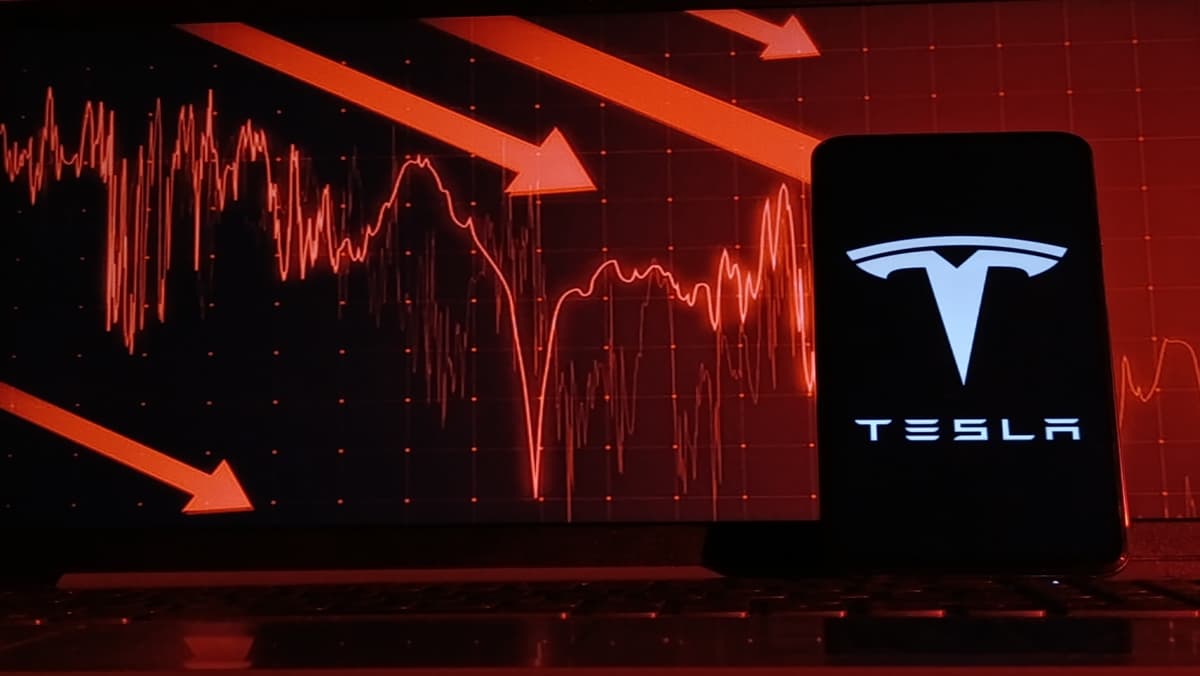
The most significant macroeconomic factor affecting Tesla’s stock performance has been the global surge in interest rates. Central banks worldwide, including the Federal Reserve, have aggressively raised rates to combat inflation. Higher interest rates typically diminish the present value of future earnings, disproportionately affecting growth stocks like Tesla, whose valuations are often predicated on substantial future growth rather than current profits. As the cost of capital increases, investors tend to de-risk portfolios, shifting from high-multiple growth stocks to more value-oriented or income-generating assets. This fundamental re-evaluation of valuation models naturally places downward pressure on companies with sky-high price-to-earnings (P/E) ratios, even if their growth trajectory remains impressive.
Global Economic Slowdown and Consumer Spending Pressures
Concerns about a looming global recession or a significant economic slowdown also weigh heavily on consumer discretionary spending. Electric vehicles, while becoming more mainstream, still represent a significant purchase for most consumers. Economic uncertainty, coupled with persistent inflation eroding purchasing power, can lead to consumers delaying or foregoing large capital expenditures, including new car purchases. For a company like Tesla, which relies on expanding its market share and volume, a contraction in consumer demand for high-value goods directly translates into slower sales growth and potential revenue misses, creating a bearish outlook for its stock.
Shifting Investor Risk Appetite and Capital Allocation
The investing landscape has undergone a significant transformation. During periods of ultra-low interest rates and quantitative easing, investors exhibited a high appetite for risk, flocking to innovative companies with disruptive potential, often overlooking traditional valuation metrics. Tesla benefited immensely from this era of speculative enthusiasm. However, as monetary policy tightened, risk appetite waned considerably. Investors became more discerning, prioritizing companies with strong balance sheets, consistent profitability, and tangible returns on capital. This shift compelled a re-evaluation of Tesla’s premium valuation, prompting some institutional investors and hedge funds to reallocate capital away from growth-at-any-cost narratives towards more defensively positioned or fundamentally sound companies, further contributing to downward pressure.
Intensifying Competition and Pricing Pressures
Tesla’s early dominance in the electric vehicle (EV) market allowed it to command premium pricing and enjoy superior margins. However, the competitive landscape has evolved dramatically, introducing significant challenges to its market share and profitability.
Erosion of EV Market Dominance
What was once a niche market dominated by a single player is now a crowded arena. Traditional automotive giants like Volkswagen, General Motors, Ford, Hyundai, and Mercedes-Benz have aggressively ramped up their EV production and introduced compelling models across various segments. Simultaneously, a new wave of well-funded EV startups, particularly from China such as BYD and Nio, are fiercely competing on price, features, and technology. This proliferation of credible alternatives means consumers have more choices than ever before, chipping away at Tesla’s once-unassailable lead and making it harder for the company to maintain its premium market positioning solely based on brand and early mover advantage.
Price Cuts and Margin Compression
In response to this intensifying competition and possibly to stimulate demand amidst economic headwinds, Tesla has repeatedly initiated price cuts across its model lineup in various markets. While these price adjustments can boost sales volume in the short term, they come at a significant cost: margin compression. Gross profit margins are a crucial indicator of a company’s financial health and pricing power. When a company, especially one with a high fixed cost base like an automaker, reduces prices without a proportional decrease in production costs, its profit margins shrink. This erosion of profitability directly impacts earnings per share (EPS), a key metric for investors, and can lead to a downward revision of future earnings forecasts, consequently depressing the stock price. The market views sustained margin compression as a sign of weakening competitive advantage or oversupply.
Legacy Automakers’ EV Ramp-up and Technological Catch-up
Legacy automakers are no longer just dabbling in EVs; they are fully committed, leveraging their immense manufacturing scale, established supply chains, and extensive dealer networks. Many have made substantial investments in battery technology, charging infrastructure, and software development, rapidly closing the technological gap that once separated them from Tesla. Furthermore, their ability to cross-subsidize EV development with profits from their traditional internal combustion engine (ICE) vehicle sales gives them financial flexibility. As these established players bring more competitive, high-quality, and often cheaper EVs to market, Tesla faces a challenge not just in innovation, but also in maintaining its market share against formidable opponents with decades of automotive expertise and vast production capabilities.
Production Challenges and Supply Chain Volatility
While Tesla has made remarkable strides in scaling production, it has also grappled with various operational hurdles and the broader instability of global supply chains, impacting its delivery schedules and cost efficiency.
Gigafactory Bottlenecks and Underutilization
Scaling manufacturing to automotive levels is notoriously complex, and Tesla’s aggressive global expansion with new Gigafactories has not been without its challenges. New factories, particularly in their ramp-up phase, often encounter production bottlenecks, quality control issues, and lower-than-expected output rates. While the long-term vision for these factories is clear, short-term underutilization or inefficiencies can lead to higher per-unit production costs. Furthermore, achieving full operational capacity and optimization takes time, during which the market may penalize the company for not meeting aggressive delivery targets or for incurring higher operating expenses than anticipated, affecting overall profitability.
Raw Material Costs and Availability
The production of electric vehicles is heavily reliant on critical raw materials such as lithium, cobalt, nickel, and rare earth elements for batteries and motors. The prices of these commodities have experienced significant volatility due driven by geopolitical tensions, mining capacity constraints, and surging demand. Tesla, like other EV manufacturers, faces the constant challenge of securing these materials at competitive prices and in sufficient quantities. Any disruption in the supply chain for these critical components, or a sustained increase in their cost, directly impacts Tesla’s bill of materials, leading to higher production costs and further pressure on gross margins. Investors scrutinize these input costs closely as they directly influence the company’s ability to maintain profitability targets.
Impact of Geopolitical Tensions on Production and Logistics
Global geopolitical tensions, trade disputes, and regional conflicts have introduced significant uncertainty into international logistics and supply chains. Tesla operates a global manufacturing and distribution network, making it particularly susceptible to these external shocks. Disruptions in shipping routes, increased freight costs, or restrictions on exports/imports can delay vehicle deliveries, increase operational expenses, and even halt production lines. For example, COVID-19 lockdowns in key manufacturing hubs severely impacted production and delivery timelines. Such external, uncontrollable factors create a climate of unpredictability, leading to missed delivery targets and reduced financial guidance, which typically results in negative investor sentiment and a downward re-rating of the stock.
Leadership Distractions and Corporate Governance Concerns
Elon Musk, Tesla’s CEO, is undeniably a visionary and a driving force behind the company’s success. However, his numerous ventures and outspoken nature have sometimes been perceived as distractions or sources of corporate governance concerns by investors.
Elon Musk’s Divided Attention and the X (Twitter) Acquisition
Elon Musk’s acquisition of Twitter (now X) and his subsequent deep involvement in its restructuring and operations raised significant concerns among Tesla shareholders. Many investors feared that Musk’s attention and time were being diverted away from his primary responsibility as CEO of Tesla, especially during a period of increasing competition and economic uncertainty for the EV maker. The perception of a distracted leader, particularly one so central to Tesla’s innovation and brand, can erode investor confidence. This sentiment is often reflected in a stock price decline, as the market bakes in a higher risk premium due to perceived leadership instability or reduced strategic focus.
Impact on Brand Perception and Investor Confidence
Musk’s often controversial public statements and his activities on X (formerly Twitter) have, at times, led to negative publicity that extended to Tesla. While his personality has historically been a strong asset for brand building, some of his more polarizing actions and comments have caused concern among certain customer segments and institutional investors. A CEO’s public persona is intricately linked to a company’s brand, especially for a personality-driven company like Tesla. Any perceived damage to that brand, or a misalignment with evolving environmental, social, and governance (ESG) standards, can deter investors who prioritize corporate responsibility and stable leadership, further contributing to a decline in stock value.
Shareholder Concerns over Stock-Based Compensation and Oversight
Another area of concern for some investors revolves around corporate governance, particularly regarding executive compensation and the board’s oversight. Debates surrounding large stock-based compensation packages for Elon Musk, especially in the context of stock performance, have periodically surfaced. While Tesla’s board has generally supported Musk’s compensation, some shareholders and proxy advisory firms have raised questions about its fairness and alignment with long-term shareholder value, particularly if the stock is underperforming. Such governance issues, even if resolved, can create a sense of unease among investors, leading to a more cautious stance on the stock.
Valuation Reassessment and Future Outlook
Ultimately, a company’s stock price reflects the market’s current and future expectations for its earnings and growth. For Tesla, its historically high valuation has always been a point of contention and a key factor in its volatility during downturns.
Justifying the Premium Valuation
For years, Tesla’s valuation significantly outpaced that of traditional automakers, often trading at multiples typically reserved for technology companies. This “tech company” premium was justified by its perceived lead in battery technology, software, artificial intelligence (AI), autonomous driving (FSD), and its innovative direct-to-consumer sales model. However, as competition stiffens and other automakers accelerate their own technological advancements, investors are increasingly questioning whether this premium is still fully warranted. A “down” period often signifies a re-evaluation by the market, where the previous growth narrative is weighed against current competitive realities and macroeconomic conditions, leading to a recalibration of what investors are willing to pay for each dollar of Tesla’s earnings.
Future Growth Drivers vs. Current Performance
Tesla’s long-term investment thesis relies not just on vehicle sales, but also on future growth drivers such as full self-driving (FSD) capabilities, AI and robotics (e.g., Optimus bot), energy storage solutions, and network services. While these avenues hold immense potential, their revenue contribution is still nascent compared to automotive sales. When the core automotive business faces headwinds – be it from competition, pricing pressure, or demand issues – the market tends to focus more on current performance and less on speculative future ventures. The gap between the ambitious future vision and the immediate financial results can lead to investor disappointment, particularly if the timeline for these future growth drivers to become significant revenue streams appears to be extending.

The Path to Sustainable Profitability and Market Maturation
As the EV market matures and competition intensifies, the path to sustainable, high-margin profitability becomes more challenging. Tesla needs to demonstrate that it can not only continue to grow its sales volume but also improve its cost efficiencies, maintain or expand its profit margins, and generate consistent free cash flow in a highly competitive environment. Periods where Tesla is “down” financially often reflect investor skepticism about the company’s ability to consistently achieve these financial metrics amidst market saturation, rising input costs, and pricing wars. The market seeks evidence of sustainable competitive advantages that translate into predictable, long-term financial performance, beyond just being a first-mover in a nascent industry.
In conclusion, Tesla’s downturns are rarely attributable to a single factor but rather a complex interplay of broader economic shifts, evolving competitive dynamics, operational challenges, leadership influences, and a fundamental reassessment of its lofty valuation. For investors, understanding these multifaceted drivers is crucial for navigating the inherent volatility of a company that continues to be a bellwether in the transformation of the automotive and energy industries.
aViewFromTheCave is a participant in the Amazon Services LLC Associates Program, an affiliate advertising program designed to provide a means for sites to earn advertising fees by advertising and linking to Amazon.com. Amazon, the Amazon logo, AmazonSupply, and the AmazonSupply logo are trademarks of Amazon.com, Inc. or its affiliates. As an Amazon Associate we earn affiliate commissions from qualifying purchases.