
Tesla Inc. stands as a titan in the automotive and energy industries, not just as a car manufacturer, but as a pioneering technology company that has redefined what an automobile can be. Far from traditional carmakers, Tesla approaches vehicle development with a software-first, innovation-driven mindset, treating its cars as advanced gadgets on wheels. Understanding “what are the Tesla models” isn’t merely a list of vehicles; it’s an exploration of cutting-edge engineering, groundbreaking battery technology, artificial intelligence, and a vision for a sustainable future. Each model represents a distinct technological leap, pushing the boundaries of performance, efficiency, and autonomy, profoundly impacting the broader automotive landscape and accelerating the global transition to electric vehicles.

The Dawn of Electric Performance: Sedan and SUV Flagships
Tesla’s journey began with a clear mission: to prove that electric vehicles could be superior to gasoline cars in every measurable way, from performance to safety and technological sophistication. The initial models were designed to capture the high-end market, demonstrating what was possible before moving to mass-market adoption. These flagship vehicles established Tesla’s reputation for innovative design, blistering acceleration, and long-range capabilities, all powered by clean electricity.
Model S: The Executive Electric Sedan
The Model S, introduced in 2012, was Tesla’s first ground-up design and a true game-changer. It wasn’t just an electric car; it was a luxury performance sedan that happened to be electric. From a technology standpoint, the Model S introduced a suite of innovations that were years ahead of its competition. Its large battery pack, integrated into the floor, not only provided an unprecedented range but also contributed to a low center of gravity, enhancing handling. Early models featured advanced liquid-cooled battery thermal management systems, crucial for performance and longevity.
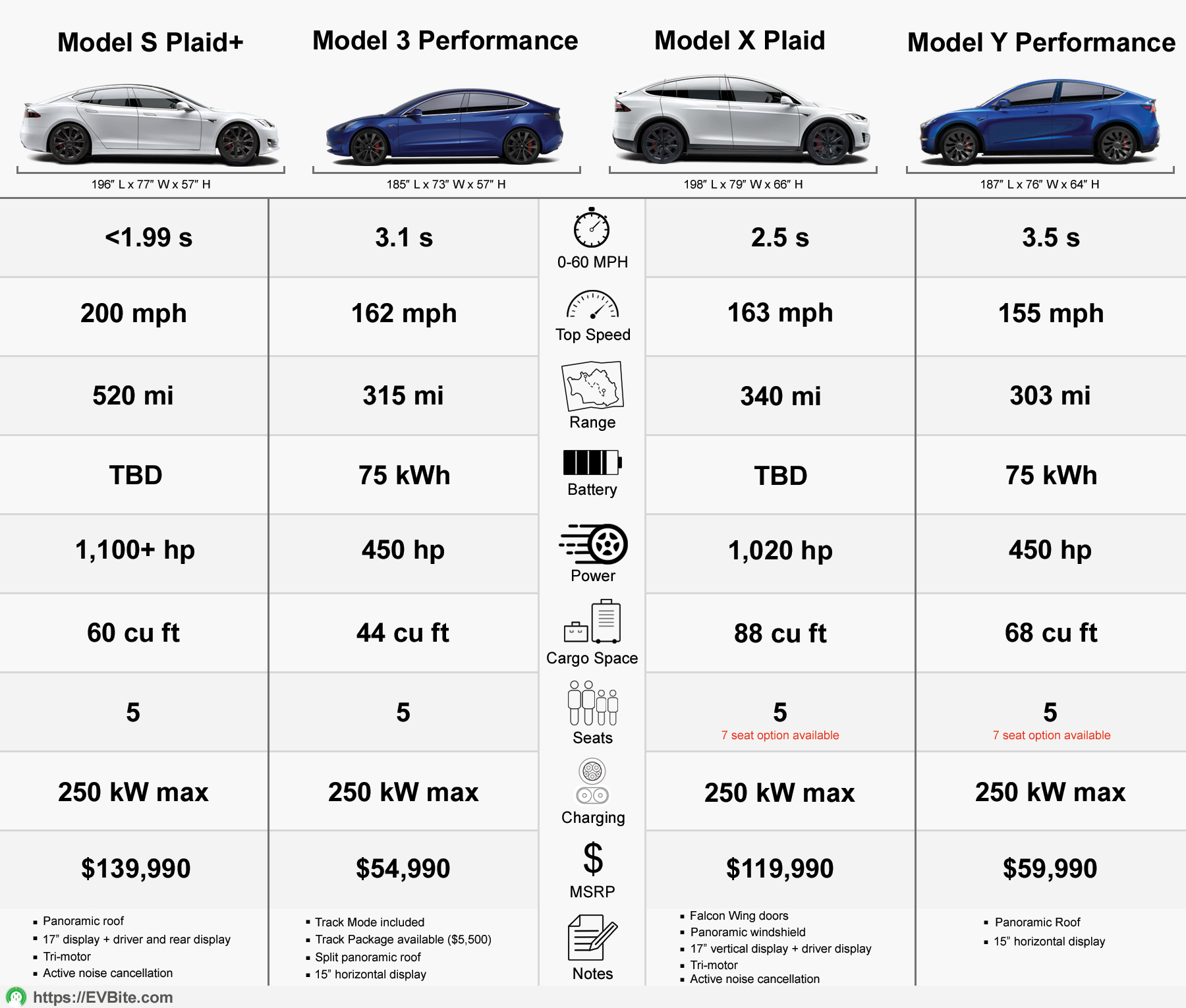
Its interior was dominated by a colossal 17-inch touchscreen, a radical departure from traditional dashboards, serving as the central hub for navigation, media, vehicle controls, and diagnostics. This screen wasn’t just big; it was the interface to an entirely new kind of car, one that received regular over-the-air (OTA) software updates, adding new features, improving performance, and fixing bugs, much like a smartphone. Performance variants, particularly the “Plaid” models, showcase incredible acceleration, utilizing advanced electric motor technology and thermal management to achieve supercar-rivaling 0-60 mph times, largely attributed to multiple high-performance electric motors and sophisticated power delivery systems. Autopilot hardware, comprising cameras, radar, and ultrasonic sensors, was integrated early on, laying the foundation for Tesla’s ambitious autonomous driving aspirations.
Model X: The Falcon Wing SUV
Following the success of the Model S, Tesla introduced the Model X in 2015, translating the Model S’s technological prowess into an SUV form factor. The Model X stands out not just for its performance but for its unique and technologically complex features. The most iconic are its “Falcon Wing” doors. While visually striking, these doors are engineering marvels, designed with multiple hinges and ultrasonic sensors to open in tight parking spaces, offering easier access to the second and third rows. This complex mechanism required sophisticated software and sensor integration to ensure safe and reliable operation.
Beyond the doors, the Model X inherited much of the Model S’s high-tech DNA, including the large central touchscreen, robust battery architecture, and advanced powertrain options. It also introduced innovations like the industry’s first true HEPA air filtration system, designed to protect occupants from biological and chemical threats – a feature more akin to aerospace technology than automotive. Its panoramic windshield, extending over the front occupants, offered an unparalleled field of vision, enabled by advanced glass manufacturing techniques. Like the Model S, the Model X emphasized safety through its rigid body structure and comprehensive sensor suite, earning top safety ratings.
Mass Market Disruption and Everyday Innovation
With the success of its premium models, Tesla turned its attention to making electric vehicles accessible to a wider audience, catalyzing the mass adoption of EVs. This shift required innovative manufacturing processes and smart technological design to bring down costs without sacrificing performance, safety, or the signature Tesla experience.
Model 3: Tesla’s Accessible Electric Vision
Launched in 2017, the Model 3 was envisioned as Tesla’s mass-market vehicle, designed to be more affordable while still delivering the brand’s core technological advantages. Its design philosophy centered on minimalism and efficiency. The interior, famously devoid of traditional gauges, relies almost entirely on a single horizontal 15-inch touchscreen for all information and controls. This bold decision simplified the manufacturing process and enabled more efficient software-driven control of vehicle functions.
Technologically, the Model 3 introduced innovations focused on cost reduction and scalability. Its battery pack, though smaller than the Model S, was highly optimized for energy density and cost, utilizing different cell chemistries (such as LFP in standard range models) to balance performance and affordability. The body structure emphasized safety and manufacturing efficiency, pioneering methods like “gigacasting” (though more extensively used in Model Y and Cybertruck) to reduce part count and assembly complexity. The Model 3’s advanced sensor suite for Autopilot and FSD was standard, offering a sophisticated driver-assistance platform at a more attainable price point, solidifying Tesla’s commitment to software-defined vehicles accessible to a broader consumer base.
Model Y: The Compact Electric SUV for the Masses
The Model Y, unveiled in 2019 and sharing approximately 75% of its components with the Model 3, quickly became one of the best-selling EVs globally. It leveraged the Model 3’s proven platform, battery technology, and software architecture, but adapted it to a more versatile compact SUV format. This commonality allowed for significant manufacturing efficiencies and faster scalability.
From a technology perspective, the Model Y further refined manufacturing processes. It was a primary vehicle for the implementation of Gigacasting, a revolutionary manufacturing technique where large parts of the vehicle’s underbody are cast as single pieces. This drastically reduces the number of individual parts, welds, and assembly steps, leading to lighter, stronger structures and significant cost savings. The Model Y also introduced an updated heat pump system, significantly improving cold-weather efficiency and range, a critical technology for EV practicality in diverse climates. Its versatile interior, with optional third-row seating, demonstrated how Tesla could blend utility with its technological prowess, all while maintaining impressive performance and range figures.
Redefining Automotive Boundaries: Future-Forward Vehicles
Tesla isn’t content with merely perfecting the existing vehicle categories. The company consistently explores new frontiers, introducing vehicles that challenge conventional wisdom about automotive design, utility, and performance. These future-forward models showcase Tesla’s commitment to radical innovation and its long-term vision for sustainable transport.
Cybertruck: The Apocalyptic Electric Pickup
The Cybertruck, unveiled in 2019 with initial deliveries starting in late 2023, is perhaps Tesla’s most radical departure from traditional automotive design. It’s a pickup truck reimagined through a lens of extreme durability and utility, heavily influenced by science fiction. Its most striking technological aspect is its “exoskeleton” design. The ultra-hard 30X cold-rolled stainless-steel exterior forms the primary structural component of the vehicle, eliminating the need for a separate frame. This material, notoriously difficult to stamp and form, dictated the Cybertruck’s angular, unpainted aesthetic but offers exceptional dent and corrosion resistance.
Beneath the resilient exterior lies a host of advanced technologies. The Cybertruck is the first Tesla to utilize an 800-volt electrical architecture, enabling faster charging and more efficient power delivery to its multiple electric motors. It features steer-by-wire technology, allowing for variable steering ratios and enhanced maneuverability, particularly with its rear-wheel steering. Adaptive air suspension with significant travel provides excellent ground clearance and ride comfort across various terrains, adjustable on the fly. Its “Vault” bed, made from composite materials, integrates a powered tonneau cover and a built-in ramp, emphasizing practicality and security for tools and cargo. The Cybertruck represents a bold experiment in material science, manufacturing, and vehicle dynamics, pushing the boundaries of what a utility vehicle can be.
Roadster: The Hypercar Reimagined
First teased in 2017 with a second-generation prototype, the new Tesla Roadster aims to redefine the hypercar segment. While still in development, the promised specifications are nothing short of astounding, pushing the absolute limits of electric vehicle performance. With a claimed 0-60 mph time of 1.9 seconds, a quarter-mile in 8.8 seconds, and a top speed exceeding 250 mph, the Roadster promises to be one of the fastest production cars ever made.
These figures are achievable through a combination of lightweight construction, advanced aerodynamics, and an extreme powertrain featuring three electric motors (one front, two rear) delivering immense torque vectoring capabilities. Its massive battery pack, projected at 200 kWh, aims for an unprecedented 620 miles of range, showcasing advancements in battery energy density and efficiency. Furthermore, Elon Musk has famously discussed a “SpaceX package” that would incorporate cold-gas thrusters for even more extreme acceleration and handling, a concept directly bridging automotive and rocket technology, demonstrating Tesla’s unconstrained approach to engineering and performance. The Roadster is a statement car, a technological demonstrator of how far electric propulsion can be pushed.
Core Technologies Unifying the Tesla Experience
Beyond individual models, a set of foundational technologies underpins every Tesla vehicle, defining the core user experience and setting them apart from competitors. These integrated systems are central to Tesla’s vision of a technologically advanced, software-defined vehicle.
Autopilot and Full Self-Driving (FSD): The AI-Driven Future
Tesla’s Autopilot system and the more advanced Full Self-Driving (FSD) capability are among the most talked-about and technologically complex aspects of its vehicles. At its core, Autopilot is an advanced suite of driver-assistance features, leveraging an array of external cameras, ultrasonic sensors, and (historically) radar to perceive the vehicle’s surroundings. The system uses a powerful on-board computer with custom-designed neural network chips to process this vast amount of data in real-time.
FSD builds upon this hardware, utilizing sophisticated artificial intelligence and machine learning algorithms to navigate complex urban environments, react to traffic signals, execute turns, and handle intersections. Tesla’s approach relies heavily on “data factories” – vehicles continuously collecting real-world driving data which is then used to train and refine its neural networks. This iterative process, combined with frequent OTA software updates, means FSD is constantly learning and evolving, pushing the boundaries of autonomous technology and aiming towards true Level 5 autonomy, where human intervention is no longer required.
Battery Technology and Charging Infrastructure
Tesla’s success is inextricably linked to its prowess in battery technology. From pioneering large-scale battery pack construction to developing sophisticated battery management systems (BMS), Tesla has continuously pushed the envelope. Its vehicles utilize various cell chemistries, including NCA (nickel-cobalt-aluminum) for performance and NMC (nickel-manganese-cobalt) for general use, and more recently, LFP (lithium iron phosphate) for standard range models, balancing energy density, cost, and longevity. The introduction of 4680 battery cells, with their larger format and structural battery pack design, promises further improvements in range, power, and manufacturing efficiency by integrating the battery directly into the vehicle’s structure.
Equally crucial is the proprietary Supercharger network. This global infrastructure of high-speed DC fast chargers is a critical technological asset, enabling seamless long-distance travel for Tesla owners. With V3 and V4 Superchargers now delivering up to 250 kW or more, vehicles can add hundreds of miles of range in minutes, showcasing advancements in charging technology and grid integration. This network, combined with destination chargers and home charging solutions, provides a comprehensive and convenient charging ecosystem unmatched by most competitors.
Over-the-Air (OTA) Software Updates: An Ever-Evolving Machine
One of Tesla’s most revolutionary technological contributions is the concept of the “software-defined vehicle,” primarily facilitated by comprehensive over-the-air (OTA) software updates. Unlike traditional cars that largely retain their features from the factory, a Tesla continuously evolves. These updates regularly introduce new features (like “Track Mode” or “Dog Mode”), improve existing functionalities (such as range, charging speed, or Autopilot performance), enhance security, and even unlock more power.
This capability transforms the ownership experience, turning the car into a dynamic, ever-improving technology platform. It also allows Tesla to gather extensive diagnostic data, often enabling proactive service and remote troubleshooting. The ability to deploy updates globally and instantaneously not only extends the useful life and value of the vehicle but also fundamentally changes the relationship between manufacturer and owner, making the car less of a static product and more of a continuously upgraded device.
The Broader Technological Impact of Tesla Models
Tesla’s models have done more than just offer new vehicles; they have catalyzed a technological revolution across the entire automotive industry, setting new benchmarks and accelerating an inevitable shift towards a more sustainable future.
Driving EV Adoption and Innovation
The technological innovations embedded in Tesla models have directly influenced the rapid acceleration of EV adoption. By demonstrating that electric vehicles could be exciting, high-performing, long-range, and technologically superior, Tesla shattered preconceived notions about EVs being slow, limited, or impractical. This success has compelled legacy automakers worldwide to invest massively in their own electric vehicle research and development, effectively speeding up the global transition away from fossil fuels. Tesla’s technological leadership in areas like battery density, motor efficiency, and thermal management has pushed competitors to innovate faster, benefiting the entire EV ecosystem.

The Software-Defined Vehicle Paradigm
Perhaps Tesla’s most enduring technological legacy is the popularization of the software-defined vehicle (SDV). By integrating deep software control over every aspect of the car – from infotainment and navigation to powertrain management, safety systems, and autonomous driving – Tesla transformed the automobile from a purely mechanical device into a complex, connected computer on wheels. This paradigm shift means that vehicle features and capabilities are no longer fixed at the point of sale but can be continuously enhanced, customized, and improved throughout the car’s lifecycle through software. This approach has forced the entire industry to rethink vehicle architecture, development cycles, and the very nature of car ownership, placing software and connectivity at the forefront of automotive innovation.
In essence, understanding “what are the Tesla models” is to grasp the leading edge of automotive technology. Each vehicle is not just a mode of transport but a testament to how relentless innovation in battery science, artificial intelligence, software engineering, and manufacturing can converge to create a product that is environmentally sustainable, exhilarating to drive, and perpetually evolving.
aViewFromTheCave is a participant in the Amazon Services LLC Associates Program, an affiliate advertising program designed to provide a means for sites to earn advertising fees by advertising and linking to Amazon.com. Amazon, the Amazon logo, AmazonSupply, and the AmazonSupply logo are trademarks of Amazon.com, Inc. or its affiliates. As an Amazon Associate we earn affiliate commissions from qualifying purchases.