
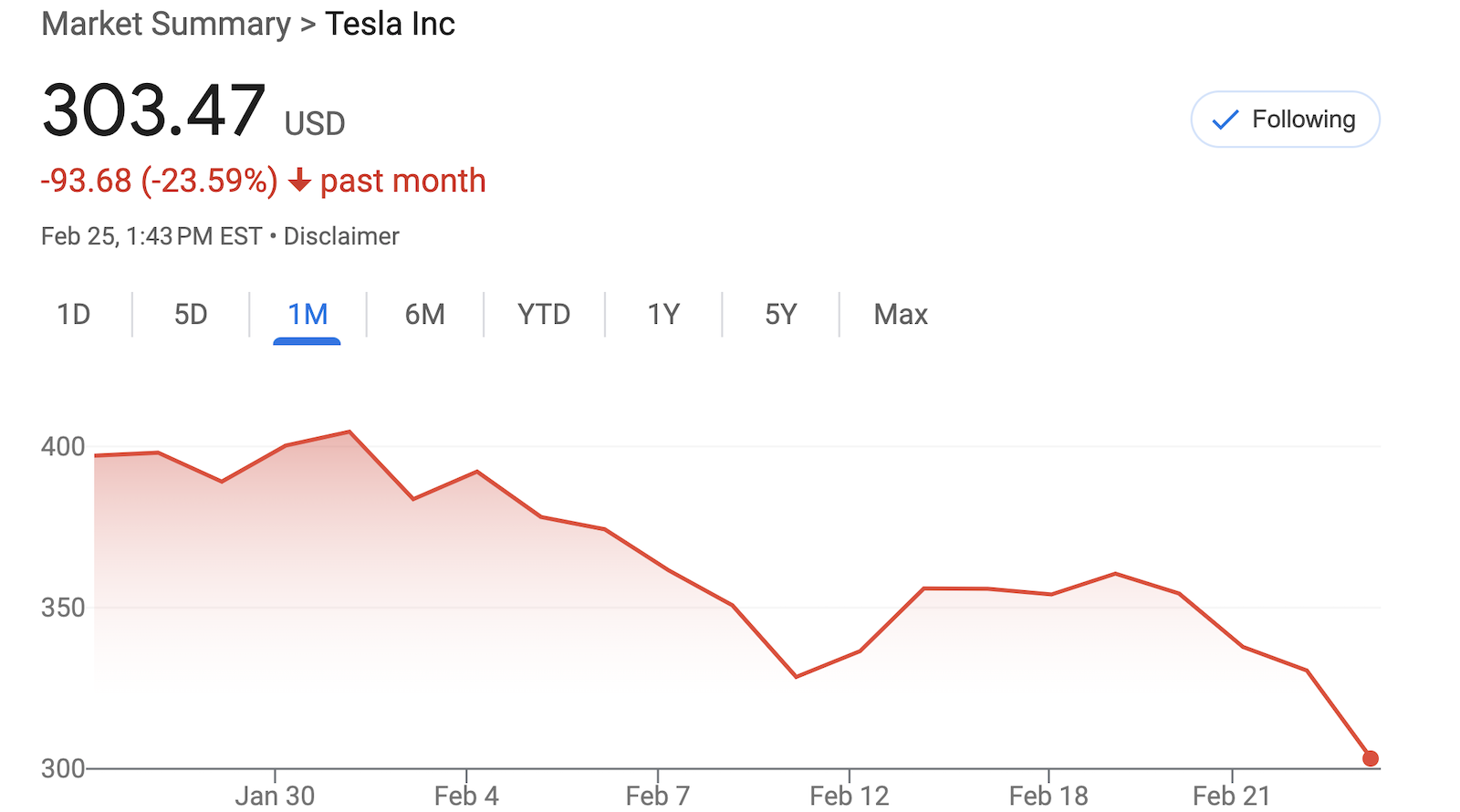
Tesla, once the darling of the stock market and a beacon for futuristic growth, has seen its stock price experience significant volatility, often trending downwards in recent periods. For investors who rode the exhilarating wave of its meteoric rise, this decline prompts crucial questions about its underlying causes and future prospects. From a pure investment perspective, understanding the confluence of macroeconomic shifts, intensifying competition, internal operational challenges, and a re-evaluation of its sky-high valuation is paramount. This analysis delves into the financial intricacies behind Tesla’s stock performance, offering insights for both current and prospective investors in the dynamic automotive and technology sectors.
Navigating Macroeconomic Headwinds and Market Sentiment
The broader economic environment plays an undeniable role in the performance of any stock, and Tesla is no exception. Growth stocks, in particular, are highly sensitive to shifts in monetary policy and general market sentiment. The recent global economic landscape has presented a challenging backdrop that has directly impacted investor appetite for high-growth, high-valuation companies like Tesla.
The Impact of Rising Interest Rates on Growth Stocks
One of the most significant macroeconomic factors affecting Tesla’s stock decline has been the aggressive stance taken by central banks worldwide, particularly the U.S. Federal Reserve, in raising interest rates. For years, an era of ultra-low interest rates fueled a boom in growth stocks, as low borrowing costs and a lack of attractive fixed-income alternatives made speculative investments more appealing. However, as interest rates climb, the cost of capital increases, making it more expensive for companies to borrow and invest. More crucially, higher rates reduce the present value of future earnings.
Growth companies like Tesla derive a substantial portion of their valuation from projected future profits, often many years down the line. When interest rates rise, the discount rate used to calculate the present value of these distant earnings increases, effectively diminishing their current worth. This phenomenon disproportionately affects stocks with high price-to-earnings (P/E) ratios and limited immediate profitability, as their future growth potential becomes less valuable in today’s terms. Investors begin to rotate out of long-duration assets (stocks with distant earnings potential) into shorter-duration assets or safer fixed-income instruments that now offer more attractive yields. For Tesla, whose valuation often priced in exponential growth far into the future, this shift in the cost of capital environment has necessitated a significant re-rating of its stock.
Broader Market Corrections and Risk Aversion
Beyond specific interest rate impacts, the overall market sentiment has turned decidedly more cautious. Fears of a looming recession, persistent inflation, geopolitical instability, and supply chain disruptions have collectively fostered an environment of risk aversion. During such periods, investors tend to liquidate riskier assets and move towards safer havens, such as cash, government bonds, or defensive sectors with stable dividends and predictable earnings.
Tesla, despite its market leadership and strong brand, is still perceived as a growth-oriented, cyclical stock. Its fortunes are closely tied to consumer discretionary spending, which is highly vulnerable during economic slowdowns. When a broad market correction occurs, even fundamentally strong companies can see their stock prices decline as part of a wider de-risking trend. Furthermore, a substantial portion of Tesla’s historical gains was driven by speculative fervor and retail investor enthusiasm. In a downturn, this speculative capital often recedes quickly, exacerbating downward price movements. The prevailing “flight to quality” means that investors are prioritizing balance sheet strength, consistent free cash flow, and proven profitability over aggressive expansion and potential future market dominance, creating a challenging environment for a stock like Tesla that traditionally embodies the latter.
Intensifying Competition and Shifting EV Landscape
Tesla once enjoyed an almost unassailable lead in the electric vehicle (EV) market. Its technological prowess, innovative design, and early market entry gave it a significant first-mover advantage. However, the EV landscape has rapidly evolved, with new and formidable competitors emerging from all corners of the automotive world. This intensifying competition is exerting immense pressure on Tesla’s market share, pricing power, and, ultimately, its profitability.
The Rise of Traditional Automakers and New Entrants
For years, established automotive giants were slow to transition to EVs, allowing Tesla to capture significant market share and mindshare. That era is definitively over. Major traditional automakers like Ford, General Motors, Volkswagen, Hyundai, and Kia have invested billions into their EV platforms, launching compelling models that directly compete with Tesla in various segments. Vehicles such as the Ford F-150 Lightning, Mustang Mach-E, Rivian R1T/R1S, Hyundai Ioniq 5, and Kia EV6 are not only gaining critical acclaim but also demonstrating robust demand.
These legacy automakers bring immense manufacturing scale, extensive dealer networks, established supply chains, and decades of brand loyalty—advantages that are proving increasingly difficult for Tesla to overcome. Furthermore, new EV-only startups, many backed by significant capital, are also entering the fray, offering innovative designs and niche market solutions. In China, a burgeoning and highly competitive EV market is dominated by domestic players like BYD, Nio, Xpeng, and Li Auto, making it challenging for Tesla to maintain its leading position without aggressive pricing strategies. This crowded market means that Tesla’s ability to dictate prices and capture premium margins is diminishing.
Pricing Pressures and Margin Compression
One of the clearest indicators of intensifying competition is the pressure on pricing. For years, Tesla could command premium prices due to its superior technology, range, charging infrastructure, and brand exclusivity. However, as competitors offer increasingly competitive alternatives, Tesla has been forced to initiate significant price cuts across its model lineup, particularly in key markets like China and the U.S. While these price reductions might stimulate demand in the short term, they come at the cost of profit margins.
Tesla’s gross profit margins have historically been a point of strength, often exceeding those of traditional automakers. However, with repeated price cuts, particularly on its high-volume Model 3 and Model Y, these margins have begun to compress. Investors are acutely sensitive to margin erosion because it directly impacts a company’s bottom line and cash flow generation. The expectation was that Tesla would achieve economies of scale and automation that would expand margins, not shrink them. The necessity of sacrificing profitability for market share retention suggests a more challenging competitive environment than many investors had anticipated, leading to a downward revision of future earnings projections and, consequently, stock valuation.
Innovation Pace and Feature Parity
While Tesla remains a leader in several technological aspects, particularly battery technology and autonomous driving software, its competitive moat based purely on innovation is shrinking. Competitors are rapidly catching up, not just in battery range and charging speeds, but also in advanced driver-assistance systems (ADAS), infotainment, and overall vehicle quality. The ‘Full Self-Driving’ (FSD) beta, while advanced, has faced regulatory scrutiny and remains a work in progress, failing to deliver the fully autonomous experience that many investors had hoped for by now.
The market is also waiting for Tesla’s next major product cycle. While the Cybertruck and Roadster are anticipated, their delays and niche appeal mean that the core volume-driving models are aging. As other manufacturers roll out fresh designs and compelling features, the perception of Tesla’s cutting-edge advantage may diminish. From an investment perspective, if Tesla’s innovation pace isn’t translating into new revenue streams or market share gains, or if its existing technology isn’t delivering the expected breakthroughs, it calls into question its long-term growth trajectory and justifies a re-evaluation of its premium valuation.
Internal Challenges and Operational Scrutiny

Beyond external market forces and competitive pressures, Tesla has also faced its share of internal operational challenges and leadership-related concerns that have weighed on investor confidence and stock performance. While many of these are characteristic of a rapidly growing, innovative company, their persistent nature and impact on financial results cannot be ignored.
Production Bottlenecks and Delivery Hurdles
Despite building new gigafactories in Texas and Berlin, Tesla has continued to grapple with production ramp-up issues and supply chain constraints. While these challenges are not unique to Tesla in the current global economic climate, they directly impact the company’s ability to meet ambitious delivery targets and capitalize on demand. Delays in scaling production for new models or encountering difficulties with specific components can lead to missed sales forecasts and increased operational costs.
Investors monitor production and delivery numbers closely as key performance indicators (KPIs) for a manufacturing company. Any shortfall or significant delay can signal underlying inefficiencies or unexpected hurdles that impact revenue and profitability. The promise of exponential growth through expanded manufacturing capacity only translates into higher stock value if that capacity is fully utilized and efficiently brings vehicles to market. Persistent issues in this area suggest that achieving economies of scale and consistent operational excellence remains a significant challenge, creating uncertainty around future financial projections.
Demand Softness and Inventory Buildup
Recent quarters have shown signs of softening demand for Tesla vehicles in various markets. This is partly attributable to the macroeconomic slowdown and increased competition, but also potentially to market saturation in certain segments and regions where early adopters have already purchased EVs. To counteract this, Tesla has resorted to aggressive price cuts and incentives, which, as discussed, impact margins.
Another related concern is the rising inventory levels. An increase in unsold vehicles sitting on lots can indicate that supply is beginning to outstrip demand, or that sales are not happening as quickly as production. High inventory levels can lead to increased carrying costs, further price reductions to clear stock, and a general signal of weakened market conditions. For a company that once struggled to keep up with demand, a shift towards managing inventory buildup is a significant operational and financial development that warrants investor scrutiny. It suggests that the “pull” of consumer demand might not be as strong or as elastic as it once was, raising questions about Tesla’s ability to maintain its growth trajectory without further impacting profitability.
Leadership Distractions and Governance Concerns
Elon Musk, Tesla’s CEO, is a polarizing figure whose actions and pronouncements often have a direct impact on the company’s stock. While his vision and drive have been instrumental in Tesla’s success, his frequent engagement with other ventures (e.g., SpaceX, Neuralink, X/Twitter) and controversial public statements have become a source of investor concern. The acquisition and subsequent management of Twitter (now X) have been particularly distracting, raising questions about Musk’s bandwidth and focus on Tesla.
Investors evaluate leadership as a critical component of a company’s investment thesis. When a CEO’s attention appears divided or when their public persona creates reputational risks for the company, it can erode investor confidence. Concerns about corporate governance—specifically, whether Musk’s various interests align perfectly with Tesla shareholder value, or if they divert crucial resources and executive time—are increasingly being voiced. While it’s challenging to quantify this impact precisely, the perception of distracted or controversial leadership can add a layer of uncertainty and risk premium to the stock, making it less attractive to institutional investors who prioritize stable and focused management.
Valuation Reset and Investor Expectations
Tesla’s stock commanded an extraordinary valuation for many years, driven by a narrative of disruptive innovation, exponential growth, and a future entirely reshaped by its technology. However, the market’s assessment of this narrative has undergone a significant recalibration. Investors are now applying a more conventional lens to Tesla’s financial prospects, leading to a substantial valuation reset.
The End of the “Growth at All Costs” Era
For a considerable period, especially during the ultra-low interest rate environment, the market rewarded “growth at all costs.” Companies like Tesla were valued primarily on their revenue growth rates, market share expansion, and future potential, often with less emphasis on current profitability or traditional valuation metrics. The expectation was that scale and market dominance would eventually translate into outsized profits.
However, with the shift in macroeconomic conditions and a broader market reassessment, the paradigm has changed. Investors are now prioritizing profitability, free cash flow generation, and sustainable earnings over aggressive, often loss-making, growth. The market is demanding a clearer path to robust and consistent profitability, rather than simply accepting growth for growth’s sake. For Tesla, whose stock often traded at many multiples higher than its automotive peers, this shift means that the premium once afforded for its growth story is being significantly reduced as financial discipline and demonstrable earnings become paramount.
Adjusting to a More Realistic Valuation
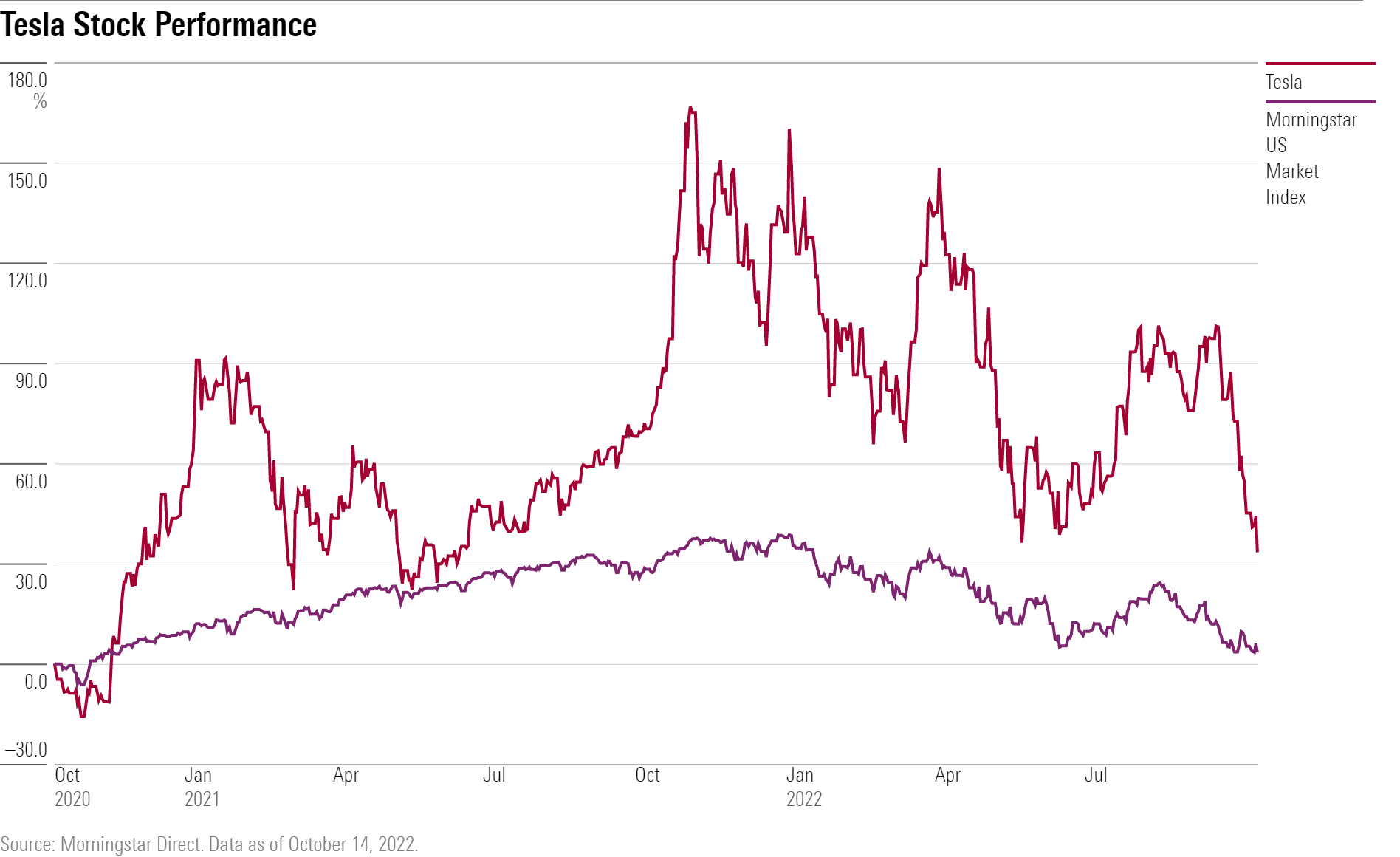
Tesla’s stock historically traded at P/E ratios that dwarfed those of established automakers, often being compared more to software or technology companies. While its technological edge and vertical integration justified some premium, the scale of that premium became increasingly difficult to justify as the company matured and faced more competition. At its peak, its market capitalization exceeded that of virtually all other major automakers combined, despite producing a fraction of their vehicles.
The current downward trend represents a move towards a more realistic valuation, bringing Tesla’s multiples closer to those of its peers or at least to a level that is more defensible given its current financial performance and market position. This recalibration involves investors scrutinizing traditional metrics like P/E ratios, price-to-sales, and enterprise value-to-EBITDA more rigorously. As the company transitions from a pure growth story to a maturing enterprise competing in a competitive industry, its valuation is naturally converging towards benchmarks relevant to its sector. This means less room for speculative premiums and a greater reliance on demonstrated financial results.
Future Growth Drivers and Execution Risks
While Tesla still has ambitious plans for future growth, including the Cybertruck, potential robotaxi services, Optimus humanoid robot, and energy storage solutions, the market is becoming more skeptical about the timelines, profitability, and execution risks associated with these ventures. The delays in the Cybertruck, the ongoing challenges with achieving full self-driving, and the highly speculative nature of concepts like robotaxis mean that investors are now less willing to price in these future growth drivers as immediate certainties.
Each new product or service represents significant capital expenditure, R&D costs, and execution risk. The market is demanding clearer roadmaps, more tangible progress, and a higher probability of successful commercialization before assigning significant valuation premiums. The burden of proof has shifted: Tesla must now demonstrate not just innovation, but also profitable scalability for its future endeavors. Any perceived missteps or extended delays in these areas will directly impact investor confidence in Tesla’s ability to maintain its historical growth rates and justify its valuation in the coming years.
In conclusion, the decline in Tesla’s stock is not attributable to a single factor but rather a complex interplay of macroeconomic forces, intense competitive pressures, internal operational challenges, and a fundamental re-evaluation of its investment thesis. For investors, understanding these intertwined dynamics is crucial for making informed decisions in a market that is increasingly prioritizing financial fundamentals and sustainable profitability over speculative growth narratives.
aViewFromTheCave is a participant in the Amazon Services LLC Associates Program, an affiliate advertising program designed to provide a means for sites to earn advertising fees by advertising and linking to Amazon.com. Amazon, the Amazon logo, AmazonSupply, and the AmazonSupply logo are trademarks of Amazon.com, Inc. or its affiliates. As an Amazon Associate we earn affiliate commissions from qualifying purchases.