
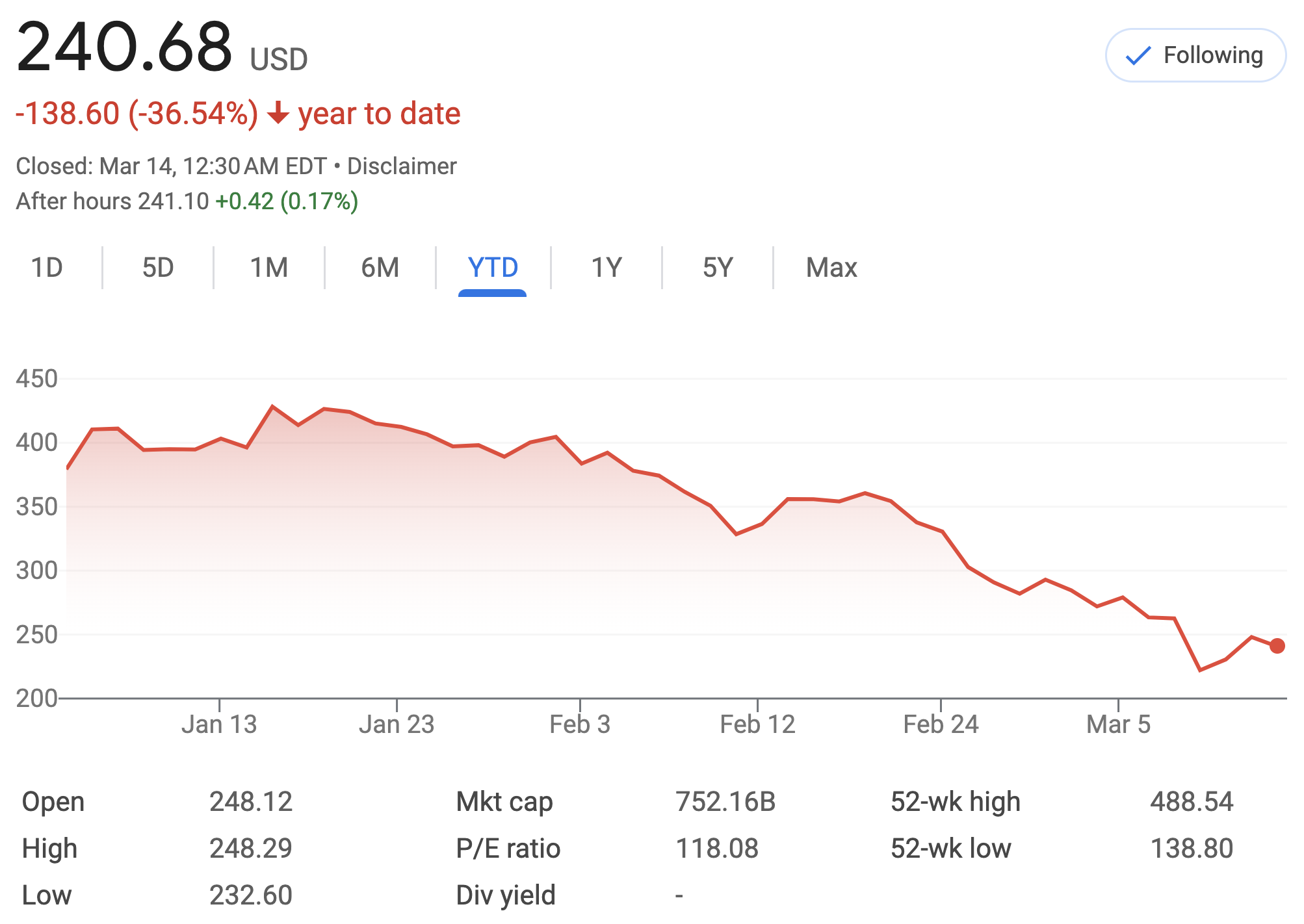
Understanding the current and prospective value of a prominent company like Tesla (TSLA) is a cornerstone of informed investing. Tesla’s stock price is not merely a number; it’s a dynamic reflection of market sentiment, fundamental company performance, macroeconomic factors, and future expectations. For both seasoned investors and curious onlookers, dissecting what drives TSLA’s valuation provides invaluable insights into the broader equity market, particularly within the innovative and often volatile technology sector. This article delves into the intricate financial landscape surrounding Tesla’s stock, offering a professional, insightful, and engaging perspective exclusively within the realm of money and investing.
Understanding TSLA as an Investment Vehicle
Tesla, Inc. (TSLA) stands as a uniquely influential stock in the global market, often generating as much debate as it does revenue. For investors, evaluating TSLA requires looking beyond its revolutionary products and charismatic leadership to scrutinize its financial underpinnings and market position.
The Market’s Perception of Tesla
Tesla’s journey from a niche electric vehicle manufacturer to a global powerhouse has been marked by extraordinary stock performance and significant volatility. The market’s perception of Tesla is often bifurcated: some view it as a tech innovator with boundless potential in EVs, AI, and energy, justifying a premium valuation. Others see a car manufacturer whose valuation has far outstripped its fundamentals compared to traditional automakers. This dichotomy fuels intense trading activity and large price swings, making TSLA a fascinating case study in investor psychology and market efficiency. Its stock price reflects not just current earnings but also speculative growth projections, particularly in nascent technologies like full self-driving (FSD) and energy storage solutions.
Key Metrics for Evaluating Tech Stocks
When assessing a stock like TSLA, traditional valuation metrics are critical but often viewed through a tech-centric lens. Investors typically look at:
- Revenue Growth: Tesla consistently reports impressive top-line growth, driven by increasing vehicle deliveries and expansion into new markets and product lines (e.g., energy storage, services).
- Profitability (GAAP vs. Non-GAAP): While gross margins on vehicles are important, understanding the impact of regulatory credits and other income streams on net profitability is crucial. Investors often scrutinize free cash flow generation as a sign of financial health.
- Deliveries and Production Capacity: These are direct indicators of operational execution and future revenue potential, often closely watched by analysts.
- Research & Development (R&D) Spending: For a company focused on innovation, R&D spend as a percentage of revenue indicates commitment to future products and technological leadership.
- Market Share: Monitoring Tesla’s market share in the rapidly growing EV segment provides insight into its competitive standing against both legacy automakers and new entrants.
- Price-to-Earnings (P/E) Ratio and Price-to-Sales (P/S) Ratio: These are commonly used, though often contentious for high-growth tech stocks, as future earnings are heavily discounted into current prices.
The Role of Innovation vs. Valuation
A significant challenge in valuing TSLA lies in balancing its groundbreaking innovation against conventional financial valuation models. Tesla is not just an automotive company; it’s also deeply involved in battery technology, AI, software, and renewable energy. This multi-faceted nature means that traditional auto industry P/E ratios often don’t fully capture its potential. Investors frequently assign a “growth premium” for its disruptive technologies and potential for market expansion beyond just vehicles, leading to higher valuation multiples than industrial counterparts. The ongoing debate revolves around whether the current stock price accurately reflects the present value of these future innovations or if it’s speculative exuberance.
Drivers Behind Tesla’s Stock Valuation
Tesla’s stock price is a complex interplay of internal execution, external market forces, and the unique influence of its CEO. Understanding these drivers is essential for any investor seeking to analyze TSLA.
Production & Delivery Growth
At the core of Tesla’s financial performance lies its ability to scale production and deliver vehicles globally. Quarterly production and delivery numbers are perhaps the most anticipated announcements, directly impacting revenue, profitability, and investor confidence. Each new Gigafactory, each production milestone, and each expansion into a new geographic market reinforces the growth narrative that underpins Tesla’s high valuation. Delays or shortfalls, conversely, can lead to sharp corrections in the stock price, as seen when supply chain issues or production ramp-up challenges emerge. The efficiency and speed with which Tesla can bring new models to market and expand its manufacturing footprint are critical long-term value drivers.
Regulatory Credits and Profitability
For many years, regulatory credits (zero-emission vehicle or ZEV credits) played a significant role in Tesla’s profitability, especially in quarters where its automotive gross margins were tighter. These credits, sold to other automakers to help them meet emissions standards, provided a substantial boost to Tesla’s net income. While the reliance on these credits has diminished as vehicle sales volumes and core profitability have surged, they remain an important factor to consider in analyzing the quality and sustainability of Tesla’s earnings. Investors watch for trends in these credits to discern the underlying profitability from vehicle sales alone versus supplementary income streams.
Competition and Market Share
The electric vehicle market is rapidly evolving, with increasing competition from both established legacy automakers (e.g., Mercedes, BMW, Ford, GM) and new EV startups (e.g., Rivian, Lucid). Tesla’s ability to maintain and grow its market share in key segments is paramount. Its competitive advantages include its superior battery technology, extensive Supercharger network, brand recognition, and advanced software capabilities. However, as rivals launch compelling EV models with competitive pricing and features, Tesla faces increasing pressure. Analyst reports often focus on Tesla’s market share in various regions (e.g., US, Europe, China) as a proxy for its long-term growth prospects and pricing power, which directly influence future earnings and thus, the stock’s valuation.
Elon Musk’s Influence and Investor Sentiment
Perhaps uniquely among public companies of its size, Tesla’s stock price is heavily influenced by its CEO, Elon Musk. His vision, bold pronouncements, and often unconventional communication style (especially on social media) can significantly sway investor sentiment. Announcements regarding new product initiatives (e.g., Cybertruck, Optimus robot), updates on FSD development, or even his personal activities and stock sales/purchases, can cause substantial short-term movements in TSLA’s share price. This “Musk premium” or “Musk discount” adds an extra layer of complexity and volatility to the stock, making it an investment heavily intertwined with the perception of its founder and leader. His ability to rally a devoted fan base and attract institutional capital is a powerful, if unpredictable, force behind the stock’s performance.
Historical Performance and Volatility Analysis

Tesla’s stock history is characterized by periods of explosive growth punctuated by significant corrections, reflecting its journey as a disruptive innovator in rapidly changing markets.
A Decade of Rapid Growth and Corrections
Since its IPO in 2010, TSLA has delivered astronomical returns for early investors, far outperforming broader market indices. This growth has been fueled by increasing EV adoption, successful product launches (Model S, Model 3, Model Y), manufacturing expansion, and growing investor confidence in its long-term vision. However, this ascent has not been linear. The stock has experienced multiple sharp pullbacks, sometimes exceeding 30-50% from peak levels, often triggered by production bottlenecks, profitability concerns, regulatory scrutiny, or broader market downturns. These corrections, while challenging for short-term traders, have often presented opportunities for long-term investors who believe in the company’s fundamental trajectory. Understanding this pattern of rapid gains followed by often equally rapid, though usually temporary, declines is crucial for managing expectations when holding TSLA.
Factors Contributing to High Volatility
Tesla’s stock exhibits higher volatility compared to many other large-cap companies for several reasons:
- Growth Stock Status: As a growth stock, TSLA is highly sensitive to interest rate changes and shifts in investor risk appetite. Higher interest rates can reduce the present value of future earnings, hitting growth stocks harder.
- High Short Interest: Historically, TSLA has been a heavily shorted stock, meaning a significant number of investors bet against its price going up. This creates potential for “short squeezes,” where a rapid increase in price forces short-sellers to buy back shares, further accelerating the rally.
- Event-Driven Trading: Product announcements, earnings reports, regulatory news, and tweets from Elon Musk often trigger substantial price movements, making it a favorite for day traders and algorithmic trading.
- Sentiment-Driven: Tesla’s passionate investor base and the polarizing views surrounding the company mean that sentiment plays an outsized role in its daily price movements, sometimes detached from immediate fundamentals.
Stock Splits and Their Impact
Tesla has executed multiple stock splits (e.g., a 5-for-1 split in August 2020 and a 3-for-1 split in August 2022). While a stock split does not change the fundamental value of a company or an investor’s total holding value (e.g., owning 5 shares at $100 after a split instead of 1 share at $500), it can have several practical impacts:
- Increased Accessibility: Lowering the per-share price makes the stock more accessible to retail investors who might be hesitant to buy a single share at a very high price. This can broaden the investor base.
- Enhanced Liquidity: More shares in circulation can lead to higher trading volumes and improved liquidity.
- Psychological Effect: There can be a positive psychological effect, as investors perceive the stock as “cheaper” and more affordable, potentially driving renewed buying interest.
- Inclusion in Indices: Lower share prices can sometimes make a stock more appealing for inclusion in certain market indices or ETFs that have per-share price constraints, further increasing demand.
Navigating Future Prospects and Investment Considerations
Investing in Tesla today involves weighing its substantial future potential against inherent risks and a valuation that already prices in significant growth.
Long-Term Growth Catalysts (AI, FSD, Energy)
Beyond vehicle sales, Tesla has several compelling long-term growth catalysts that excite investors:
- Artificial Intelligence (AI) and Full Self-Driving (FSD): The development of truly autonomous driving represents a massive potential revenue stream through software subscriptions and robotaxis. Tesla’s lead in collecting real-world driving data and developing its AI chips is a key differentiator.
- Energy Storage and Generation: Tesla Energy, with its Powerwall, Powerpack, and Megapack solutions, as well as solar offerings, positions the company as a major player in the renewable energy transition. This segment is expected to grow substantially as global energy infrastructure evolves.
- Robotics (Optimus): While nascent, Tesla’s foray into humanoid robotics through the Optimus project suggests ambitious long-term diversification into general-purpose AI and robotics, potentially unlocking entirely new markets.
- Gigafactory Expansion: Continued global expansion of its manufacturing footprint in new regions like Mexico or Southeast Asia will allow Tesla to tap into new markets and further scale production, driving future revenue growth.
Potential Headwinds and Risks (Competition, Geopolitics, Valuation)
Despite its promise, Tesla faces several significant headwinds and risks:
- Intensifying Competition: The EV market is becoming crowded. Traditional automakers are rapidly electrifying their fleets, and new EV startups are emerging. This could erode Tesla’s market share and pricing power.
- Geopolitical and Regulatory Risks: Operations in multiple countries expose Tesla to geopolitical tensions, trade disputes, and evolving regulatory environments, particularly in key markets like China.
- Supply Chain Disruptions: As a global manufacturer, Tesla remains vulnerable to supply chain issues for critical components like semiconductors and raw materials, which can impact production and margins.
- Valuation Concerns: Many analysts argue that TSLA’s valuation already reflects aggressive growth projections, leaving little room for error. Any significant slowdown in growth or failure to meet expectations could lead to substantial stock price corrections.
- Regulatory Scrutiny: Tesla faces ongoing scrutiny regarding its FSD capabilities, vehicle safety, and advertising practices, which could result in regulatory penalties or reputational damage.
Diversification and Risk Management for Investors
Given its high volatility and growth-stock characteristics, investors considering TSLA should prioritize diversification and robust risk management strategies:
- Portfolio Diversification: Avoid over-allocating to a single stock, especially one as volatile as Tesla. A diversified portfolio across various sectors, asset classes, and geographies can help mitigate concentration risk.
- Long-Term Perspective: Tesla is generally considered a long-term growth investment. Investors should be prepared for significant short-term fluctuations and focus on the company’s multi-year strategic execution rather than daily price movements.
- Dollar-Cost Averaging: For those accumulating TSLA shares, dollar-cost averaging (investing a fixed amount regularly) can help smooth out the impact of volatility by buying more shares when prices are low and fewer when prices are high.
- Understand Your Risk Tolerance: Evaluate your personal financial situation and risk tolerance before investing. Only invest capital you are comfortable potentially losing, especially in high-growth, high-volatility stocks.
- Stay Informed: Continuously monitor company news, earnings reports, competitive developments, and macroeconomic trends to make informed decisions about your investment.
Tools and Resources for Tracking TSLA and the Market
For investors keen on monitoring Tesla’s stock price and the broader financial landscape, a wealth of tools and resources are available, offering everything from real-time data to in-depth analysis.
Financial News Outlets and Analyst Reports
Reputable financial news sources are indispensable for staying current. Websites like Bloomberg, Reuters, The Wall Street Journal, Financial Times, CNBC, and Yahoo Finance provide real-time stock quotes, breaking news, market commentary, and company-specific updates. These platforms often feature articles discussing Tesla’s latest moves, competitive landscape, and regulatory challenges. Furthermore, institutional research firms (e.g., Goldman Sachs, Morgan Stanley, Wedbush Securities) publish detailed analyst reports on TSLA, offering price targets, earnings estimates, and buy/sell/hold recommendations. While these reports should be considered as one input among many, they can provide valuable insights from industry experts. Investor relations sections on Tesla’s official website also offer quarterly earnings call transcripts, investor decks, and SEC filings (10-K, 10-Q), which are primary sources of factual company information.
Brokerage Platforms and Analytical Tools
Modern brokerage platforms are powerful hubs for managing investments and conducting research. Platforms from brokers like Fidelity, Charles Schwab, Vanguard, Interactive Brokers, Robinhood, or eToro typically offer:
- Real-time Quotes and Charts: Detailed interactive charts with various technical indicators (moving averages, RSI, MACD) to analyze price trends.
- News Feeds: Integrated news directly relevant to TSLA from various financial media outlets.
- Fundamental Data: Access to key financial statements (income statement, balance sheet, cash flow), historical performance data, and valuation ratios.
- Analyst Ratings: Consolidated views from various analysts regarding Tesla’s stock.
- Watchlists and Alerts: Customizable watchlists to track TSLA and receive price alerts or news notifications.
- Screeners: Tools to filter stocks based on specific criteria, which can be useful for comparing Tesla against its peers.
Advanced tools might also include options chains, dark pool data, and institutional ownership information, providing a deeper dive for sophisticated investors.

Understanding Market Data and Indicators
To truly grasp “what’s Tesla’s stock price,” it’s vital to understand the context provided by broader market data and indicators:
- Overall Market Performance: The general direction of the major indices (S&P 500, Nasdaq Composite) often influences individual stock movements, especially for a large-cap growth stock like Tesla.
- Sector Performance: Tracking the performance of the automotive sector (especially EV pure-plays) and the broader technology sector helps contextualize TSLA’s movements.
- Economic Indicators: Macroeconomic data such as interest rate decisions, inflation reports, GDP growth, and consumer confidence can impact investor sentiment and liquidity, thereby affecting stock prices across the board, including Tesla.
- Volume: High trading volume alongside price movements can indicate stronger conviction behind those movements.
- Volatility Indices (e.g., VIX): A higher VIX often signals increased market uncertainty, which can lead to larger price swings in individual stocks.
- Short Interest: Monitoring the percentage of TSLA shares held short can offer clues about prevailing bearish sentiment and potential for short squeezes.
By utilizing these tools and integrating various data points, investors can develop a more holistic and informed perspective on Tesla’s stock price and make more strategic financial decisions within the dynamic investment landscape.