
In the vast and rapidly evolving landscape of modern technology, few companies exert as profound and pervasive an influence as NVIDIA. Far more than just a chipmaker, NVIDIA has emerged as a foundational force, an architect of the digital future, driving advancements across virtually every frontier of computing, from the immersive realms of gaming to the intricate complexities of artificial intelligence, high-performance computing, and autonomous systems. To ask “who is NVIDIA” is to embark on a journey through the very arteries of technological innovation, understanding how one company’s relentless pursuit of graphical excellence and parallel processing has redefined what’s possible in the digital age.
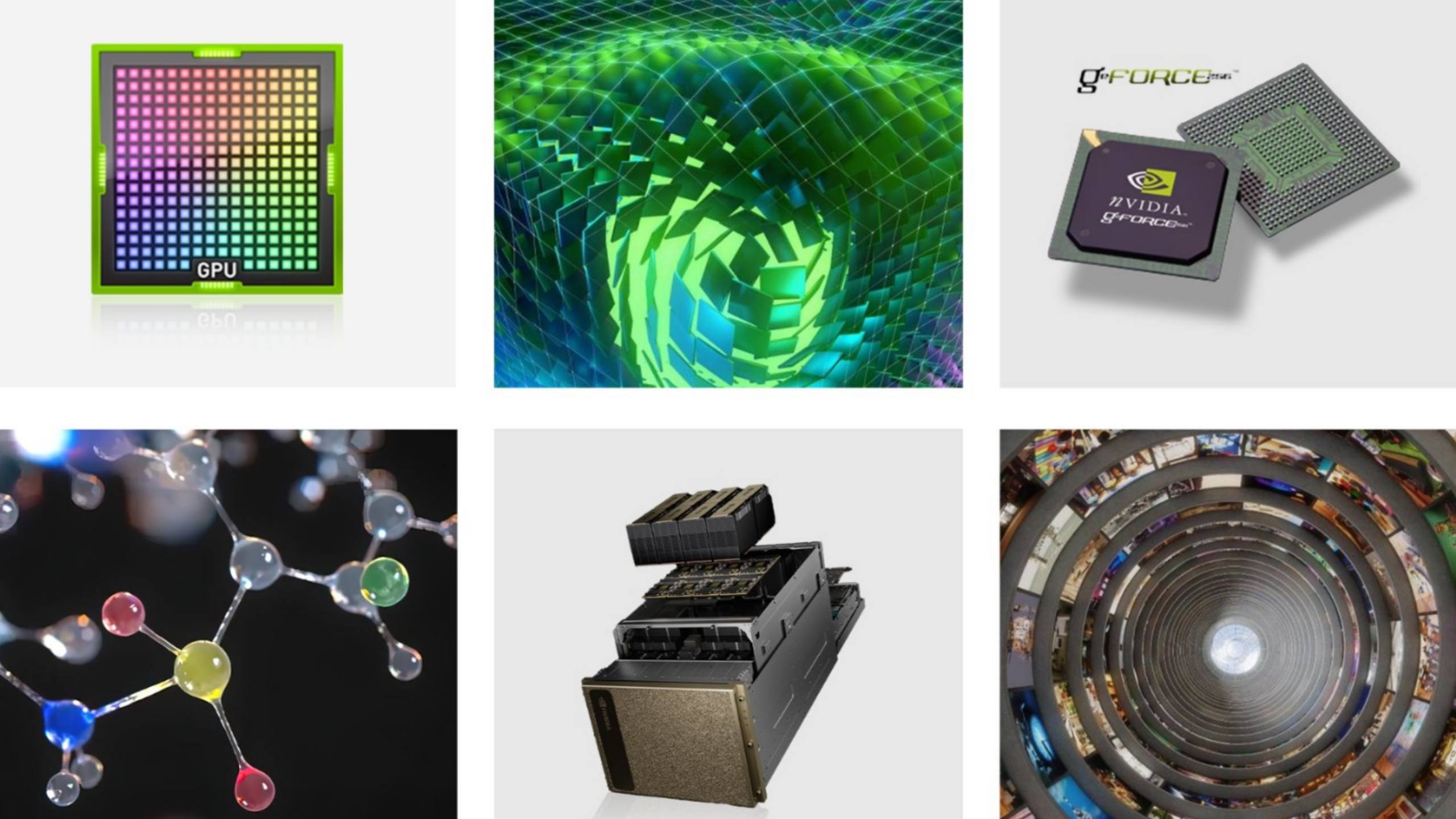
NVIDIA’s story is one of visionary leadership, audacious engineering, and a strategic pivot that transformed its core technology into a universal accelerator for the most demanding computational challenges. Founded in 1993 by Jensen Huang, Chris Malachowsky, and Curtis Priem, the company initially set out to bring 3D graphics to the masses. Over three decades, it has not only achieved that goal but has also become the indispensable backbone for the AI revolution, a pioneer in the metaverse, and a critical enabler of scientific discovery and industrial innovation. At its heart, NVIDIA is a technology company defined by its relentless innovation in graphics processing units (GPUs), software platforms, and entire accelerated computing systems designed to tackle the world’s most complex problems.
The Genesis of a Graphics Powerhouse
NVIDIA’s initial foray into the technology world was laser-focused on one ambitious goal: to bring high-quality 3D graphics to personal computers, a capability that was once the exclusive domain of expensive workstations. This early vision laid the groundwork for its future dominance and set the stage for a technological evolution that would ripple across industries.
Pioneering 3D Graphics
In the early to mid-1990s, PC graphics were rudimentary. While 2D interfaces were commonplace, realistic 3D rendering was largely absent from the consumer market. NVIDIA recognized this gaping void and committed itself to creating dedicated hardware that could accelerate the complex mathematical calculations required for real-time 3D graphics. Its early products, like the NV1 (released in 1995), showcased a departure from traditional approaches, aiming for a more integrated and powerful graphics solution. However, it was the TNT (TwiN Texel) series and, more significantly, the GeForce 256 (introduced in 1999) that truly solidified NVIDIA’s position. The GeForce 256 was controversially dubbed the “world’s first GPU” by NVIDIA, a claim that underscored its revolutionary integration of transform, clipping, lighting, and rendering capabilities onto a single chip. This monumental step not only unleashed a new era of visual fidelity and interactive experiences in PC gaming but also firmly established the Graphics Processing Unit (GPU) as a distinct and crucial component in computer architecture, laying the foundation for an entirely new industry.
From Niche to Mainstream Dominance
The success of the GeForce line propelled NVIDIA into the spotlight, making it a household name among PC gamers and enthusiasts. The continuous innovation in GPU architectures, with successive generations like GeForce 3, GeForce FX, and the eventual transition to unified shader architectures, pushed the boundaries of what was graphically possible. NVIDIA’s commitment to developing robust software drivers, developer tools, and API support (like DirectX and OpenGL) further cemented its ecosystem, making its GPUs the preferred choice for game developers and hardware manufacturers alike. This period saw NVIDIA not just creating faster graphics cards but also building a comprehensive platform that made cutting-edge visual experiences accessible and manageable. The company’s ability to consistently deliver performance improvements, combined with a strategic focus on supporting the gaming industry, transformed it from a niche hardware provider into a mainstream technology leader, essential for anyone seeking the best visual computing experience.
NVIDIA’s Technological Pillars: Beyond Gaming
While its roots are firmly in gaming, NVIDIA’s true identity as a technological titan emerged from a groundbreaking realization: the parallel processing power of the GPU could be harnessed for tasks far beyond rendering pixels. This insight led to a strategic pivot that unleashed the GPU’s potential on a vastly broader range of computational problems.
The CUDA Revolution: Parallel Computing Unlocked
The most significant turning point in NVIDIA’s history, and arguably in the history of modern computing, was the introduction of CUDA (Compute Unified Device Architecture) in 2006. CUDA was not just another hardware release; it was a parallel computing platform and programming model that allowed developers to use NVIDIA GPUs for general-purpose computing tasks. Prior to CUDA, GPUs were specialized hardware units controlled by graphics APIs. CUDA opened the floodgates, enabling programmers to write software that could leverage the thousands of processing cores within a GPU for highly parallelizable workloads, independent of graphics rendering.
This was a paradigm shift. Suddenly, tasks that traditionally took hours or days on conventional CPUs—like scientific simulations, complex data analysis, and intricate mathematical modeling—could be accelerated by orders of magnitude on GPUs. CUDA democratized high-performance computing, making supercomputing capabilities accessible to a wider array of researchers and engineers. It transformed the GPU from a graphics accelerator into a general-purpose parallel processor, laying the intellectual and technological groundwork for the revolution that was soon to follow.
Fueling the AI and Deep Learning Boom
The full impact of CUDA became dramatically evident with the rise of artificial intelligence (AI) and, more specifically, deep learning. Deep learning models, with their vast neural networks, require immense computational power, particularly during the training phase where they process massive datasets to learn patterns. The inherently parallel nature of neural network computations perfectly aligned with the architecture of NVIDIA GPUs and the capabilities of CUDA.
Researchers quickly discovered that GPUs could train deep learning models exponentially faster than CPUs. This acceleration was a critical factor in the rapid advancements seen in AI over the past decade. NVIDIA’s GPUs, paired with its CUDA platform, became the de facto standard for AI research and development. From image recognition and natural language processing to drug discovery and autonomous systems, NVIDIA’s technology has become indispensable. The company proactively invested in the AI ecosystem, providing libraries, frameworks, and specialized hardware (like the Tensor Core GPUs introduced with the Volta architecture) specifically optimized for AI workloads. This strategic alignment cemented NVIDIA’s position as the foundational technology provider for the AI revolution, making it a key enabler of every major breakthrough in the field.
Data Center and Enterprise Solutions
As AI gained momentum, the demand for GPU acceleration migrated from individual workstations to large-scale data centers. NVIDIA responded by expanding its focus to enterprise solutions, transforming data centers into “AI factories.” The company developed a comprehensive suite of hardware and software solutions tailored for data center deployment, including its Tesla (now part of the Data Center GPU family), Hopper, and Grace GPUs, along with integrated systems like the DGX Station and DGX SuperPOD. These systems provide immense computational power for AI training, inference, and high-performance computing (HPC) workloads at scale.
NVIDIA’s data center offerings are crucial for cloud service providers, large enterprises, and research institutions that rely on accelerated computing. Its networking technologies, acquired through the Mellanox acquisition, further enhance the performance of these data centers, ensuring that data can move between GPUs and storage systems with minimal latency. By providing not just chips, but entire computing platforms, software stacks, and networking solutions, NVIDIA has established itself as a critical infrastructure provider for the digital economy, underpinning everything from cloud computing services to specialized scientific research facilities.
Diversifying the Tech Portfolio
NVIDIA’s strategic vision extends beyond its core GPU products, encompassing a wide array of specialized platforms and ecosystems designed to bring accelerated computing to diverse industries and applications. This diversification underscores its commitment to pervasive technological influence.
Professional Visualization and Design
While gaming brought GPUs to the masses, NVIDIA has a long-standing commitment to professional markets, particularly in design, engineering, and content creation. The Quadro series (now often integrated into RTX professional GPUs) has been the gold standard for workstations, providing certified drivers and robust performance for demanding applications like CAD/CAM, digital content creation (DCC), medical imaging, and scientific visualization. These GPUs are engineered for precision, reliability, and long-term stability, critical for professionals whose livelihoods depend on accurate and uninterrupted performance.
More recently, NVIDIA has launched its RTX Studio program, bringing professional-grade capabilities to consumer laptops, and has heavily invested in its Omniverse platform. Omniverse is a collaborative 3D design and simulation platform that allows creators, designers, and engineers to connect various tools and work together on complex projects in real-time within a shared virtual space. This platform is not just about rendering; it’s about creating digital twins, simulating entire factories, designing next-generation products, and revolutionizing how industries approach visual computing and simulation.
Automotive and Autonomous Vehicles
One of NVIDIA’s most ambitious and impactful diversification efforts is in the automotive sector, specifically autonomous vehicles. Recognizing that self-driving cars require immense real-time processing power to perceive their environment, plan routes, and make decisions, NVIDIA developed specialized AI platforms. The Drive platform, powered by chips like Xavier, Orin, and the forthcoming Thor, serves as the “AI brain” for autonomous driving systems. These system-on-chips (SoCs) integrate multiple processing units, including GPUs, CPUs, and AI accelerators, to handle the vast amounts of sensor data (from cameras, radar, lidar) and execute complex AI algorithms required for safe and reliable autonomous operation.
NVIDIA is not just providing chips; it’s building an end-to-end development platform for the automotive industry, including simulation tools (like Drive Sim, built on Omniverse) and a comprehensive software stack for autonomous driving. This positions NVIDIA as a crucial partner for automakers and robotaxi companies, pushing the boundaries of what’s possible in mobility and safety.
Edge Computing and Robotics
The principles of accelerated computing and AI are also being applied at the “edge” – meaning on devices closer to the source of data generation, outside of traditional data centers. NVIDIA’s Jetson platform is a family of embedded AI computing modules designed for robotics, drones, smart cameras, and other intelligent edge devices. These compact, power-efficient modules bring the power of NVIDIA’s AI and GPU technology to situations where real-time processing, low latency, and autonomy are paramount.
From AI-powered industrial robots that can learn and adapt to dynamic environments to smart cities leveraging intelligent video analytics, Jetson enables a new generation of intelligent machines. This focus on edge computing is critical for applications where connectivity is limited, or immediate decisions are required, further solidifying NVIDIA’s role in orchestrating a more intelligent, automated world.
Shaping the Future of Technology
NVIDIA is not content to merely react to technological trends; it actively shapes them, envisioning a future where accelerated computing and AI are woven into the very fabric of every industry.
The Metaverse and Digital Twins with Omniverse
A significant part of NVIDIA’s future vision revolves around the metaverse and digital twins, primarily powered by its Omniverse platform. Beyond professional design, Omniverse is being positioned as the foundational technology for creating and interacting within persistent, simulated 3D worlds. These aren’t just for entertainment; they are vital for industrial applications, allowing companies to create highly accurate “digital twins” of physical assets, factories, or even entire cities. These digital twins can be used for simulation, optimization, predictive maintenance, and training, revolutionizing how products are designed, manufactured, and operated.
NVIDIA believes that the metaverse will be the next major computing platform, and Omniverse is its vehicle for providing the infrastructure, simulation capabilities, and AI required to build and interact within these complex virtual environments. This blend of graphics, AI, and physical simulation capabilities places NVIDIA at the forefront of what promises to be a transformative era for human-computer interaction and industrial operations.
The Era of Accelerated Computing
NVIDIA’s overarching philosophy is centered on the concept of accelerated computing. This isn’t just about faster chips; it’s about building entire systems—from specialized processors and interconnects to comprehensive software stacks and developer ecosystems—that drastically improve performance and energy efficiency for computationally intensive tasks. Their vision suggests that every data center will eventually become an “AI factory,” and every industry will leverage accelerated computing to drive innovation and efficiency.
The company continues to push the boundaries of chip architecture, with innovations like the Grace CPU Superchip (designed for HPC and AI) and the Hopper GPU architecture featuring advanced Tensor Cores and Transformer Engines. Their focus is on co-designing hardware and software to maximize throughput for AI, data analytics, and scientific computing, ensuring that the limits of what’s computationally possible are continuously expanded.
Challenges and the Road Ahead
Despite its dominant position, NVIDIA faces challenges. Intense competition from other chipmakers (Intel, AMD), the rise of custom AI accelerators from tech giants (Google’s TPUs, Amazon’s Trainium/Inferentia), and geopolitical factors influencing semiconductor supply chains are constant pressures. Ethical considerations surrounding AI and data privacy also present complex hurdles that the company, like the broader tech industry, must navigate responsibly.
However, NVIDIA’s strategic foresight, relentless investment in R&D, and its strong ecosystem of developers and partners position it well for continued leadership. Its future will likely involve deeper integration of AI into every product, further expansion into robotics and autonomous systems, and playing a pivotal role in the unfolding metaverse.

Conclusion
So, who is NVIDIA? It is a company that began by giving computers eyes, then gave them the ability to think, and is now working to give them the capability to build and inhabit new realities. NVIDIA is an essential architect of the modern technological landscape, an enabler of scientific breakthroughs, an engine for artistic creation, and the indispensable backbone of the artificial intelligence revolution. From the vibrant pixels of a gaming world to the complex algorithms driving a self-driving car, and the intricate simulations within a digital twin, NVIDIA’s technology is pervasive, powerful, and profoundly transformative. It is not merely a component provider but a visionary force, continuously pushing the boundaries of what accelerated computing can achieve, and in doing so, shaping the very future of technology itself.
aViewFromTheCave is a participant in the Amazon Services LLC Associates Program, an affiliate advertising program designed to provide a means for sites to earn advertising fees by advertising and linking to Amazon.com. Amazon, the Amazon logo, AmazonSupply, and the AmazonSupply logo are trademarks of Amazon.com, Inc. or its affiliates. As an Amazon Associate we earn affiliate commissions from qualifying purchases.