
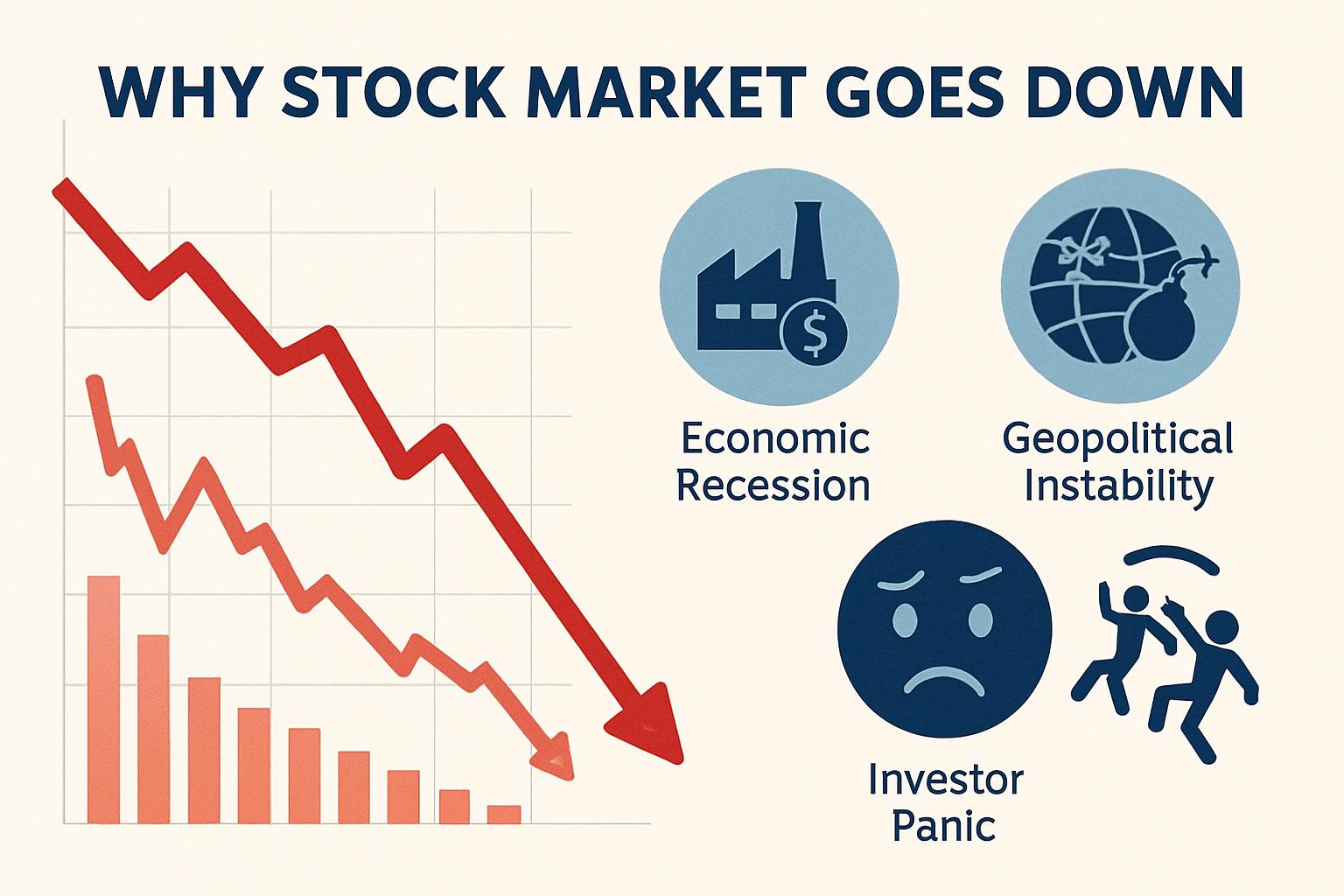
The Nasdaq Composite and the Nasdaq-100 are often viewed as the primary barometers for the global growth economy. When these indices experience a downturn, the ripple effects are felt across the entire financial landscape, from retail brokerage accounts to institutional pension funds. Understanding “why the Nasdaq is down today” requires a multi-faceted analysis of macroeconomic policy, corporate earnings cycles, and the shifting psychology of the modern investor. Unlike broader indices like the Dow Jones Industrial Average, the Nasdaq is heavily weighted toward technology, biotechnology, and consumer services, making it uniquely sensitive to specific economic triggers.
The Dominance of Macroeconomic Sentiment and Interest Rate Policy
The most frequent driver of a Nasdaq decline is the shifting landscape of monetary policy. Because the index is dominated by “growth” stocks—companies expected to deliver the bulk of their cash flows in the distant future—it is disproportionately affected by the cost of borrowing.
The Sensitivity of Long-Duration Assets
In financial modeling, growth stocks are often classified as long-duration assets. This means their intrinsic value is highly sensitive to the discount rate used to calculate the present value of future earnings. When the Federal Reserve signals a “higher-for-longer” stance on interest rates, or when inflationary data comes in hotter than expected, the discount rate rises. This mathematical reality causes the present valuation of tech giants and startups alike to compress. Even if a company’s fundamental business is performing well, a rise in the risk-free rate (typically the 10-year Treasury yield) makes those future dollars less valuable today, leading to immediate selling pressure across the index.
Inflationary Fears and the Federal Reserve’s Narrative
The Nasdaq often reacts violently to the Consumer Price Index (CPI) and Producer Price Index (PPI) releases. If inflation remains sticky, investors begin to price in a more aggressive Federal Reserve. Today’s downturn may be the result of a realization that rate cuts, which market participants may have been prematurely celebrating, are being pushed further into the horizon. High inflation also erodes the purchasing power of consumers, potentially dampening the demand for the high-end hardware, software subscriptions, and digital services that the Nasdaq’s constituents provide. When the “cost of living” rises, the “cost of innovation” often faces a correction.
Corporate Earnings and the Burden of High Expectations
While macro factors set the stage, microeconomic performance—specifically corporate earnings—provides the script. The Nasdaq is currently characterized by extreme concentration, where a handful of companies, often referred to as the “Magnificent Seven,” dictate the direction of the entire index.
The “Magnificent Seven” and Concentration Risk
When companies like Microsoft, Apple, Nvidia, or Alphabet report earnings or provide guidance, the entire market holds its breath. Today’s decline might be rooted in a “beat but raise” scenario that failed to satisfy the market’s voracious appetite for growth. In a high-valuation environment, simply meeting expectations is often insufficient. If a bellwether tech stock reports stellar revenue but warns of decelerating growth in its cloud computing or AI division, it can trigger a sector-wide sell-off. Because the Nasdaq is market-cap weighted, a 2% or 3% drop in two or three of these giants can easily pull the entire index into the red, regardless of how the remaining hundreds of stocks are performing.
Guidance vs. Performance: The Fear of a Growth Slowdown
Investors are forward-looking creatures. A company may report record profits for the previous quarter, but if the management’s guidance for the next six months suggests a cooling of demand, the stock price will likely tumble. Today’s downward movement often reflects a shift in the “narrative.” For much of the past year, the narrative has been driven by the Artificial Intelligence (AI) revolution. However, if investors begin to question the immediate ROI (Return on Investment) of massive AI infrastructure spending, they may begin to rotate out of expensive tech names and into more defensive, value-oriented sectors of the market.
Bond Yields and the “Risk-Free” Alternative

There is an old adage in investing: “Don’t fight the Fed, and don’t ignore the tape.” The “tape” today is often dominated by the action in the bond market. The relationship between the Nasdaq and the 10-year Treasury yield is frequently inverse.
The Inverse Correlation with the 10-Year Treasury
When the yield on the 10-year Treasury note climbs toward 4.5% or 5%, it creates a “gravity” that pulls down stock multiples. For an investor, a 5% guaranteed return from the U.S. government becomes an attractive alternative to the volatility of a tech stock trading at 40 times its earnings. As yields rise, institutional investors rebalance their portfolios, shifting capital out of “risk-on” assets like the Nasdaq and into “risk-off” assets like bonds. This institutional rebalancing is a mechanical process that can create significant downward pressure on the index throughout a trading session.
Liquidity Tightening and Margin Pressures
In a broader sense, today’s dip may be a symptom of tightening liquidity. When the Federal Reserve engages in Quantitative Tightening (QT), it reduces the amount of money circulating in the financial system. This lack of “cheap money” makes it harder for speculative growth companies to fund their operations and for investors to borrow money to buy stocks on margin. As liquidity dries up, volatility increases, and the Nasdaq—known for its high beta—tends to swing more aggressively to the downside than the S&P 500 or the Dow.
Geopolitical Volatility and Global Trade Concerns
The Nasdaq is not just a domestic index; it is a global one. The companies within it rely on complex international supply chains and derive a significant portion of their revenue from overseas markets.
Supply Chain Disruptions and Hardware Vulnerability
For the hardware and semiconductor sectors of the Nasdaq, any hint of geopolitical tension in East Asia or disruptions in global shipping routes is a major red flag. If there are concerns regarding the availability of critical components or the implementation of new export controls on high-end chips, the semiconductor index (SOX) will likely lead the Nasdaq lower. Today’s decline could be a reaction to new regulatory hurdles or international trade frictions that threaten the “just-in-time” manufacturing model that tech companies have relied upon for decades.
Currency Fluctuations and the Strong Dollar
A strong U.S. dollar is often a “hidden” headwind for the Nasdaq. Since most tech giants are multinational corporations, they earn revenue in euros, yen, and yuan. When the dollar is exceptionally strong, those foreign earnings are worth less when converted back into dollars for financial reporting. If today’s market is seeing a surge in the DXY (Dollar Index), investors may be preemptively selling tech stocks in anticipation of lackluster international revenue figures in the coming quarter.
Technical Corrections and the Psychology of Market Volatility
Sometimes, the reason the Nasdaq is down today is less about “new” news and more about the internal mechanics of the market itself.
Identifying Overbought Conditions and Mean Reversion
Markets do not move in a straight line. After a period of sustained gains, the Nasdaq often becomes “stretched” relative to its moving averages. Technical analysts look at indicators like the Relative Strength Index (RSI) to determine if the market is overbought. If the RSI has been hovering above 70 for an extended period, a “pullback” or “healthy correction” is expected. Today’s selling might simply be profit-taking by traders who are locking in gains after a strong run, triggering automated sell orders as certain technical support levels are breached.

Strategies for Investors During Market Pullbacks
For the individual investor, seeing the Nasdaq in the red can be unsettling, but it is a fundamental part of the market cycle. Financial advisors often suggest that these downturns provide an opportunity for “rebalancing”—selling assets that have become overweighted and buying into quality growth names at a discount. Rather than reacting emotionally to a single day’s performance, seasoned investors look at the “why” behind the move to determine if the long-term investment thesis for their holdings has changed. If the drop is driven by macro noise rather than a fundamental flaw in a company’s business model, it is often viewed as a volatility-induced entry point rather than a reason to panic.
In conclusion, the Nasdaq’s performance today is a synthesis of interest rate expectations, the health of corporate balance sheets, and the relative attractiveness of the bond market. By dissecting these layers, investors can move beyond the “what” of a market decline and gain a deeper understanding of the “why,” allowing for more informed and disciplined financial decision-making.
aViewFromTheCave is a participant in the Amazon Services LLC Associates Program, an affiliate advertising program designed to provide a means for sites to earn advertising fees by advertising and linking to Amazon.com. Amazon, the Amazon logo, AmazonSupply, and the AmazonSupply logo are trademarks of Amazon.com, Inc. or its affiliates. As an Amazon Associate we earn affiliate commissions from qualifying purchases.