
The year 2020 will forever be etched in history for a multitude of reasons, not least among them the dramatic and often unpredictable trajectory of mortgage rates. While the world grappled with a global pandemic, the financial markets, particularly the housing and lending sectors, experienced a whirlwind of activity, leading to some of the lowest mortgage rates ever recorded. For homeowners, prospective buyers, and financial professionals alike, understanding the dynamics of 2020’s mortgage landscape is crucial, offering invaluable insights into the interplay of economic forces, monetary policy, and consumer behavior. This period reshaped financial strategies, fueled a refinancing boom, and intensified competition in the housing market, making it a pivotal year in recent economic history. This article delves deep into the factors that influenced mortgage rates throughout 2020, examines the trends for various loan types, and explores the profound impact these rates had on personal finance and the broader economy.

The Economic Landscape of 2020: A Catalyst for Mortgage Rate Volatility
The year 2020 began with a relatively stable economic outlook, but within a few short months, the emergence and rapid spread of the COVID-19 pandemic plunged global markets into unprecedented turmoil. This profound shift created a fertile ground for extreme volatility in financial instruments, including mortgage rates. Understanding the foundational economic events of 2020 is key to comprehending why mortgage rates behaved as they did.
The Onset of the COVID-19 Pandemic
The declaration of a global pandemic in March 2020 triggered widespread lockdowns, business closures, and immense uncertainty. This immediate shock led to a flight to safety, where investors moved capital from riskier assets like stocks into traditionally safer assets such as U.S. Treasury bonds. Mortgage rates tend to track the yields on these Treasury bonds, particularly the 10-year Treasury note. Initially, the panic caused a sharp, albeit brief, spike in mortgage rates as lenders struggled with liquidity and capacity. However, as the Federal Reserve stepped in with aggressive measures, the long-term trend began its downward trajectory. The pandemic’s impact on employment, consumer confidence, and overall economic activity created an environment where lower interest rates became an essential tool for stimulating recovery.
Federal Reserve’s Aggressive Monetary Policy
In response to the economic fallout from COVID-19, the U.S. Federal Reserve unleashed an arsenal of monetary policy tools, unparalleled in their scale and speed. The most direct action impacting mortgage rates was the slashing of the federal funds rate to near zero in March 2020. While the federal funds rate doesn’t directly dictate mortgage rates, it sets the tone for borrowing costs across the economy. More significantly for mortgages, the Fed reinstituted and expanded its quantitative easing program, aggressively buying vast quantities of Treasury bonds and mortgage-backed securities (MBS). By purchasing MBS, the Fed directly injects liquidity into the mortgage market, driving down yields and, consequently, lowering mortgage rates. This explicit intervention was a primary force pushing rates down throughout the year, aiming to support economic stability and encourage borrowing and investment.
The Impact of Economic Uncertainty
Beyond the direct actions of the Fed, pervasive economic uncertainty played a crucial role. Businesses faced an unknown future, unemployment soared, and consumer spending patterns shifted dramatically. In such an environment, the demand for safe, fixed-income investments like long-term bonds increases, which in turn pushes their yields down. Mortgage lenders, anticipating future economic conditions and default risks, adjust their pricing accordingly. The sustained uncertainty, coupled with the Fed’s commitment to keeping borrowing costs low for the foreseeable future, fostered an expectation of continued low rates, further embedding the downward trend into the market. This unique blend of crisis and intervention created a once-in-a-generation opportunity for borrowers.
A Deep Dive into 2020 Mortgage Rate Trends
The year 2020 saw mortgage rates embark on a remarkable journey, characterized by initial volatility followed by a sustained and historic descent. This section examines the specific movements across key loan types, highlighting the periods of significant change.
Monthly and Quarterly Averages for Key Loan Types
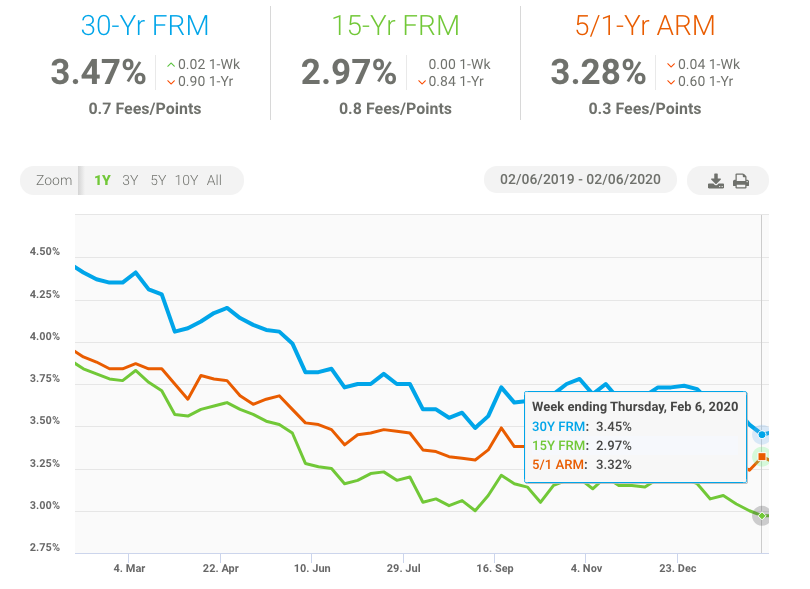
Throughout 2020, the average 30-year fixed-rate mortgage (FRM), the most popular loan product, saw its rates tumble from just under 3.75% in early March to consistently dip below 3% by July, eventually reaching multiple record lows. The year often closed with average rates for 30-year FRMs hovering around 2.65% to 2.75%, a stark contrast to where they began.
For 15-year fixed-rate mortgages, which typically offer lower interest rates due to their shorter term, the drops were even more pronounced. Starting the year above 3%, these rates quickly fell below 2.5% and, by year-end, were often quoted in the 2.15% to 2.25% range. This made the 15-year FRM an incredibly attractive option for those looking to pay off their homes faster and save significantly on interest.
Adjustable-rate mortgages (ARMs), such as the 5/1 ARM, also saw their initial fixed periods benefit from the lower rate environment. While less common than fixed-rate options during a period of historically low rates, their initial rates often followed a similar downward trajectory, albeit with inherent future variability.
- Q1 2020: Rates started relatively stable, then briefly spiked in March due to market panic, but quickly began to fall as the Fed intervened.
- Q2 2020: A steady decline, with 30-year FRM rates consistently dropping below 3.5%.
- Q3 2020: The period where rates broke multiple all-time lows, often dipping below 3% for the 30-year FRM.
- Q4 2020: Rates continued their descent, reaching their lowest points by the end of the year, consolidating around the 2.7% mark for 30-year FRMs.
The Race to the Bottom: When Rates Hit Record Lows
The summer and fall of 2020 were defined by a relentless “race to the bottom” for mortgage rates. Week after week, Freddie Mac’s Primary Mortgage Market Survey (PMMS) announced new record lows. This sustained decline was primarily driven by the Federal Reserve’s aggressive bond-buying program, which artificially suppressed long-term yields. The market’s expectation of a prolonged period of low rates, coupled with the demand for safe assets, further amplified this trend. These historically low rates translated into significant savings for borrowers, making homeownership more accessible and refinancing highly advantageous. The psychological barrier of sub-3% rates for 30-year fixed mortgages was a major milestone, captivating homeowners and potential buyers alike.
Brief Periods of Fluctuation and Recovery
While the overall trend for 2020 was a downward one, it wasn’t a perfectly smooth ride. There were brief periods of slight rate increases or plateaus. These minor fluctuations were often responses to short-term market reactions to economic data releases, global political events, or shifts in investor sentiment. For example, positive news on vaccine development or better-than-expected jobs reports could occasionally lead to a temporary uptick in Treasury yields and, consequently, mortgage rates, as investors anticipated a stronger economic recovery and less need for extreme monetary accommodation. However, these movements were generally short-lived, with rates quickly resuming their downward or stable low trajectory, reinforced by the Fed’s unwavering commitment to its accommodative stance.
Unpacking the Borrower’s Perspective: Refinancing Mania and Homebuying Surge

The historically low mortgage rates of 2020 created a seismic shift in the financial decisions of millions of Americans. Both existing homeowners and aspiring buyers found themselves in an environment ripe with opportunities, leading to unprecedented levels of activity in the mortgage market.
The Refinance Boom: Saving Billions for Homeowners
The most immediate and widespread impact of plummeting rates was the explosion in mortgage refinancing. Homeowners rushed to lock in lower interest rates, reducing their monthly payments, shortening their loan terms, or converting adjustable-rate mortgages to fixed-rate ones. Lenders were inundated with applications, sometimes struggling to keep up with demand. This refinancing wave put billions of dollars back into the pockets of consumers, either through reduced monthly expenses or by allowing them to tap into their home equity more affordably. For many, it provided much-needed financial relief during a period of economic uncertainty, allowing them to allocate funds to other necessities, savings, or investments. This surge in refinancing activity also contributed to the overall liquidity and stability of the housing market.
Increased Affordability and the Competitive Housing Market
For prospective homebuyers, particularly first-time buyers, the low rates significantly boosted purchasing power and made homeownership more affordable. A lower interest rate on a 30-year fixed mortgage could translate into hundreds of dollars saved monthly, effectively allowing buyers to afford a more expensive home or simply reduce their financial burden. This enhanced affordability, coupled with a shift in housing preferences towards larger homes and suburban areas during the pandemic, fueled a robust and highly competitive housing market. Inventory levels dwindled as demand surged, leading to rapid price appreciation, bidding wars, and a seller’s market in many regions across the country. While rates were low, the challenge for buyers often shifted from affordability to simply finding and securing a property.
Challenges and Opportunities for Borrowers
While the low rates presented immense opportunities, borrowers also faced certain challenges. The sheer volume of applications meant longer processing times and increased scrutiny from lenders. Credit score requirements tightened briefly at the outset of the pandemic, and documentation became more critical. However, for those with solid credit and stable employment, the opportunities were abundant. It was a time when understanding one’s financial profile, having documents prepared, and working with a proactive lender or broker became paramount. The opportunity to drastically reduce lifetime interest payments or finally achieve homeownership outweighed the temporary hurdles for many.
Beyond 2020: Lasting Impacts and Future Implications
The unique conditions of 2020 left an indelible mark on the financial landscape, with ripple effects extending well beyond the calendar year. Understanding these lasting impacts is crucial for appreciating the ongoing evolution of the housing and mortgage markets.
The Role of the Secondary Mortgage Market
The efficient functioning of the secondary mortgage market, where loans are bought and sold, was critical in 2020. Agencies like Fannie Mae and Freddie Mac played a pivotal role, supported by the Federal Reserve’s bond-buying, in ensuring liquidity and stability. The massive volume of originations and refinances highlighted the robustness of this system, but also exposed areas of operational strain for lenders. The heightened activity underscored the importance of technological advancements in loan processing and the need for adaptable regulatory frameworks to manage such surges. The experience of 2020 reinforced the understanding that a healthy secondary market is essential for translating monetary policy into actionable benefits for consumers.
Lessons Learned for Financial Planning
For individuals, 2020 offered profound lessons in financial agility and the importance of monitoring market conditions. Those who were prepared with strong credit scores and emergency savings were best positioned to capitalize on the low rates. It highlighted the value of regular financial check-ups, understanding one’s current mortgage terms, and being ready to act when market conditions are favorable. The year also showcased the potential for interest rate risk – both the benefit of declining rates and the potential vulnerability when they eventually rise. For financial advisors, it provided a real-time case study in helping clients navigate complex market swings and make informed decisions about their largest liabilities.
A Glimpse into Post-2020 Rate Environments
While 2020 closed with record lows, it also set the stage for subsequent years. The extremely low rates fueled inflation concerns and created an environment where the Fed would eventually need to reverse course. The experience of 2020 illustrated how quickly market conditions can change and the significant impact government policy can have. As we moved beyond 2020, the discussion shifted from “how low can they go?” to “how long can they stay low?” and eventually to “how quickly will they rise?” The precedent set by 2020’s rates continues to influence borrower expectations and financial planning strategies, even as the market normalizes towards higher rates in later years.
Navigating Mortgage Decisions in Any Market
While 2020 presented an extraordinary opportunity, the core principles of sound mortgage decision-making remain constant, regardless of the interest rate environment. For personal finance, understanding these principles is paramount.
Understanding Your Financial Profile
Before even looking at rates, a thorough assessment of your financial health is crucial. This includes your credit score, debt-to-income ratio, employment stability, and savings for a down payment and closing costs. Lenders use these metrics to determine eligibility and the interest rate you qualify for. Improving your credit score, reducing existing debt, and building a solid financial buffer will always put you in a stronger negotiating position and secure more favorable terms. The competitive market of 2020 further emphasized the importance of being a well-qualified borrower.
The Importance of a Trusted Advisor
Engaging with a knowledgeable mortgage lender or broker is invaluable. These professionals can help you understand the various loan products available, explain the nuances of the market, and guide you through the application process. They can provide personalized advice based on your financial goals, whether that’s minimizing monthly payments, shortening the loan term, or extracting equity. In a fast-moving market like 2020, having an experienced guide was not just helpful, but often critical to successfully securing the best possible rates and navigating the complexities of the mortgage process. A trusted advisor ensures you make informed decisions that align with your long-term financial strategy.
In conclusion, 2020 was an exceptional year for mortgage rates, characterized by historic lows driven by unprecedented economic challenges and aggressive monetary intervention. It reshaped financial landscapes for millions, highlighted the intricate relationship between global events and personal finance, and provided invaluable lessons for navigating future market fluctuations. For anyone involved in real estate or personal financial planning, the year 2020 stands as a powerful testament to the dynamic nature of interest rates and their profound impact on our financial lives.
aViewFromTheCave is a participant in the Amazon Services LLC Associates Program, an affiliate advertising program designed to provide a means for sites to earn advertising fees by advertising and linking to Amazon.com. Amazon, the Amazon logo, AmazonSupply, and the AmazonSupply logo are trademarks of Amazon.com, Inc. or its affiliates. As an Amazon Associate we earn affiliate commissions from qualifying purchases.