
In the complex world of home financing, the term “Annual Percentage Rate” (APR) for a mortgage is frequently encountered yet often misunderstood. While many prospective homeowners fixate solely on the interest rate, a comprehensive grasp of APR is paramount for making informed financial decisions. The APR offers a more holistic picture of the total cost of borrowing, extending beyond the simple interest charged on the principal. It acts as a crucial benchmark, allowing consumers to compare different loan products on a more level playing field. Understanding what APR truly represents and how it’s calculated is not just a matter of financial literacy; it’s a strategic necessity that can save homeowners thousands over the life of their mortgage.

Understanding the Basics: Beyond the Interest Rate
When embarking on the journey to secure a mortgage, the interest rate is often the first, and sometimes only, figure that catches the eye. While undeniably important, the interest rate alone doesn’t tell the full story of what you’ll pay to borrow money for your home. This is where the Annual Percentage Rate (APR) steps in, providing a more comprehensive and transparent view of the true cost of credit.
Defining APR: The True Cost of Borrowing
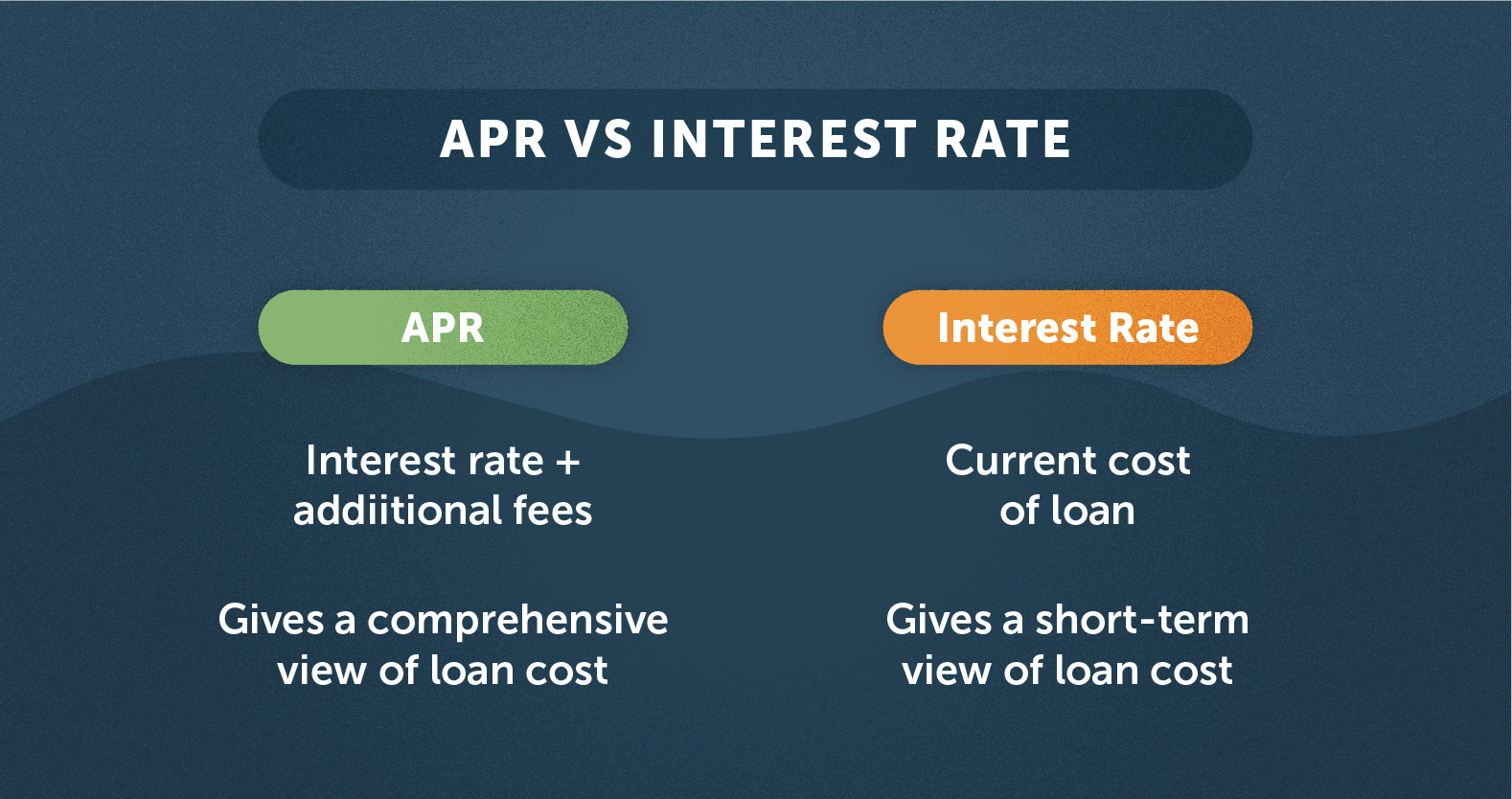
At its core, the APR for a mortgage is a standardized measure designed to reflect the total annual cost of a loan, expressed as a percentage. Unlike the nominal interest rate, which only accounts for the cost of borrowing the principal amount, the APR incorporates not only the interest rate but also most other fees and charges associated with securing the loan. These can include points, mortgage broker fees, and other charges paid directly or indirectly by the borrower. The goal of APR is to provide consumers with a single, all-encompassing figure that allows for a more accurate comparison of different loan products. It was introduced by the Truth in Lending Act (TILA) to promote transparency and prevent lenders from obscuring costs through various fees. Without APR, lenders could quote a low interest rate but load up the loan with exorbitant fees, misleading borrowers about the actual expense. By standardizing this calculation, TILA ensures that consumers have a clearer picture of what they’re truly committing to.
Components of APR: What’s Included?
To truly grasp the significance of APR, it’s essential to understand what elements contribute to its calculation. The APR is not just an arbitrary number; it’s a direct reflection of several key costs:
- The Interest Rate: This is the primary component and the percentage charged by the lender for the use of the borrowed money. It determines the bulk of your monthly mortgage payment.
- Origination Fees: These are charges assessed by the lender for processing the loan application, underwriting, and other administrative services. They are typically expressed as a percentage of the loan amount (e.g., 1% of the loan).
- Discount Points: Also known as “points,” these are upfront fees paid to the lender in exchange for a lower interest rate. One point typically equals 1% of the loan amount. While they reduce the nominal interest rate, they increase the upfront cost and therefore the APR.
- Mortgage Broker Fees: If you use a mortgage broker, their compensation will often be included in the APR calculation, as it’s a cost directly related to obtaining the loan.
- Underwriting Fees: These cover the cost of evaluating the risk of the loan, including verifying your financial information and property value.
- Processing Fees: Administrative costs associated with preparing your loan documents.
It’s important to note that certain closing costs are generally not included in the APR calculation. These often include third-party fees such as appraisal fees, credit report fees, title insurance, attorney fees, recording fees, and property taxes. While these are still costs you will bear, they are typically not considered part of the cost of borrowing money itself under TILA guidelines for APR calculation. This distinction highlights why even with a clear APR, borrowers must still review the full Loan Estimate provided by lenders.
Interest Rate vs. APR: Why the Distinction Matters
The distinction between the nominal interest rate and the APR is critically important for any borrower. The nominal interest rate represents only the cost of borrowing the principal amount; it’s the percentage used to calculate your monthly interest payments. If two loans have the same interest rate but different fees, their APRs will differ, and the loan with higher fees will have a higher APR.
Consider two mortgage offers:
- Loan A: 6.0% interest rate, with 1 point ($3,000 on a $300,000 loan) and $1,500 in origination fees.
- Loan B: 6.0% interest rate, with no points and $500 in origination fees.
While both loans have the same stated interest rate, Loan A has higher upfront costs directly related to the loan. Consequently, Loan A’s APR will be higher than Loan B’s, even though their monthly principal and interest payments would initially appear identical. The higher APR for Loan A signals that its total cost of borrowing, when spread over the loan term, is greater due to those additional fees.
The APR, therefore, serves as a powerful comparison tool. When you are presented with multiple loan offers, comparing their APRs provides a more accurate assessment of which loan is truly more expensive over its lifetime. A lower APR generally indicates a cheaper loan, even if its stated interest rate is slightly higher than another loan with heavy upfront fees. This distinction empowers consumers to look beyond superficial figures and delve into the actual financial implications of their mortgage choice.
The Mechanics of APR Calculation
Understanding the components of APR is one thing, but appreciating how lenders arrive at this crucial percentage requires a deeper dive into its underlying mechanics. The calculation isn’t arbitrary; it’s a standardized process mandated by federal law, designed to ensure consistency and transparency across the mortgage industry.
How Lenders Determine Your APR
Lenders use a specific methodology to calculate the APR, mandated by the Truth in Lending Act (TILA). The fundamental principle is to take the total cost of the loan – including the interest and most upfront fees – and spread it out over the life of the loan, expressing it as an annual percentage. Conceptually, it involves determining an effective interest rate that, when applied to the principal, yields the same total cost as the principal plus all included fees and interest payments over the loan term.
The calculation is complex because it involves financial mathematics, specifically determining the internal rate of return (IRR) of the loan cash flows. Essentially, it treats the upfront fees as additional money borrowed that you pay back over time, alongside the principal. The more fees included, and the shorter the loan term, the more significantly these fees will impact the APR. Lenders use specialized software to perform these calculations accurately, ensuring compliance with regulatory requirements. The resulting APR must be disclosed to the borrower on the Loan Estimate and Closing Disclosure documents, providing clarity on the total cost of credit.
Fees and Charges That Impact APR
As discussed, not all closing costs are folded into the APR. The key distinction lies in whether a fee is considered a cost of borrowing money or a cost of closing the transaction.
Fees typically included in APR:
- Interest: The core charge for borrowing.
- Loan Origination Fees: Compensation to the lender for processing the loan.
- Discount Points: Fees paid to lower the interest rate.
- Mortgage Broker Fees: If a broker is used, their compensation.
- Underwriting and Processing Fees: Lender charges for evaluating and preparing the loan.
- Mortgage Insurance Premiums (MIP/PMI): In some cases, especially for FHA loans, the upfront and ongoing mortgage insurance premiums are included in the APR calculation, as they are a condition of the loan itself.
Fees generally not included in APR:
- Appraisal Fees: Cost of determining the property’s value.
- Credit Report Fees: Cost of pulling your credit history.
- Title Insurance and Title Search Fees: Protects against claims on the property’s title.
- Attorney Fees: Legal services for closing.
- Recording Fees: Paid to local government to record the deed and mortgage.
- Escrow Fees / Closing Agent Fees: Charges for the neutral third party handling the closing.
- Prepaid Items: Such as property taxes and homeowner’s insurance premiums that are paid upfront at closing to establish an escrow account.
Understanding this differentiation is vital because even a low APR can be accompanied by significant closing costs not reflected in that percentage. Borrowers must review the entire Loan Estimate and Closing Disclosure carefully, examining both the APR and the itemized list of closing costs.
The APR Formula (Conceptual Understanding)
While the precise mathematical formula for APR is complex and typically handled by software, it’s beneficial to understand its conceptual basis. Imagine you borrow a sum of money, and in addition to repaying that sum with interest, you also have to pay a set of upfront fees. The APR essentially calculates what interest rate you would have to pay if those upfront fees were added to the principal and repaid over the loan term, such that the total payments (principal, interest, and fees) remained the same.
In simpler terms:
APR ≈ (Total Interest Paid + Total Included Fees) / (Original Loan Amount * Loan Term in Years)
This approximation highlights that:
- A higher interest rate directly increases the APR.
- More fees directly increase the APR.
- A shorter loan term generally makes the impact of fees more pronounced on the APR, as those costs are spread over fewer years.
The official calculation uses present value and future value formulas to precisely account for the time value of money, ensuring that the APR accurately reflects the annual cost of credit over the life of the loan. This mathematical rigor is why APR is considered a superior comparison tool to the nominal interest rate alone.
Types of APR and Their Implications
Just as there are various types of mortgages, the APR associated with them can also behave differently, carrying unique implications for borrowers. Understanding these distinctions is crucial for selecting a mortgage product that aligns with your financial strategy and risk tolerance.
Fixed-Rate vs. Adjustable-Rate Mortgage (ARM) APR
The fundamental difference between fixed-rate and adjustable-rate mortgages (ARMs) extends to their APRs.
-
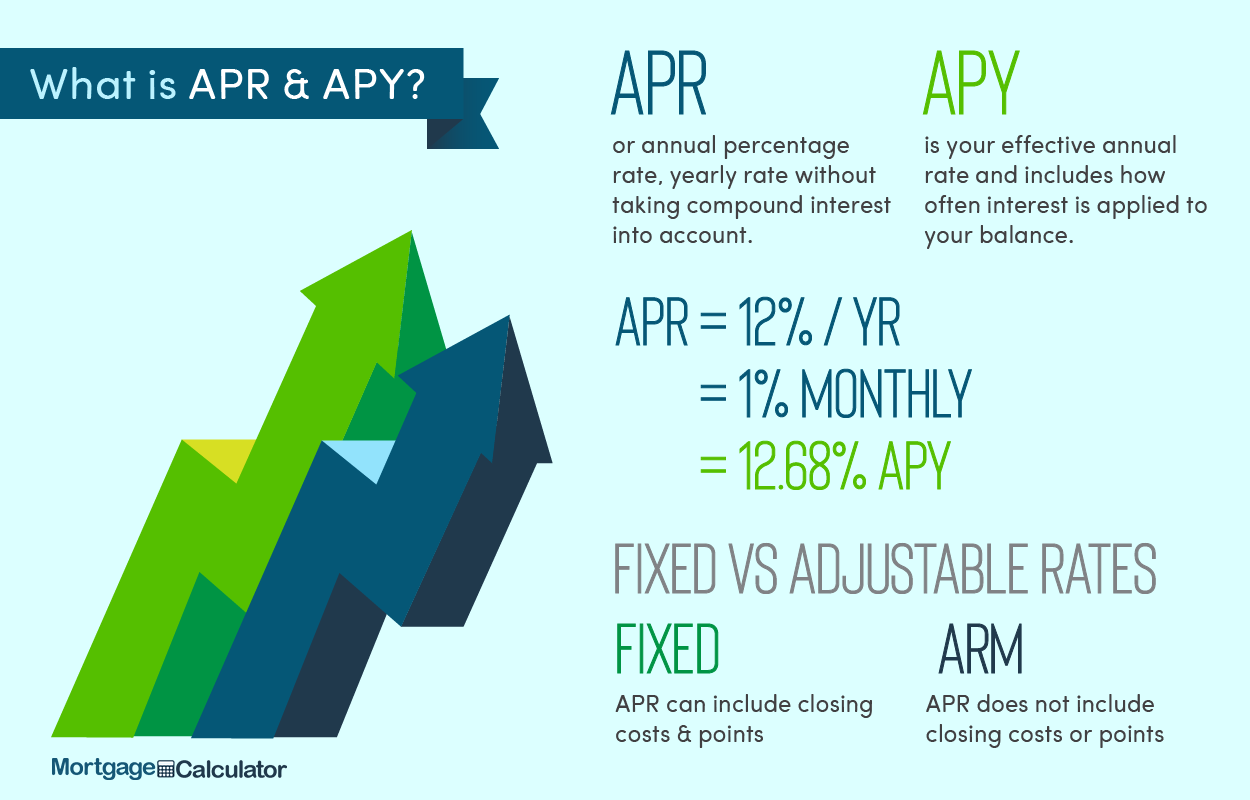
Fixed-Rate Mortgage APR: For a fixed-rate mortgage, both the interest rate and the calculated APR remain constant throughout the entire loan term, barring any refinancing. This predictability is its primary advantage. The APR disclosed at the outset is the rate you can expect to pay for the life of the loan, assuming no prepayments or defaults. This makes budgeting straightforward and protects borrowers from future interest rate hikes. The simplicity of a fixed APR makes it easy to compare offers from different lenders directly.
-
Adjustable-Rate Mortgage (ARM) APR: ARMs, by their nature, have interest rates that fluctuate after an initial fixed period (e.g., 5/1 ARM, 7/1 ARM). The challenge with ARM APRs is that they are initially calculated based on the starting interest rate and included fees, but they are often presented with a “fully indexed rate” scenario to give a more realistic long-term picture. However, the actual APR will change once the interest rate adjusts. Lenders are required to disclose a “worst-case scenario” APR, often called the “maximum possible APR,” which reflects the highest rate the loan could reach based on its caps over the loan’s life. This makes comparing ARMs based solely on the initial APR more complex, as the future cost is uncertain. Borrowers considering an ARM must understand not just the initial APR, but also the adjustment frequency, the index the rate is tied to, and the rate caps (periodic and lifetime).
Conventional vs. FHA/VA Loan APR Considerations
Different loan types carry specific underwriting requirements and associated costs, which in turn impact their APRs.
-
Conventional Loan APR: Conventional loans are not insured or guaranteed by the government. Their APR primarily reflects the interest rate, origination fees, and any points. If your down payment is less than 20%, you’ll likely pay Private Mortgage Insurance (PMI), which is generally not included in the APR calculation, but is a significant ongoing cost to consider. Lenders use your credit score, debt-to-income ratio, and down payment size to determine your conventional loan’s interest rate and fees, thus influencing the APR.
-
FHA Loan APR: FHA loans are insured by the Federal Housing Administration and are popular for borrowers with lower credit scores or smaller down payments. A significant factor impacting FHA APR is the Mortgage Insurance Premium (MIP). FHA loans require both an upfront MIP (UFMIP) and annual MIP. Both the UFMIP and the annual MIP are typically included in the APR calculation, which can make the FHA loan’s APR appear higher than a conventional loan’s nominal interest rate, even if the base interest rate is lower. This inclusion is crucial because MIP is a mandatory cost for FHA borrowers, effectively making it part of the cost of borrowing.
-
VA Loan APR: VA loans, guaranteed by the Department of Veterans Affairs, offer exceptional benefits to eligible service members and veterans, including no down payment requirements and no private mortgage insurance. However, VA loans typically require a VA Funding Fee, which is a one-time fee paid at closing that helps offset the cost to taxpayers. The VA Funding Fee is included in the APR calculation, meaning VA loans, despite their other benefits, will have an APR that reflects this upfront cost. Disabled veterans are often exempt from the funding fee, which would result in a lower APR for them.
The inclusion or exclusion of mortgage insurance and funding fees can significantly alter the APR, making direct comparisons between different loan types based solely on their initial interest rates highly misleading.
The Impact of Discount Points and Origination Fees
Discount points and origination fees are two of the most direct ways borrowers can influence their mortgage’s APR.
-
Discount Points: These are prepaid interest that you pay at closing to “buy down” your interest rate. One point typically costs 1% of the loan amount. Paying points will lower your nominal interest rate, which in turn reduces your monthly principal and interest payments. However, since the cost of the points is an upfront fee included in the APR calculation, paying points will result in a higher APR than if you took the loan with no points and a higher interest rate, unless the interest rate reduction is substantial enough to offset the point cost over the life of the loan. This is a crucial paradox to understand: a lower interest rate can sometimes mean a higher APR if you pay too many points. Borrowers must calculate their “break-even point” – how long it will take for the savings from the lower monthly payment to recoup the cost of the points – to determine if paying points is financially advantageous.
-
Origination Fees: These are fees charged by the lender for the administrative costs of processing your loan. They are typically expressed as a percentage of the loan amount or a flat fee. Like discount points, origination fees are directly included in the APR calculation. A loan with higher origination fees will have a higher APR, all else being equal, as these fees add to the total cost of borrowing. Some lenders advertise “no origination fee” loans, but these often come with a slightly higher interest rate to compensate the lender, which could lead to a different APR dynamic.
Ultimately, the interplay of these fees and the interest rate dictates the final APR. A thorough understanding allows borrowers to negotiate effectively and choose a loan structure that best suits their financial goals, whether that’s minimizing upfront costs or achieving the lowest overall long-term cost of borrowing.
Why APR is Crucial for Mortgage Shopping
In the bustling marketplace of mortgage lenders, where every institution vies for your business with seemingly attractive offers, the APR emerges as the indispensable compass guiding you towards the truly best deal. It’s more than just a regulatory disclosure; it’s a powerful analytical tool that cuts through marketing jargon and reveals the true financial implications of your borrowing decision.
Comparing Loan Offers Effectively
Imagine you receive two mortgage offers for the same loan amount and term.
- Offer A: An interest rate of 6.25% with $1,000 in origination fees.
- Offer B: An interest rate of 6.10% with $3,000 in origination fees and one discount point.
Simply looking at the interest rate, Offer B appears superior. However, by comparing the APRs, a different picture might emerge. Offer B has significantly higher upfront fees that are included in its APR calculation. When these costs are amortized over the life of the loan, it’s entirely possible that Offer A, despite its slightly higher nominal interest rate, could have a lower APR because its total cost of borrowing (interest + included fees) is less over the loan term.
The APR standardizes the comparison. It encapsulates the interest rate, most lender fees, and some other costs into a single percentage, allowing you to directly pit two seemingly different loans against each other. A lower APR almost always signifies a cheaper loan overall, making it the most reliable figure to use when comparing different offers. Relying solely on the nominal interest rate can lead to costly mistakes, as hidden fees can quickly erode any perceived savings.
Protecting Yourself from Hidden Costs
The primary regulatory impetus behind the creation of APR was consumer protection. Before its widespread adoption and mandated disclosure, lenders had more leeway to offer a low-ball interest rate while burying significant costs in various fees, making it difficult for the average consumer to ascertain the true expense of a mortgage.
The APR acts as a safeguard against this tactic. By requiring lenders to incorporate most of these fees into a single, comprehensive percentage, it makes it much harder to obscure the real cost. When you receive a Loan Estimate, the APR provides a clear, apples-to-apples comparison point. If one loan has an APR significantly higher than another with a similar interest rate, it immediately signals that the former includes substantially more upfront fees. This transparency empowers you to ask targeted questions about those fees, negotiate their reduction, or choose a loan product with a more favorable overall cost structure. It forces lenders to be more upfront with their pricing, fostering a more competitive and consumer-friendly market.
Long-Term Financial Planning with APR in Mind
A mortgage is one of the most significant financial commitments most individuals undertake, often spanning 15 to 30 years. Consequently, even small differences in the cost of borrowing can accumulate into substantial amounts over such a long duration. This is where the long-term perspective afforded by APR becomes invaluable.
By understanding the APR, borrowers can make more strategic financial decisions:
- Budgeting: While your monthly payment is primarily driven by the interest rate, knowing the APR gives you a fuller sense of the total financial burden.
- Decision on Points: The APR helps you evaluate whether paying discount points to lower your interest rate is truly beneficial. If the reduction in monthly payments over your expected tenure in the home doesn’t outweigh the cost of the points (which are reflected in a higher APR for the total cost), then paying points might not be a wise move.
- Refinancing: When considering refinancing, comparing your current mortgage’s remaining APR (if calculable) with the new offer’s APR will give you a clear indication of whether the new loan genuinely offers a lower overall cost of borrowing, rather than just a lower nominal interest rate.
- Financial Health: Choosing a mortgage with a lower APR means less of your hard-earned money will go towards fees and interest, freeing up capital for other investments, savings, or personal goals.
In essence, the APR transforms mortgage shopping from a potentially confusing maze into a clear path. It distills complex financial arrangements into a single, digestible percentage, allowing you to make a decision that is not only informed but also strategically sound for your long-term financial well-being. Always prioritize the APR when comparing mortgage offers – it is the truest reflection of a loan’s total cost.
Navigating Your Mortgage Journey with APR Knowledge
Armed with a thorough understanding of what APR is and why it matters, you’re now better equipped to navigate the often-intimidating mortgage landscape. This knowledge isn’t just theoretical; it’s a practical tool that empowers you to interact more effectively with lenders, optimize your financial profile, and make the most advantageous choices throughout your homeownership journey.
Questions to Ask Your Lender
Engaging with a lender requires proactive questioning, especially when it comes to APR. Don’t be shy about seeking clarity; a good lender will be transparent and willing to explain every detail. Here are crucial questions to ask:
- “What is the APR for this specific loan offer, and how does it compare to the nominal interest rate?” This question forces the lender to explicitly state both figures and potentially explain the difference.
- “Can you provide a detailed breakdown of all fees included in the APR calculation?” This allows you to scrutinize each charge and understand its contribution to the overall cost.
- “Are there any other closing costs not included in the APR that I need to be aware of?” This helps uncover third-party fees like appraisal, title, and escrow fees, which, while not part of the APR, are still out-of-pocket expenses at closing.
- “If I pay [X amount] in discount points, how would that affect both the interest rate and the APR?” This helps you analyze the trade-off between upfront costs and long-term interest savings, using the APR as your guiding metric.
- “What would happen to the APR if I chose a different loan term (e.g., 15-year vs. 30-year)?” Shorter terms often have slightly lower interest rates and distribute fees over a shorter period, which can impact the APR.
- “For an ARM, what is the initial APR, and what is the maximum possible APR over the life of the loan based on the rate caps?” This is crucial for understanding the potential risk and future cost implications of an adjustable-rate product.
By asking these questions, you not only gain clarity but also demonstrate to the lender that you are an informed consumer, which can sometimes lead to more favorable terms.
The Role of Credit Score in APR
Your credit score is arguably the most significant factor influencing the APR you’ll be offered. Lenders use your credit score as a primary indicator of your creditworthiness – your likelihood of repaying the loan on time.
- Higher Credit Score = Lower APR: Borrowers with excellent credit scores (typically 740 and above) are perceived as lower risk. As a result, lenders are more willing to offer them lower interest rates and often fewer fees, which translates directly into a lower APR. A strong credit history suggests financial responsibility and a reduced chance of default, making you a more attractive borrower.
- Lower Credit Score = Higher APR: Conversely, individuals with lower credit scores (e.g., below 620-670 range) are deemed higher risk. Lenders compensate for this increased risk by charging higher interest rates and potentially more fees, resulting in a higher APR. This higher cost of borrowing reflects the added risk the lender assumes.
Therefore, before even applying for a mortgage, it is highly advisable to review your credit report and score. If your score is not optimal, taking steps to improve it – such as paying down debt, disputing errors, and making on-time payments – can significantly reduce the APR you’re offered, potentially saving you tens of thousands of dollars over the life of the loan. Even a modest improvement in your credit score can shift you into a better rate tier, making a tangible difference in your mortgage costs.
Refinancing and Its APR Implications
Refinancing a mortgage involves taking out a new loan to pay off your existing one, often to secure a lower interest rate, change loan terms, or access home equity. When considering refinancing, the APR is once again your best friend for making an informed decision.
- Comparing Old vs. New APR: The primary goal of many refinances is to reduce the cost of borrowing. You should compare the APR of your current mortgage (or at least the remaining effective APR if fees were paid upfront) with the APR of the new refinance offer. If the new APR is significantly lower, it indicates a substantial saving on the total cost of borrowing.
- Considering New Fees: A refinance involves new closing costs, including origination fees, appraisal fees, title insurance, and more. While not all of these are in the APR, the included fees will contribute to the new loan’s APR. It’s crucial to ensure that the savings from a lower interest rate outweigh the costs of refinancing. The APR helps you quantify this new “cost of borrowing” more precisely.
- Cash-Out Refinance: If you’re doing a cash-out refinance, you’re borrowing more than your outstanding principal. The new APR will reflect the cost of borrowing this larger amount, including the cash you receive.
- Loan Term Change: Refinancing from a 30-year to a 15-year term will likely result in a lower interest rate and a potentially lower APR, but with significantly higher monthly payments. Conversely, extending your loan term (e.g., refinancing a 20-year remaining loan into a new 30-year loan) might lower your monthly payment but could result in paying more interest over the longer term, even if the APR is slightly lower.
Ultimately, your APR knowledge empowers you to confidently approach mortgage decisions, whether it’s your initial home purchase or a strategic refinance. By focusing on the APR, asking the right questions, and understanding the factors that influence it, you can secure the most financially advantageous mortgage for your unique situation, paving the way for a more stable and prosperous financial future.
aViewFromTheCave is a participant in the Amazon Services LLC Associates Program, an affiliate advertising program designed to provide a means for sites to earn advertising fees by advertising and linking to Amazon.com. Amazon, the Amazon logo, AmazonSupply, and the AmazonSupply logo are trademarks of Amazon.com, Inc. or its affiliates. As an Amazon Associate we earn affiliate commissions from qualifying purchases.