
Navigating the mortgage landscape can feel like a complex journey, especially when specific loan types like FHA loans come into play. For many prospective homeowners, particularly first-time buyers or those with less-than-perfect credit, FHA loans represent a vital pathway to homeownership. Understanding “what is the current FHA mortgage rate” is not just about a single number; it’s about comprehending a dynamic financial instrument influenced by a myriad of economic forces and individual circumstances. This comprehensive guide will demystify FHA mortgage rates, explain the factors that drive them, and equip you with the knowledge to make informed decisions in your home-buying journey.
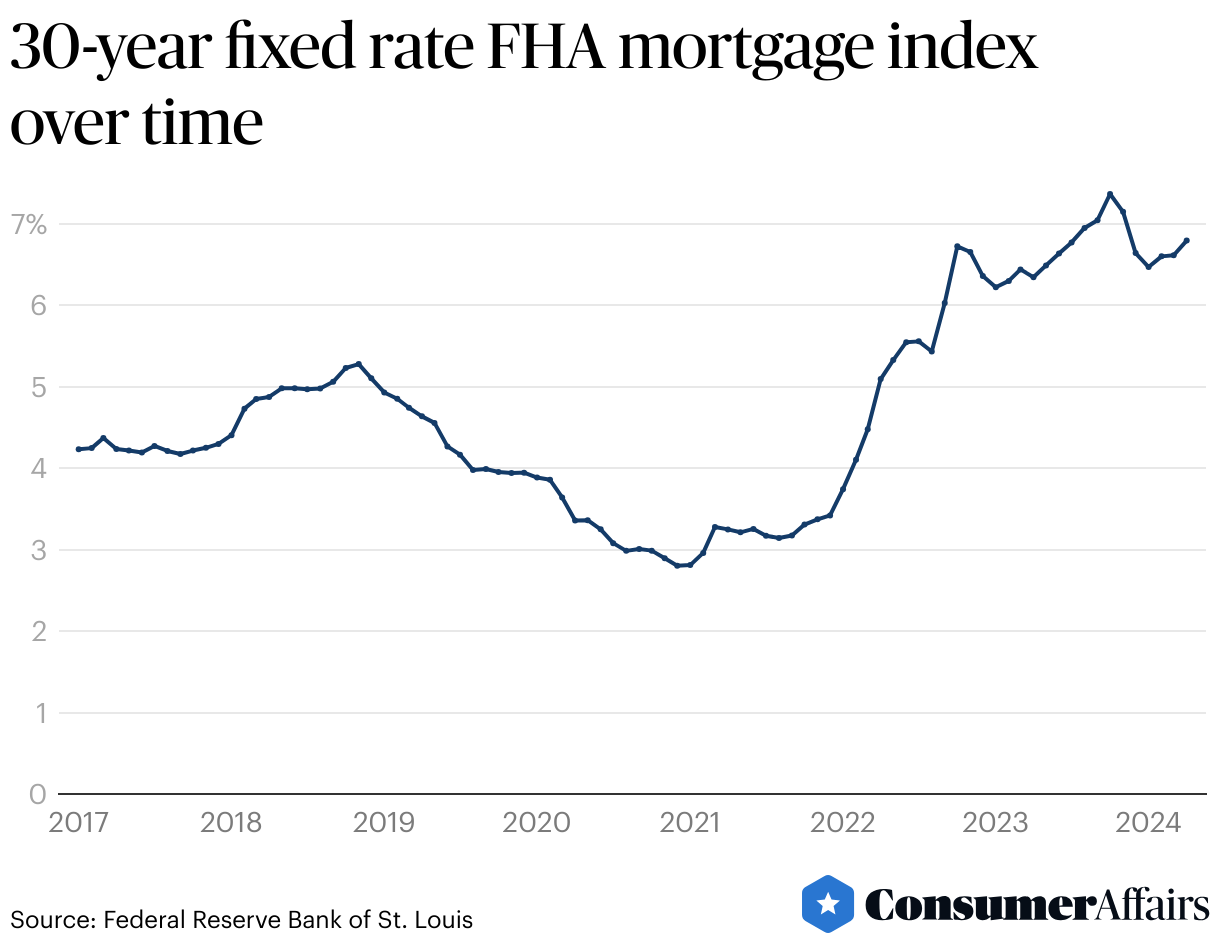
Understanding FHA Loans and Their Appeal
FHA loans are a popular option, backed by the Federal Housing Administration (FHA), a division of the U.S. Department of Housing and Urban Development (HUD). Unlike conventional loans, the FHA doesn’t lend money directly; instead, it insures loans made by FHA-approved lenders. This government backing reduces the risk for lenders, making them more willing to offer mortgages to borrowers who might not qualify for conventional financing.
What is an FHA Loan?
An FHA loan is a government-insured mortgage that aims to make homeownership more accessible, especially for individuals with lower credit scores or limited funds for a down payment. The FHA sets specific guidelines that lenders must follow, covering aspects like property standards, loan limits, and borrower eligibility. While the FHA guarantees the loan, the actual interest rate and terms are set by individual FHA-approved lenders, making shopping around crucial.
Key Benefits of FHA Loans
The primary allure of FHA loans lies in their more flexible qualification criteria compared to conventional mortgages.
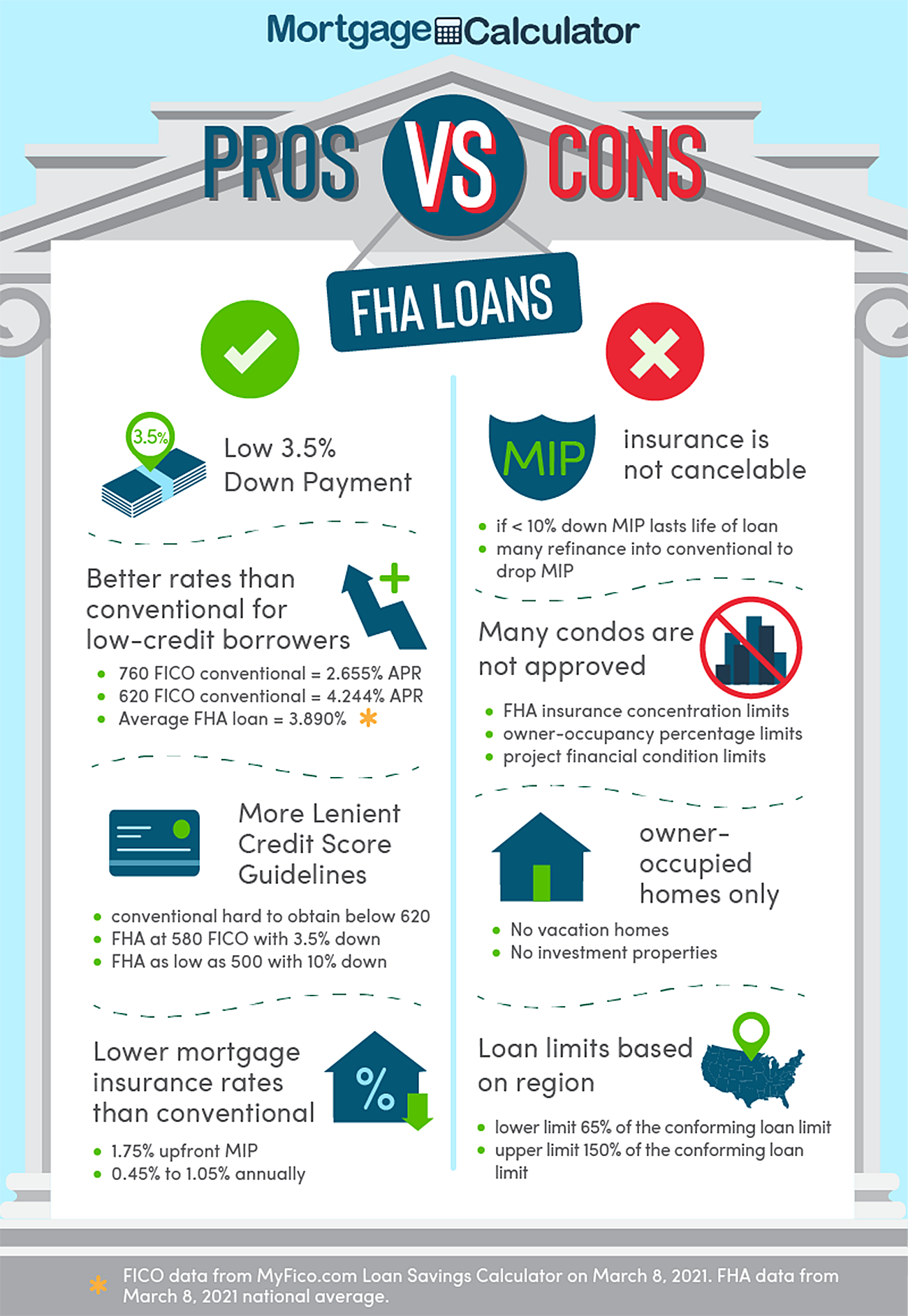
- Lower Credit Score Requirements: Borrowers can often qualify for an FHA loan with credit scores as low as 580 to be eligible for the minimum 3.5% down payment. Those with scores between 500-579 might still qualify with a 10% down payment. This flexibility opens doors for many who are rebuilding their credit or haven’t had the chance to establish a robust credit history.
- Lower Down Payment Options: With a minimum down payment of just 3.5%, FHA loans significantly reduce the upfront cash needed to purchase a home. This is particularly beneficial for first-time homebuyers who may not have accumulated substantial savings.
- Competitive Interest Rates: Despite the more lenient qualification criteria, FHA loan rates are often competitive with, and sometimes even lower than, conventional loan rates. This is largely due to the government insurance, which mitigates lender risk.
- Assumable Mortgages: An often-overlooked benefit is that FHA loans are assumable. This means if you sell your home, the buyer can potentially take over your existing FHA mortgage, including its original interest rate, which can be a significant advantage in a rising rate environment.
Who is an FHA Loan Best For?
FHA loans are ideally suited for:
- First-Time Homebuyers: The low down payment and flexible credit requirements are perfect for those entering the housing market for the first time.
- Borrowers with Lower Credit Scores: Individuals who have faced financial challenges in the past and are working to rebuild their credit can find an FHA loan more accessible than a conventional loan.
- Buyers with Limited Savings: The minimal down payment requirement makes homeownership attainable for those who haven’t saved a large sum for a down payment.
- Buyers Looking for Multi-Unit Properties: FHA loans can be used to purchase multi-unit properties (up to four units), provided the borrower intends to live in one of the units, offering an opportunity for rental income.
Factors Influencing FHA Mortgage Rates
While the FHA sets the framework, the actual rate you receive is a moving target, influenced by a complex interplay of broader economic trends, lender-specific policies, and your individual financial profile. Understanding these factors is key to predicting and influencing the rate you’re offered.
The Broader Economic Landscape
Mortgage rates, including FHA rates, are not set in a vacuum. They are deeply intertwined with the overall economic health of the nation and global markets.
- Federal Reserve Policy: While the Federal Reserve doesn’t directly set mortgage rates, its monetary policy decisions, particularly changes to the federal funds rate, significantly impact the cost of borrowing for banks. This, in turn, influences the interest rates banks charge consumers for various loans, including mortgages. When the Fed raises rates, mortgage rates tend to follow suit.
- Inflation: High inflation erodes the purchasing power of money over time. Lenders demand higher interest rates to compensate for this loss of value, as their future returns will be worth less. Conversely, lower inflation can put downward pressure on rates.
- Economic Growth and Employment: A strong economy with low unemployment often leads to higher demand for credit and, consequently, higher interest rates as lenders anticipate a more robust market. Conversely, economic slowdowns can lead to lower rates as the Fed and lenders try to stimulate activity.
- Bond Market Performance: Mortgage rates are closely tied to the yields on mortgage-backed securities (MBS) and U.S. Treasury bonds. When bond yields rise, mortgage rates generally rise, and vice-versa.
Lender-Specific Factors
Even within the same economic environment, different lenders will offer varying FHA rates.
- Underwriting Standards: Each lender has its own risk assessment models. While FHA guidelines provide a baseline, some lenders may impose “overlays” – stricter requirements than the FHA minimums – leading to slightly different rate offerings.
- Profit Margins: Lenders operate as businesses and need to make a profit. Their pricing strategies, overhead costs, and desired profit margins will factor into the rates they offer.
- Volume and Competition: Lenders with higher loan volumes might be able to offer more competitive rates due to economies of scale. Competition among lenders also helps keep rates in check.
Borrower-Specific Factors
Your personal financial situation plays a significant role in the FHA rate you qualify for.
- Credit Score: Although FHA loans are lenient, a higher credit score (e.g., above 620 or 680) will almost always result in a better interest rate, as it signifies a lower risk to the lender.
- Debt-to-Income (DTI) Ratio: Your DTI, which compares your monthly debt payments to your gross monthly income, is a critical indicator of your ability to manage additional debt. A lower DTI (typically below 43-50% for FHA) can lead to more favorable terms.
- Down Payment Size: While 3.5% is the minimum, putting down a larger down payment (e.g., 5% or 10%) can sometimes result in a slightly lower interest rate, as it reduces the lender’s risk.
- Loan Term: FHA loans are available in various terms, most commonly 30-year fixed-rate and 15-year fixed-rate options. Shorter terms typically come with lower interest rates but higher monthly payments.
- Location and Loan Amount: Mortgage rates can vary slightly by state or even county due to local market conditions, taxes, and lender presence. The loan amount can also subtly influence the rate, though this is less common for FHA loans within conforming limits.
The Role of Mortgage Insurance Premiums (MIP)
It’s crucial to distinguish between the interest rate and the total cost of an FHA loan. FHA loans require two types of mortgage insurance premiums (MIP), which add to the overall expense:
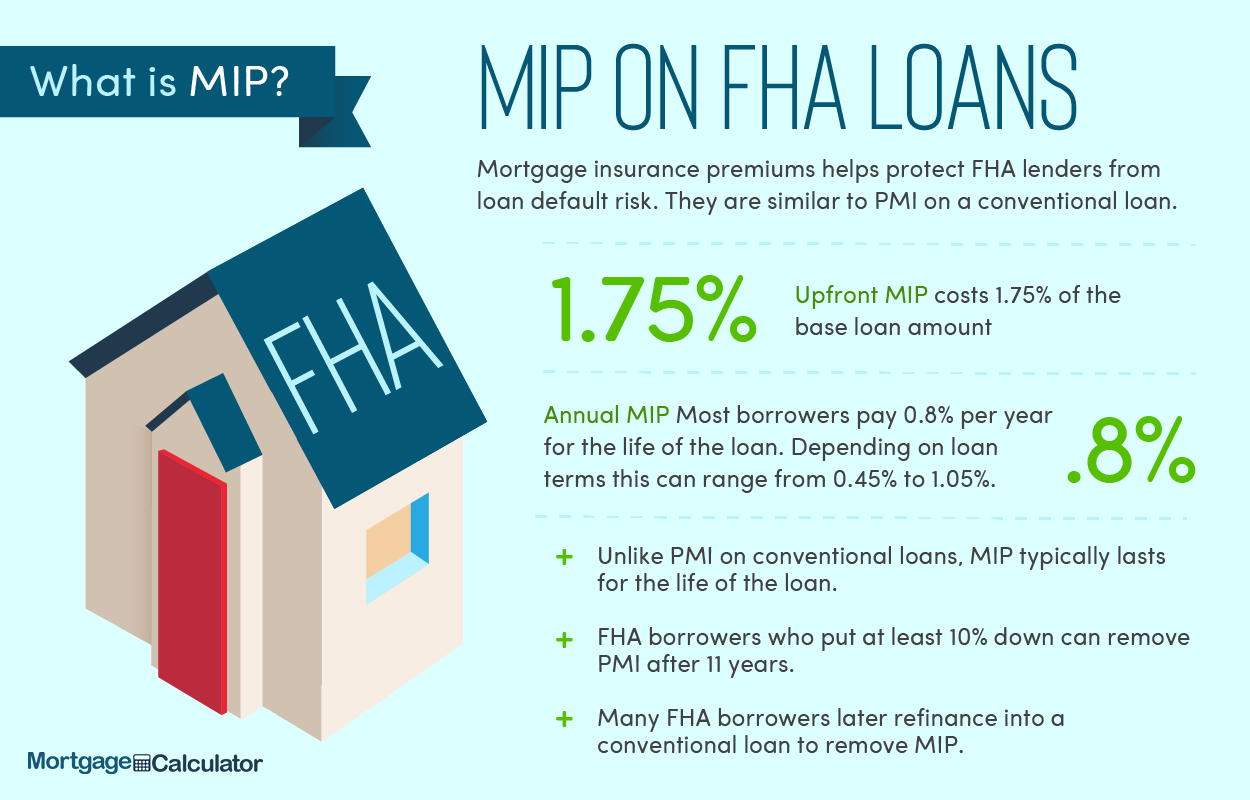
- Upfront Mortgage Insurance Premium (UFMIP): This is a one-time fee, currently 1.75% of the loan amount, typically paid at closing but can be financed into the loan.
- Annual Mortgage Insurance Premium (MIP): This is an ongoing premium paid monthly, with the rate varying based on the loan term, loan amount, and loan-to-value (LTV) ratio (or down payment percentage). For most FHA loans with a 3.5% down payment, the annual MIP is 0.55% for a 30-year loan. Unlike conventional private mortgage insurance (PMI), FHA’s annual MIP generally lasts for the life of the loan if your down payment was less than 10%, adding a consistent cost to your monthly payment.
When comparing FHA rates to conventional rates, it’s essential to consider the impact of MIP on your total monthly housing expense.
How to Find the Most Accurate FHA Rates Today
Given the daily fluctuations, finding the exact current FHA mortgage rate is more about understanding how to access real-time information and comparison tools.
Why Rates Fluctuate Daily (and Even Hourly)
Mortgage rates are highly sensitive to market movements. Global economic news, changes in bond yields, statements from central banks, and even geopolitical events can cause rates to shift multiple times within a single day. Lenders adjust their rates to reflect these underlying market conditions and their own risk assessments. Therefore, a rate quoted yesterday might not be the same today.
Tools and Resources for Rate Comparison
The best strategy for finding the most competitive FHA rate is to shop around extensively.
- Online Lenders and Aggregators: Websites like Bankrate, Zillow Mortgages, and LendingTree allow you to input your basic financial information and receive rate quotes from multiple lenders. This provides a quick snapshot of current market rates.
- Traditional Banks and Credit Unions: Don’t overlook established financial institutions. Your local bank or credit union might offer competitive rates, especially if you have an existing relationship with them.
- Mortgage Brokers: A mortgage broker acts as an intermediary, working with multiple lenders to find you the best possible rate and terms. They can be particularly useful for navigating complex situations or finding niche products.
- Direct Lender Websites: Visit the websites of large mortgage lenders (e.g., Rocket Mortgage, loanDepot, Wells Fargo) directly. They often have rate tools that provide personalized quotes.
When comparing rates, always ensure you’re looking at the Annual Percentage Rate (APR), not just the interest rate. The APR includes the interest rate plus certain fees and points, giving you a more accurate picture of the loan’s true annual cost.
The Importance of a Loan Estimate
Once you’ve narrowed down your choices, request a formal “Loan Estimate” from each lender you’re considering. This standardized three-page form provides a detailed breakdown of your interest rate, monthly payment, closing costs, and other loan terms. It allows for a clear, apples-to-apples comparison between different loan offers, making it easier to identify the best deal. Lenders are legally required to provide you with a Loan Estimate within three business days of receiving your application.
Beyond the Rate: Hidden Costs and Considerations
While the interest rate is a significant factor, it’s only one piece of the puzzle. Overlooking other costs associated with an FHA loan can lead to surprises down the road.
Upfront Mortgage Insurance Premium (UFMIP)
As mentioned, the UFMIP (1.75% of the loan amount) is a mandatory upfront cost. While it can be financed into the loan, it increases your total loan amount and, consequently, your monthly payments and interest accrual over time. Be sure to factor this into your affordability calculations.
Annual Mortgage Insurance Premium (MIP)
The annual MIP is a recurring charge, typically paid monthly as part of your mortgage payment. For most FHA loans with a down payment less than 10%, this premium lasts for the life of the loan, adding a permanent expense that you wouldn’t necessarily incur with a conventional loan if you have 20% equity. This is a critical distinction that can significantly impact your long-term cost of homeownership.
Closing Costs and Lender Fees
Beyond the UFMIP, FHA loans, like all mortgages, come with various closing costs. These can include:
- Origination Fees: What the lender charges for processing the loan.
- Appraisal Fees: To assess the home’s value and ensure it meets FHA standards.
- Title Insurance and Escrow Fees: For services related to property ownership transfer.
- Recording Fees: Paid to local government to record the property sale.
- Prepaid Items: Such as property taxes and homeowner’s insurance premiums that are paid in advance.
FHA loans have specific limits on what fees lenders can charge, and some fees can be negotiated or covered by the seller, but it’s essential to budget for these expenses, which typically range from 2% to 5% of the loan amount.
Appraisal and Inspection Requirements
FHA loans have stricter appraisal requirements than many conventional loans. The FHA appraisal ensures the property meets minimum health and safety standards. While this protects the buyer, it can sometimes lead to delays or require the seller to make repairs before closing. It’s also crucial to remember that an FHA appraisal is not a home inspection. A separate professional home inspection is highly recommended to uncover potential issues that might not be visible during an appraisal.
Strategies for Securing a Better FHA Rate
Even if FHA loans are known for flexibility, there are proactive steps you can take to position yourself for the most favorable interest rate possible.
Improving Your Credit Score
Your credit score is arguably the most impactful factor within your control.
- Pay Bills on Time: Payment history is the biggest component of your score.
- Reduce Credit Card Balances: Lowering your credit utilization ratio (how much credit you use vs. how much you have available) can quickly boost your score.
- Avoid New Credit Applications: Each new application can cause a temporary dip in your score.
- Check for Errors: Review your credit report regularly for inaccuracies that could be dragging down your score.
Reducing Your Debt-to-Income Ratio
Lenders look at your DTI to assess your ability to manage monthly mortgage payments.
- Pay Down Existing Debts: Focus on credit card balances, personal loans, or auto loans.
- Avoid Taking on New Debt: Refrain from making large purchases on credit before applying for a mortgage.
- Increase Your Income (if possible): A higher income relative to your debts will improve your DTI.
Saving for a Larger Down Payment
While 3.5% is the minimum, putting down more can sometimes lead to a slightly better rate and reduces the amount you finance, lowering your overall interest paid. Additionally, a larger down payment reduces your loan-to-value ratio, which lenders perceive as less risky.
Shopping Around and Negotiating
This cannot be stressed enough. Different lenders have different pricing structures. Obtain quotes from at least three to five lenders, including banks, credit unions, and mortgage brokers. Use these quotes to negotiate. If one lender offers a lower rate or fewer fees, see if another is willing to match or beat it.
Understanding Rate Locks
Once you receive a favorable rate, consider locking it in. A rate lock guarantees your interest rate for a specific period (typically 30, 45, or 60 days) while your loan is being processed. This protects you from potential rate increases before closing. Discuss rate lock options and any associated fees with your lender.
In conclusion, understanding “what is the current FHA mortgage rate” involves much more than a quick search result. It requires a holistic view of economic forces, lender dynamics, and your personal financial standing. By understanding these components, proactively improving your financial profile, and diligently shopping for the best terms, you can confidently navigate the FHA loan process and achieve your dream of homeownership. Remember, the right FHA mortgage isn’t just about the lowest rate; it’s about the best overall fit for your financial situation and long-term goals.
aViewFromTheCave is a participant in the Amazon Services LLC Associates Program, an affiliate advertising program designed to provide a means for sites to earn advertising fees by advertising and linking to Amazon.com. Amazon, the Amazon logo, AmazonSupply, and the AmazonSupply logo are trademarks of Amazon.com, Inc. or its affiliates. As an Amazon Associate we earn affiliate commissions from qualifying purchases.