
Navigating the world of home loans can feel like deciphering a complex financial puzzle, with interest rates often being the most bewildering piece. For prospective homebuyers and current homeowners alike, understanding “what is the interest rate on a home loan today” is not merely a point of curiosity; it’s a critical factor that dictates affordability, monthly payments, and the total cost of homeownership over decades. Today’s interest rates are a dynamic reflection of a myriad of economic forces, central bank policies, and individual borrower profiles. They fluctuate constantly, influenced by everything from global economic shifts to localized housing market trends.
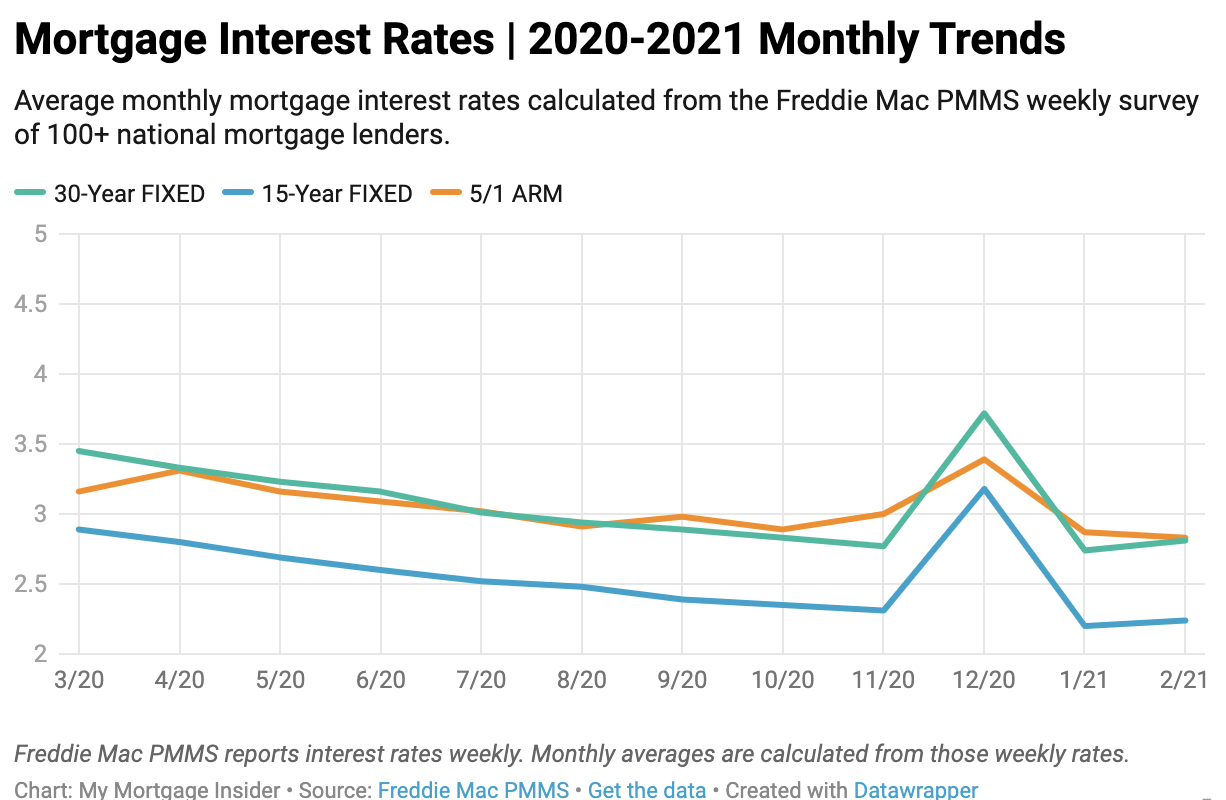
This article aims to demystify current home loan interest rates, providing a comprehensive guide to their drivers, the various types of loans available, factors influencing your personal rate, and strategies to secure the most favorable terms. Far beyond a simple number, an interest rate is a gateway to understanding the broader financial landscape that shapes one of life’s most significant investments. By the end, you’ll have a clearer picture of how “today’s” rate is determined and what it means for your financial future in the housing market.
Understanding the Dynamics of Home Loan Interest Rates
Home loan interest rates are not arbitrarily set; they are a sophisticated barometer of the broader economic climate. Their movement is influenced by a complex interplay of governmental policies, market sentiment, and lender-specific strategies. To grasp why rates are what they are today, it’s essential to look at the foundational forces at play.
The Federal Reserve’s Role and Monetary Policy
At the heart of interest rate movements in the United States is the Federal Reserve (the Fed). While the Fed doesn’t directly set mortgage rates, its monetary policy decisions have a profound indirect impact. The Federal Open Market Committee (FOMC) meets regularly to discuss and set the federal funds rate, which is the target rate for overnight borrowing between banks. Changes to this rate signal the Fed’s stance on economic growth and inflation.
When the Fed raises the federal funds rate, it typically makes borrowing more expensive for banks, which then passes these higher costs on to consumers in the form of higher interest rates for various loans, including mortgages. Conversely, a cut in the federal funds rate is usually intended to stimulate economic activity by making borrowing cheaper. It’s crucial to remember that mortgage rates are more closely tied to the yield on the 10-year Treasury bond, which often moves in anticipation of or in reaction to the Fed’s actions and inflation expectations. However, the overall sentiment and direction set by the Fed are undeniably powerful in shaping the mortgage market.
Economic Indicators That Influence Rates
Beyond the Fed, a host of economic indicators constantly provide clues about the health and direction of the economy, directly impacting investor confidence and, consequently, mortgage rates.
- Inflation: Perhaps the most significant driver. When inflation rises, the purchasing power of money decreases. Lenders demand higher interest rates to compensate for the reduced value of future repayments. High inflation often prompts the Fed to raise rates, further pushing mortgage rates upward.
- Employment Data: Strong job growth and low unemployment rates typically signal a robust economy, which can lead to inflationary pressures and higher interest rates. Conversely, weak employment numbers might suggest an economic slowdown, potentially leading to lower rates as the Fed seeks to stimulate growth.
- GDP Growth: Gross Domestic Product (GDP) measures the total value of goods and services produced in an economy. Strong GDP growth can indicate an expanding economy, often associated with higher interest rates due to increased demand for credit and potential inflation.
- Housing Market Data: Indicators like housing starts, existing home sales, and home price appreciation can also influence mortgage rates. A booming housing market might lead to concerns about overheating and inflation, while a sluggish market might warrant lower rates to encourage activity.
- Global Economic Events: International conflicts, economic instability in major trading partners, or global supply chain disruptions can all ripple through financial markets, impacting bond yields and, subsequently, mortgage rates in the domestic market.
Lender-Specific Factors and Their Impact
While macroeconomic forces set the general trend, individual lenders also factor in their own costs, risk assessments, and profit margins when quoting rates.
- Cost of Funds: Lenders borrow money to lend it out. Their own cost of funds directly influences the rates they offer.
- Overhead and Operational Costs: These expenses are built into the interest rates.
- Risk Assessment: Lenders evaluate the overall risk in the market and adjust their pricing accordingly. During times of high economic uncertainty, they might be more conservative and charge higher rates.
- Competition: A competitive lending market can drive rates down as lenders vie for borrowers.
- Loan Volume and Capacity: Lenders might adjust rates to manage their pipeline of applications, offering more attractive rates when they want to increase volume.
Together, these elements create a complex and ever-changing landscape for home loan interest rates, making it imperative for borrowers to stay informed.
Navigating Different Types of Home Loans
When you ask “what is the interest rate on a home loan today,” the answer isn’t singular. It depends heavily on the type of home loan you’re considering. Each loan product is designed to meet different financial needs and risk tolerances, coming with its own specific rate structure and implications.
Fixed-Rate Mortgages: Stability and Predictability
The fixed-rate mortgage is perhaps the most popular choice, prized for its stability. With a fixed-rate loan, your interest rate remains constant for the entire life of the loan—typically 15 or 30 years. This means your principal and interest payment will never change, regardless of how market rates fluctuate.
Pros:
- Predictable Payments: Budgeting is easier when you know exactly what your largest housing expense will be each month.
- Protection from Rising Rates: If market rates increase after you close on your loan, you’re insulated from those increases.
- Simplicity: Easy to understand and manage.
Cons:
- Higher Initial Rates: Fixed rates are often slightly higher than initial adjustable rates, as lenders price in the risk of future interest rate increases.
- No Benefit from Falling Rates: If market rates drop significantly, you won’t benefit unless you refinance, which incurs additional costs.
Popular terms for fixed-rate mortgages include 30-year and 15-year options, with the 15-year loan typically offering a lower interest rate but a higher monthly payment due to the shorter repayment period.
Adjustable-Rate Mortgages (ARMs): Flexibility with Risk
Adjustable-Rate Mortgages (ARMs) offer a different approach. These loans typically start with a lower, fixed interest rate for an initial period (e.g., 3, 5, 7, or 10 years). After this introductory period, the interest rate adjusts periodically, usually once a year, based on a specific market index plus a margin set by the lender.
Pros:
- Lower Initial Payments: The initial fixed rate is often lower than that of a comparable fixed-rate mortgage, making homeownership more accessible in the short term.
- Benefit from Falling Rates: If market rates decrease, your ARM payment could go down.
- Good for Short-Term Ownership: Ideal for those who plan to sell or refinance before the fixed-rate period ends.
Cons:
- Payment Uncertainty: Your monthly payments can increase significantly if interest rates rise, making budgeting difficult and potentially straining your finances.
- Complexity: ARMs come with caps (limits on how much the rate can increase or decrease per adjustment period and over the life of the loan), which can be complex to understand.
- Market Risk: You bear the risk of interest rate fluctuations.
Common ARM structures are expressed as two numbers, such as “5/1 ARM,” meaning the rate is fixed for the first five years, then adjusts annually (the “1”) for the remainder of the loan term.
Other Loan Programs: FHA, VA, USDA
Beyond conventional fixed and adjustable-rate loans, several government-backed programs cater to specific borrower needs, often with more flexible qualification criteria and potentially different rate structures.
- FHA Loans: Insured by the Federal Housing Administration, these loans are popular for first-time homebuyers and those with lower credit scores. They require a smaller down payment (as low as 3.5%) but come with mandatory mortgage insurance premiums (MIP). Interest rates for FHA loans are often competitive.
- VA Loans: Guaranteed by the U.S. Department of Veterans Affairs, VA loans are available to eligible service members, veterans, and their surviving spouses. They offer significant benefits, including no down payment requirements and no private mortgage insurance (PMI). Interest rates are often among the lowest available due to the government guarantee.
- USDA Loans: Backed by the U.S. Department of Agriculture, these loans are designed to help low- and moderate-income individuals purchase homes in eligible rural areas. They also typically require no down payment and offer competitive interest rates.
Understanding these different loan types is crucial because the “interest rate on a home loan today” can vary significantly based on which product best fits your financial situation.
Key Factors Affecting Your Personal Interest Rate
While macroeconomic conditions and the chosen loan type establish a general range for interest rates, the specific rate you’re offered is highly personalized. Lenders assess your individual financial health to determine the risk involved in lending to you. The better your financial profile, the lower the interest rate you’re likely to qualify for.
Your Credit Score: The Cornerstone of Loan Eligibility
Your credit score is arguably the single most important factor influencing your mortgage interest rate. It’s a numerical representation of your creditworthiness, reflecting your history of borrowing and repaying debt. FICO scores, ranging from 300 to 850, are widely used by lenders.
- Excellent Credit (740+): Borrowers with excellent credit scores are considered low-risk. They typically qualify for the lowest available interest rates, saving tens of thousands of dollars over the life of a loan.
- Good Credit (670-739): Still very good, but you might see slightly higher rates than those with excellent credit.
- Fair Credit (580-669): You can still qualify for a mortgage, but you’ll likely face higher interest rates, and loan options might be more limited (e.g., FHA loans are more accessible).
- Poor Credit (below 580): Qualifying for a conventional mortgage becomes very challenging. Government-backed loans (FHA) might be an option, but rates will be significantly higher.
A higher credit score signals to lenders that you are a reliable borrower, deserving of their most favorable terms.
Debt-to-Income Ratio: Assessing Your Financial Capacity
Your Debt-to-Income (DTI) ratio is a crucial metric that lenders use to evaluate your ability to manage monthly payments and repay debt. It’s calculated by dividing your total monthly debt payments (including the prospective mortgage payment, credit cards, auto loans, student loans, etc.) by your gross monthly income.
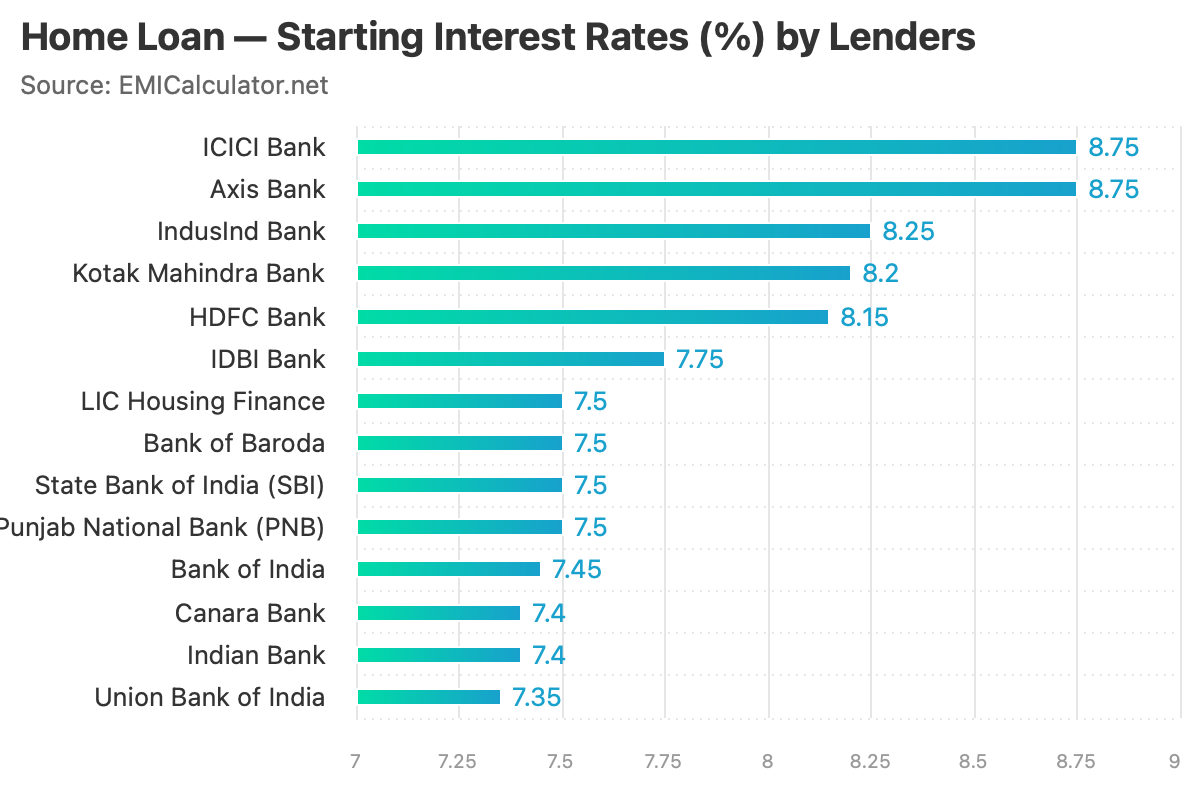
Lenders typically look at two DTI ratios:
- Front-End Ratio (Housing DTI): The percentage of your gross monthly income that goes towards housing costs (principal, interest, property taxes, homeowner’s insurance, and HOA fees).
- Back-End Ratio (Total DTI): The percentage of your gross monthly income that goes towards all monthly debt payments, including housing.
Most lenders prefer a back-end DTI ratio of 36% or lower for conventional loans, though some may go up to 43-50% depending on other compensating factors like a large down payment or significant reserves. A lower DTI indicates less financial strain and a greater ability to comfortably make mortgage payments, often leading to a better interest rate offer.
Down Payment Size and Loan-to-Value (LTV) Ratio
The size of your down payment plays a significant role in determining your interest rate because it directly impacts your Loan-to-Value (LTV) ratio. LTV is calculated by dividing the loan amount by the home’s appraised value.
- Lower LTV (Higher Down Payment): A larger down payment means you’re borrowing less relative to the home’s value. This translates to a lower LTV ratio, which lenders view as less risky. Borrowers with lower LTVs often qualify for lower interest rates and may avoid private mortgage insurance (PMI) if their down payment is 20% or more.
- Higher LTV (Lower Down Payment): A smaller down payment (and thus a higher LTV) is perceived as riskier by lenders. You’ll likely face a higher interest rate and will almost certainly be required to pay PMI.
Putting down more money upfront not only reduces your monthly principal and interest payment but also demonstrates a stronger financial commitment, often unlocking better rate options.
Loan Term and Points: Balancing Upfront Costs and Long-Term Payments
The length of your mortgage term and whether you pay “points” can also affect your interest rate.
- Loan Term: Shorter loan terms (e.g., 15-year mortgages) typically come with lower interest rates compared to longer terms (e.g., 30-year mortgages). While the monthly payment will be higher on a 15-year loan, you pay significantly less interest over the life of the loan. Lenders view shorter terms as less risky because their money is tied up for a shorter period.
- Mortgage Points (Discount Points): These are fees paid directly to the lender at closing in exchange for a lower interest rate. One point typically costs 1% of the loan amount. Paying points can be a strategic move if you plan to stay in the home for many years, as the long-term savings from a lower interest rate can outweigh the upfront cost. However, it increases your closing costs.
Each of these personal factors combines to create your unique interest rate profile. Understanding and optimizing these elements can lead to substantial savings on your home loan.
Strategies for Securing the Best Home Loan Rate
Given the significant impact interest rates have on your long-term financial health, actively working to secure the lowest possible rate is paramount. It involves careful preparation, diligent research, and savvy negotiation.
The Importance of Shopping Around and Comparing Lenders
One of the most effective ways to find the best interest rate is to shop around and compare offers from multiple lenders. Just like buying any other major product, different financial institutions will have varying pricing structures, fees, and promotional rates.
- Get Quotes from Diverse Lenders: Don’t just stick to your existing bank. Reach out to large national banks, smaller community banks, credit unions, and online mortgage lenders. Each type of institution may offer different advantages.
- Compare Apples to Apples: When comparing offers, look beyond just the interest rate. Focus on the Annual Percentage Rate (APR), which includes the interest rate plus certain closing costs and fees, giving you a more accurate picture of the total cost of borrowing. Also, scrutinize all closing costs and lender fees.
- Timing is Key: Mortgage rate quotes are typically only good for a specific period (e.g., 30-60 days). Get all your quotes around the same time to ensure you’re comparing rates under similar market conditions. Many credit bureaus allow you to check multiple mortgage rates within a 14-45 day window without it negatively impacting your credit score multiple times.
A difference of even a quarter of a percentage point can translate to tens of thousands of dollars in savings over a 30-year loan, making the effort of comparing indispensable.
Improving Your Financial Profile Before Applying
Taking proactive steps to enhance your financial standing before you even apply for a mortgage can significantly improve the rates you’re offered.
- Boost Your Credit Score:
- Pay bills on time, every time. Payment history is the most important factor in your credit score.
- Reduce outstanding debt, especially on credit cards, to lower your credit utilization ratio.
- Avoid opening new credit accounts or making large purchases before and during the mortgage application process.
- Check your credit report for errors and dispute any inaccuracies.
- Reduce Your Debt-to-Income Ratio:
- Pay down existing debts (credit cards, auto loans, student loans).
- Avoid taking on new debt.
- Consider increasing your income, if possible.
- Increase Your Down Payment:
- Save as much as you can. A larger down payment (20% or more) can help you secure a lower interest rate and avoid PMI.
- Explore down payment assistance programs if eligible.
- Build Cash Reserves: Lenders look favorably upon borrowers who have a healthy amount of savings (reserves) in their bank accounts after closing on the loan. This demonstrates financial stability and an ability to weather unexpected expenses.
These improvements show lenders you’re a responsible borrower, making them more willing to offer you their most competitive rates.
Understanding Rate Locks and Closing Costs
Beyond the quoted interest rate, two other elements are crucial to grasp: rate locks and closing costs.
- Rate Locks: A rate lock guarantees the interest rate you’ve been offered for a specific period (e.g., 30, 45, or 60 days) while your loan application is processed. This protects you if market rates rise during the underwriting period. Most lenders offer free rate locks for a standard period, but longer locks might come with a fee. It’s vital to choose a lock period that gives your lender ample time to close the loan.
- Closing Costs: These are fees and expenses paid at the closing of a real estate transaction. They typically range from 2% to 5% of the loan amount and can include origination fees, appraisal fees, title insurance, attorney fees, and more. While some closing costs are fixed, others can be negotiated or vary between lenders. A lower interest rate might sometimes come with higher closing costs (e.g., by paying points), so it’s essential to analyze the trade-off. Your Loan Estimate form, provided by lenders, breaks down all these costs transparently.
By diligently shopping for lenders, strengthening your financial profile, and understanding the nuances of rate locks and closing costs, you put yourself in the strongest position to secure the most advantageous interest rate on your home loan today.
The Broader Impact of Interest Rates on Homeownership
Understanding “what is the interest rate on a home loan today” extends beyond merely getting the best deal. These rates have profound and lasting implications for your monthly budget, the total cost of your home, and your overall financial flexibility as a homeowner.
Monthly Payments and Affordability
The most immediate and tangible impact of interest rates is on your monthly mortgage payment. Even a slight variation in the interest rate can lead to a significant difference in how much you pay each month. For instance, on a $300,000 30-year fixed-rate mortgage:
- At 6.5% interest, the principal and interest payment is approximately $1,896.
- At 6.0% interest, the principal and interest payment is approximately $1,799.
- At 5.5% interest, the principal and interest payment is approximately $1,703.
This illustrates that a difference of just 0.5% to 1.0% can save you $97 to $193 per month, making a considerable impact on your budget and what you can comfortably afford. Higher interest rates reduce your purchasing power, meaning for the same monthly payment, you can afford a smaller loan amount and thus a less expensive home.
Long-Term Cost of Borrowing
Beyond the monthly payment, interest rates dramatically affect the total amount of money you’ll pay back over the life of the loan. The compounding effect of interest over 15 or 30 years means that a seemingly small percentage difference can add up to tens or even hundreds of thousands of dollars.
Using the same $300,000 30-year fixed-rate mortgage example:
- At 6.5% interest, the total interest paid over 30 years is approximately $382,752.
- At 6.0% interest, the total interest paid over 30 years is approximately $347,732.
- At 5.5% interest, the total interest paid over 30 years is approximately $313,296.
This clearly shows that a 1% difference in your interest rate can result in over $69,000 in additional interest paid over three decades. This highlights why securing the lowest possible rate is not just about monthly savings but about massive long-term financial benefits.

Market Conditions and Refinancing Opportunities
Interest rates are not static; they ebb and flow with market conditions. This volatility creates opportunities for homeowners, particularly through refinancing.
- When Rates Fall: If interest rates drop significantly after you’ve secured your initial mortgage, you might have an opportunity to refinance your loan. Refinancing involves taking out a new loan to pay off your old one, ideally at a lower interest rate. This can reduce your monthly payments, lower the total interest paid over time, or allow you to switch from an ARM to a fixed-rate mortgage for greater stability.
- Strategic Refinancing: Beyond just lower rates, refinancing can also be used to:
- Change your loan term (e.g., from 30 to 15 years to pay off faster).
- Tap into your home equity (cash-out refinance) for other financial needs.
- Remove private mortgage insurance (PMI) once you’ve built sufficient equity.
However, refinancing comes with its own set of closing costs, so it’s essential to calculate whether the long-term savings outweigh the upfront expenses. Generally, if you can reduce your interest rate by at least 0.75% to 1.0% and plan to stay in the home long enough to break even on the refinancing costs, it might be a worthwhile consideration.
In conclusion, the interest rate on a home loan today is more than just a number; it is a critical determinant of financial feasibility, long-term costs, and future opportunities in your homeownership journey. Staying informed about market trends, diligently managing your financial profile, and strategically exploring your loan options are key to making the most financially sound decisions for your home.
aViewFromTheCave is a participant in the Amazon Services LLC Associates Program, an affiliate advertising program designed to provide a means for sites to earn advertising fees by advertising and linking to Amazon.com. Amazon, the Amazon logo, AmazonSupply, and the AmazonSupply logo are trademarks of Amazon.com, Inc. or its affiliates. As an Amazon Associate we earn affiliate commissions from qualifying purchases.