
Every moment, in the vast expanse above us, an intricate dance of metal, data, and human ingenuity unfolds. While the average person might glance up and spot a singular contrail against the blue, the reality is a breathtaking symphony of global movement – an astonishing volume of air traffic made possible by an ever-evolving technological ecosystem. The question “how many planes fly every day?” isn’t merely a statistical curiosity; it’s a gateway into understanding the sophisticated digital and physical infrastructure that underpins modern air travel, facilitating billions of journeys annually. This article delves into the technological marvels that track, manage, and propel this monumental daily ballet across our skies.

The Digital Pulse of the Skies: Quantifying Global Air Traffic
The sheer scale of daily aviation is nothing short of astounding, representing a pinnacle of human achievement in engineering and coordination. However, comprehending this scale requires more than just raw numbers; it demands an understanding of the advanced technological systems that meticulously track every departure, ascent, descent, and arrival, creating a real-time digital representation of our bustling airspace.
Aggregating the Astonishing Numbers: Sensors, Satellites, and Big Data
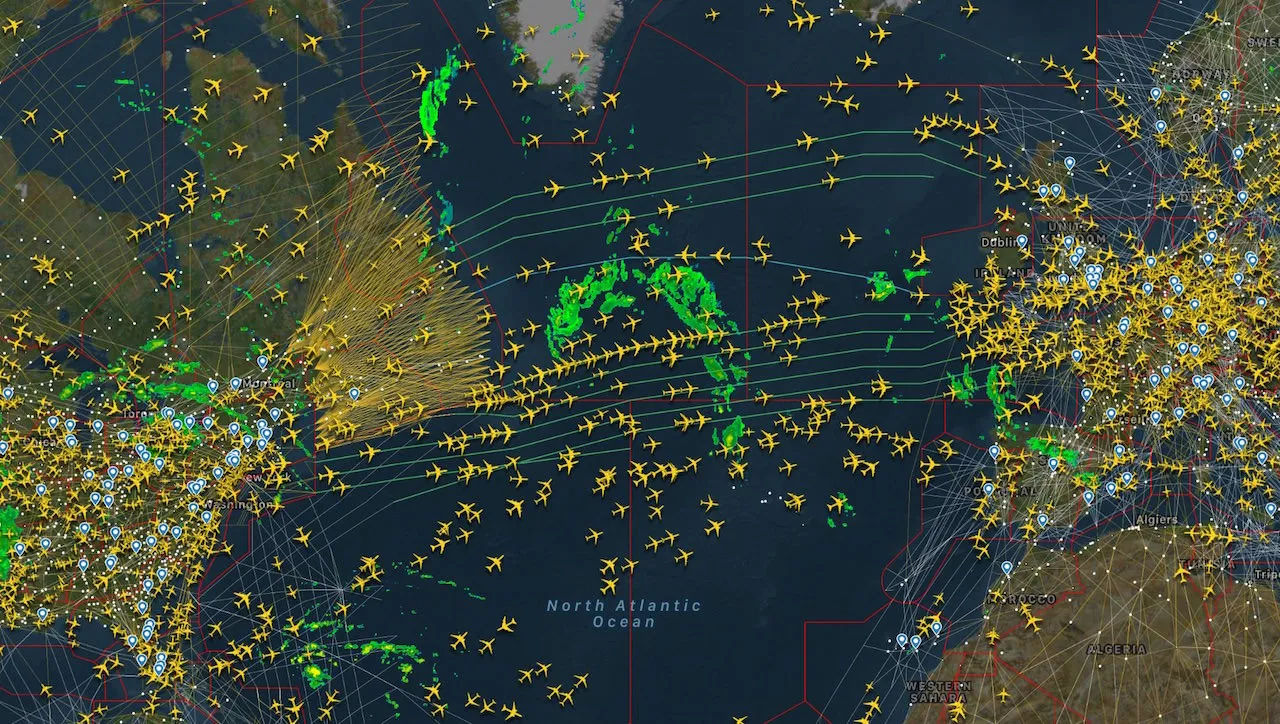
On an average day, the global aviation network facilitates approximately 100,000 flights. This isn’t a static figure; it’s a dynamic number that can swell to over 120,000 during peak seasons like summer holidays or major festive periods. Imagine: roughly one aircraft takes off or lands somewhere in the world every second. This incredible feat of data aggregation isn’t achieved by a single system but through a confluence of technologies:
- ADS-B (Automatic Dependent Surveillance-Broadcast): A cornerstone of modern flight tracking, ADS-B transmitters on aircraft continuously broadcast precise position data (derived from GPS), velocity, and other critical information to ground stations and other aircraft. This digital signal forms the primary data stream for many flight tracking websites and air traffic control systems.
- Radar Systems: While ADS-B is increasingly prevalent, traditional primary and secondary radar systems remain vital. Primary radar detects aircraft by bouncing radio waves off their airframes, while secondary radar interrogates a transponder on the aircraft, which then sends back identifying information. These systems provide a robust backup and cover areas where ADS-B infrastructure might be sparse.
- Satellite Tracking: For flights over oceans or remote areas beyond terrestrial radar and ADS-B ground station range, satellite-based ADS-B receivers pick up aircraft broadcasts. Companies like Aireon have deployed ADS-B receivers on low Earth orbit satellites, providing unprecedented global coverage and closing once-blind spots.
- Flight Data Recorders and Digital Logbooks: Beyond real-time tracking, every flight generates a massive amount of operational data. Digital flight data recorders capture hundreds of parameters per second, while electronic logbooks document maintenance, fuel loads, and crew information. These form a vast repository of historical data, crucial for analysis, efficiency improvements, and safety investigations.
These disparate data streams are fed into sophisticated big data platforms, where they are processed, visualized, and analyzed, providing a comprehensive, real-time picture of global air traffic. This digital pulse informs everyone from individual travelers checking flight statuses to national air traffic management agencies orchestrating complex airspace flows.
The Invisible Digital Canvas: Mapping Global Airflow and Congestion
The movement of 100,000 aircraft isn’t a chaotic free-for-all; it’s an intricately choreographed ballet on an invisible digital canvas. Major flight corridors over North America, Europe, and increasingly Asia, represent the busiest airspaces. Technology plays an indispensable role in visualizing, managing, and predicting the flow of this traffic, identifying potential bottlenecks, and optimizing routes.
- Geospatial Information Systems (GIS): GIS platforms are fundamental to displaying flight paths, weather overlays, restricted airspace, and airport layouts. They transform raw positional data into intuitive, actionable visual information for controllers and pilots.
- Predictive Analytics and AI: Advanced algorithms analyze historical flight data, weather forecasts, and current traffic patterns to predict potential congestion points, delays, and optimal routing strategies. AI-driven tools can suggest alternative routes or holding patterns to minimize delays and fuel burn, enhancing the overall efficiency of the network.
- Flow Management Systems: Regional and global flow management systems use real-time data to regulate the volume of traffic entering specific airspace sectors or airports, preventing overload. These systems rely heavily on data exchange protocols and advanced software to ensure seamless coordination across different Air Traffic Control (ATC) centers and national boundaries.
This digital canvas, continuously updated by a torrent of real-time data, allows for the dynamic management of airspace, ensuring safety and optimizing the flow of millions of passengers and tons of cargo every single day.
At the Core: Air Traffic Control and Navigation Technologies
The safe and efficient movement of aircraft hinges on the highly advanced technologies employed by Air Traffic Control (ATC) and the sophisticated navigation systems integrated into every aircraft. These form the critical brain and nervous system of global aviation.
The Evolution of Tracking: From Analog Radar to Digital Networked Systems
The technology underpinning air traffic management has undergone a profound transformation. What began with basic ground-based radar systems has evolved into a highly integrated, digitally networked infrastructure.
- Primary and Secondary Radar (Legacy & Enhancement): While older primary radar systems simply detected reflections, secondary radar, requiring an aircraft transponder, introduced the ability to identify specific aircraft and their altitudes. Modern radar systems are highly digitized, providing cleaner data and integrating with other surveillance methods.
- ADS-B (Automatic Dependent Surveillance-Broadcast): As mentioned, ADS-B represents a significant leap forward. Unlike radar, which ‘sees’ aircraft, ADS-B allows aircraft to ‘broadcast’ their position, making them visible to both ground stations and other aircraft. This ‘air-to-air’ capability enhances situational awareness for pilots and provides higher accuracy and refresh rates than traditional radar.
- Multilateration (MLAT): In areas where ADS-B coverage might be limited or in complex airport environments, MLAT systems use multiple ground receivers to pinpoint an aircraft’s position by measuring the time difference of arrival (TDOA) of its transponder signals. This technology is particularly effective for surface movement tracking at busy airports.
The trend is towards a more collaborative surveillance environment, where data from all these sources is fused, providing controllers with the most accurate, comprehensive, and up-to-date picture of the airspace, often displayed on advanced digital workstations.
The Digital Brain of ATC: Software, AI, and Predictive Analytics
Modern ATC centers are less about physical controls and more about sophisticated software platforms, data analytics, and decision-support tools.
- Air Traffic Management (ATM) Software Suites: These comprehensive software systems integrate data from all surveillance sources, display aircraft positions, manage flight plans, and generate alerts for potential conflicts. They provide controllers with intuitive graphical user interfaces (GUIs) to manage complex airspace sectors.
- AI and Machine Learning for Conflict Detection and Resolution: AI algorithms are being developed and deployed to enhance predictive capabilities, identifying potential conflicts well in advance and even suggesting optimal resolutions. These systems can process vast amounts of data—including weather, aircraft performance, and airspace restrictions—to guide controllers in making faster, more informed decisions.
- Voice Communication Systems (VCS) and Digital Air-Ground Communications: While radio remains critical, there’s a growing move towards more efficient digital communication protocols, such as Controller-Pilot Data Link Communications (CPDLC). CPDLC allows for text-based exchanges of routine instructions, reducing radio congestion and misunderstandings, especially in non-urgent situations.
These technological advancements empower air traffic controllers to manage increasingly complex and congested airspace with enhanced safety and efficiency, moving beyond reactive control to proactive, predictive management.
Data, Automation, and the Future of Flight Management
The aviation industry is a prime beneficiary of the digital revolution, with data and automation increasingly shaping its present and future. As demand for air travel continues to grow, technology provides the pathways to scalability, sustainability, and unprecedented levels of operational efficiency.
Big Data in Aviation: Optimizing Routes, Schedules, and Resources
Every flight generates terabytes of data, from engine performance metrics to passenger manifests. Harnessing this “big data” is transforming how airlines operate and how the global air traffic network is managed.
- Operational Intelligence and Performance Monitoring: Airlines use data analytics to monitor aircraft performance in real-time, optimize fuel consumption, predict maintenance needs, and manage crew schedules more effectively. This data-driven approach leads to significant cost savings and improved operational reliability.
- Dynamic Route Optimization: Algorithms constantly analyze weather patterns, turbulence reports, and real-time air traffic density to suggest the most fuel-efficient and timely flight paths. This dynamic routing reduces flight times, cuts fuel costs, and minimizes environmental impact.
- Airport Resource Management: Airports use big data and AI to optimize everything from gate assignments and baggage handling to security screening and passenger flow. Predictive models can anticipate passenger surges and allocate resources proactively, enhancing the overall airport experience.
This constant feedback loop of data collection, analysis, and application creates a living, evolving system that continuously refines operations across the entire aviation ecosystem.
Autonomous Systems and Next-Gen Airspace Management
The horizon of aviation technology is marked by advancements in automation and, eventually, autonomous operations, which promise to revolutionize air travel and airspace management.
- Unmanned Aircraft Systems (UAS) Integration: The proliferation of drones, from recreational to commercial, necessitates sophisticated UTM (UAS Traffic Management) systems. These systems, often leveraging AI and cloud computing, are designed to safely integrate autonomous drone operations into existing airspace, managing flight plans, geofencing, and conflict avoidance for a new class of air vehicles.
- Urban Air Mobility (UAM) and Air Taxis: Concepts like electric vertical take-off and landing (eVTOL) aircraft for urban air mobility are pushing the boundaries of airspace management. Future UAM networks will require highly automated, interconnected air traffic systems capable of managing thousands of simultaneous, short-distance flights within dense urban environments, far exceeding the current complexity of conventional air traffic.
- Single Pilot Operations and Autonomous Flight: While full autonomy in commercial passenger jets is still a distant prospect, technological advancements are paving the way for reduced crew operations and more highly automated cockpits. AI-powered co-pilots and advanced automation systems will enhance safety and efficiency by offloading routine tasks and assisting pilots in complex situations.
The development of these autonomous capabilities necessitates a parallel evolution of air traffic management systems, moving towards highly automated, self-organizing networks capable of overseeing diverse types of air vehicles.
Cybersecurity in the Clouds: Protecting Critical Aviation Infrastructure
As aviation becomes increasingly digital and interconnected, the vulnerability to cyber threats grows. Protecting the critical infrastructure, from ATC systems to aircraft avionics, is paramount.
- Network Security for ATM Systems: Air Traffic Management systems are critical national infrastructure and are protected by multi-layered cybersecurity defenses, including firewalls, intrusion detection systems, and encryption. Regular audits and threat intelligence sharing are essential to anticipate and counter emerging threats.
- Aircraft Cybersecurity: Modern aircraft are essentially flying networks, with hundreds of interconnected systems. Securing these systems from unauthorized access, both on the ground and in the air, is a complex challenge. This involves robust software security, hardware-level protections, and secure data links.
- Data Integrity and Resilience: Ensuring the integrity of flight data, communication, and navigation signals is crucial. This involves employing cryptographic measures, redundant systems, and robust recovery protocols to maintain operational continuity even in the face of cyberattacks or system failures.
The ongoing battle against cyber threats is a critical component of ensuring the safety and reliability of the global aviation network, a testament to the fact that technological advancement must always be paired with robust security measures.
The Indispensable Role of Technology
The question “how many planes fly every day?” serves as a powerful reminder of the extraordinary achievements in aviation technology. From the intricate network of sensors and satellite links that track every movement to the sophisticated AI-driven software that manages complex airspace, technology is the invisible force enabling this daily marvel. It’s the radar that paints a picture of the skies, the software that orchestrates millions of data points, and the communication systems that connect pilots to controllers, all working in concert to ensure the safest and most efficient mode of transport on the planet.
As we look to the future, with the advent of urban air mobility, more autonomous operations, and the pursuit of sustainable aviation, the role of technology will only intensify. It will be the engine driving further innovation, ensuring that the skies remain a vibrant, safe, and increasingly efficient global thoroughfare for generations to come. The daily symphony of 100,000 flights is, at its heart, a profound testament to the power and sophistication of modern technology.
aViewFromTheCave is a participant in the Amazon Services LLC Associates Program, an affiliate advertising program designed to provide a means for sites to earn advertising fees by advertising and linking to Amazon.com. Amazon, the Amazon logo, AmazonSupply, and the AmazonSupply logo are trademarks of Amazon.com, Inc. or its affiliates. As an Amazon Associate we earn affiliate commissions from qualifying purchases.