
In an increasingly digital world, concepts often emerge that reshape our understanding of how information is stored, secured, and exchanged. Among these, blockchain technology stands out as a fundamental innovation, promising to redefine trust and transparency across various sectors. While often associated primarily with cryptocurrencies like Bitcoin, blockchain is a much broader technological paradigm. At its core, a blockchain is a decentralized, distributed ledger that records transactions in a secure, verifiable, and immutable way. This intricate system leverages advanced cryptography and network protocols to create a digital record-keeping system that is inherently resistant to modification and tampering.
To truly grasp “what’s a blockchain,” one must look beyond its most famous applications and delve into its architectural underpinnings. It represents a paradigm shift from centralized databases, where a single entity holds control and authority, to a peer-to-peer network where data integrity is maintained collectively by participants. This move towards decentralization is not merely a technical alteration but a philosophical one, empowering users and fostering an environment of shared accountability. Understanding this technology requires an exploration of its foundational components, its defining characteristics, the varied forms it can take, and its profound implications for the future of digital interactions.
The Foundational Mechanics: How Blockchain Operates
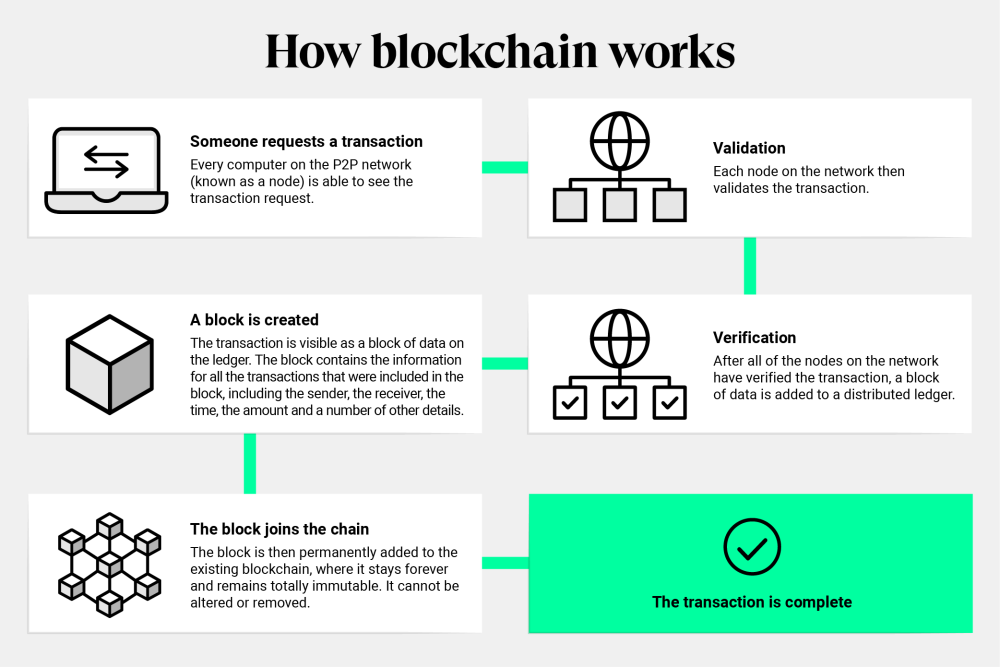
The ingenuity of blockchain lies in its elegantly designed architecture, which interweaves several established computer science principles into a novel system. It’s a chain of blocks, where each “block” contains a batch of transactions, and these blocks are linked together chronologically and cryptographically. This interlocking structure is what gives blockchain its remarkable security and immutability.
Blocks, Chains, and Cryptographic Links
Each block within a blockchain is essentially a container for data. While the specific data can vary depending on the blockchain’s purpose (e.g., transaction details for financial ledgers, sensor readings for supply chains), every block typically contains three key elements:
- Data: The actual information being recorded, such as transaction details (sender, receiver, amount).
- Hash of the Current Block: A unique digital fingerprint generated by a cryptographic hash function, representing all the data within that block. Even a tiny change in the data would result in a completely different hash.
- Hash of the Previous Block: This is the crucial link that forms the “chain.” Each new block includes the hash of the block that came before it. This linkage is what makes the blockchain tamper-proof. If someone tries to alter a transaction in an old block, its hash would change, invalidating the hash stored in the subsequent block, and thus breaking the entire chain.
This sequential and cryptographic linkage ensures that altering historical data is virtually impossible without re-mining every subsequent block, a task that becomes exponentially difficult as the chain grows longer and more computationally intensive.
Decentralization and the Distributed Ledger
One of the most revolutionary aspects of blockchain is its decentralized nature. Unlike traditional databases, which are controlled by a central authority (like a bank or a government server), a blockchain’s ledger is distributed across a network of computers, known as “nodes.” Every node in the network holds a complete or partial copy of the entire blockchain.
When a new block is created and validated, it is broadcast to all nodes, and each node updates its copy of the ledger. This distribution means there is no single point of failure or control. If one node goes offline or is compromised, the integrity of the ledger remains intact because thousands of other nodes continue to operate and verify the chain. This distributed consensus model fosters transparency and trust, as no single entity can unilaterally change the records. It democratizes data ownership and ensures that the ledger remains consistent and reliable across the entire network.
Consensus Mechanisms: Securing the Network
For a decentralized network to function, there must be a mechanism for all participants to agree on the valid state of the ledger. This is where consensus mechanisms come into play. They are protocols that ensure all nodes on the network agree on the validity of new transactions and the order in which new blocks are added to the chain. Without consensus, different nodes might have conflicting versions of the ledger, undermining the entire system.
The most well-known consensus mechanism is Proof of Work (PoW), popularized by Bitcoin. In PoW, “miners” compete to solve complex computational puzzles. The first miner to solve the puzzle gets to add the next block to the chain and is rewarded. This process is energy-intensive but highly secure, as altering the chain would require redoing an immense amount of computational work. Another prominent mechanism is Proof of Stake (PoS), used by Ethereum 2.0 and many other blockchains. In PoS, validators are chosen to create new blocks based on the amount of cryptocurrency they “stake” as collateral. This method is generally more energy-efficient and scalable than PoW, as it doesn’t rely on competitive computational effort. Other mechanisms like Delegated Proof of Stake (DPoS), Proof of Authority (PoA), and variations are continually being developed to optimize for speed, security, and decentralization across different blockchain applications.
Core Characteristics That Define Blockchain
Beyond its operational mechanics, blockchain possesses a set of inherent characteristics that distinguish it from traditional data management systems and drive its potential for transformative impact. These attributes collectively contribute to its robust security, transparency, and resilience.
Immutability and Transparency: The Trust Pillars
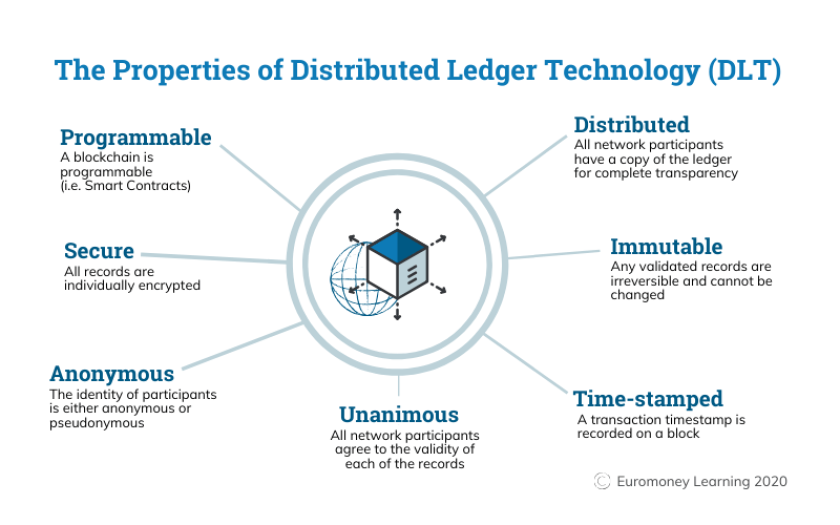
One of the most celebrated features of blockchain is its immutability. Once a transaction or data record has been added to a block and that block has been appended to the chain, it is virtually impossible to alter or delete it. This is due to the cryptographic hashing of blocks and their sequential linking; changing an old block would necessitate recalculating all subsequent hashes, a task that becomes computationally infeasible very quickly. This permanence provides an unparalleled level of data integrity, making blockchain an ideal solution for systems where an unchangeable audit trail is critical.
Coupled with immutability is transparency. In a public blockchain, all transactions are visible to every participant in the network. While the identities of the participants are often pseudonymous (represented by cryptographic addresses rather than real names), the historical record of all activities is open for inspection. This level of transparency fosters trust, as users can independently verify the ledger’s contents, eliminating the need to trust a central intermediary. This open auditability stands in stark contrast to opaque centralized systems where data manipulation can occur without public knowledge.
Enhanced Security and Resilience
The security of a blockchain network is multifaceted, drawing power from its distributed nature and cryptographic foundations. The use of advanced cryptography ensures that data within blocks is secure and that transactions are authenticated. Each transaction is digitally signed, guaranteeing its authenticity and preventing unauthorized modifications.
Furthermore, the distributed architecture itself is a massive security advantage. A blockchain network is highly resilient to cyberattacks because there is no single point of failure. To compromise the network, an attacker would need to gain control of a majority of the distributed nodes simultaneously, often referred to as a “51% attack.” For large, established public blockchains with thousands of nodes globally, such an attack is prohibitively expensive and logistically challenging, rendering them exceptionally secure against malicious actors. This resilience makes blockchain an attractive technology for critical infrastructure and sensitive data management.
The Power of Decentralization: Beyond Central Control
The concept of decentralization is perhaps the most defining and powerful characteristic of blockchain. It fundamentally changes the relationship between users and data by removing the need for a central authority or intermediary. In traditional systems, banks, governments, or large corporations act as trusted third parties, facilitating transactions and maintaining records. This concentration of power can lead to vulnerabilities, censorship, and data breaches.
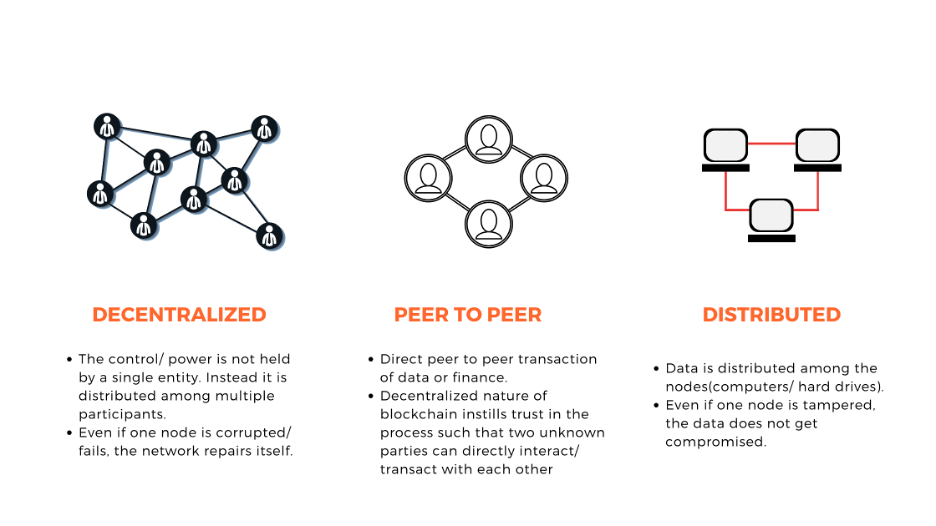
Decentralization eliminates this single point of control. Decisions regarding network updates, transaction validations, and data integrity are made collectively by the network participants through the consensus mechanism. This distributed governance model ensures that no single entity can dictate rules, censor transactions, or unilaterally alter the ledger. For users, this means greater autonomy, censorship resistance, and enhanced privacy (through pseudonymity). For organizations, it offers a pathway to creating more robust, transparent, and resilient systems that are not beholden to a single gatekeeper, fostering an ecosystem of trustless interaction where trust is built into the protocol itself, rather than relying on external institutions.
Diverse Architectures and Their Use Cases
While the core principles of blockchain remain consistent, the technology isn’t a monolithic entity. Different types of blockchain architectures have emerged, each designed to address specific needs and use cases, extending its applicability far beyond just cryptocurrencies.
Public, Private, and Consortium Blockchains
Blockchains can broadly be categorized into three main types based on their access and permissioning structures:
- Public Blockchains (Permissionless): These are fully decentralized networks open to anyone. Anyone can join, read the ledger, submit transactions, and participate in the consensus process (e.g., mining or validating). Bitcoin and Ethereum are prime examples. They offer maximum transparency and censorship resistance but can face challenges with scalability and privacy for certain enterprise applications due to the open nature of their data.
- Private Blockchains (Permissioned): These are controlled by a single organization. Participation requires permission, meaning only authorized entities can join the network, read data, and validate transactions. While still distributed, they are not decentralized in the same way as public blockchains. They offer higher transaction speeds, greater privacy, and more control over who participates, making them suitable for internal enterprise use cases where full public transparency isn’t desired (e.g., managing internal supply chain records). Hyperledger Fabric is a popular framework for private blockchains.
- Consortium Blockchains: These are a hybrid model, where multiple organizations govern a single blockchain network. They are permissioned, but control is distributed among a pre-selected group of participants rather than a single entity. This provides a balance between the decentralization of public chains and the control/privacy of private chains, making them ideal for inter-organizational collaborations, such as supply chain tracking involving multiple companies or industry-wide data sharing initiatives.
Smart Contracts: Automating Trust
A significant technological leap within the blockchain ecosystem, particularly pioneered by Ethereum, is the concept of smart contracts. These are self-executing contracts with the terms of the agreement directly written into lines of code. The code and the agreements contained therein exist across a decentralized, distributed blockchain network.
When predetermined conditions are met, the smart contract automatically executes the agreed-upon actions, without the need for intermediaries. For example, a smart contract could automatically release payment to a supplier once a shipment is verified as delivered, or transfer ownership of a digital asset once funds are received. This automation reduces friction, eliminates the need for trusted third parties, lowers costs, and increases the speed and efficiency of transactions. Smart contracts are foundational for many advanced blockchain applications, from decentralized finance (DeFi) to digital identity management and beyond.
Beyond Cryptocurrencies: Real-World Applications
While blockchain gained prominence through Bitcoin, its technological capabilities extend far beyond digital currencies. Its core attributes – immutability, transparency, security, and decentralization – make it applicable to a vast array of industries and use cases:
- Supply Chain Management: Tracking goods from origin to consumer, ensuring authenticity, transparency, and accountability for every step, reducing fraud and improving efficiency.
- Healthcare: Securely managing patient records, ensuring data privacy while enabling seamless sharing between authorized providers, and tracking pharmaceutical supply chains.
- Digital Identity: Creating self-sovereign digital identities that give individuals greater control over their personal data, reducing reliance on centralized identity providers.
- Voting Systems: Enhancing the security, transparency, and auditability of electoral processes, reducing the potential for fraud and increasing public trust.
- Real Estate: Streamlining property title transfers, reducing paperwork, and improving transparency in land registries.
- Intellectual Property: Timestamping creations to prove ownership and track usage rights for artists, musicians, and creators.
- Non-Fungible Tokens (NFTs): Representing unique digital assets (art, collectibles, media) on a blockchain, proving ownership and authenticity through their immutable records.
These diverse applications highlight blockchain’s potential as a foundational technology for building more transparent, efficient, and secure digital infrastructures across the global economy.
Navigating the Landscape: Advantages, Challenges, and the Future
Like any nascent yet powerful technology, blockchain presents a dual landscape of immense opportunities tempered by significant hurdles that require ongoing innovation and careful consideration.
Key Benefits Across Industries
The widespread interest in blockchain stems from its compelling advantages over traditional systems:
- Enhanced Security: The cryptographic linking of blocks and the distributed nature of the ledger make data highly resistant to tampering and cyberattacks.
- Increased Transparency and Trust: Public and consortium blockchains offer verifiable, immutable records, reducing the need for trust in intermediaries and fostering greater accountability.
- Improved Efficiency and Speed: Automation through smart contracts and the elimination of intermediaries can significantly streamline processes, reduce paperwork, and speed up transaction settlement.
- Reduced Costs: By cutting out third-party fees and manual processes, blockchain can lead to substantial cost savings in various operations.
- Decentralization and Censorship Resistance: No single entity controls the network, making it resilient to censorship and unilateral control, empowering users and fostering an open ecosystem.
- Data Integrity and Auditability: The immutable ledger provides an undeniable audit trail, crucial for compliance, forensics, and verifying historical data.
Overcoming Hurdles: Scalability, Energy, and Regulation
Despite its promising attributes, blockchain technology faces several critical challenges that developers and policymakers are actively working to address:
- Scalability: Many public blockchains, especially those using Proof of Work, struggle with processing a high volume of transactions per second compared to centralized systems like Visa. This “blockchain trilemma” (balancing decentralization, security, and scalability) is a major focus of research, with solutions like sharding, layer-2 protocols (e.g., Lightning Network), and alternative consensus mechanisms being developed.
- Energy Consumption: Proof of Work blockchains, particularly Bitcoin, consume vast amounts of energy due to the computational intensity of mining. While more energy-efficient mechanisms like Proof of Stake are gaining traction, the environmental impact remains a concern.
- Regulatory Uncertainty: The decentralized and borderless nature of blockchain and cryptocurrencies poses significant challenges for traditional regulatory frameworks. Governments worldwide are still grappling with how to classify, govern, and tax blockchain-based assets and applications, creating an environment of uncertainty for businesses and innovators.
- Interoperability: Different blockchains often operate in isolated silos, making it difficult for them to communicate and exchange data or assets seamlessly. Developing standards and protocols for cross-chain interoperability is crucial for the broader adoption of the technology.
- Complexity and User Experience: For many, understanding and interacting with blockchain technology remains complex, hindering mainstream adoption. User-friendly interfaces and simplified processes are necessary to onboard a wider audience.
The Evolving Horizon of Blockchain Technology
The trajectory of blockchain technology is one of relentless innovation and expanding application. We are witnessing a maturation phase where initial hype is giving way to pragmatic development and enterprise adoption. Future developments will likely focus on:
- Further Scalability Solutions: Advancements in layer-2 solutions, new consensus algorithms, and modular blockchain designs will continue to enhance transaction throughput and reduce latency.
- Enhanced Interoperability: Bridges and cross-chain protocols will become more sophisticated, allowing different blockchains to interact seamlessly and create a more interconnected digital ecosystem.
- Sustainability: The shift towards more energy-efficient consensus mechanisms and the development of “green” blockchain initiatives will address environmental concerns.
- Integration with Emerging Technologies: Blockchain will increasingly converge with AI, IoT, and edge computing to create highly intelligent, automated, and secure systems across smart cities, industries, and consumer applications.
- Institutional and Government Adoption: As regulatory clarity improves, more traditional financial institutions, corporations, and government bodies will integrate blockchain into their operations for increased efficiency, transparency, and security.
In conclusion, blockchain is far more than just the technology behind cryptocurrencies; it is a foundational digital infrastructure capable of redefining how trust, data, and value are managed in a decentralized world. By understanding its core mechanisms, defining characteristics, and diverse applications, we can begin to appreciate its profound potential to reshape industries, empower individuals, and build a more transparent and secure digital future. As the technology continues to evolve, its impact will undoubtedly grow, fundamentally altering our perception of digital interaction and security.
aViewFromTheCave is a participant in the Amazon Services LLC Associates Program, an affiliate advertising program designed to provide a means for sites to earn advertising fees by advertising and linking to Amazon.com. Amazon, the Amazon logo, AmazonSupply, and the AmazonSupply logo are trademarks of Amazon.com, Inc. or its affiliates. As an Amazon Associate we earn affiliate commissions from qualifying purchases.