
In an increasingly digital and subscription-driven economy, understanding the true financial implications of our recurring expenditures is paramount. Amazon Prime, a ubiquitous name in online retail and digital services, represents a significant annual or monthly commitment for millions worldwide. Beyond the initial sticker price, a savvy financial consumer must delve deeper into its value proposition, considering both direct costs and the more nuanced benefits and drawbacks. This article aims to meticulously break down the financial investment required for an Amazon Prime membership, dissecting its various tiers, discounts, and critically evaluating whether its extensive suite of benefits truly justifies the expense for different user profiles.

The Core Investment: Understanding Amazon Prime’s Price Structure
At its heart, an Amazon Prime membership is a financial transaction for a bundle of services. The cost is not static for everyone, as Amazon offers various pricing structures designed to cater to different segments of its vast customer base. Navigating these options is the first step in making an informed financial decision.
Standard Membership Tiers: Monthly vs. Annual
The most common decision for prospective and current Prime members revolves around the payment frequency. Amazon typically offers two primary options for its standard Prime membership:
- Annual Membership: This is generally the more cost-effective choice for long-term users. Paying for a full year upfront provides a discount compared to the cumulative monthly payments over the same period. For instance, if the monthly fee is $14.99, an annual payment of $139 (as of my last update) saves approximately $40 over a year. This upfront investment locks in the price for 12 months and mitigates the risk of future monthly price hikes during that period. For individuals or households confident in their consistent use of Prime services, the annual option represents a prudent financial optimization.
- Monthly Membership: Offering greater flexibility, the monthly option typically costs more on an annualized basis. At $14.99 per month (current as of my last update), this option allows users to subscribe for shorter periods, making it ideal for seasonal users, those testing the waters, or individuals with fluctuating financial circumstances. While more expensive over the long run, it avoids a large upfront payment, which can be beneficial for budgeting, especially if cash flow is a concern. It also allows for easier cancellation if the perceived value diminishes or personal financial priorities shift without being locked into a year-long commitment.
The choice between these two hinges on an individual’s financial planning, usage frequency, and risk assessment regarding future price changes. A quick calculation of the annual cost of the monthly plan versus the dedicated annual plan often reveals significant savings for the latter.
Accessible Options: Discounts for Students and Qualified Assistance Programs
Amazon recognizes the diverse financial situations of its customers and offers substantial discounts to make Prime more accessible, aligning with its strategy to penetrate various market segments. These discounted tiers are critical for specific demographics to leverage Prime’s benefits without bearing the full financial burden.
- Prime Student: For those enrolled in a college or university, Amazon offers a significantly reduced membership fee, often at 50% off the standard annual rate (e.g., $69 per year after a six-month free trial, as of my last update). This program not only provides the core Prime benefits but also frequently includes exclusive student deals and promotions. From a financial perspective, this is an excellent opportunity for students to access shipping, streaming, and other services at a fraction of the cost, making it a highly attractive value proposition for those on a tight budget. The free trial period further allows students to fully assess the benefits before committing financially.
- EBT/Medicaid Recipients: In a move to increase accessibility, Amazon also extends a discounted Prime membership to individuals receiving qualifying government assistance, such as EBT or Medicaid. This tier significantly reduces the monthly cost (e.g., $6.99 per month, as of my last update). This initiative reflects a broader trend of companies providing subsidized access to essential services for lower-income households. For these individuals, the reduced price makes vital services like free shipping more attainable, potentially helping to manage household budgets by reducing travel costs to physical stores and accessing competitive online pricing.
These specialized programs underscore Amazon’s tiered pricing strategy, designed to broaden its market reach while addressing different financial capacities. For eligible individuals, opting for these discounted plans is a smart financial move that maximizes value.
Navigating Price Changes and Future Considerations
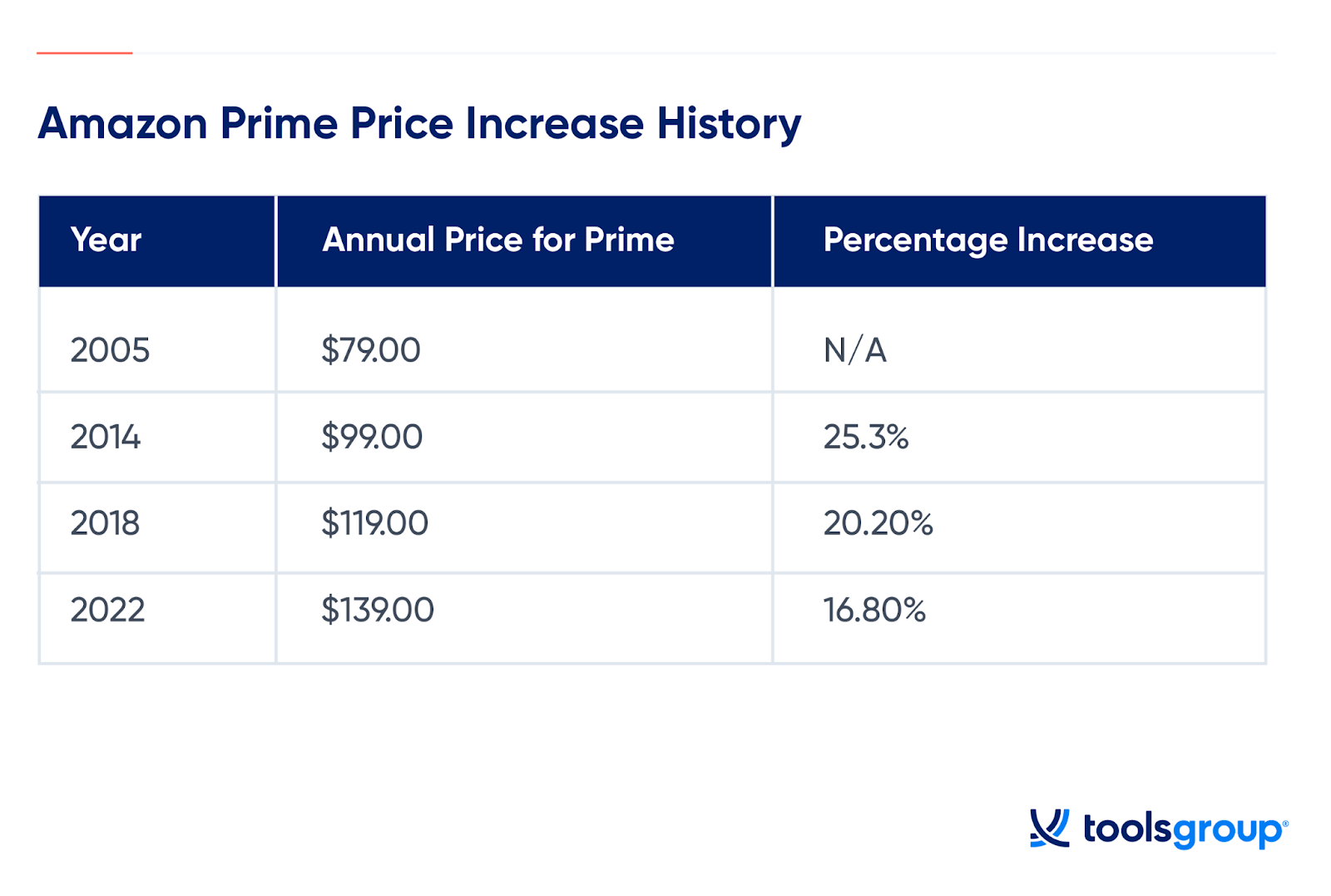
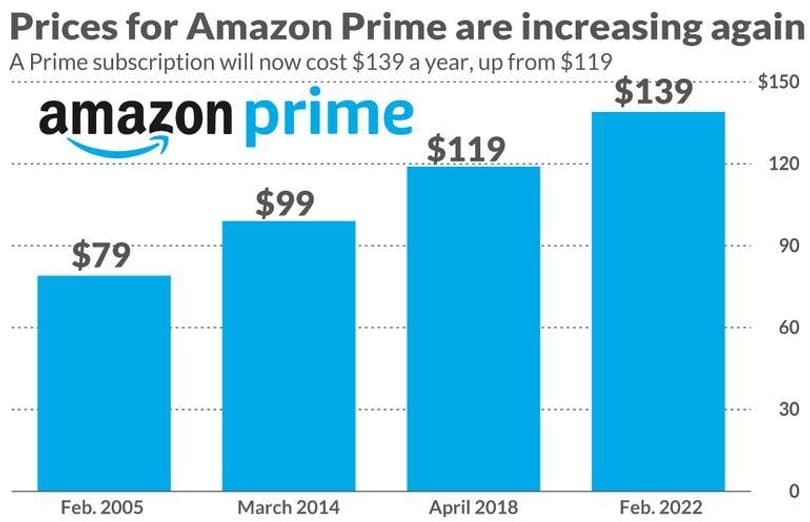
Like any subscription service, Amazon Prime is subject to price adjustments. Historically, Amazon has raised its Prime membership fees periodically, citing expanding benefits and rising operational costs. For instance, the annual fee increased from $99 to $119 in 2018 and then to $139 in 2022.
From a financial planning perspective, subscribers should be aware of these potential increases. Choosing an annual plan locks in the price for a year, offering a degree of predictability. However, monthly subscribers are more directly exposed to immediate price changes. Keeping an eye on Amazon’s official announcements and reviewing membership terms annually can help prevent surprises and allow for a proactive re-evaluation of the membership’s financial viability. Future considerations might also include new bundled services that could further justify price hikes or, conversely, make the subscription seem less appealing if one doesn’t use the new features.
Beyond the Price Tag: Quantifying Prime’s Value Proposition
The true cost of Amazon Prime isn’t just the membership fee; it’s the sum of what you pay versus what you save and gain. To properly assess its financial worth, one must break down the value of its extensive ecosystem of benefits.
Shipping Savings: The Most Tangible Financial Benefit
For many, the cornerstone of Prime’s financial appeal is its expedited and free shipping. In a world where individual shipping costs can quickly add up, Prime’s unlimited free two-day (and often one-day or same-day) delivery on millions of items offers substantial savings.
- Direct Cost Avoidance: If a non-Prime member places several orders a month, each incurring a shipping fee of $5-$10, these costs can easily surpass the monthly or even annual Prime fee. For example, just three orders a month with an average $7 shipping fee would amount to $21, quickly making a monthly Prime subscription ($14.99) a net saving. High-volume shoppers or households that frequently order essentials stand to save hundreds of dollars annually in shipping fees.
- Convenience and Time Value: While not a direct monetary saving, the convenience of fast, free shipping saves time and effort, which has an inherent value. Avoiding trips to brick-and-mortar stores, especially for urgent needs, frees up time that can be allocated to other productive activities, implicitly adding to its financial benefit.
Calculating your average monthly shipping costs without Prime is a critical exercise to determine if this benefit alone justifies the membership fee.
Entertainment Bundles: Valuing Prime Video, Music, and Gaming
Prime’s digital entertainment offerings are often cited as secondary benefits but hold significant financial value, especially when compared to standalone subscription services.
- Prime Video: Included with Prime, this streaming service offers a vast library of movies, TV shows, and Amazon Originals. If one were to subscribe to a comparable streaming service separately (e.g., Netflix, Hulu, HBO Max), the monthly cost could range from $7 to $20. For Prime members who would otherwise pay for another streaming service, Prime Video represents a direct financial saving, essentially providing entertainment at no additional cost beyond the core Prime fee.
- Amazon Music Prime: This tier of Amazon’s music service offers ad-free access to millions of songs. While not as extensive as Amazon Music Unlimited or Spotify Premium, it provides a solid music streaming option. Comparing it to basic ad-free music services, which can cost $5-$10 per month, reveals further savings.
- Prime Gaming (formerly Twitch Prime): Offers free games, in-game content, and a free channel subscription on Twitch. For gamers, particularly those who engage with Twitch, this can save money on in-game purchases and support streamers without direct payment.
The cumulative value of these entertainment options, if utilized, can easily surpass a significant portion of the Prime membership fee, especially if they replace other paid subscriptions. However, if these services go unused, their perceived financial value drops to zero for that individual.
Digital Perks: The Cost-Benefit of Prime Reading and Photos
Beyond shipping and entertainment, Prime offers a suite of digital perks that, while perhaps less prominent, contribute to its overall financial value proposition.
- Prime Reading: Provides access to a rotating selection of free eBooks, magazines, and comics. For avid readers, this can reduce the need to purchase individual titles, offering a modest but tangible saving, particularly if one reads several books a year.
- Amazon Photos: Offers unlimited full-resolution photo storage, plus 5 GB for videos. Compared to cloud storage services like Google One, Dropbox, or Apple iCloud, which charge monthly or annual fees for similar capacities, Amazon Photos provides a significant financial advantage for individuals who need reliable and extensive cloud storage for their memories. This benefit can easily save $5-$10 per month compared to alternative solutions.
These digital perks, though often overlooked, represent real financial savings for users who would otherwise pay for these services independently.
Exclusive Deals and Early Access: Hidden Financial Advantages
Prime membership also unlocks a range of exclusive deals and early access to sales events, which can lead to significant financial savings on specific purchases.
- Prime Day: This annual sales event offers deep discounts exclusively for Prime members. Savvy shoppers who plan their purchases around Prime Day can achieve substantial savings on big-ticket items or everyday essentials.
- Whole Foods Market Discounts: Prime members receive exclusive discounts and 5% back on selected items at Whole Foods Market, a significant perk for those who frequent the grocery chain. These ongoing savings can add up over time, offsetting a portion of the membership fee.
- Prescription Savings: Amazon Pharmacy offers exclusive discounts on prescription medications for Prime members, another often-overlooked financial benefit for those with regular medication needs.
These “hidden” benefits require active engagement and planning but can generate considerable financial returns, further enhancing the overall value proposition of Prime.
Is Amazon Prime a Prudent Financial Decision? A Cost-Benefit Analysis
Deciding whether Amazon Prime is a financially sound investment requires a personalized cost-benefit analysis. What works for one person may not for another, as usage patterns and financial priorities vary widely.
Personal Spending Habits: When Prime Aligns with Your Budget
The primary determinant of Prime’s financial worth is your personal spending and consumption habits.
- High-Frequency Online Shoppers: If you regularly make multiple purchases from Amazon each month, especially items under the free shipping threshold for non-Prime members, the shipping savings alone likely justify the cost.
- Digital Content Consumers: If you frequently stream movies/TV, listen to music, read eBooks, or need cloud photo storage, and you would otherwise pay for separate services, Prime bundles these at a potentially lower collective cost.
- Whole Foods Shoppers/Gamers: Specific lifestyle choices, like consistently shopping at Whole Foods or being an active gamer on Twitch, can tilt the financial scales in Prime’s favor due to specialized discounts and benefits.
Conversely, if you rarely shop on Amazon, use other streaming services, or have no need for cloud storage, the benefits dwindle, making the membership a questionable financial outlay.
Opportunity Cost: What Else Could You Do with the Membership Fee?
Every dollar spent on Amazon Prime is a dollar that cannot be spent or saved elsewhere. This is the concept of opportunity cost.
- Savings/Investments: Could that $139 annual fee (or $180 if paying monthly) be better allocated to an emergency fund, a retirement account, or a high-yield savings account? Over several years, consistently investing that amount could lead to substantial growth.
- Alternative Subscriptions: Could the money be better spent on a different subscription service that provides more direct value to your life, such as a specialized fitness app, an educational platform, or a local community membership?
- Debt Repayment: For those carrying high-interest debt, directing the Prime fee towards debt reduction would offer a guaranteed financial return by minimizing interest payments.
Considering the opportunity cost forces a critical look at whether Prime offers the best return on your investment compared to other financial priorities.
Breaking Down the “Perk Value”: Do You Use Everything You Pay For?
Amazon Prime’s strength lies in its bundle, but its weakness for some users is paying for perks they don’t utilize.
- “Bundle Waste”: Many Prime members might primarily use free shipping and occasionally Prime Video, while never touching Prime Music, Prime Reading, Prime Gaming, or Whole Foods discounts. In such cases, a significant portion of the membership fee is effectively “wasted” on unused services.
- Itemizing Value: A useful exercise is to assign a hypothetical standalone market value to each Prime benefit you actually use and sum them up. If this sum consistently falls below your Prime membership fee, it might be time to reconsider. For example, if you value shipping at $10/month and Prime Video at $7/month, your perceived value is $17/month. If you’re paying $14.99/month or $139/year, it’s a good deal. If you only use shipping, it’s likely not.
This granular breakdown helps uncover if you’re truly extracting the full financial value from your Prime membership.
Managing Your Amazon Membership: Financial Controls and Considerations
Effective financial management extends beyond the initial purchase; it involves ongoing oversight of subscriptions. Knowing how to manage your Amazon Prime membership can save you from unnecessary expenditures.
Trial Periods and Cancellation Policies: Avoiding Unintended Costs
Amazon often offers a free 30-day trial for Prime, and students may get an even longer trial. This is a crucial financial tool.
- Strategic Trial Usage: Use the trial period to rigorously test out all the benefits you anticipate using. Place orders, stream videos, upload photos.
- Calendar Reminders: Set a reminder before the trial expires to decide whether to continue. Many users forget and are then automatically charged for a full month or year.
- Easy Cancellation: Amazon generally makes it straightforward to cancel Prime, even allowing pro-rata refunds for annual members who haven’t used many benefits. Understanding these policies can prevent financial leakage. Actively monitoring your subscription end dates is a simple yet powerful financial control.
Gifted Memberships: A Different Kind of Financial Consideration
Sometimes, a Prime membership is gifted. While initially “free” for the recipient, it’s still worth assessing its value.
- Expiration Awareness: Gifted memberships have an expiry date. Be aware of it to avoid automatic renewal charges to your card if you decide not to continue.
- Value Assessment: Even with a gifted membership, critically evaluate if you utilize enough of the benefits to warrant paying for it yourself once the gifted period ends. This prevents transitioning from a free perk to an unexamined financial commitment.
The Business Perspective: Leveraging Prime for Small Business Savings
For small business owners, Amazon Prime can transition from a personal expense to a business investment.
- Supply Chain Efficiency: Small businesses often rely on timely delivery for office supplies, inventory, or specialized equipment. Prime’s free expedited shipping can significantly reduce operational costs and improve efficiency, particularly for businesses that do not have existing bulk purchasing agreements with suppliers.
- Cost Control: Eliminating individual shipping charges across numerous business purchases contributes directly to overhead cost reduction.
- Amazon Business Prime: Amazon also offers Business Prime, a separate membership tailored for businesses, which adds benefits like spend visibility, guided buying, and multi-user accounts. For businesses with higher purchasing volumes, evaluating Business Prime against standard Prime is a financially strategic move.
The Evolving Landscape of Membership Value: Long-Term Financial Implications
Amazon Prime exists within a broader “subscription economy,” and its long-term financial relevance hinges on its ability to continually adapt and justify its cost.
The Subscription Economy: Amazon Prime in Context
Consumers today are inundated with subscription choices – streaming, gaming, software, meal kits, fitness apps. Prime is just one piece of this puzzle.
- Budgeting for Subscriptions: It’s crucial for individuals to regularly audit all their subscriptions. Are you paying for multiple streaming services but only using one? Does Prime offer sufficient value to stay in your portfolio of recurring expenses?
- Consolidation Strategy: Prime’s bundled approach can be financially advantageous if it allows you to cancel multiple other standalone subscriptions (e.g., Prime Video replacing another streamer, Amazon Photos replacing a cloud storage service). This consolidation can lead to net savings.
Future Value: Will Prime Continue to Justify Its Cost?
As Amazon expands its offerings and potentially raises prices, the “worth it” equation for Prime will continually evolve.
- Benefit Creep vs. Price Creep: Will Amazon continue to add valuable new services that justify future price increases, or will the price simply creep up without commensurate value additions?
- Competitive Landscape: The rise of competing services (e.g., Walmart+ offering similar shipping benefits, other strong streaming platforms) puts pressure on Prime to maintain its value edge.
- Personal Utility: Ultimately, the financial justification for Amazon Prime will always come down to individual utility. Regularly re-evaluating your usage against the cost, considering new services, and staying informed about market alternatives are essential components of sound financial management in the subscription age.
In conclusion, “how much is Amazon membership” is far more than a simple dollar figure. It represents a multifaceted financial decision that requires a thorough examination of direct costs, the tangible and intangible value of bundled services, personal usage habits, and the broader context of one’s financial goals. For many, Prime remains a highly cost-effective solution, but for others, a critical review may reveal opportunities to optimize their expenditures and redirect funds to more impactful financial avenues.
aViewFromTheCave is a participant in the Amazon Services LLC Associates Program, an affiliate advertising program designed to provide a means for sites to earn advertising fees by advertising and linking to Amazon.com. Amazon, the Amazon logo, AmazonSupply, and the AmazonSupply logo are trademarks of Amazon.com, Inc. or its affiliates. As an Amazon Associate we earn affiliate commissions from qualifying purchases.