
Amazon (AMZN) stands as a titan in the global economy, a household name synonymous with e-commerce, cloud computing, and relentless innovation. For investors and market watchers alike, the question of “how much is Amazon stock right now?” is a perennial query, reflecting not just a specific price point but the intricate dance of market forces, corporate strategy, and global economic trends. While providing an exact, real-time stock price in an article like this is impractical due to market fluctuations, understanding where to find this information, what drives its value, and how to interpret its movements is crucial for anyone considering an investment or simply following the pulse of the market.

Amazon’s stock price is a dynamic reflection of its sprawling empire, encompassing everything from its dominant online retail platform to its highly profitable Amazon Web Services (AWS) cloud division, its burgeoning advertising segment, and its ventures into areas like healthcare, logistics, and entertainment. Tracking AMZN’s current valuation means tapping into financial data platforms, but truly comprehending its worth requires a deeper dive into its underlying business fundamentals, growth drivers, and the broader economic landscape.
Understanding Amazon’s Stock Price Dynamics
Amazon’s stock, like any publicly traded security, is subject to a complex interplay of forces that determine its real-time value. It’s not just a number; it’s a representation of investor sentiment, corporate performance, and future expectations.
The Current Valuation Snapshot
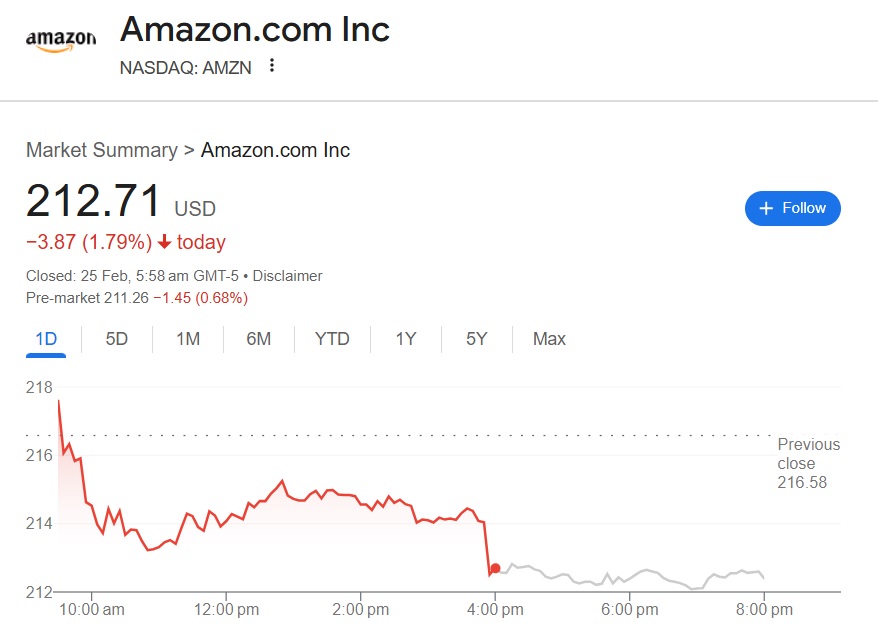
To ascertain the precise, real-time price of Amazon stock (AMZN), an investor would typically consult a reputable financial data source. Platforms like Google Finance, Yahoo Finance, Bloomberg Terminal, Reuters, or your brokerage account will provide the most up-to-the-minute figures, often accompanied by charts, trading volumes, and key financial metrics. These platforms are indispensable for getting a snapshot of the current price, which fluctuates throughout trading hours based on buy and sell orders. It’s important to remember that the price you see is the last traded price, and it can change by the second. Beyond the immediate price, these tools also show critical metrics like the daily high and low, 52-week high and low, market capitalization, and volume, all of which provide context to the current valuation.
Market Cap and Share Structure
Amazon’s market capitalization, which is its share price multiplied by the number of outstanding shares, is a critical indicator of its size and overall market value. As one of the world’s largest companies by market cap, Amazon’s sheer scale means its stock movements can significantly impact broader market indices. Understanding its share structure, including how many shares are outstanding and any historical stock splits (Amazon has had several, most notably a 20-for-1 split in 2022 that made shares more accessible to individual investors), helps contextualize the current per-share price. A high market cap often suggests stability and leadership in its sectors, but it also implies that significant further growth requires substantial capital and market expansion.
Supply and Demand Fundamentals
At its core, Amazon’s stock price, like all asset prices, is governed by the principles of supply and demand. When there are more buyers than sellers, the price tends to rise; conversely, when sellers outnumber buyers, the price falls. This balance is influenced by a myriad of factors, including quarterly earnings reports, news about strategic initiatives, analyst upgrades or downgrades, macroeconomic data (like inflation or interest rates), and even broader market sentiment. High trading volume often accompanies significant price movements, indicating strong conviction from either buyers or sellers. Investors monitor these indicators closely to gauge the immediate direction and strength of the stock’s trend.
Key Factors Influencing AMZN Stock Performance
Amazon’s diversified business model means its stock performance is influenced by a multitude of internal and external factors. Understanding these drivers is key to forming an informed investment thesis.
E-commerce Dominance and Growth
Amazon’s retail arm remains its most visible and recognized segment. Its stock performance is heavily tied to the health of global consumer spending, its ability to innovate in logistics (e.g., faster delivery, drone technology), and its expansion into new product categories and international markets. Factors such as holiday shopping seasons, Prime Day events, subscription growth for Prime membership, and competition from other retailers (both online and brick-and-mortar) directly impact its retail revenue and, consequently, investor sentiment. Sustained growth in its e-commerce segment, especially in profitability metrics, is a crucial driver.
Amazon Web Services (AWS) as a Profit Engine
Perhaps the most significant factor differentiating Amazon from traditional retailers is AWS, its cloud computing subsidiary. AWS is a powerhouse, consistently delivering high-margin revenue and operating income, often overshadowing the profitability of the core retail business. The continued growth in cloud adoption by businesses worldwide, AWS’s innovation in services (AI, machine learning, data analytics), and its competitive position against rivals like Microsoft Azure and Google Cloud are paramount to Amazon’s overall financial health and stock valuation. Any slowdown in AWS growth or increased competition in the cloud space can significantly impact AMZN’s share price.
Innovation and Diversification
Amazon’s strategy of relentless innovation and diversification means its stock is also influenced by its ventures beyond e-commerce and cloud. This includes its rapidly growing advertising business, which leverages its vast customer data, its investments in healthcare (e.g., Amazon Pharmacy, One Medical), its logistics and fulfillment network (which it increasingly offers to third parties), and its entertainment offerings (Prime Video, Amazon Music, Twitch). Success in these adjacent markets opens new revenue streams and demonstrates Amazon’s long-term growth potential, positively impacting investor confidence. Conversely, costly failures or slow adoption in these areas can weigh on the stock.
Macroeconomic Headwinds and Tailwinds
Broader economic conditions play a substantial role. Inflation, interest rates, consumer confidence, and global supply chain stability all affect Amazon. High inflation can impact consumer discretionary spending and increase operational costs, while rising interest rates can make growth stocks less attractive by increasing the cost of capital and making future earnings less valuable in present terms. Conversely, a robust economy with strong consumer spending and business investment creates a favorable environment for Amazon’s diverse operations. Geopolitical events and regulatory environments in various countries where Amazon operates also present significant headwinds or tailwinds.
Competitive Landscape and Regulatory Scrutiny
Amazon operates in highly competitive industries, from retail to cloud computing. Competition from established players and emerging startups continuously puts pressure on its market share and pricing power. Furthermore, given its market dominance, Amazon faces increasing regulatory scrutiny worldwide regarding antitrust concerns, labor practices, and data privacy. Potential fines, mandated business practice changes, or even break-up proposals could significantly impact its stock price and long-term strategy. Investors closely monitor regulatory developments and their potential implications.
Investing in Amazon: What You Need to Know
For those considering an investment in Amazon stock, understanding the practical aspects of buying shares and conducting due diligence is as important as understanding the company’s fundamentals.

How to Buy AMZN Stock
Buying Amazon stock is straightforward through a brokerage account. You’ll need to open an account with a licensed brokerage firm (e.g., Fidelity, Charles Schwab, Robinhood, eToro, Interactive Brokers). Once your account is funded, you can place an order for AMZN shares. You can typically choose between a market order (buy at the current market price) or a limit order (specify a maximum price you’re willing to pay). Given Amazon’s high share price history (prior to splits), fractional share investing, offered by many brokerages, has become a popular way for smaller investors to gain exposure without buying an entire share.
Understanding Stock Splits and Their Impact
Amazon has undergone stock splits in its history, most recently a 20-for-1 split in June 2022. A stock split does not change the total value of your investment; it simply increases the number of shares you own while proportionally decreasing the price per share. For example, if you owned one share at $2000, after a 20-for-1 split, you would own 20 shares at $100 each, with your total investment still being $2000. Splits can make shares more accessible and liquid for individual investors, potentially increasing trading volume and attracting a broader investor base, but they do not alter the company’s underlying fundamentals or market capitalization.
Evaluating Financial Reports
A diligent investor will regularly review Amazon’s quarterly and annual financial reports (10-K and 10-Q filings with the SEC). Key metrics to focus on include:
- Revenue Growth: Is the company expanding its top line across its various segments?
- Profitability: Are net income and operating margins improving, especially in core profit centers like AWS?
- Free Cash Flow: This indicates how much cash the company generates after accounting for capital expenditures, crucial for funding growth and managing debt.
- Balance Sheet Health: Look at debt levels, cash reserves, and overall liquidity.
- Guidance: Pay attention to management’s forward-looking statements and projections for future performance, as these often drive short-term stock movements.
The Role of Due Diligence
Before investing, thorough due diligence is paramount. This involves not only analyzing financial statements but also researching management’s track record, understanding the company’s competitive advantages (its “moat”), assessing industry trends, and evaluating potential risks (regulatory, competitive, macroeconomic). Don’t rely solely on analyst ratings; conduct your own research to form an independent opinion on Amazon’s long-term prospects.
The Future Outlook for Amazon Stock
Projecting the future of Amazon stock involves assessing its long-term growth vectors and ability to navigate an evolving global landscape. The consensus among many analysts leans towards continued expansion, albeit with recognition of increasing maturity and regulatory challenges for some segments.
Continued Growth in Cloud Computing
AWS is expected to remain a cornerstone of Amazon’s value. The global demand for cloud services continues unabated, driven by digital transformation, AI adoption, and the need for scalable, reliable infrastructure. AWS’s market leadership, continuous innovation in new services, and sticky customer base position it for sustained growth. Its ability to expand into new geographies and cater to diverse industry needs will be critical for maintaining its momentum and, by extension, supporting AMZN’s valuation.
Expanding E-commerce Footprint Globally
While Amazon’s e-commerce dominance in developed markets is established, significant growth opportunities still exist in emerging economies and through further penetration in underserved segments. Improvements in international logistics, localized offerings, and adapting to diverse consumer preferences will be key. The Prime ecosystem, with its bundle of benefits, is also a powerful retention tool that can drive continued retail growth and customer lifetime value across global markets.
Emerging Business Ventures and R&D
Amazon’s investment in research and development (R&D) remains substantial, signaling its commitment to future growth drivers. This includes advancements in artificial intelligence and machine learning (integral to AWS and its smart devices), robotics for logistics, autonomous vehicles, and potentially new consumer technologies. Success in these emerging ventures, such as healthcare or satellite internet (Project Kuiper), could unlock significant new markets and revenue streams, providing fresh catalysts for the stock. However, these long-term bets also carry inherent risks and require substantial capital.
Analyst Projections and Market Sentiment
Wall Street analysts frequently issue price targets and ratings for Amazon stock, based on their models and insights. While these projections can influence short-term trading, individual investors should use them as one data point among many. Market sentiment, driven by broader economic narratives, investor confidence, and major news events, also plays a crucial role. A generally bullish market can lift Amazon, while a bearish one can weigh it down, even if the company’s fundamentals remain strong. The prevailing narrative around growth stocks versus value stocks can also impact AMZN’s appeal.
Navigating Volatility and Long-Term Strategy
Investing in a high-growth, high-profile stock like Amazon often comes with its share of volatility. A thoughtful, long-term approach is generally recommended for navigating these fluctuations.
The Importance of a Long-Term Horizon
Amazon has historically been a growth stock, rewarding patient investors who have held shares for extended periods despite market downturns and sector rotations. Its strategy is focused on long-term value creation, often prioritizing market share and innovation over short-term profits. For investors, this implies that daily or even quarterly price movements should be viewed within the context of Amazon’s multi-year growth trajectory. A long-term horizon allows investors to ride out temporary volatility and benefit from the compounding effect of the company’s continued expansion.
Diversification Beyond Single Stocks
While Amazon represents a compelling investment opportunity for many, it’s crucial for investors to maintain a diversified portfolio. Putting all your investment capital into a single stock, no matter how strong the company, carries inherent risks. Diversification across different asset classes (stocks, bonds, real estate), industries, and company sizes helps mitigate idiosyncratic risks associated with any single holding. A well-diversified portfolio ensures that even if Amazon faces unexpected headwinds, your overall financial health isn’t solely dependent on its performance.
Staying Informed with Market News
Successful investing requires continuous learning and staying informed. Regularly follow financial news, read earnings call transcripts, and keep abreast of developments within Amazon’s various industries, including cloud computing, e-commerce, and digital advertising. Understanding market trends, technological shifts, and regulatory changes will help you make more informed decisions about your investment. However, distinguish between short-term noise and long-term fundamental shifts.
Consulting Financial Professionals
For those new to investing or with complex financial situations, consulting a qualified financial advisor is highly recommended. A professional can help you assess your risk tolerance, define your financial goals, and construct a portfolio that aligns with your individual circumstances, including whether an investment in Amazon stock is suitable for your overall strategy. They can provide personalized advice and help you navigate the complexities of the market, ensuring your investment decisions are sound and aligned with your broader financial plan.
In conclusion, “how much is Amazon stock right now?” is a question that leads to a much broader discussion about one of the world’s most influential companies. While the immediate price is a click away, its true value lies in understanding its diverse business model, its growth engines, the macroeconomic environment, and its relentless pursuit of innovation. For investors, Amazon offers exposure to multiple high-growth sectors, but like any investment, it demands thorough research, a long-term perspective, and a clear understanding of both its potential and its risks.
aViewFromTheCave is a participant in the Amazon Services LLC Associates Program, an affiliate advertising program designed to provide a means for sites to earn advertising fees by advertising and linking to Amazon.com. Amazon, the Amazon logo, AmazonSupply, and the AmazonSupply logo are trademarks of Amazon.com, Inc. or its affiliates. As an Amazon Associate we earn affiliate commissions from qualifying purchases.