
The world of finance often appears shrouded in complex jargon, but at its heart lies a relatively simple concept with profound implications: the share price. Far more than just a number flashing on a stock market ticker, a share price represents the perceived value of a single unit of ownership in a publicly traded company. It’s a dynamic indicator, constantly fluctuating and reflecting a myriad of factors, from a company’s financial health to broader economic trends and investor sentiment. Understanding what a share price is, how it’s determined, and what influences its movements is fundamental for anyone looking to navigate the investment landscape, whether as a seasoned investor, a budding entrepreneur, or simply an informed observer of the global economy. This article delves into the core mechanics of share prices, demystifying their nature and illuminating their significance in the realm of money and investing.
Understanding the Fundamentals of Share Price
At its core, a share price is the price at which a single share of a company’s stock can be bought or sold on the open market. Each share represents a fractional ownership claim on the company’s assets and earnings. When you own a share, you become a part-owner, and your stake’s value is directly tied to the prevailing share price.
Defining Share Price: More Than Just a Number
The term “share price” refers specifically to the market price. This is not necessarily the same as the “value” of the company, but rather the current consensus price at which willing buyers and sellers are transacting. It’s a snapshot, a moment-to-moment reflection of collective optimism, pessimism, and information. The price is expressed in monetary units (e.g., dollars, pounds, euros) per share and is the most readily accessible metric for evaluating a public company’s stock performance. While it might seem like an abstract figure, every cent of change can translate into millions, or even billions, of dollars in market capitalization shifts for a large corporation, directly impacting the wealth of its shareholders.
Why Share Price Matters: A Dual Perspective (Investor & Company)
The importance of share price is multifaceted, resonating deeply with both investors and the companies themselves.
For investors, the share price is the primary determinant of their investment returns. If an investor buys shares at a lower price and sells them at a higher price, they achieve capital appreciation. Conversely, a decline in share price leads to a loss. Beyond direct returns, share prices influence an investor’s portfolio value, their risk exposure, and their strategic decisions regarding buying, holding, or selling positions. It’s the critical gauge of how well their invested capital is performing.
For companies, the share price serves as a continuous report card from the market. A high and rising share price can indicate strong market confidence in the company’s future prospects, management, and strategic direction. This can lead to several advantages:
- Lower Cost of Capital: A higher share price makes it easier and cheaper for a company to raise additional capital through new share issuances.
- Enhanced Reputation: A strong stock performance can boost a company’s brand image and attract top talent.
- Acquisition Currency: Shares can be used as currency to acquire other companies, a much more flexible option when their value is high.
- Employee Morale: Employees holding stock options or shares benefit directly from price appreciation, aligning their interests with company success.
- Defense Against Takeovers: A high share price makes a company more expensive and less attractive as a takeover target.
Conversely, a falling share price can signal trouble, eroding market confidence, making capital raising more difficult, and potentially exposing the company to hostile takeovers.
Key Drivers: What Makes Share Prices Move?
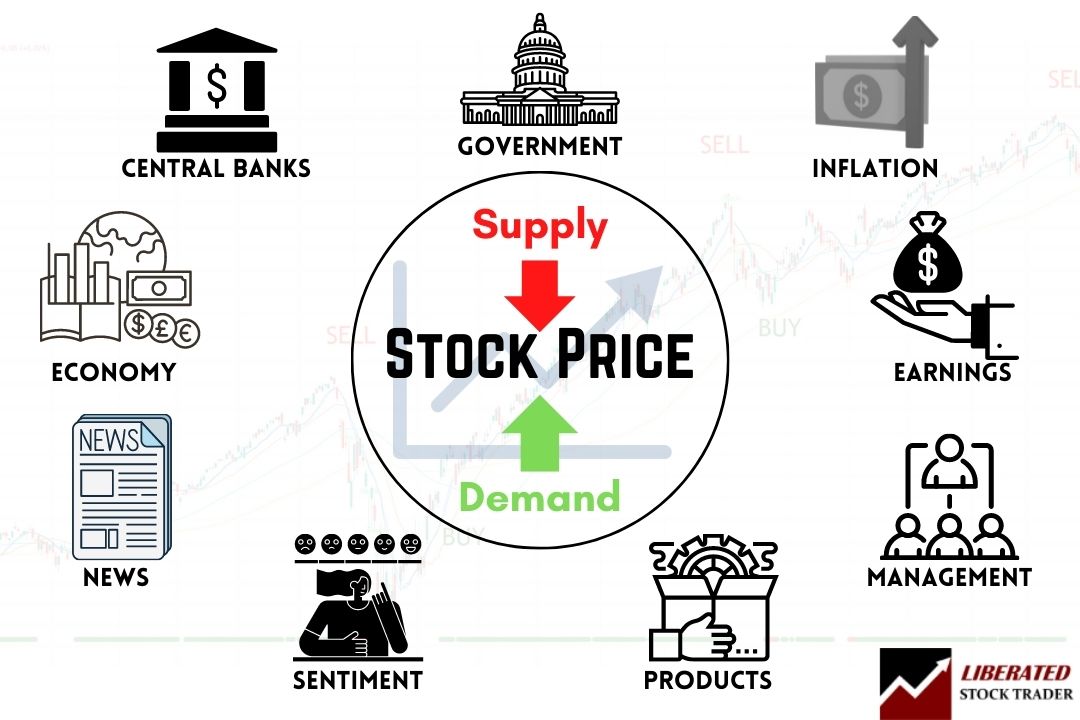
Share prices are in constant flux, driven by an intricate dance between numerous variables. These factors can broadly be categorized into those specific to the company and broader market and economic influences.
Company-Specific Factors: The Inner Workings
The fundamental health and prospects of a company are paramount in shaping its share price.
Financial Performance and Growth Prospects
The bedrock of any company’s value lies in its financial performance. Strong revenue growth, consistent profitability, healthy cash flow, and robust balance sheets typically lead to higher investor confidence and, consequently, a higher share price. Investors closely scrutinize earnings reports, looking for signs of sustained growth, efficiency, and market share expansion. Future growth prospects, such as innovation in new products, expansion into new markets, or strategic partnerships, are often more impactful than past performance, as investors are primarily buying into a company’s future earnings potential. Positive news regarding research and development breakthroughs or successful product launches can cause share prices to surge, while missed earnings targets or guidance reductions can trigger sharp declines.
Management Quality and Corporate Governance
The leadership team and the integrity of a company’s governance structure play a crucial role. A capable, experienced, and trustworthy management team that executes strategic plans effectively and communicates transparently inspires investor confidence. Conversely, a change in leadership, scandals, or poor governance practices can severely damage investor trust and depress share prices. Investors want to know that their capital is being stewarded by ethical and competent hands.
Dividends, Buybacks, and Capital Structure
A company’s approach to capital allocation directly affects shareholder value. Regular dividend payments can make a stock attractive to income-focused investors, providing a steady return even if the share price remains stable. Share buybacks (repurchasing its own shares from the open market) reduce the number of outstanding shares, thus increasing earnings per share (EPS) and potentially boosting the share price. The company’s capital structure – its mix of debt and equity – also influences risk and return. Excessive debt can signal financial vulnerability, while a well-managed capital structure can optimize returns. Decisions like splitting shares (e.g., one share becomes two at half the price) are often seen as positive signals of future growth, despite not changing the underlying value of one’s total holding.
Market and Economic Influences: The Broader Landscape
Beyond the individual company, the wider economic and market environment exerts a powerful influence on share prices.
Supply and Demand Dynamics
At its most basic level, share price is determined by the classic economic principle of supply and demand. If more investors want to buy a stock than sell it (high demand, low supply), the price will rise. If more investors want to sell a stock than buy it (low demand, high supply), the price will fall. This dynamic is constantly playing out on stock exchanges, with millions of transactions per second moving prices incrementally. Large institutional investors, with their significant capital, can especially influence this balance.
Economic Indicators and Interest Rates
Macroeconomic factors such as GDP growth, inflation rates, unemployment figures, and consumer confidence indices can sway overall market sentiment and, consequently, individual share prices. A robust economy generally bodes well for corporate earnings and stock prices, while a recession or economic slowdown can have the opposite effect. Interest rates, set by central banks, are particularly critical. Higher interest rates typically make borrowing more expensive for companies and make fixed-income investments (like bonds) more attractive relative to stocks, which can put downward pressure on equity prices. Lower interest rates tend to have the opposite effect, making stocks more appealing.
Industry Trends and Competitive Landscape
Companies operate within specific industries, and the health and trends of that industry directly impact its constituents’ share prices. A booming sector, like renewable energy or artificial intelligence today, can lift all boats, even for companies with moderate performance. Conversely, a struggling industry, perhaps due to technological obsolescence or changing consumer preferences, can depress share prices across the board. The competitive landscape—the number and strength of rivals—also matters. Companies with strong competitive advantages (moats) are often viewed more favorably.
Investor Sentiment and Market Psychology
Human psychology plays an undeniable role in financial markets. Investor sentiment, which refers to the overall attitude of investors towards a particular market or asset, can drive prices beyond what fundamental analysis might suggest. During periods of irrational exuberance (a “bubble”), prices can detach from underlying value. In times of panic or fear (a “bear market”), prices can plunge even for fundamentally sound companies. News headlines, analyst upgrades/downgrades, and social media trends can rapidly shift sentiment, demonstrating the powerful, sometimes irrational, sway of collective emotion on share prices.
How Share Prices are Determined and Interpreted
While the influencing factors are numerous, the actual determination of share price boils down to the mechanics of the market.
The Mechanics of Trading: Supply Meets Demand
On a stock exchange, prices are set through a continuous auction process. Buyers place “bid” orders (the maximum price they are willing to pay), and sellers place “ask” or “offer” orders (the minimum price they are willing to accept). When a bid price matches an ask price, a transaction occurs, and that price becomes the latest trade price. This continuous matching of bids and asks creates the real-time share price that we see. The difference between the highest bid and the lowest ask is known as the “bid-ask spread,” representing the market’s liquidity for that particular stock.

Public Offerings: Setting the Initial Price (IPOs)
When a private company decides to go public, it conducts an Initial Public Offering (IPO). During an IPO, investment banks help the company determine an initial share price range. This is an intricate process involving valuations based on the company’s financial health, market demand, industry comparisons, and future growth prospects. The goal is to set a price that attracts sufficient investor interest without leaving too much money on the table for the company or its early investors. Once the shares begin trading on the exchange, market forces take over, and the price will then fluctuate based on supply and demand, just like any other publicly traded stock.
Deciphering Share Price Data: Key Metrics
Understanding the various data points associated with a share price is crucial for interpretation.
Open, Close, High, Low, and Volume
- Open Price: The price at which the first trade of the day occurred.
- Close Price: The price of the last trade before the market closed for the day. This is often the most referenced price for daily performance.
- High Price: The highest price at which the stock traded during the day.
- Low Price: The lowest price at which the stock traded during the day.
- Volume: The total number of shares traded during a specific period. High volume often indicates strong interest and conviction behind a price movement.
Bid and Ask Prices: The Real-Time Transaction
As mentioned, the bid price is the highest price a buyer is currently willing to pay, and the ask price (or offer price) is the lowest price a seller is currently willing to accept. The difference is the bid-ask spread. For highly liquid stocks, this spread is very narrow, indicating efficient price discovery. For less liquid stocks, the spread can be wider, making transactions potentially more costly.
Share Price vs. Share Value: An Important Distinction
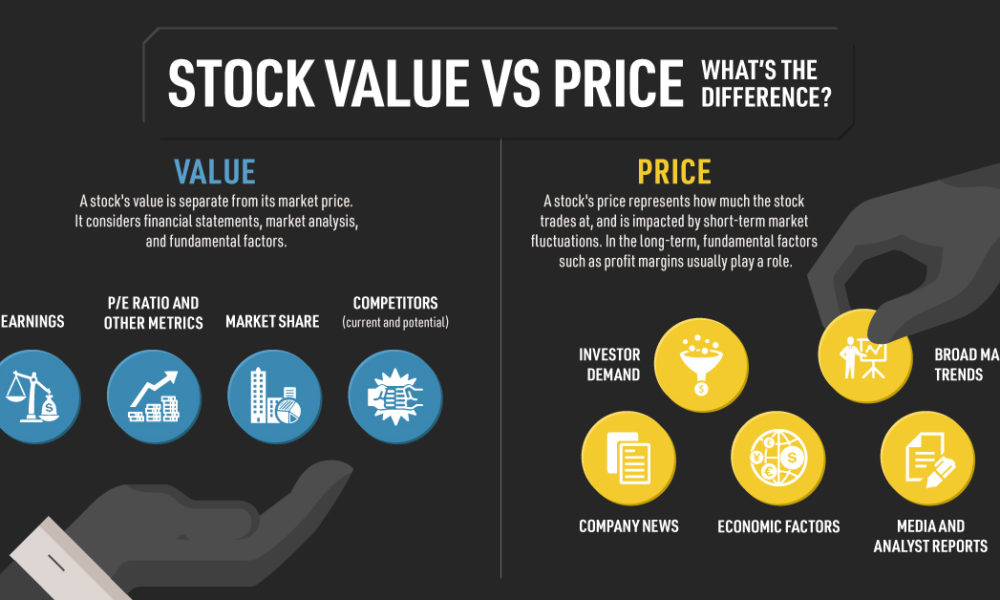
It’s crucial to differentiate between “share price” and “share value” (or intrinsic value). Share price is what the market is currently paying. Share value is what an asset is worth based on its underlying fundamentals, future earnings potential, and risk profile, as determined by a thorough analysis. Ideally, in an efficient market, share price would closely align with intrinsic value. However, due to market sentiment, irrationality, and information asymmetry, share prices can deviate from a company’s true value, creating opportunities for investors who can identify undervalued or overvalued stocks. This is the core principle behind value investing.
The Strategic Importance of Share Price
The share price is more than just a metric; it’s a strategic tool and a powerful indicator for both individual investors and corporate entities.
For Investors: Guiding Investment Decisions
For investors, share price serves as a compass for their financial journey.
Capital Appreciation and Returns
The most direct impact of share price is on capital appreciation. Investors buy shares with the expectation that the price will rise, allowing them to sell at a profit. The percentage change in share price, combined with any dividends received, forms the total return on investment. This return is central to achieving financial goals, whether it’s saving for retirement, a down payment, or a child’s education.
Risk Assessment and Portfolio Management
Share price volatility is a key measure of risk. Stocks with historically wide price swings are generally considered riskier. Investors use share price data to monitor the performance of their portfolios, rebalance their asset allocations, and make informed decisions about whether to buy more of a stock, hold onto it, or cut their losses. Diversification across different stocks and asset classes is a common strategy to mitigate the impact of individual share price fluctuations.
For Companies: A Reflection of Health and Future
For companies, the share price is a vital reflection of their standing and future prospects in the market.
Valuation and Fundraising Potential
A company’s market capitalization (share price multiplied by the number of outstanding shares) is a direct measure of its market value. A high market cap can make it easier to raise funds for expansion, research, or acquisitions. Investment banks and venture capitalists closely monitor share prices as part of their due diligence for potential investments or partnerships. A robust share price enhances a company’s ability to attract new capital on favorable terms.
Mergers, Acquisitions, and Corporate Strategy
Share price plays a critical role in mergers and acquisitions (M&A). A company with a strong share price can use its stock as currency to acquire other companies without having to spend cash. Conversely, a low share price can make a company an attractive takeover target for others. Strategic decisions, such as stock splits, reverse stock splits, or going private, are often heavily influenced by the prevailing share price and its implications for shareholder value.
Employee Compensation and Stakeholder Perception
Many companies use stock options or restricted stock units (RSUs) as a significant part of employee compensation, particularly for executives. A rising share price directly benefits employees and helps in talent retention and attraction. Furthermore, a strong share price positively influences public and media perception, projecting an image of success and stability, which can enhance customer loyalty and business partnerships.
Navigating the Volatility: A Prudent Approach
The dynamic nature of share prices, while offering opportunities, also presents inherent risks due to constant volatility. A prudent approach is essential for long-term financial success.
The Role of Research and Due Diligence
Never invest based solely on a rising share price or a “hot tip.” Thorough research and due diligence are paramount. This involves analyzing a company’s financial statements (income statement, balance sheet, cash flow statement), understanding its business model, assessing its competitive landscape, evaluating its management team, and staying informed about industry trends. Fundamental analysis helps to determine a company’s intrinsic value, providing a basis for judging whether its current share price represents an attractive buying opportunity or is overvalued.
Long-Term Vision vs. Short-Term Speculation
For most investors, especially those aiming for financial independence, a long-term investment horizon is generally recommended. Trying to predict short-term share price movements is incredibly difficult and often akin to speculation. Historically, stock markets tend to trend upwards over the long term, rewarding patient investors. Short-term trading strategies, while potentially lucrative, carry significantly higher risk and require deep market understanding and active management.
The Impact of External Factors and Unforeseen Events
Share prices are also vulnerable to external shocks that are difficult to predict. Geopolitical events (wars, trade disputes), natural disasters, pandemics, regulatory changes, and sudden technological shifts can all have immediate and sometimes drastic impacts on individual share prices and the broader market. A diversified portfolio and a long-term perspective can help weather these unforeseen storms, as markets often recover over time, and the impact of specific events tends to normalize.
In conclusion, the share price is a fundamental concept in finance, acting as the heartbeat of the stock market. It’s a complex interplay of company performance, economic conditions, market dynamics, and human psychology. While its daily fluctuations can seem daunting, a comprehensive understanding of what drives share prices empowers investors to make more informed decisions, manage risk, and ultimately participate meaningfully in the growth and wealth creation offered by the financial markets. For companies, it serves as a critical barometer of market confidence and a powerful strategic asset. Mastering its intricacies is a key step on the path to financial literacy and successful investing.
aViewFromTheCave is a participant in the Amazon Services LLC Associates Program, an affiliate advertising program designed to provide a means for sites to earn advertising fees by advertising and linking to Amazon.com. Amazon, the Amazon logo, AmazonSupply, and the AmazonSupply logo are trademarks of Amazon.com, Inc. or its affiliates. As an Amazon Associate we earn affiliate commissions from qualifying purchases.