
Investing in individual stocks can be a compelling way to grow wealth, and few companies capture investor interest quite like Apple Inc. (AAPL). As one of the largest and most influential technology companies globally, Apple’s stock has delivered remarkable returns over the decades, establishing itself as a cornerstone in many investment portfolios. However, like any investment, understanding the nuances of investing in Apple requires careful consideration of its business fundamentals, market position, and the various methods available to acquire its shares. This comprehensive guide will walk you through everything you need to know to make an informed decision about investing in Apple stock, strictly from a financial and investment perspective.
Understanding Apple as an Investment Vehicle
Before diving into the mechanics of purchasing shares, it’s crucial to understand what makes Apple an attractive—or potentially risky—investment. A thorough analysis of its financial health, growth prospects, and competitive landscape is foundational to any sound investment strategy.
Apple’s Financial Health and Market Position
Apple boasts an enviable financial track record, characterized by robust revenue growth, substantial profit margins, and an exceptionally strong balance sheet. The company consistently generates massive free cash flow, which it strategically deploys through dividends, share buybacks, and investments in research and development. Its brand loyalty is unparalleled, allowing it to command premium pricing for its products and services.
Key aspects contributing to its market dominance include:
- Diverse Ecosystem: The interconnectedness of its hardware (iPhone, iPad, Mac, Apple Watch, AirPods) with its software and services (App Store, Apple Music, iCloud, Apple Pay) creates a powerful ecosystem that encourages customer retention and provides multiple revenue streams.
- Global Reach: Apple operates in virtually every major market worldwide, with a significant presence in developed and emerging economies, mitigating regional economic downturns.
- Innovation Leader: While often criticized for incremental updates, Apple consistently introduces new technologies and refines existing ones, maintaining its premium status and drawing consumers.
- Strong Brand Value: The Apple brand is consistently ranked among the most valuable globally, instilling consumer trust and driving demand.
Growth Drivers and Future Outlook
While Apple’s hardware sales remain significant, the company has strategically diversified its revenue streams, with services becoming an increasingly vital component. This shift provides a more recurring and predictable revenue base, which is highly valued by investors.
Future growth drivers include:
- Services Segment Expansion: Continued growth in the App Store, Apple Music, iCloud, Apple TV+, and new subscription offerings like Apple Fitness+ and Apple Arcade. This segment often has higher margins than hardware.
- Wearables, Home, and Accessories: Products like the Apple Watch, AirPods, and HomePod mini continue to see strong demand and innovation, expanding Apple’s presence in users’ daily lives beyond the iPhone.
- Emerging Technologies: While speculative, Apple’s investments in augmented reality (AR), virtual reality (VR), and potentially autonomous vehicles (Project Titan) could unlock significant future revenue streams.
- International Market Penetration: Continued expansion and deeper penetration into large, growing markets like India and Southeast Asia.
- Shareholder Returns: Apple’s consistent dividend increases and aggressive share buyback programs enhance shareholder value by returning capital and reducing the number of outstanding shares, which can boost earnings per share.
Potential Risks and Challenges
No investment is without risk, and Apple faces several challenges that investors should consider:
- Regulatory Scrutiny: Antitrust concerns regarding its App Store policies, market dominance, and data privacy practices pose potential threats of fines or forced business model changes.
- Supply Chain Dependencies: Reliance on a complex global supply chain, particularly in China, exposes it to geopolitical risks, natural disasters, and manufacturing disruptions.
- Intense Competition: Fierce competition in all its product categories from rivals like Samsung, Google, Microsoft, and Amazon necessitates continuous innovation and marketing spend.
- Reliance on iPhone Sales: Despite diversification, the iPhone remains Apple’s flagship product and primary revenue driver. A significant slowdown in iPhone demand or a failure to innovate could impact overall performance.
- Economic Downturns: As a consumer discretionary company, Apple’s sales can be sensitive to broader economic slowdowns or recessions.
Different Ways to Invest in Apple
Once you’ve assessed Apple’s investment profile, the next step is to understand the various avenues available for acquiring its stock. Your choice will depend on your investment goals, risk tolerance, and the amount of capital you wish to deploy.
Direct Stock Purchase (Buying Shares)
The most straightforward method is to directly purchase shares of AAPL through a brokerage account. When you buy shares, you become a partial owner of the company, entitled to dividends and voting rights.
- Brokerage Accounts: You’ll need to open an investment account with a reputable brokerage firm (e.g., Charles Schwab, Fidelity, E*TRADE, Vanguard, Interactive Brokers, Robinhood). These platforms allow you to buy and sell stocks, ETFs, and other securities.
- Types of Orders:
- Market Order: Buys or sells shares immediately at the best available current price. While fast, the price might fluctuate slightly from what you see.
- Limit Order: Specifies a maximum price you’re willing to pay (for buying) or a minimum price you’re willing to accept (for selling). This gives you more control over the execution price but isn’t guaranteed to fill if the market doesn’t reach your specified price.
- Research and Execution: Once your account is funded, you can search for “AAPL” or “Apple Inc.” and place your buy order.
Exchange-Traded Funds (ETFs) and Mutual Funds
For investors seeking diversification or a less hands-on approach, investing in funds that hold Apple stock is an excellent alternative.
- ETFs: These are funds that trade like individual stocks on an exchange. Many tech-focused ETFs, large-cap growth ETFs, or even broad market index ETFs (like those tracking the S&P 500) will have Apple as one of their top holdings due to its market capitalization. Investing in an ETF provides instant diversification, reducing your exposure to the performance of any single company.
- Mutual Funds: Similar to ETFs, mutual funds pool money from multiple investors to invest in a diversified portfolio of securities. Many actively managed tech or growth mutual funds will also hold Apple stock. They are typically managed by professional fund managers.
Investing through funds allows you to benefit from Apple’s growth while spreading your risk across other companies and sectors.
Options Trading
For experienced investors with a higher risk tolerance, options trading offers another way to gain exposure to Apple’s stock. Options are contracts that give you the right, but not the obligation, to buy or sell a stock at a specified price (strike price) on or before a certain date.
- Call Options: Give you the right to buy Apple stock. Investors buy calls if they expect the stock price to rise.
- Put Options: Give you the right to sell Apple stock. Investors buy puts if they expect the stock price to fall or to hedge an existing stock position.
Options trading involves significant leverage and can lead to substantial losses if the market moves against your position. It is generally recommended for sophisticated investors who fully understand the complexities and risks involved.
Fractional Shares
Historically, buying individual stocks required purchasing full shares, which could be expensive for high-priced stocks like Apple. Many brokerages now offer fractional shares, allowing you to invest a specific dollar amount (e.g., $50) rather than buying a whole number of shares. This democratizes investing, making it accessible to those with smaller capital, allowing them to own a piece of high-value companies.
Steps to Begin Your Apple Stock Investment Journey
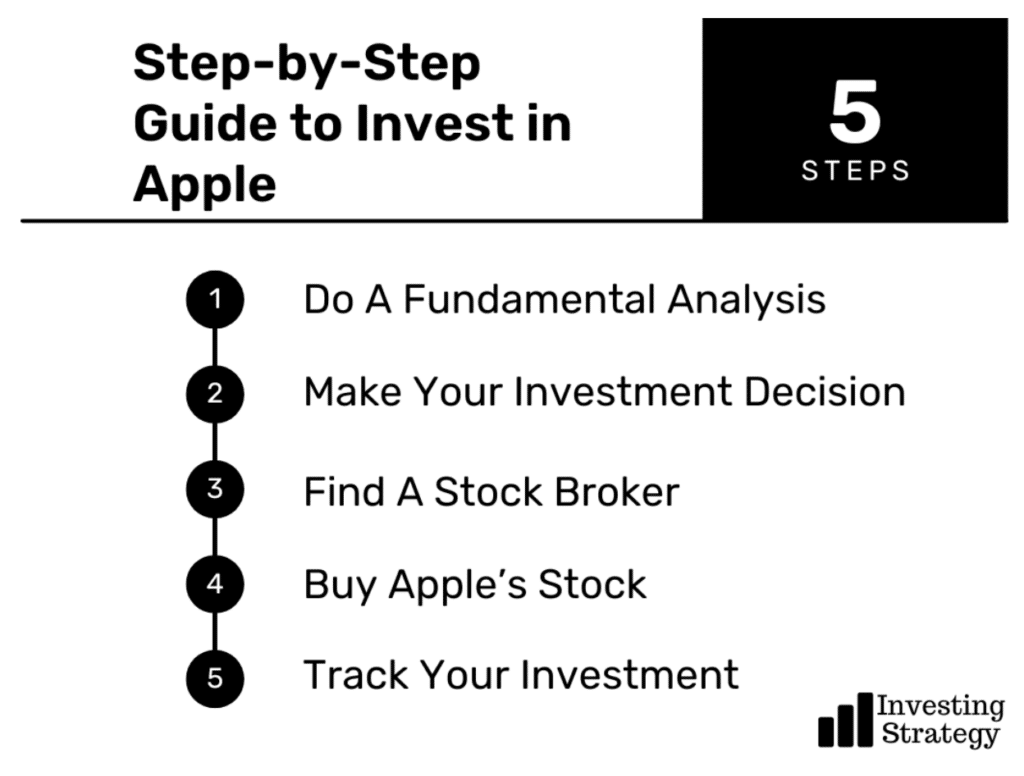
Once you’ve decided on your preferred method of investment, follow these practical steps to get started.
Open a Brokerage Account
This is the foundational step. Choose a brokerage that aligns with your needs. Consider factors like:
- Fees: Look for commission-free stock and ETF trading.
- Account Minimums: Some brokers require a minimum deposit.
- Investment Offerings: Ensure they offer the types of investments you’re interested in (e.g., fractional shares, options).
- Research Tools and Education: Good brokers provide analytical tools and educational resources.
- Customer Service: Responsive and helpful support is invaluable.
Common account types include taxable brokerage accounts (general investment accounts) or tax-advantaged retirement accounts like Individual Retirement Accounts (IRAs) or 401(k)s, if offered through your employer.
Fund Your Account
After opening your account, you’ll need to deposit money. Common funding methods include:
- Electronic Funds Transfer (ACH): Linking your bank account for free and easy transfers (typically takes 1-3 business days).
- Wire Transfer: Faster but often incurs a fee.
- Check Deposit: Slower processing time.
- Rollover: Transferring funds from an old 401(k) or IRA.
Research and Due Diligence
Even for a company as well-known as Apple, performing your own due diligence is critical. Don’t just rely on headlines or past performance.
- Financial Statements: Review Apple’s quarterly (10-Q) and annual (10-K) reports filed with the SEC to understand its revenue, expenses, profits, and cash flow.
- Analyst Reports: Read reports from financial analysts, but always consider them as opinions rather than definitive forecasts.
- News and Earnings Calls: Stay updated on company news, product launches, and listen to earnings calls to hear directly from management.
- Competitor Analysis: Understand how Apple stacks up against its rivals.
Place Your Order
With your account funded and research complete, navigate to the trading platform, search for “AAPL,” and place your buy order. Decide whether a market order or a limit order is more appropriate for your strategy. Confirm all details before executing the trade.
Key Considerations for Investing in AAPL
Successful investing involves more than just buying shares; it requires a strategic mindset and continuous awareness of your overall financial picture.
Investment Goals and Risk Tolerance
Align your investment in Apple with your broader financial objectives. Are you saving for retirement, a down payment, or simply aiming for long-term growth? Understand your personal risk tolerance. While Apple is a relatively stable blue-chip stock, individual stock investing carries more risk than diversified funds. Only invest what you are comfortable losing, though the aim is always to gain.
Diversification
Even the strongest companies can face unexpected challenges. It is rarely wise to put all your investment capital into a single stock, no matter how promising it seems. Diversification—spreading your investments across various companies, industries, and asset classes—is crucial for managing risk. Apple stock can be a valuable component of a portfolio, but it should ideally be part of a broader, diversified strategy.
Long-Term vs. Short-Term Strategy
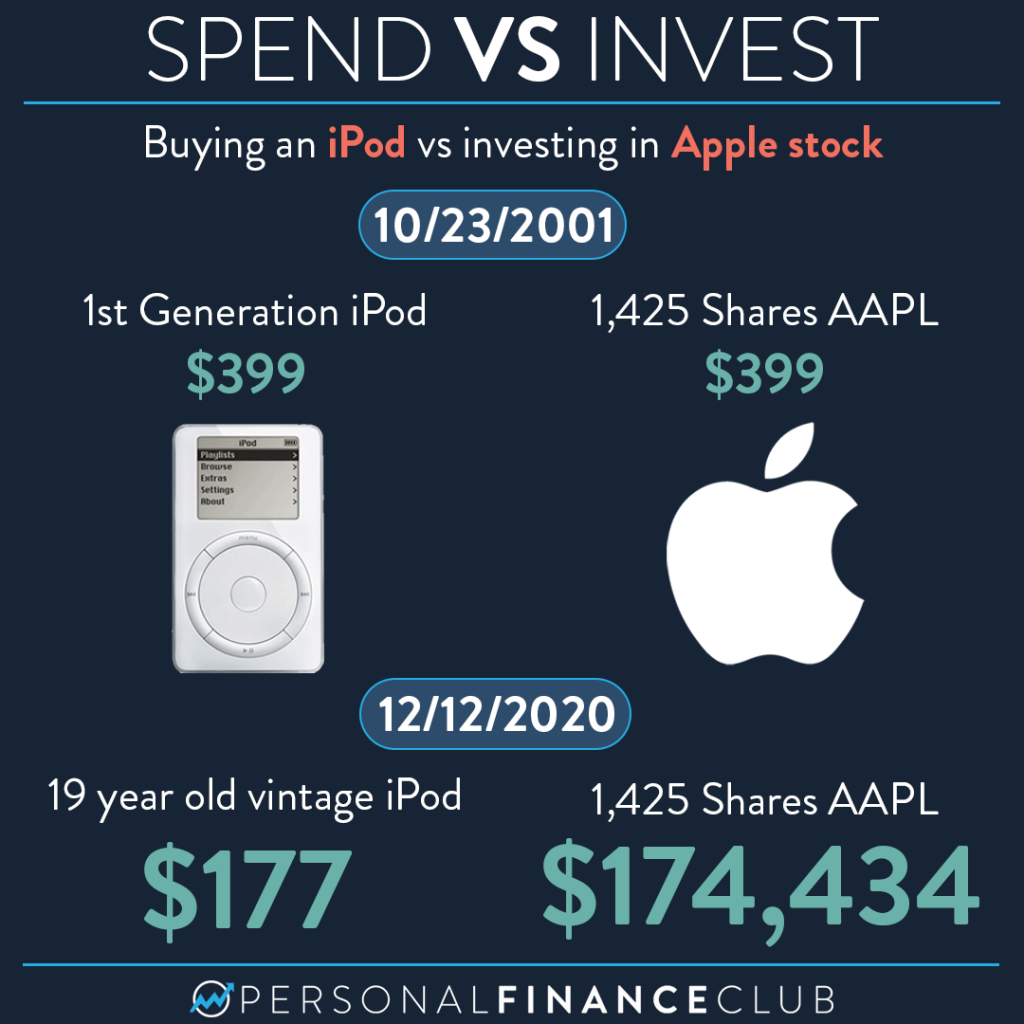
For most investors, especially those new to the market, a long-term approach to investing in Apple is often advisable. Trying to time the market by frequently buying and selling can be difficult and costly due to transaction fees and taxes. Holding a quality company like Apple for several years allows its underlying business growth to translate into stock appreciation and lets you benefit from its dividend payments and share buybacks.
Monitoring Your Investment
Your investment journey doesn’t end after buying shares. Regularly monitor Apple’s financial performance, news, and industry trends. While frequent trading is discouraged for long-term investors, staying informed helps you understand if your initial investment thesis still holds true or if adjustments to your portfolio might be necessary. This doesn’t mean checking the stock price daily but rather reviewing quarterly earnings and significant company announcements.
Tax Implications of Investing in Stocks
Understanding the tax implications is a critical, often overlooked, aspect of stock investing. How your gains and dividends are taxed can significantly impact your net returns.
Capital Gains Tax
When you sell Apple stock for a profit, you incur capital gains. The tax rate applied depends on how long you held the shares:
- Short-Term Capital Gains: If you held the stock for one year or less, your profits are taxed at your ordinary income tax rate, which can be as high as 37% (as of current tax laws).
- Long-Term Capital Gains: If you held the stock for more than one year, your profits are taxed at a lower, more favorable long-term capital gains rate (typically 0%, 15%, or 20%, depending on your income bracket). This is a strong incentive for long-term holding.
Dividend Tax
Any dividends Apple pays out to shareholders are also taxable income. These are generally taxed as “qualified dividends” if certain holding period requirements are met, meaning they are taxed at the same favorable long-term capital gains rates. Non-qualified dividends are taxed at your ordinary income rate.
Tax-Advantaged Accounts
Investing in Apple stock within tax-advantaged accounts like an IRA (Traditional or Roth) or a 401(k) can offer significant tax benefits:
- Traditional IRA/401(k): Contributions may be tax-deductible, and your investments grow tax-deferred until retirement, when withdrawals are taxed as ordinary income.
- Roth IRA/401(k): Contributions are made with after-tax money, but qualified withdrawals in retirement are entirely tax-free, including all gains and dividends.
Utilizing these accounts can substantially reduce your tax burden over the long term, making them an excellent choice for holding growth stocks like Apple.
Investing in Apple stock can be a rewarding endeavor for investors seeking exposure to a financially sound, innovative, and market-leading company. By understanding its business fundamentals, choosing the right investment method, conducting thorough research, and considering all financial implications, you can strategically integrate Apple into your diversified investment portfolio and work towards achieving your financial goals. Always remember that past performance is not indicative of future results, and every investment carries inherent risks.
aViewFromTheCave is a participant in the Amazon Services LLC Associates Program, an affiliate advertising program designed to provide a means for sites to earn advertising fees by advertising and linking to Amazon.com. Amazon, the Amazon logo, AmazonSupply, and the AmazonSupply logo are trademarks of Amazon.com, Inc. or its affiliates. As an Amazon Associate we earn affiliate commissions from qualifying purchases.