
The modern movie theater has transcended its origins as a simple dark room with a projector and a screen. Today, it represents the pinnacle of consumer-facing technology, integrating advanced optics, high-performance computing, complex audio engineering, and artificial intelligence to create an environment that cannot be replicated in a domestic setting. When we ask what is currently in the movie theaters, we are not merely discussing the films themselves, but rather the sophisticated technological stack that facilitates the delivery of high-fidelity digital art. This evolution from celluloid to high-bitrate digital streams has fundamentally altered how audiences consume media, pushing the boundaries of what is possible in visual and auditory immersion.

The Revolution in Visual Immersion: Laser Projection and High Dynamic Range
The core of the cinematic experience has always been the image, but the technology producing that image has undergone a radical transformation over the last decade. The industry has largely moved away from traditional Xenon bulb projectors toward RGB laser and laser phosphor systems. This shift is not merely a matter of convenience; it is a leap in color science and luminance.
The Shift from Xenon to RGB Laser Projection
Traditional Xenon lamps, while bright, suffer from rapid degradation and a limited color gamut. In contrast, RGB laser projection—often referred to as “6P” (six-primary) laser—utilizes separate lasers for the red, green, and blue channels for each eye. This allows for a level of brightness that was previously unattainable, especially in 3D applications where polarized glasses typically dim the image significantly.
Laser projectors provide a much wider color gamut, approaching the Rec. 2020 standard, which covers significantly more of the visible spectrum than the older Rec. 709 standard used in home television. The result is a more vibrant, lifelike image where colors are saturated without losing detail. Furthermore, the contrast ratios of laser systems are exponentially higher. While a standard digital projector might struggle to produce deep blacks, a laser system can achieve near-total darkness, allowing for a “true black” that makes images pop with three-dimensional depth.
High Frame Rate (HFR) and 4K Resolution Standards
While 4K resolution (4096 x 2160 pixels) is now the baseline for premium large-format (PLF) screens, the industry is increasingly experimenting with High Frame Rate (HFR) technology. Standard cinema has operated at 24 frames per second (fps) for nearly a century. However, modern digital projectors are capable of 48, 60, or even 120 fps. This technology eliminates motion blur and “judder” during fast-action sequences, providing a level of clarity that makes the screen feel like a window into reality. When combined with 4K resolution, the “screen door effect” is entirely eliminated, ensuring that even viewers in the front row experience a seamless, sharp image.
Auditory Innovation: Object-Based Audio and Immersive Soundscapes
In the current landscape of movie theaters, sound is no longer confined to channels (e.g., 5.1 or 7.1 surround sound). The industry has transitioned to object-based audio, a technology that treats individual sounds as “objects” that can be moved precisely through a three-dimensional space.
The Rise of Dolby Atmos and DTS:X
Dolby Atmos is perhaps the most recognizable name in this space, utilizing a system that can support up to 128 simultaneous audio tracks and 64 unique speaker feeds. In a theater equipped with Atmos, speakers are placed not just behind the screen and on the walls, but also across the ceiling. This overhead dimension allows sound engineers to place a helicopter or a rainstorm directly above the audience.
The software behind these systems calculates the exact timing and volume required for each speaker to create a coherent sound field. This ensures that every seat in the house—whether in the center or on the far edge—receives a balanced and immersive experience. This spatial precision is a key differentiator for the theatrical experience, as replicating a 64-speaker array at home is impractical for the average consumer.
Transducer Technology and Haptic Feedback
Beyond the audible spectrum, theaters are increasingly incorporating haptic technology. This is often integrated through low-frequency transducers (commonly known as “shakers”) built into the seating. These devices translate low-end bass frequencies into physical vibrations. When an explosion occurs on screen, the audience does not just hear the rumble; they feel it in their chassis. This tactile layer of sound adds a level of immersion that engages the body’s vestibular system, making the digital experience feel physically tangible.
The Intersection of AI and Theater Management Systems
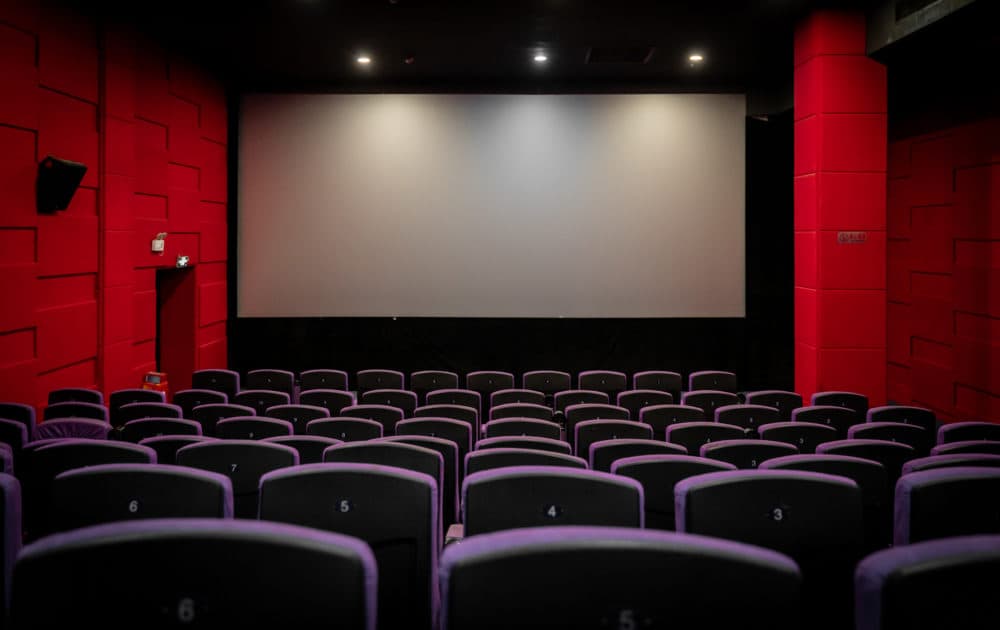
The “tech stack” in a theater extends far beyond the auditorium. Modern cinema operations rely heavily on sophisticated Software as a Service (SaaS) platforms and Artificial Intelligence to manage everything from content delivery to energy consumption.
Predictive Analytics for Programming and Inventory
Theater chains now utilize AI-driven predictive analytics to determine which films should be allocated to which screens and at what times. By analyzing historical data, social media trends, and regional demographics, these algorithms can predict ticket sales with startling accuracy. This ensures that the most popular films are played in the largest rooms with the most advanced technology (like IMAX or Dolby Cinema), maximizing both revenue and viewer satisfaction.
On the operational side, AI is used to manage concession inventory and energy usage. Smart HVAC systems are synchronized with ticket sales data; if a theater is only 20% full, the climate control system automatically adjusts to reduce energy consumption while maintaining a comfortable temperature, significantly lowering the carbon footprint of the facility.
Automated Maintenance and Remote Monitoring
Modern projectors are essentially high-powered computers that generate a massive amount of heat. To prevent hardware failure, theaters use remote monitoring software that tracks the “health” of every laser diode and cooling fan in real-time. If a projector’s internal temperature spikes or a pixel begins to drift, the system can automatically alert a technician or even make software-level adjustments to compensate for the hardware issue until it can be physically repaired. This proactive approach to maintenance ensures that “downtime” is virtually non-existent in the digital age.
Beyond the Screen: 4D Tech and Sensory Interactivity
For audiences seeking more than just a visual and auditory experience, theaters have introduced 4D technology. This represents a fusion of robotics, mechanical engineering, and digital synchronization.
Motion Seats and Environmental Effects
Technologies such as 4DX and MX4D use heavy-duty actuators to move seats in synchronization with the action on screen. These seats can tilt, heave, and pitch, simulating everything from the sway of a ship to the jolts of a car chase. However, the technology goes beyond mere movement. The auditoriums are equipped with environmental modules that can produce wind, fog, strobe lights, scents, and even water effects.
The complexity of these systems lies in the “sync track.” For every movie released in 4D, a dedicated team of engineers must program a script that tells the seats and environmental modules exactly what to do at every millisecond of the film. This data is delivered alongside the movie file and executed by a local server that controls the hardware.
ScreenX and Multi-Projection Systems
Another emerging trend is the use of multi-projection systems like ScreenX, which expands the film onto the side walls of the theater, creating a 270-degree panoramic view. This requires a complex setup of multiple projectors that must be perfectly calibrated and edge-blended to create a seamless image. The software must also handle “perspective correction” to ensure that the images on the side walls do not look distorted from the audience’s point of view. This technology leverages peripheral vision to draw the viewer deeper into the environment, making the theater itself feel like a part of the film’s world.
The Future of Digital Distribution and Security
The way movies arrive at a theater is a marvel of digital logistics. The days of shipping heavy film canisters are long gone, replaced by the Digital Cinema Package (DCP) and high-speed satellite delivery.
DCP Protocols and Satellite Delivery
A DCP is essentially a specialized hard drive or a large digital file containing encrypted streams of video and audio. These files are massive, often exceeding several hundred gigabytes for a single movie, to ensure the highest possible bitrate and image quality. Many modern theaters now receive these files via encrypted satellite links or dedicated fiber-optic networks, allowing a film to be “pushed” to thousands of locations simultaneously.

Security and Key Delivery Messages (KDM)
Security is a paramount concern in cinema technology. To prevent piracy, DCPs are heavily encrypted. Even if a digital file is stolen, it cannot be played without a Key Delivery Message (KDM). A KDM is a digital certificate that “unlocks” the movie for a specific projector at a specific time. This allows studios to have granular control over their content; for example, a KDM might only allow a film to be screened between 7:00 PM and 10:00 PM on a Friday. This level of digital rights management (DRM) is what allows the industry to distribute multi-billion dollar assets globally with minimal risk of pre-release leaks.
As we look at what is in the movie theaters today, it is clear that the industry has embraced a high-tech future. From the laser-driven light that hits the screen to the AI that optimizes the popcorn machine, the modern cinema is a hub of technological innovation designed to provide an experience that remains the gold standard of entertainment.
aViewFromTheCave is a participant in the Amazon Services LLC Associates Program, an affiliate advertising program designed to provide a means for sites to earn advertising fees by advertising and linking to Amazon.com. Amazon, the Amazon logo, AmazonSupply, and the AmazonSupply logo are trademarks of Amazon.com, Inc. or its affiliates. As an Amazon Associate we earn affiliate commissions from qualifying purchases.