
For many, a car represents freedom, necessity, and a significant financial commitment. The vast majority of vehicle purchases are financed through loans, making a clear understanding of interest rates not just beneficial, but absolutely critical. An interest rate is, at its core, the cost of borrowing money. When you take out a car loan, you’re essentially renting the lender’s capital for a period, and the interest rate determines how much that rental will cost you over the lifetime of the loan. It’s a percentage of the principal loan amount that you pay back in addition to the amount you borrowed.
Navigating the world of car financing can feel complex, with terms like APR, fixed rates, variable rates, credit scores, and loan terms all playing a role in the final figure you pay. Yet, grasping these concepts is empowering, enabling consumers to make informed decisions that can save them thousands of dollars. This article will demystify car loan interest rates, exploring what they are, the myriad factors that influence them, where to find competitive rates, and practical strategies to secure the most favorable terms for your next vehicle purchase.
Demystifying Car Loan Interest Rates: The Basics
Understanding the fundamental definitions and distinctions within car loan interest rates is the first step toward becoming a savvy borrower. It’s not just about the number itself, but what that number truly represents in the context of your overall loan.
Defining Interest Rates in Automotive Financing
An interest rate, in its simplest form, is the percentage charged by a lender for the use of its money. For a car loan, this rate is applied to the principal amount you borrow to purchase your vehicle. It is typically expressed as an annual percentage. For example, if you borrow $20,000 at a 5% interest rate, you’ll pay 5% of the remaining principal balance each year, spread across your monthly payments. This interest accumulates over the loan term, increasing the total cost of your car. The higher the interest rate, the more you will pay over the life of the loan for the same principal amount. This percentage is a key factor in calculating your monthly payment and the total amount you will ultimately pay back to the lender. It’s the primary profit mechanism for the financial institution providing the loan, compensating them for the risk and the opportunity cost of lending you their capital.
The Difference Between Interest Rate and APR
While often used interchangeably in casual conversation, the interest rate and the Annual Percentage Rate (APR) are distinct concepts, and understanding the difference is vital for comparing loan offers accurately. The interest rate refers solely to the percentage charged on the principal loan amount. The APR, however, is a broader measure of the total cost of borrowing money. It includes the interest rate plus any additional fees associated with the loan, such as origination fees, closing costs, or administrative charges. These fees, when factored into the APR, give you a more comprehensive picture of the true annual cost of your loan. For instance, two lenders might offer the same interest rate, but if one has higher fees, its APR will be higher. When comparing loan offers, always prioritize the APR as it provides the most accurate “apples-to-apples” comparison of overall loan costs. Federal regulations require lenders to disclose the APR to consumers, ensuring transparency in lending practices.
Fixed vs. Variable Rates: What to Expect
Car loans typically come with either a fixed or a variable interest rate, each with its own advantages and disadvantages. A fixed interest rate means that the rate of interest on your loan will remain constant throughout the entire loan term. Your monthly payments for principal and interest will stay the same from the first payment to the last, providing predictability and stability in your budgeting. This is the most common type of car loan. On the other hand, a variable interest rate means that the interest rate can fluctuate over the life of the loan. It’s typically tied to a benchmark index (like the prime rate) plus a margin. As the benchmark index rises or falls, so too will your interest rate and, consequently, your monthly payments. While variable rates can sometimes start lower than fixed rates, they carry the risk of increasing, making your payments higher later on. Most automotive loans offered to consumers are fixed-rate, providing the borrower with peace of mind knowing exactly what their financial commitment will be each month. Variable rates are more common in other types of loans, such as mortgages or lines of credit, but it’s important to be aware of the distinction when reviewing any loan offer.
Key Factors Influencing Your Car Loan Interest Rate
Several interconnected factors dictate the interest rate you’ll be offered for a car loan. Understanding these elements can help you identify areas where you might improve your position and secure a more favorable rate. Lenders assess risk, and these factors help them determine how likely you are to repay the loan as agreed.
Your Credit Score: The Primary Determinant
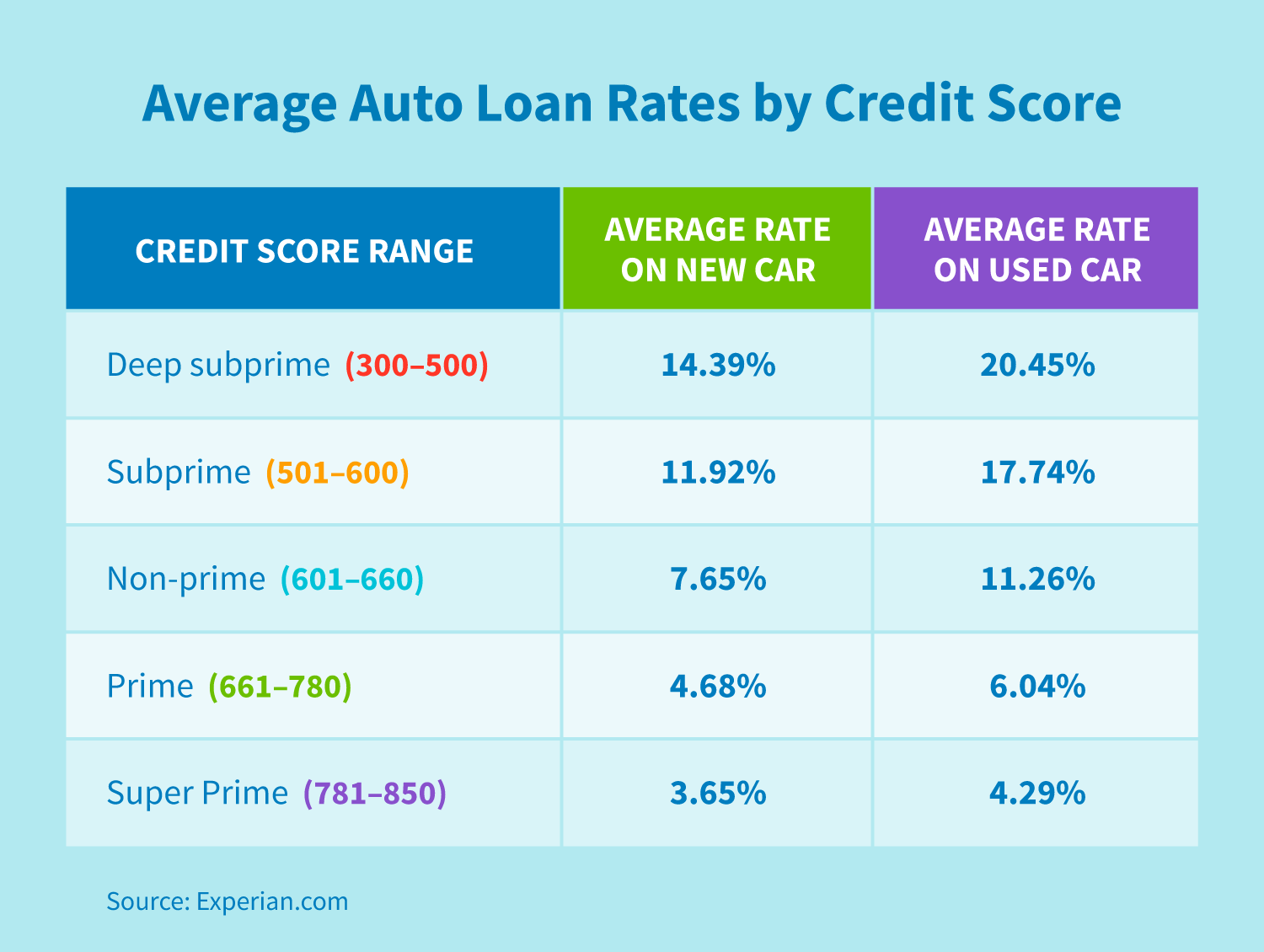
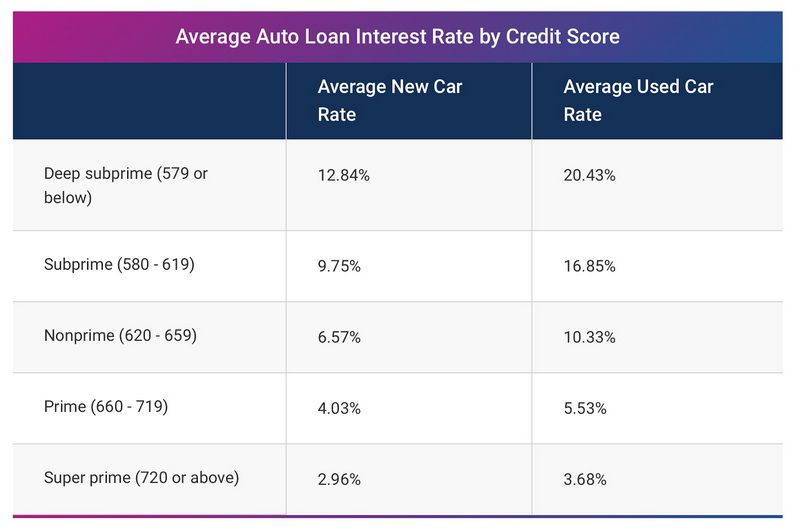
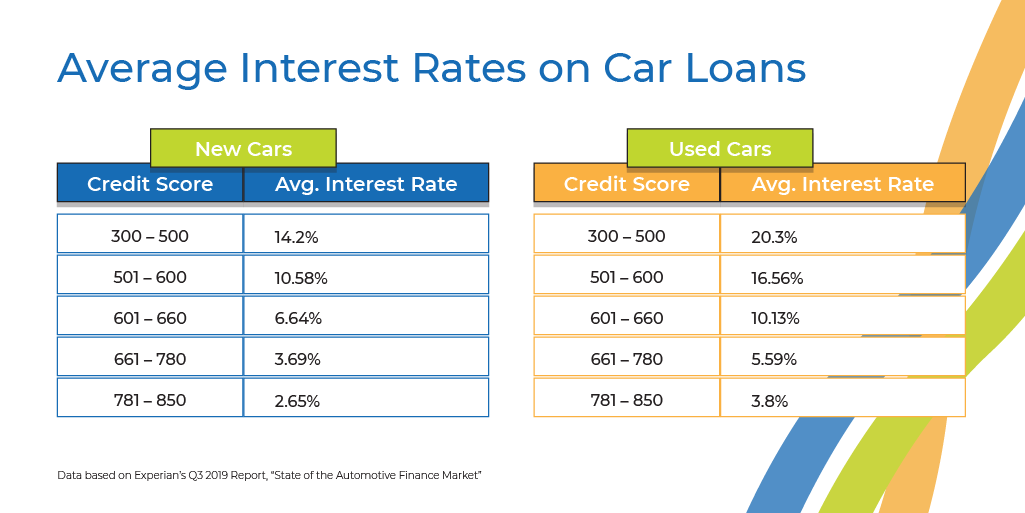
Without a doubt, your credit score is the single most significant factor influencing the interest rate you’ll receive on a car loan. A credit score is a numerical representation of your creditworthiness, based on your payment history, outstanding debts, length of credit history, types of credit used, and new credit applications. Lenders use these scores to assess the risk of lending money to you. Individuals with excellent credit scores (generally 720 and above on the FICO scale) are considered low-risk borrowers. They have a history of managing debt responsibly and making payments on time, leading to them being offered the lowest interest rates. Conversely, those with poor credit scores (below 620) are seen as higher risk, often resulting in significantly higher interest rates or even outright loan denial. A higher interest rate compensates the lender for the increased risk of default. Before applying for a car loan, it is highly recommended to check your credit report and score to understand where you stand and address any potential errors or issues.
The Impact of Loan Term and Down Payment
The loan term (the length of time you have to repay the loan) and your down payment also play crucial roles in determining your interest rate. Generally, shorter loan terms (e.g., 36 or 48 months) tend to come with lower interest rates than longer terms (e.g., 60, 72, or even 84 months). This is because a shorter term reduces the lender’s risk; there’s less time for economic conditions to change or for your financial situation to deteriorate. While longer terms result in lower monthly payments, they often mean paying more in total interest over the life of the loan due to the higher interest rate and extended repayment period.
Similarly, a larger down payment can lead to a lower interest rate. A significant down payment reduces the amount you need to borrow, which in turn reduces the lender’s risk. It also demonstrates your commitment to the purchase and your financial stability. Lenders view borrowers who put down a substantial portion of the car’s value as less likely to default, as they have more “skin in the game.” Aiming for a down payment of at least 10-20% of the vehicle’s price is often recommended to secure more favorable rates and terms.
Economic Conditions and Lender Policies
Broader economic conditions significantly influence interest rates across the board, including for car loans. Factors such as the federal funds rate set by central banks, inflation rates, and the overall health of the economy directly impact the cost of money for lenders. When the federal funds rate rises, lenders’ costs of borrowing increase, and they typically pass these increased costs on to consumers through higher interest rates. Conversely, in periods of economic downturn or low inflation, central banks might lower rates to stimulate borrowing, which can translate to lower car loan interest rates.
Beyond macroeconomics, individual lender policies and their internal risk assessments also play a part. Different banks, credit unions, and captive finance companies (those associated with car manufacturers) have varying appetites for risk, operational costs, and profit margins. This is why shopping around among multiple lenders is so critical; one lender’s policy might allow them to offer you a better rate than another, even if all your personal factors (like credit score) are the same. Their current promotional offers, competitive landscape, and strategic goals can all lead to different rate offerings.
Vehicle Type and Age
While less impactful than credit score or loan term, the type and age of the vehicle you’re purchasing can subtly influence your interest rate. Lenders perceive certain vehicles as higher or lower risk collateral. For instance, a brand-new car generally depreciates slower in the initial years compared to an older, high-mileage used car. Newer vehicles are also more reliable and often come with manufacturer warranties, reducing the likelihood of unexpected repair costs that could jeopardize a borrower’s ability to make payments.
Because of this, new car loans often carry slightly lower interest rates than used car loans. For used cars, very old vehicles or those with exceptionally high mileage might be subject to higher rates or specific lending restrictions. The reason is that their resale value is lower and their reliability is less certain, making them less valuable as collateral for the lender in case of default. Lenders prefer to finance assets that retain their value, as it mitigates their losses if they have to repossess and sell the vehicle.
Navigating the Car Loan Landscape: Where to Find the Best Rates
Finding the best car loan interest rate requires proactive research and understanding the various channels available for financing. Simply walking into a dealership and accepting their first offer might be convenient, but it rarely results in the most advantageous terms.
Dealership Financing vs. External Lenders (Banks, Credit Unions)
When it comes to securing a car loan, consumers generally have two main avenues: dealership financing or external lenders. Dealerships often act as intermediaries, working with a network of banks, credit unions, and their own captive finance companies (like Ford Credit or Toyota Financial Services). They can offer convenience, sometimes including promotional rates directly from manufacturers, especially for new cars. However, their primary goal is often to sell a car, and while they might find you a competitive rate, they might also mark up the interest rate for additional profit.
External lenders, such as national banks, local credit unions, and online lenders, typically offer direct-to-consumer loans. Credit unions are particularly known for often offering highly competitive rates due to their non-profit cooperative structure, which often translates to lower overheads and a focus on member benefits. Banks, both large and small, are also major players, offering a variety of loan products. Exploring these external options before you visit the dealership provides you with leverage. You’ll know what rate you pre-qualify for, giving you a strong baseline for comparison and negotiation.
The Power of Pre-Approval
One of the most effective strategies for securing a good car loan interest rate is to get pre-approved for a loan before you even step foot in a dealership. Pre-approval involves applying for a loan with an external lender (bank, credit union, or online lender) before you’ve chosen a specific vehicle. The lender will assess your creditworthiness and provide you with an offer for a maximum loan amount at a specific interest rate, typically valid for a certain period (e.g., 30-60 days).
The power of pre-approval lies in several aspects:
- Clarity: You know your borrowing power and the rate you can qualify for, separating the car purchase from the financing negotiation.
- Negotiation Leverage: With a pre-approval in hand, you walk into the dealership as a cash buyer. You can compare the dealership’s financing offer directly against your pre-approved rate. If the dealership can beat or match your pre-approved rate, great; otherwise, you have a ready-made financing option.
- Focus on Price: It allows you to focus solely on negotiating the price of the car, rather than getting entangled in a complicated negotiation that mixes price, trade-in value, and financing rates all at once. This simplifies the buying process and makes it harder for dealerships to obscure the true cost.
Online Lenders and Fintech Solutions
The rise of online lenders and fintech solutions has significantly expanded the options for car loan financing. Companies like Capital One Auto Finance, LightStream, Carvana, and others operate entirely online, offering a streamlined application process, quick approvals, and often competitive rates. These platforms can compare offers from multiple lenders on your behalf or provide direct loans.
The advantages of online lenders include convenience (you can apply from anywhere, anytime), speed, and sometimes more flexible underwriting standards for borrowers with less-than-perfect credit. They can be particularly useful for quickly comparing rates from various providers without the need to visit physical branches. However, it’s crucial to ensure that any online lender you consider is reputable and transparent about all fees and terms. Always read reviews, check for proper licensing, and ensure their security measures protect your personal and financial data. Incorporating online research into your financing strategy can uncover rates you might not find through traditional channels.
Strategies for Securing a Lower Car Loan Interest Rate
Armed with knowledge about how interest rates are determined and where to look, you can proactively employ several strategies to improve your chances of securing the lowest possible rate. Each action you take to present yourself as a lower-risk borrower can translate into significant savings over the life of your loan.
Boosting Your Creditworthiness
Since your credit score is the most influential factor, boosting your creditworthiness should be a top priority if you have time before needing a loan. This involves a few key practices:
- Pay Bills On Time: Payment history accounts for 35% of your FICO score. Consistently making all your payments (not just on credit cards, but also utilities, rent, and other loans) on or before the due date is paramount.
- Reduce Existing Debt: High credit utilization (the amount of credit you’re using compared to your available credit) can negatively impact your score. Paying down credit card balances can significantly improve your score.
- Avoid New Credit Applications: Each time you apply for new credit, a hard inquiry appears on your report, which can temporarily ding your score. Try to avoid opening new credit lines in the months leading up to a car loan application.
- Correct Credit Report Errors: Obtain your free annual credit report from all three major bureaus (Equifax, Experian, TransUnion) and dispute any inaccuracies. Even small errors can affect your score.
- Maintain Older Accounts: The length of your credit history matters. Don’t close old, unused credit card accounts, as this can shorten your average credit age.
Maximizing Your Down Payment and Minimizing Loan Term
As discussed, a larger down payment signals reduced risk to lenders. Aiming for 20% or more, if feasible, not only lowers the amount you need to borrow but can also lead to a better interest rate. It also reduces your monthly payments and minimizes the amount of time you spend “underwater” on your loan (owing more than the car is worth).
Similarly, opting for the shortest loan term you can comfortably afford will often result in a lower interest rate. While a longer term means lower monthly payments, the cumulative interest paid is almost always higher. Calculate what you can realistically afford each month and choose the shortest term that fits within that budget. For example, opting for a 60-month loan instead of a 72-month loan could save you hundreds or even thousands in interest over the life of the loan and typically comes with a more attractive rate.
The Art of Negotiation and Shopping Around
One of the most powerful tools in your arsenal is the ability to negotiate and shop around. Never accept the first offer, whether from a dealership or an external lender.
- Shop Multiple Lenders: Apply for pre-approval with at least 3-5 different lenders (banks, credit unions, online platforms). Do this within a short window (e.g., 14-45 days) so that multiple inquiries count as a single inquiry for credit scoring purposes. This “rate shopping” won’t significantly harm your score.
- Use Competing Offers: Once you have a pre-approved offer, use it as leverage. Take your best pre-approval rate to the dealership and see if they can beat it. If they can’t, you have a fallback.
- Negotiate Separately: Negotiate the car price first, then the financing. Don’t let a “great rate” distract you from paying too much for the car itself. Salespeople are skilled at bundling these negotiations, making it harder for you to see the true cost of each component. By securing your financing independently, you can keep the focus on the vehicle’s price.
Considering a Co-Signer or Refinancing
If your credit score isn’t ideal, or if you’re a young borrower with limited credit history, considering a co-signer can be a viable strategy. A co-signer is someone with excellent credit who agrees to take responsibility for the loan if you fail to make payments. Their strong credit history can help you qualify for a much lower interest rate than you could get on your own. However, this is a significant commitment for the co-signer, as their credit will also be impacted if you default, so it should be approached with careful consideration.
Another option, if you’ve already purchased a car and your financial situation or credit score has significantly improved, is refinancing. Refinancing involves taking out a new loan to pay off your existing car loan, ideally at a lower interest rate. If interest rates have dropped since you took out your original loan, or if your credit score has improved substantially, refinancing could save you a considerable amount of money over the remaining term of your loan. It’s wise to periodically check refinance rates, especially a year or two into your current loan, to see if better terms are available.
Understanding the Long-Term Cost of Car Loan Interest
While securing a low interest rate is important, it’s equally crucial to understand its long-term financial implications. The total interest paid over the life of the loan can add a substantial sum to the actual cost of your vehicle.
Calculating Your Total Interest Paid
Many borrowers focus solely on the monthly payment, overlooking the cumulative cost of interest. To truly understand the financial impact, you need to calculate your total interest paid. This can be done using online car loan calculators or amortization schedules. These tools allow you to input the principal amount, interest rate, and loan term, and they will output not only your monthly payment but also the total amount of interest you will pay over the entire loan period.
For example, a $25,000 loan at 5% over 60 months results in a monthly payment of approximately $471.78, with a total interest paid of around $3,306.80. However, if the interest rate jumps to 8%, your monthly payment increases to about $507.03, and your total interest paid skyrockets to roughly $5,421.80 – a difference of over $2,100 for the same loan amount and term, simply due to a 3% rate difference. This calculation vividly illustrates why even a small reduction in the interest rate can lead to significant long-term savings.
The Importance of Loan Amortization
Loan amortization is the process of paying off a debt over time through regular, fixed payments. Each payment consists of both principal and interest. In the early stages of a car loan, a larger portion of your monthly payment goes toward interest, and a smaller portion goes toward reducing the principal balance. As the loan matures, this ratio gradually shifts, with more of your payment going toward the principal and less toward interest.
Understanding amortization is important because it shows you how slowly the principal decreases initially, especially with longer loan terms. This “front-loading” of interest means that if you sell or trade in your car early in the loan term, you might find yourself owing more than the car is worth (being “underwater” or having negative equity), particularly if the car depreciates quickly. Knowing how amortization works can inform your decision about loan terms and the timing of any potential vehicle upgrades.
Making Informed Financial Decisions
Ultimately, understanding car loan interest rates empowers you to make informed financial decisions. It moves you from being a passive borrower to an active participant in your own financial well-being. By taking the time to research, compare offers, and negotiate, you can secure a loan that aligns with your budget and minimizes unnecessary costs.
Considering the true cost of borrowing means looking beyond the sticker price and the monthly payment. It involves evaluating the total amount you will pay, including all interest and fees, over the lifetime of the loan. This comprehensive perspective ensures that your car purchase is not only exciting but also financially sound, contributing positively to your overall personal finance goals.
aViewFromTheCave is a participant in the Amazon Services LLC Associates Program, an affiliate advertising program designed to provide a means for sites to earn advertising fees by advertising and linking to Amazon.com. Amazon, the Amazon logo, AmazonSupply, and the AmazonSupply logo are trademarks of Amazon.com, Inc. or its affiliates. As an Amazon Associate we earn affiliate commissions from qualifying purchases.