
Understanding how to find the interest on a loan is one of the most critical skills in personal finance. Whether you are looking at a mortgage, an auto loan, a personal line of credit, or a credit card balance, interest represents the cost of borrowing money. Failing to grasp how these figures are calculated can lead to long-term financial strain, while mastering them allows you to make informed decisions that save thousands of dollars over the life of a loan.
Interest is essentially the rent paid to a lender for the use of their capital. However, the way that “rent” is calculated varies significantly depending on the type of financial product you choose. To truly understand the cost of a loan, you must look beyond the monthly payment and dive into the mechanics of interest rates, compounding frequencies, and amortization schedules.
The Fundamentals of Loan Interest Calculation
Before diving into complex formulas, it is essential to distinguish between the two primary ways interest is calculated: simple interest and compound interest. Most consumer loans, such as traditional auto loans and personal loans, utilize simple interest. Conversely, credit cards and many investment-linked accounts utilize compound interest, which can significantly increase the total amount owed over time.
Simple Interest: The Basic Formula
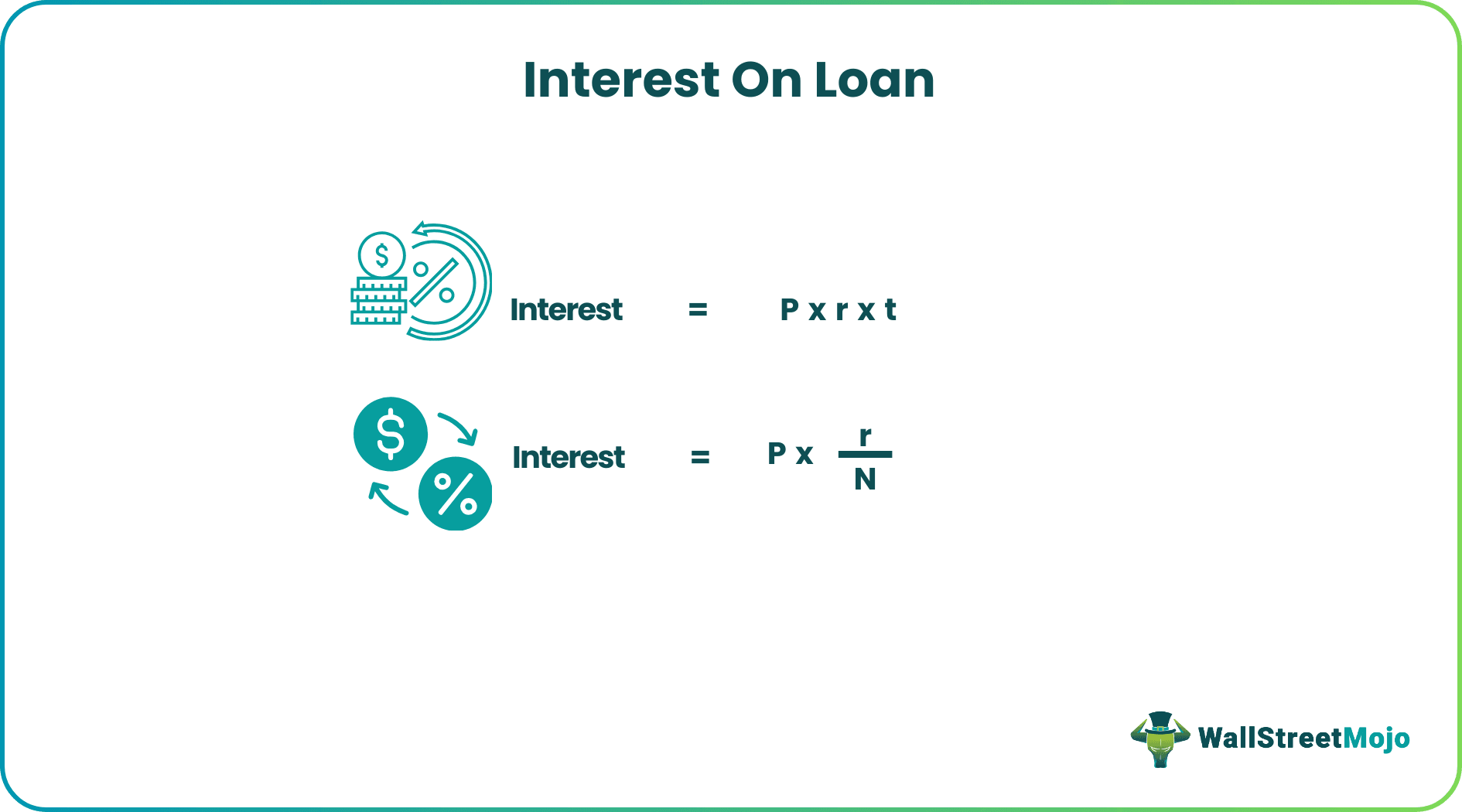
Simple interest is calculated only on the principal amount—the original sum of money borrowed. It does not factor in interest that has accumulated in previous periods. The formula for simple interest is straightforward:
Interest = Principal × Rate × Time
In this equation, the principal (P) is the total amount borrowed. The rate (r) is the annual interest rate expressed as a decimal (for example, 5% becomes 0.05). The time (t) is the duration for which the money is borrowed, usually expressed in years.
For example, if you borrow $10,000 at a 6% annual simple interest rate for three years, the calculation would be:
$10,000 × 0.06 × 3 = $1,800.
In this scenario, you would pay back a total of $11,800. Simple interest is transparent and predictable, making it a favorite for consumer-friendly lending products.
Compound Interest: The Cost of Time
Compound interest is more complex because it is calculated on the principal plus any interest that has already accumulated. This means you are essentially paying interest on your interest. In the world of debt, compounding is a double-edged sword that usually benefits the lender.
The formula for compound interest is:
A = P (1 + r/n)^(nt)
Where:
- A is the total amount (principal + interest).
- P is the principal.
- r is the annual interest rate (decimal).
- n is the number of times interest compounds per year (monthly, daily, etc.).
- t is the number of years the money is borrowed.
If you carry a balance on a credit card, the interest often compounds daily. This is why credit card debt can spiral out of control so quickly; the daily additions to the balance increase the base upon which the next day’s interest is calculated.
Navigating Amortization and Monthly Payments
While the basic formulas provide a snapshot, most modern loans use an amortization schedule. Amortization is the process of spreading out a loan into a series of fixed payments over time. While your monthly payment remains the same, the ratio of principal to interest changes with every payment.
How Amortization Works
In the early stages of an amortized loan—such as a 30-year mortgage—the majority of your monthly payment goes toward interest. As the principal balance slowly decreases, the amount of interest charged each month also decreases, allowing a larger portion of your payment to go toward the principal.
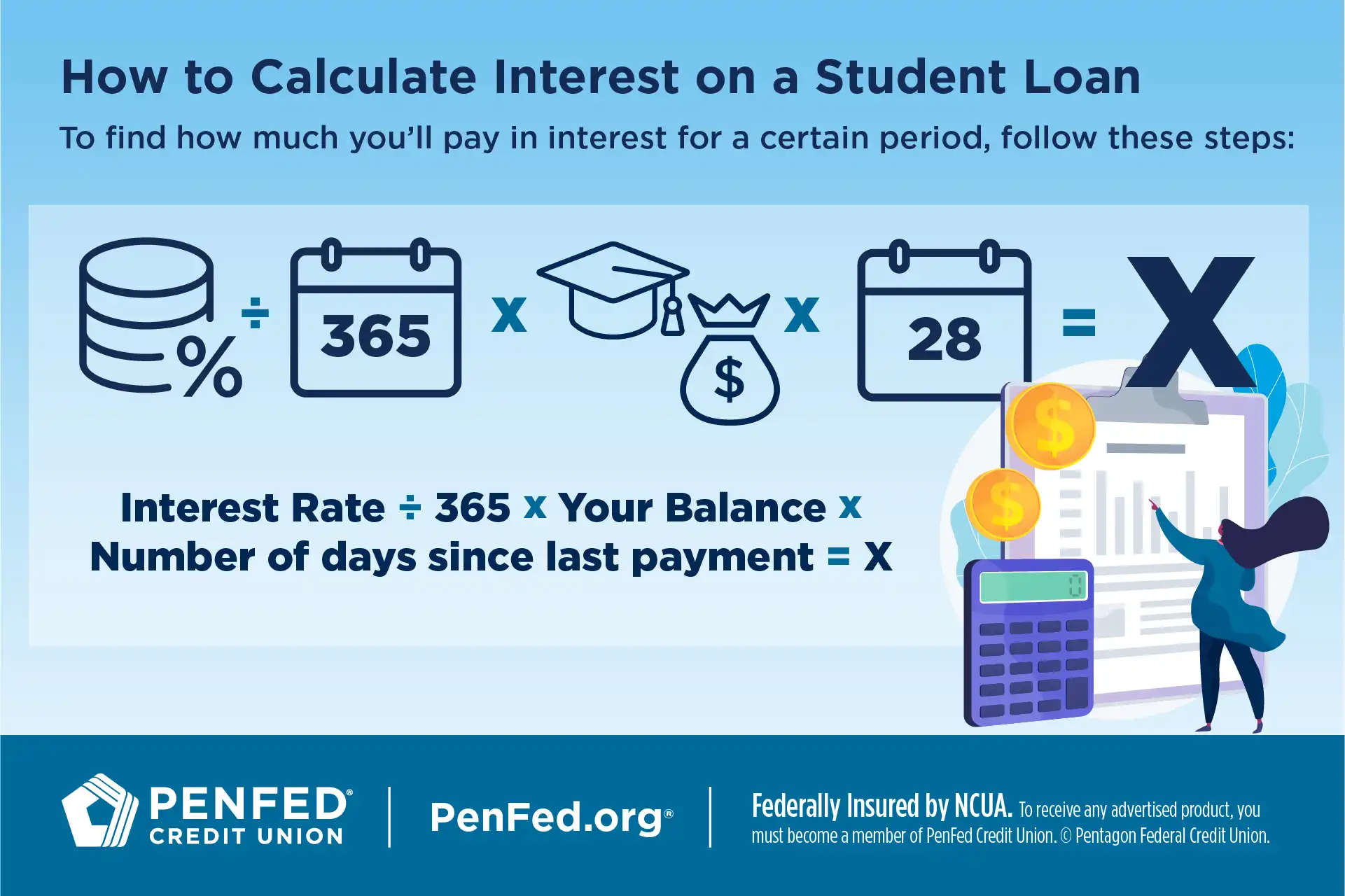
To find the interest for a specific month on an amortized loan, you can use a simple manual calculation:
- Find your current principal balance.
- Divide your annual interest rate by 12 to get the monthly interest rate.
- Multiply the principal balance by the monthly interest rate.
For example, if you have a $200,000 mortgage at a 4.5% interest rate:
$200,000 × (0.045 / 12) = $750.
In this first month, $750 of your mortgage payment goes strictly to interest. If your total payment is $1,013, only $263 is actually reducing your debt. Understanding this “front-loaded” interest structure is vital for anyone considering paying off a loan early.
The Impact of Loan Terms
The length of your loan term significantly impacts how much interest you will eventually pay. While a longer term (like a 72-month car loan) results in a lower, more manageable monthly payment, it drastically increases the total interest paid. Conversely, shorter terms have higher monthly requirements but allow you to build equity and clear the debt much faster, saving you a substantial sum in the long run.

APR vs. Nominal Interest Rate: Knowing the Difference
When you are searching for a loan, you will often see two different percentages: the interest rate (nominal rate) and the Annual Percentage Rate (APR). Knowing the difference is crucial to finding the true cost of interest.
What is the Nominal Interest Rate?
The nominal interest rate is the “advertised” rate. It is the percentage used to calculate the interest on the principal. However, it does not include any of the extra costs associated with taking out the loan.
The Power of APR
The APR provides a more accurate picture of the total cost of borrowing. It includes the interest rate plus any additional fees, such as loan origination fees, mortgage insurance, or closing costs.
For instance, two lenders might offer a 5% interest rate. However, Lender A charges $500 in fees while Lender B charges $2,000. Lender B will have a significantly higher APR. When comparing loan offers, always use the APR as your primary metric. It levels the playing field and reveals hidden costs that might not be apparent in the base interest rate.
Digital Tools and Strategies for Interest Management
In the modern era, you don’t need to be a mathematician to find the interest on a loan. A variety of digital tools can automate these calculations, providing you with precision and foresight.
Utilizing Spreadsheet Software
Excel and Google Sheets are powerful allies in financial planning. You can use the PMT function to calculate monthly payments or the IPMT function to find exactly how much interest you are paying in a specific period.
The syntax for IPMT is: =IPMT(rate, period, nper, pv).
- Rate: Interest rate per period.
- Period: The specific period (e.g., month 12) you want to examine.
- Nper: Total number of payment periods.
- Pv: Present value (the principal).
By building a simple spreadsheet, you can visualize your entire debt-reduction journey and see exactly when you will reach “the tipping point” where more of your money goes to principal than interest.
Online Calculators and Financial Apps
Most banking apps and independent financial websites offer “Loan Comparison Calculators.” These are invaluable for running “what-if” scenarios. For example, you can calculate how much interest you would save by paying an extra $100 toward your principal each month. Often, these small adjustments can shave years off a mortgage and save tens of thousands in interest.
Strategies to Reduce the Interest You Pay
Once you know how to find the interest on a loan, the logical next step is to find ways to pay less of it. Financial literacy isn’t just about calculation; it’s about optimization.
Refinancing and Consolidation
If market interest rates have dropped since you took out your loan, or if your credit score has improved, refinancing is a powerful tool. By taking out a new loan at a lower interest rate to pay off the old one, you reduce the “rent” you pay on that capital. Similarly, debt consolidation can move high-interest credit card debt into a lower-interest personal loan, effectively slowing down the compounding process.
Accelerating Principal Payments
Because interest is calculated based on the remaining principal, anything you do to lower that principal faster will result in lower interest charges. Making bi-weekly payments instead of monthly payments is a popular strategy. By paying half of your monthly amount every two weeks, you end up making 13 full payments in a year instead of 12. This extra payment goes directly toward the principal, compounding your savings over time.
Improving Your Credit Profile
The interest rate offered by lenders is a reflection of risk. By improving your credit score—through timely payments, low credit utilization, and a healthy mix of accounts—you qualify for lower rates. Even a 1% difference in a mortgage rate can mean the difference between a comfortable retirement and a decade of extra work.
Finding the interest on a loan is the first step toward taking full control of your financial life. By understanding the formulas, distinguishing between APR and nominal rates, and utilizing the right tools, you can navigate the world of borrowing with confidence. Remember that every dollar saved in interest is a dollar that can be redirected toward investing, savings, and building long-term wealth.
aViewFromTheCave is a participant in the Amazon Services LLC Associates Program, an affiliate advertising program designed to provide a means for sites to earn advertising fees by advertising and linking to Amazon.com. Amazon, the Amazon logo, AmazonSupply, and the AmazonSupply logo are trademarks of Amazon.com, Inc. or its affiliates. As an Amazon Associate we earn affiliate commissions from qualifying purchases.