
Purchasing a car is a significant financial decision for most individuals and families. While the sticker price of the vehicle often takes center stage in negotiations, understanding the interest rate of your car loan is arguably even more crucial for your long-term financial health. The interest rate is essentially the cost of borrowing money from a lender, expressed as a percentage of the principal loan amount. It directly impacts your monthly payments and, more importantly, the total amount you will pay over the life of the loan. A seemingly small difference in interest rate can translate into hundreds, or even thousands, of dollars saved or spent over several years.
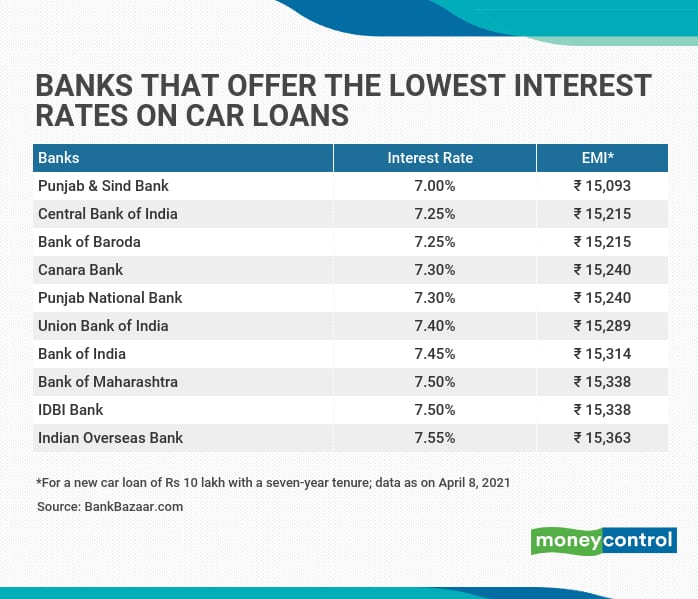
In essence, when you take out a car loan, you’re not just paying back the price of the car; you’re also paying a fee to the lender for the privilege of using their money immediately. This fee is the interest. Navigating the world of car loan interest rates can seem complex, with various factors at play and numerous lenders vying for your business. This comprehensive guide aims to demystify car loan interest rates, explaining what they are, what influences them, how to secure the best possible rate, and their profound impact on your overall financial commitment.
Decoding Car Loan Interest Rates: The Fundamentals
Before diving into the intricacies, it’s essential to grasp the basic definitions and why these percentages hold so much sway over your car purchase.
Defining Interest Rates and APR
The interest rate on a car loan is the percentage charged by a lender for the money you borrow, typically calculated annually. If you borrow $20,000 at a 5% interest rate, you’d accrue $1,000 in interest over a year on that principal amount (though the actual calculation for a loan involves amortization). This rate solely represents the cost of borrowing the principal.
However, a more comprehensive measure you’ll often encounter is the Annual Percentage Rate (APR). The APR encompasses the interest rate plus any additional fees associated with the loan, such as administrative fees, origination fees, or other charges that the lender may impose. For instance, if a loan has an interest rate of 4.5% but also includes $200 in fees, the APR might be 4.8%. The APR provides a more accurate picture of the total annual cost of borrowing because it factors in all the upfront and ongoing charges. When comparing loan offers, always prioritize comparing the APR, as it gives you the truest representation of the loan’s actual cost. A lower APR always means a cheaper loan, assuming all other terms (like the loan amount and term length) are equal.
Why Interest Rates Matter for Your Car Purchase
The interest rate is not merely a number; it’s a critical financial lever that dictates the affordability and total cost of your car. A lower interest rate means:
- Lower Monthly Payments: A reduced interest burden means more of your monthly payment goes towards the principal, resulting in a smaller overall payment.
- Lower Total Cost of the Loan: Over the life of a multi-year loan, even a one or two percentage point difference in the interest rate can save you hundreds or even thousands of dollars in total interest paid. This translates directly to more money in your pocket that could be used for savings, investments, or other financial goals.
- Greater Financial Flexibility: With lower payments and less money tied up in interest, you have more disposable income and less financial stress, making it easier to manage other expenses or respond to unforeseen financial challenges.
Ignoring the interest rate and focusing solely on the monthly payment can be a costly mistake. Lenders might offer extended loan terms (e.g., 72 or 84 months) to lower the monthly payment, but often at the expense of a higher interest rate and significantly more interest paid over the longer term.
Key Determinants of Your Car Loan Interest Rate
Car loan interest rates are not uniform; they vary widely based on a multitude of factors, both personal and market-driven. Understanding these determinants empowers you to take steps to secure a more favorable rate.
The Pivotal Role of Your Credit Score
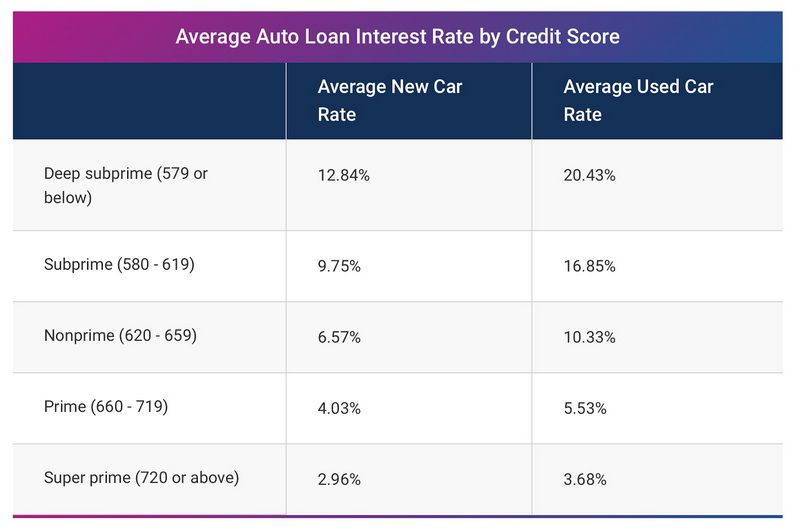
Your credit score is arguably the single most influential factor in determining the interest rate you’ll be offered. Lenders use credit scores (like FICO scores) as a quick indicator of your creditworthiness and your likelihood of repaying the loan. A higher credit score (typically above 700, with excellent scores being 800+) signals to lenders that you are a low-risk borrower, enabling them to offer you lower interest rates. Conversely, a lower credit score (below 600) suggests a higher risk, prompting lenders to charge higher interest rates to compensate for that perceived risk. This is why improving your credit score before applying for a car loan can yield substantial savings.
Loan Term Length: A Double-Edged Sword
The length of your loan, or the loan term, significantly impacts your interest rate. Generally, shorter loan terms (e.g., 36 or 48 months) tend to come with lower interest rates because the lender’s money is tied up for a shorter period, reducing their risk. Longer loan terms (e.g., 60, 72, or 84 months), while offering lower monthly payments, typically carry higher interest rates. This is because the extended repayment period increases the lender’s exposure to risk, such as changes in your financial situation or the car depreciating more than anticipated. While a longer term might make the car seem more affordable monthly, it often results in paying considerably more interest over the loan’s life.
Down Payment and Its Influence
A substantial down payment reduces the amount of money you need to borrow, which, in turn, reduces the lender’s risk. When you put down a larger percentage of the car’s purchase price, you demonstrate a greater personal investment in the vehicle and a lower likelihood of default. Lenders often reward this lower risk profile with more attractive interest rates. Furthermore, a significant down payment can help you avoid becoming “upside down” on your loan, where you owe more than the car is worth, especially given how quickly new cars depreciate.
New vs. Used Vehicles: Rate Disparities
The type of vehicle you purchase—new or used—can also affect your interest rate. Generally, new car loans tend to have lower interest rates than used car loans. This is partly due to the perception of less risk with a new vehicle (e.g., warranty coverage, predictable maintenance) and partly because new cars often qualify for promotional financing rates offered by manufacturers. Used cars, with their varying conditions, higher mileage, and potential for unforeseen issues, are perceived as higher risk, leading to slightly higher interest rates.
Lender Types: Banks, Credit Unions, and Dealerships
Where you get your loan can also play a role.
- Banks: Offer a wide range of loan products and competitive rates, especially for borrowers with excellent credit.
- Credit Unions: Often known for offering highly competitive rates and personalized service to their members, as they are non-profit organizations focused on member benefits.
- Dealerships (Captive Lenders): While convenient, dealership financing can sometimes be marked up. However, they can also offer compelling promotional rates on new cars, especially from their associated “captive” finance companies (e.g., Ford Credit, Toyota Financial Services). It’s crucial to compare these offers with independent lenders.
- Online Lenders: Have grown in popularity, offering quick approvals and competitive rates, often with a streamlined application process.
Shopping around with different lender types is crucial for finding the best rate.
Current Economic Climate and Market Rates
Beyond personal financial factors, the broader economic environment and the Federal Reserve’s monetary policy decisions significantly influence interest rates across the board, including car loans. When the Fed raises its benchmark interest rate, it typically leads to higher borrowing costs for consumers. Conversely, during periods of economic stimulus or lower benchmark rates, car loan rates tend to decrease. While you can’t control these macro-economic factors, being aware of them can help you understand why rates might be higher or lower at certain times.
Strategies to Secure the Most Favorable Car Loan Rate
Armed with the knowledge of what influences interest rates, you can proactively employ strategies to improve your chances of securing the lowest possible rate.
Prioritizing Credit Score Improvement

Since your credit score is paramount, dedicate time to improving it before applying for a loan.
- Pay bills on time: Payment history is the most significant factor in your credit score.
- Reduce outstanding debt: Especially credit card debt, as high utilization ratios can hurt your score.
- Check your credit report: Review it for errors and dispute any inaccuracies.
- Avoid opening new credit accounts: This can temporarily lower your score.
A few months of focused effort can significantly boost your score and save you a substantial amount on interest.
The Power of Comparison Shopping
Never settle for the first loan offer you receive. Just as you compare car models and prices, you should compare loan offers from multiple lenders. Apply to banks, credit unions, and online lenders, and get pre-approved before you even set foot in a dealership. This strategy provides you with leverage and a benchmark rate against which to compare any financing offered by the dealership. Lenders often perform “soft inquiries” to pre-qualify you, which don’t affect your credit score, allowing you to gather various quotes without penalty.
Mastering the Art of Negotiation
Once you have multiple pre-approval offers, you’re in a strong position to negotiate.
- Negotiate the car price first: Keep the financing separate initially. Get a firm price on the vehicle before discussing how you’ll pay for it.
- Use your pre-approval: Present your best pre-approval offer to the dealership and ask if they can beat it. Dealerships often have relationships with various lenders and may be able to secure an even lower rate to earn your business.
- Be prepared to walk away: If a deal doesn’t feel right or the rates are too high, don’t be afraid to explore other options.
The Advantage of Pre-Approval
Getting pre-approved for a loan before visiting a dealership is a game-changer.
- Know your budget: A pre-approval tells you exactly how much you can afford to borrow, preventing you from falling in love with a car outside your financial reach.
- Expedited process: It streamlines the car-buying process at the dealership.
- Removes payment focus: It shifts the focus from “what monthly payment can I afford?” to “what is the best total price for this car?”. This prevents dealerships from playing games with the numbers by stretching out loan terms to lower monthly payments while increasing the overall cost.
The Long-Term Financial Impact of Your Car Loan Interest Rate
Understanding the mechanics of interest rates is one thing; appreciating their long-term financial ramifications is another. This insight is crucial for making a truly informed decision.
Calculating the Total Cost of Ownership
The total cost of your car isn’t just the purchase price; it’s the purchase price plus the total interest paid over the life of the loan, plus any fees and taxes. A higher interest rate dramatically inflates this total cost. For example, a $25,000 car loan at 3% over 60 months might cost you around $2,000 in interest, bringing the total to $27,000. The same loan at 7% could cost over $4,600 in interest, pushing the total to nearly $29,600. That’s a $2,600 difference solely due to the interest rate, which is a significant sum that could have been saved or invested.
Use online car loan calculators to plug in different interest rates, loan terms, and down payment amounts. This allows you to visualize the direct impact of each variable on your total cost and monthly payments, empowering you to make the most economical choice.
Understanding Your Monthly Payment Burden
While many buyers focus intensely on the monthly payment, it’s vital to understand how the interest rate directly shapes it. A higher interest rate means a larger portion of your early monthly payments goes towards interest rather than reducing the principal. This slows down your equity build-up in the vehicle. While a lower monthly payment from a longer loan term might seem appealing, remember it often comes with a higher interest rate and a much larger total interest payout. Always strike a balance between an affordable monthly payment and a reasonable total cost.
The Trade-offs: Shorter vs. Longer Loan Terms
Choosing the right loan term is a balancing act.
- Shorter Terms (e.g., 36-48 months): Pros include lower interest rates, less total interest paid, and faster ownership of the vehicle. Cons include higher monthly payments, which might strain your budget.
- Longer Terms (e.g., 72-84 months): Pros include lower monthly payments, making expensive cars seem more accessible. Cons include higher interest rates, significantly more total interest paid, and a greater risk of being “upside down” on your loan as the car depreciates faster than you pay it off.
Your ideal loan term depends on your budget, your desire to minimize overall costs, and your financial goals. Prioritizing a shorter term with an affordable payment will almost always result in better financial outcomes.
Navigating Common Car Loan Pitfalls and Making Informed Decisions
Even with the best intentions, car loan financing can present traps. Being aware of them can help you avoid costly mistakes.
Beware of Add-ons and Hidden Fees
Dealerships often try to upsell buyers on various add-ons such as extended warranties, paint protection, fabric protection, GAP insurance (Guaranteed Asset Protection), and service contracts. While some of these might have merit, they can significantly increase your loan amount and, consequently, the total interest paid. Carefully evaluate if you truly need these extras and always negotiate their price separately. Hidden fees, like document fees, should also be scrutinized. Always ask for a breakdown of all charges and ensure they are legitimate and reasonable.
Refinancing Opportunities
If you initially secured a car loan with a high interest rate (perhaps due to a lower credit score at the time, or not shopping around), refinancing can be a valuable option. Refinancing involves taking out a new loan to pay off your existing car loan, ideally at a lower interest rate or with more favorable terms. This can save you money on interest and potentially lower your monthly payments. Consider refinancing if your credit score has improved, market rates have dropped, or you found a better offer from another lender after your initial purchase.
The Importance of Reading the Fine Print
Before signing any loan agreement, meticulously read every line of the contract. Pay close attention to:
- The APR: Confirm it matches what you were quoted.
- The Loan Term: Ensure it’s the agreed-upon duration.
- Prepayment Penalties: Check if there are any fees for paying off your loan early. Most standard car loans do not have these, but it’s worth verifying.
- Late Payment Penalties: Understand the consequences of missed or late payments.
- Any additional charges or fees: Make sure you understand what each fee is for.
Never feel rushed or pressured into signing. If anything is unclear, ask for clarification. If you’re uncomfortable, take the contract home to review it or seek advice from a trusted financial advisor.
Conclusion
The interest rate of your car loan is a cornerstone of your automotive financing. It’s not just a small percentage point; it’s a powerful financial force that dictates your monthly outflow and the total cost of bringing that vehicle into your life. By understanding the factors that influence these rates – your credit score, loan term, down payment, and the economic climate – you equip yourself with the knowledge to navigate the complex world of auto financing effectively.
Furthermore, by proactively improving your credit, diligently shopping around for the best APR, leveraging pre-approvals, and confidently negotiating, you position yourself to secure the most favorable terms possible. Remember that a seemingly minor reduction in your interest rate can translate into substantial savings over the life of the loan, freeing up your financial resources for other important goals. Approach car financing with the same diligence and research you would apply to the car itself, and you’ll drive away not only with your desired vehicle but also with a smart, sustainable financial decision.
aViewFromTheCave is a participant in the Amazon Services LLC Associates Program, an affiliate advertising program designed to provide a means for sites to earn advertising fees by advertising and linking to Amazon.com. Amazon, the Amazon logo, AmazonSupply, and the AmazonSupply logo are trademarks of Amazon.com, Inc. or its affiliates. As an Amazon Associate we earn affiliate commissions from qualifying purchases.