
In the rapidly evolving landscape of digital media, the term “cord-cutting” has transitioned from a niche hobbyist trend to a mainstream technological shift. At the forefront of this revolution is YouTube TV. While the standard YouTube platform revolutionized user-generated content, YouTube TV is a distinct, premium service designed to replace traditional cable and satellite television through high-speed internet. It is a virtual Multichannel Video Programming Distributor (vMVPD) that leverages Google’s robust cloud infrastructure to deliver live broadcasts, local news, and premium sports directly to connected devices.

Understanding the Architecture of YouTube TV
To understand what YouTube TV is, one must first understand the underlying technology that separates it from traditional broadcast media. Unlike cable television, which relies on physical coaxial cables or satellite dishes and proprietary set-top boxes, YouTube TV operates entirely via the internet protocol (IP).
The Transition from Traditional Cable to vMVPDs
Traditional cable relies on a “linear” delivery system where signals are sent through dedicated hardware. This often results in signal degradation, hardware failures, and high maintenance costs. YouTube TV, as a vMVPD, utilizes a “top-down” software approach. It takes the linear feeds from major networks—such as ABC, CBS, FOX, and NBC—and encodes them into digital streams that are optimized for various bandwidths. This allows the service to offer high-definition content without the need for a physical technician to visit your home.
How the Cloud DVR Infrastructure Sets a New Standard
One of the most significant technological breakthroughs of YouTube TV is its Cloud DVR (Digital Video Recorder). In the past, recording live television required a physical hard drive inside a DVR box, which had limited storage capacity. YouTube TV utilizes Google’s massive data centers to provide “unlimited” cloud storage. When a user “records” a show, they aren’t saving it to a local device; instead, they are flagging a specific stream on Google’s servers to be accessible on demand. This architecture allows for simultaneous recordings of an infinite number of programs, a feat that was technically impossible with physical hardware.
Key Features and Technological Capabilities
YouTube TV is not merely a digital mirror of cable; it is an intelligent software suite that incorporates advanced data processing to enhance the viewing experience. By integrating Google’s search algorithms and high-speed data delivery, the platform offers features that traditional hardware cannot match.
Multi-View and 4K Plus: Pushing the Limits of Bandwidth
For sports enthusiasts and power users, YouTube TV has introduced “Multi-View.” This feature allows users to stream up to four live feeds simultaneously on a single screen. From a technical standpoint, this is a complex task that requires significant processing power to sync multiple high-bitrate streams without lag. Furthermore, the “4K Plus” add-on package enables Ultra High Definition (UHD) streaming for select content. This requires the app to dynamically adjust to the user’s internet speed, using adaptive bitrate streaming (ABS) to ensure that the 4K feed remains stable even if the network fluctuates.
User Interface and Algorithmic Recommendations
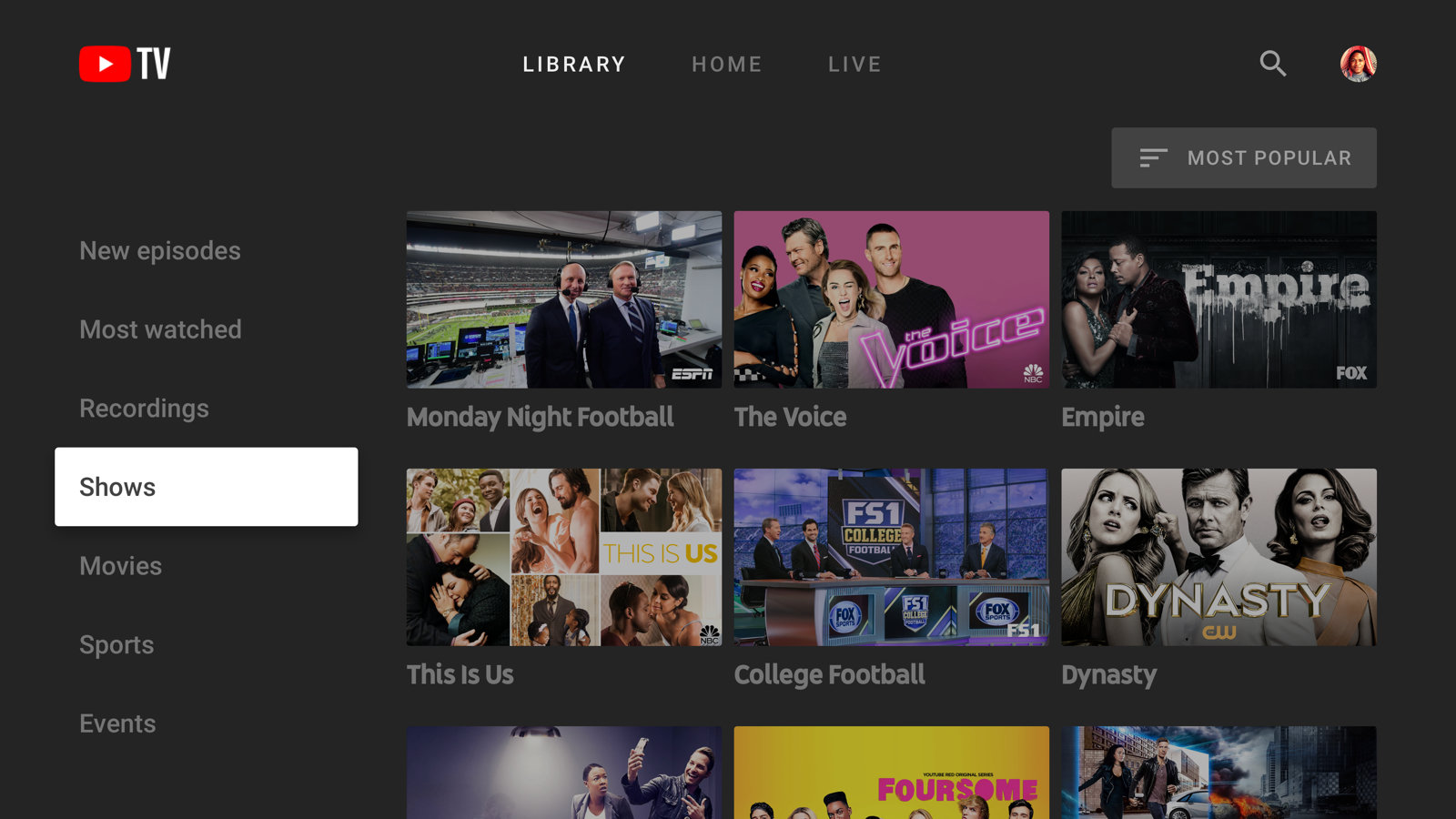
The YouTube TV interface is a masterclass in modern UI/UX design. Drawing from years of data on the main YouTube platform, the service uses machine learning to suggest content based on viewing habits. If you frequently watch NFL games, the interface will prioritize live sports and related news on your home screen. The “Live Guide” is also a notable piece of software engineering; it provides a real-time, interactive schedule that updates instantaneously, allowing users to see what is airing across over 100 channels with zero latency.
Compatibility and Hardware Integration
A primary advantage of YouTube TV is its “platform-agnostic” nature. Because it is a software-based service, it can live on almost any device with a screen and an internet connection, breaking the hardware monopoly held by traditional cable providers.
Native Apps and Cross-Platform Synchronicity
YouTube TV offers native applications for a vast array of operating systems, including Android TV, tvOS (Apple TV), Fire OS (Amazon), and various proprietary Smart TV systems (Samsung Tizen, LG webOS). This cross-platform compatibility is maintained through a unified codebase that ensures a consistent experience regardless of the device. One of the most impressive technical aspects is the “hand-off” feature: a user can start watching a live game on their smartphone while on the subway and, upon arriving home, immediately resume the same stream on their smart TV with a single tap.
Smart Home Integration and Voice Commands
As part of the broader Google ecosystem, YouTube TV is deeply integrated with Google Home and Assistant. This allows for voice-activated control of the television. Technically, this involves complex API calls between the YouTube TV app and the Google Home ecosystem. A user can say, “Hey Google, play ESPN on the Living Room TV,” and the system will authenticate the user, launch the app on the designated hardware, and tune to the correct stream in seconds.
YouTube TV vs. Competitors: A Technical Benchmarking
In the crowded market of streaming services—including Hulu + Live TV, FuboTV, and Sling TV—YouTube TV is often cited as the gold standard for performance. This reputation is built on specific technical benchmarks related to uptime and latency.
Latency and Streaming Stability
One of the biggest hurdles for live-streaming technology is “latency”—the delay between the live action and the image appearing on the screen. In live sports, a 30-second delay can lead to spoilers via social media. YouTube TV has invested heavily in low-latency technology, reducing the delay to levels that rival traditional cable. By optimizing the “last mile” of data delivery and using localized edge servers, Google ensures that the stream reaches the user as fast as possible.
Channel Buffering and Bitrate Quality
While many services struggle with “buffering” during high-traffic events (like the Super Bowl), YouTube TV utilizes Google’s global Content Delivery Network (CDN). This network is designed to handle massive spikes in traffic by distributing the load across thousands of servers worldwide. Additionally, the service uses high-efficiency video coding (HEVC) to provide superior picture quality at lower bitrates, making it accessible even to users with moderate internet speeds.
The Future of YouTube TV and Emerging Tech Trends
As we look toward the next decade of television, YouTube TV is positioned to be more than just a video player. It is becoming a hub for interactive media and integrated technology.
Integration of AI-Driven Interactivity
The next phase of YouTube TV involves the integration of Artificial Intelligence (AI) to provide “Key Plays” and real-time stats. Using computer vision, the platform can automatically identify significant moments in a sports broadcast. If a user joins a game late, the AI offers a “Catch up through key plays” feature, which generates a curated playlist of highlights on the fly. This requires real-time video analysis and automated metadata tagging, showcasing the platform’s deep tech roots.
The Role of 5G in Mobile Live Streaming
The rollout of 5G technology is set to amplify the utility of YouTube TV. With higher mobile bandwidth and lower latency, the “TV” experience will no longer be tethered to the home. We are moving toward a future where 8K streaming on a mobile device becomes technically feasible. YouTube TV is already optimizing its mobile apps to leverage the increased speeds of 5G, ensuring that the “live” in live TV is truly instantaneous, regardless of location.

Conclusion
YouTube TV represents the culmination of decades of advancement in cloud computing, data delivery, and user interface design. It is not merely an alternative to cable; it is a superior technological evolution. By removing the constraints of physical hardware and replacing them with the scalability of the cloud, YouTube TV has redefined what it means to “watch television.” As internet speeds continue to climb and AI becomes more integrated into our daily lives, YouTube TV will likely continue to lead the charge, transforming the television from a passive box into an intelligent, interactive, and omnipresent digital service. Whether through its unlimited DVR, its 4K capabilities, or its seamless ecosystem integration, YouTube TV is the definitive answer to the question of what the future of media looks like.
aViewFromTheCave is a participant in the Amazon Services LLC Associates Program, an affiliate advertising program designed to provide a means for sites to earn advertising fees by advertising and linking to Amazon.com. Amazon, the Amazon logo, AmazonSupply, and the AmazonSupply logo are trademarks of Amazon.com, Inc. or its affiliates. As an Amazon Associate we earn affiliate commissions from qualifying purchases.