
In the realm of personal finance and household budgeting, few topics spark as much debate as the annual “subscription” to a warehouse club. For millions of consumers, the Costco card is more than just a piece of plastic; it is a gateway to a specific financial ecosystem designed to leverage economies of scale. However, with the recent 2024 adjustment to membership fees—the first increase since 2017—many savvy consumers are re-evaluating the math. To determine whether a Costco membership is a prudent investment or an unnecessary leak in your cash flow, one must look beyond the sticker price and analyze the structural ROI (Return on Investment) of the various membership tiers.
Understanding the Tiered Cost Structure of Costco Memberships
Costco operates on a membership-based business model where the majority of its net profit is derived from annual fees rather than the margins on the goods themselves. This allows the company to keep markups significantly lower than traditional grocery retailers. As of the most recent price adjustment, there are two primary tiers for individuals and a specialized track for businesses.
The Gold Star Membership: Entry-Level Value
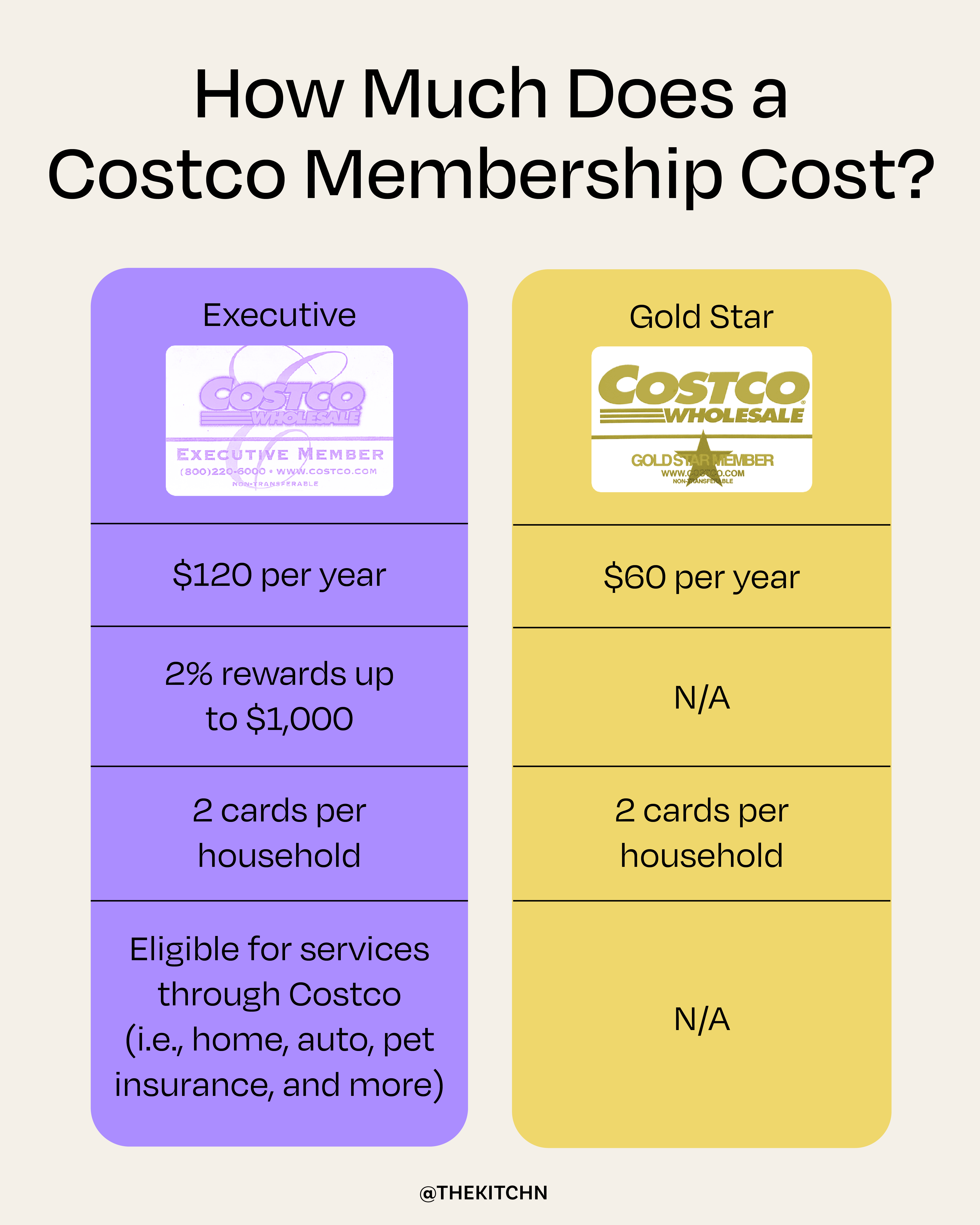
The Gold Star Membership is the standard entry point for individual households. Currently priced at $65 per year, this tier provides access to all Costco locations worldwide and allows for one additional household card for a spouse or partner. From a financial planning perspective, this equates to a fixed cost of approximately $5.42 per month. For this investment to make sense, a household must save at least that amount in price differentials compared to standard supermarkets or online retailers like Amazon.
The Executive Membership: The Premium Cashback Engine
For those who view their shopping habits through the lens of a “prosumer,” the Executive Membership is often the preferred choice. Priced at $130 per year, it represents a $65 premium over the Gold Star level. The defining feature of this tier is the 2% annual reward on qualified Costco purchases, capped at $1,250 per year.
Mathematically, the Executive Membership functions as a hedge against inflation. If a household spends $3,250 annually at Costco (roughly $271 per month), the 2% reward equals $65, effectively covering the price difference between the Gold Star and Executive tiers. Any spending beyond that point begins to subsidize the base cost of the membership itself.
Business Memberships: Scaling for Professional Needs
Costco also offers Business and Business Executive memberships, priced identically to the consumer tiers ($65 and $130, respectively). The primary distinction here is the ability to purchase goods for resale and the option to add additional “affiliate” members for a set fee per person. For small business owners, this is an essential tool for managing overhead, allowing for the procurement of office supplies, breakroom inventory, and even raw materials at wholesale rates that are inaccessible to the general public.
The Mathematics of the ROI: When Does the Fee Pay for Itself?
Determining the value of a Costco membership requires a cold, analytical look at spending patterns. It is a common trap in personal finance to assume that “bulk equals savings.” To truly understand the financial impact, one must calculate the break-even point and account for the “Costco Effect” on discretionary spending.
Calculating the Break-Even Point for Executive Members
As previously mentioned, the $3,250 annual spend is the “magic number” for Executive members. However, the calculation changes when you factor in high-ticket items. Costco’s inventory strategy involves rotating “treasure hunt” items—electronics, furniture, and appliances—which carry higher price tags but significant savings compared to specialty retailers. A single purchase of a $1,500 refrigerator or a $1,000 laptop can generate $20 to $30 in cashback rewards instantly, drastically shortening the path to recouping the $130 annual fee.
Factoring in the “Costco Effect” on Monthly Budgets
From a behavioral finance perspective, one must account for the tendency to overspend when presented with bulk quantities. A membership cost is a “sunk cost.” Once paid, consumers often feel a psychological urge to shop more frequently to “get their money’s worth.”
To maintain a healthy budget, financial experts suggest comparing the unit price. A 30-pack of paper towels might seem like a bargain at $25, but if a smaller household takes six months to use it, that capital is effectively “trapped” in inventory. A successful Costco strategy involves focusing on high-turnover staples—dairy, eggs, rotisserie chickens, and fuel—where the unit price consistently beats traditional grocers by 10% to 30%.

Maximizing Financial Efficiency Through Ecosystem Perks
While the physical warehouse is the main attraction, the true financial power of a Costco membership lies in its auxiliary services. These “hidden” perks can often save a member hundreds, if not thousands, of dollars annually, far exceeding the membership fee.
Fuel Savings and the Impact on Transportation Costs
For many members, the savings at the pump alone justify the annual fee. Costco Gasoline is Top Tier certified and typically priced significantly lower than surrounding stations—often by as much as $0.20 to $0.40 per gallon. For a commuter who fills up a 15-gallon tank once a week, a $0.30 per gallon saving results in $4.50 saved per week, or $234 per year. This single benefit can pay for an Executive Membership nearly twice over.
Costco Services: Insurance, Optical, and Pharmacy Arbitrage
Costco leverages its massive member base to negotiate lower rates for services that are usually high-margin for providers.
- Insurance: Through partnerships, Costco offers auto, home, and life insurance. Members frequently report saving $100–$500 annually by switching from traditional carriers.
- Pharmacy: The Costco Pharmacy is often cited as one of the most cost-effective places for prescriptions, even for those without health insurance.
- Optical and Hearing: The savings on high-end frames, lenses, and hearing aids can be substantial. A pair of progressive lenses that might cost $600 at a private clinic often costs less than $250 at Costco.
Travel and High-Ticket Purchases
Costco Travel functions as a dedicated travel agency for members, offering bundled vacation packages, rental cars, and cruises. Because Costco negotiates these rates in bulk, they often include “extras” like resort credits or Costco Shop Cards. When booking a $3,000 vacation, the 2% Executive reward ($60) plus the inherent savings in the package can make the membership fee look like a rounding error.
Comparative Analysis: Costco vs. Other Wholesale and Retail Models
In a competitive market, how does Costco’s membership fee hold up against rivals like Sam’s Club or the increasingly popular “free” shipping models of Amazon Prime?
Membership Fees vs. Grocery Store Inflation
While a $65 or $130 fee feels like a hurdle, it acts as a gatekeeper to a low-margin environment. Traditional grocery stores have seen significant price inflation over the last three years. Costco, by virtue of its limited SKU (Stock Keeping Unit) count—roughly 4,000 items compared to a typical supermarket’s 30,000—maintains immense bargaining power with suppliers. This allows them to absorb some inflationary pressure rather than passing it directly to the consumer.
The Psychology of Bulk Buying and Cash Flow Management
Financially, bulk buying is a form of “pre-paying” for future consumption. This requires a certain level of liquidity. If a consumer is living paycheck to paycheck, spending $200 on a single trip for bulk items might disrupt their short-term cash flow, even if the unit price is lower. However, for those with a stabilized budget, using Costco as a “pantry” reduces the frequency of shopping trips, which statistically reduces the number of impulse purchases made at convenience-oriented retailers.

Conclusion: Is the Membership a Liability or an Asset?
When analyzing whether the cost of a Costco membership is worth it, the answer is rarely a simple “yes” or “no.” It is a calculation of lifestyle and financial discipline.
For a single individual living in an urban apartment with limited storage and no car, a $65 membership may indeed be a financial liability. The inability to store bulk goods and the lack of access to Costco fuel pumps removes the two biggest avenues for savings.
However, for a family or a small business owner, the membership is almost certainly a high-yield financial asset. By strategically using the Executive Membership’s 2% cashback, utilizing the gas stations, and diverting high-cost services like insurance through the Costco ecosystem, the $130 annual fee can yield a 1,000% return in total annual savings.
Ultimately, the cost of a Costco membership should not be viewed as an expense, but as an access fee to a specialized financial toolset. Like any tool, its value is determined by the skill and frequency with which it is used. If you shop with a list, monitor your unit prices, and take advantage of the secondary services, the membership doesn’t just pay for itself—it becomes a cornerstone of a sophisticated personal finance strategy.
aViewFromTheCave is a participant in the Amazon Services LLC Associates Program, an affiliate advertising program designed to provide a means for sites to earn advertising fees by advertising and linking to Amazon.com. Amazon, the Amazon logo, AmazonSupply, and the AmazonSupply logo are trademarks of Amazon.com, Inc. or its affiliates. As an Amazon Associate we earn affiliate commissions from qualifying purchases.