
In the realm of personal finance, few decisions carry as much weight as the acquisition of a vehicle. For the vast majority of consumers and business professionals, a car is not merely a mode of transport; it is a significant capital expenditure and a depreciating asset that requires careful management. Deciding where to buy a used car is no longer just a matter of visiting a local lot; it is a sophisticated financial maneuver that involves analyzing market trends, understanding depreciation curves, and evaluating the opportunity cost of every dollar spent.
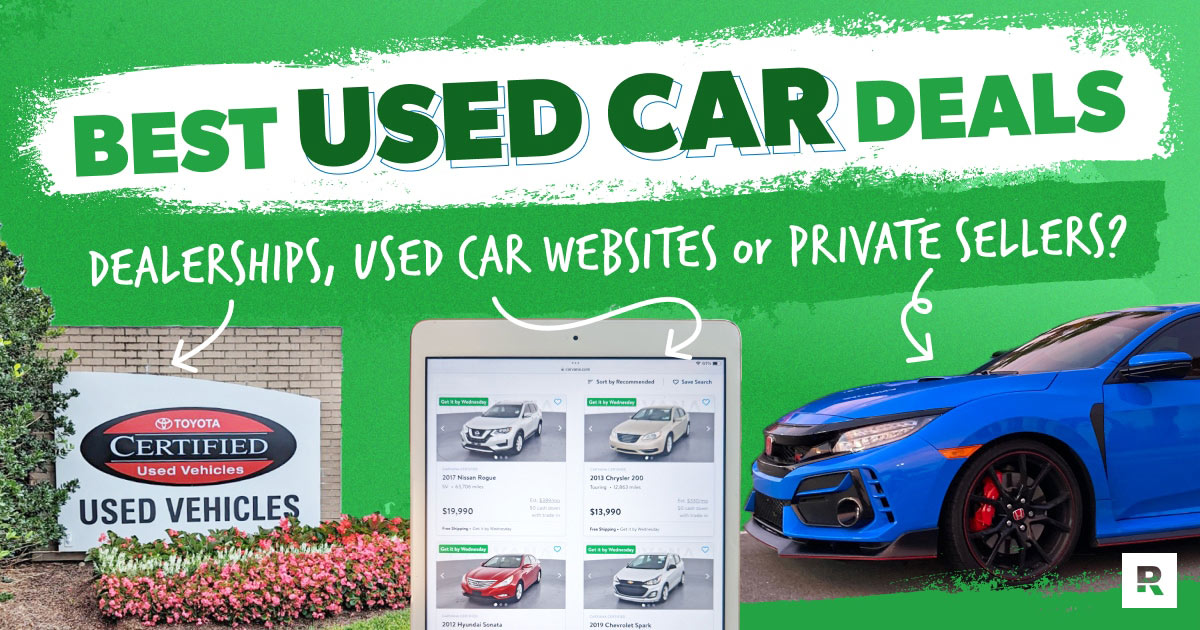
As the secondary automotive market evolves, the “where” has become inextricably linked to the “how much” and the “at what cost.” This guide examines the most effective avenues for purchasing used vehicles through a financial lens, focusing on how to secure the best return on investment while minimizing the total cost of ownership.
The Financial Logic of the Used Car Market
Before identifying specific marketplaces, one must understand the underlying economic principles that make the used car market a cornerstone of savvy personal finance. The most compelling argument for buying used is the mitigation of “drive-off-the-lot” depreciation.
Understanding Depreciation Curves
A new car typically loses 20% to 30% of its value within the first year of ownership. By the five-year mark, many vehicles have lost 60% of their original MSRP. From a wealth-building perspective, purchasing a vehicle that has already cleared the steepest part of its depreciation curve—usually between ages three and five—allows the buyer to let the original owner shoulder the heaviest financial loss. When you identify where to buy used cars, you are essentially looking for the point where the utility of the vehicle is high, but the price has stabilized.
The “New Car” Premium vs. Opportunity Cost
Choosing to buy used is an exercise in managing opportunity cost. If a new SUV costs $50,000 and a three-year-old equivalent costs $32,000, the $18,000 difference represents capital that can be deployed elsewhere. In a professional financial context, that $18,000, if invested in a diversified portfolio with a 7% annual return, could grow significantly over the life of the car. Buying used is not just about spending less; it is about freeing up capital for assets that appreciate rather than depreciate.
Sourcing for Value: Peer-to-Peer vs. Institutional Sellers
The choice of venue significantly impacts the final price and the financial risk involved. Each “where” comes with a different set of overhead costs passed down to the consumer.
The Private Party Advantage: Eliminating the Middleman
Platforms like Facebook Marketplace, Craigslist, and specialized enthusiast forums remain the most direct way to maximize value. In a private party transaction, there is no dealership markup to cover sales commissions, showroom rent, or corporate marketing budgets.
From a financial standpoint, buying from an individual often allows for more aggressive negotiation. However, this route requires the buyer to conduct their own “due diligence”—much like a business merger. Investing in a $150 Pre-Purchase Inspection (PPI) by a trusted mechanic is a vital financial safeguard. It turns an unknown liability into a calculated risk, ensuring that the “deal” doesn’t turn into a money pit of unforeseen repairs.
Dealership Certified Pre-Owned (CPO) Programs as Risk Mitigation
For those who prioritize capital preservation and risk management over the absolute lowest sticker price, franchise dealerships offering Certified Pre-Owned (CPO) vehicles are a primary destination. These vehicles undergo rigorous inspections and come with manufacturer-backed warranties.
While the purchase price is higher than a private sale, the financial value lies in the “insurance” of the warranty. For a small business owner or a professional with a tight schedule, the avoidance of repair volatility and the guarantee of a loaner car can justify the higher upfront cost. It is a trade-off between higher acquisition cost and lower operational risk.
Digital Marketplaces and the Financial Democratization of Car Buying
The rise of digital-first retailers has fundamentally altered the landscape of where to buy used cars, moving the industry toward a high-volume, low-friction model.
Online-First Retailers: Convenience vs. Margin
Companies like Carvana, Vroom, and Shift have attempted to commoditize used car buying. Their value proposition is built on transparency and “no-haggle” pricing. For the consumer, the financial benefit is the elimination of the “hidden fees” often found in traditional dealership back-offices.

However, from a business finance perspective, it is important to note that these platforms often carry a premium price tag to cover their massive logistical overhead. A savvy buyer must weigh the convenience of home delivery and a 7-day return policy against the $1,000 to $2,000 premium these services often command over local market rates.
Auction Platforms: High Risk, High Reward for Savvy Investors
Online auction sites like Bring a Trailer or Cars & Bids cater to a different financial demographic. These platforms deal largely in enthusiast and high-retained-value vehicles. While not the place for a “cheap” commuter car, these are strategic venues for buying vehicles that may actually appreciate or hold their value exceptionally well.
Investing in a vehicle with a high “collectability” factor can occasionally result in a neutral or positive net worth impact over the ownership period. This requires a deep understanding of market trends and historical data, treating the car more like a physical commodity or a “passion investment” than a mere utility.
Financing and Total Cost of Ownership (TCO) Strategies
Where you buy a car often dictates how you finance it, and the financing structure is where many buyers lose the “money” game.
Navigating Interest Rates in the Secondary Market
Interest rates on used cars are typically higher than those on new cars. A “good deal” on a purchase price can be completely negated by a high-interest loan. Before deciding where to shop, a buyer should secure a pre-approval from a credit union or a bank.
Credit unions, in particular, are often the best financial partners for used car buyers. They are member-owned and frequently offer rates 1% to 2% lower than national banks. By walking into a dealership or a private sale with a pre-approved check, you retain control over the “cost of capital,” preventing the seller from profiting off an inflated finance margin.
Insurance and Maintenance: The Hidden Variables of Asset Management
The “Total Cost of Ownership” (TCO) is the only metric that truly matters in car buying. When comparing where to buy, one must consider the insurance premiums and maintenance schedules of specific brands. A used European luxury sedan may have a low entry price, but its maintenance costs can represent a significant percentage of its value annually.
A wise financial strategy involves researching the “5-year cost to own” for any model. A vehicle that is $2,000 more expensive upfront but has a reputation for 200,000-mile reliability and low insurance groups will almost always be the superior financial choice over a “bargain” that requires specialized, high-cost labor and parts.
Exit Strategies: Maintaining Resale Value
In any business investment, the exit strategy is as important as the entry. Where you buy and how you maintain the vehicle dictates its eventual resale or trade-in value.
Documentation as a Financial Asset
A meticulously documented service history is a tangible financial asset. Whether you buy from a dealer or a neighbor, maintaining a folder of every oil change, tire rotation, and brake job adds a “transparency premium” when you eventually sell the car. In the private market, a car with a “full service history” (FSH) can often command a 10% to 15% price premium over an identical car with no records.
Timing the Market for Maximum ROI
Finally, the “when” is as important as the “where.” The used car market is cyclical. Generally, prices for four-wheel-drive vehicles rise in the autumn, while convertibles and fuel-efficient commuters may see price hikes in the spring.
Furthermore, monitoring broader economic indicators—such as new car inventory levels and interest rate hikes by the Federal Reserve—can provide clues on when used car prices are likely to soften. Buying during a market correction or at the end of a fiscal quarter when dealerships are desperate to meet volume targets is a professional-grade tactic for securing a superior price.
Conclusion
Determining where to buy a used car is a multifaceted financial decision that requires more than just a cursory glance at the sticker price. By viewing the purchase as a strategic acquisition of a depreciating asset, and by applying the principles of risk management, cost of capital, and total cost of ownership, consumers can navigate the market to their advantage. Whether through the high-risk, high-reward world of private sales, the regulated security of CPO programs, or the streamlined efficiency of digital retailers, the goal remains the same: to minimize the financial drain of transportation while maximizing the utility and eventual resale value of the asset. In the world of money, it is not just what you drive, but how effectively you managed the capital used to acquire it.
aViewFromTheCave is a participant in the Amazon Services LLC Associates Program, an affiliate advertising program designed to provide a means for sites to earn advertising fees by advertising and linking to Amazon.com. Amazon, the Amazon logo, AmazonSupply, and the AmazonSupply logo are trademarks of Amazon.com, Inc. or its affiliates. As an Amazon Associate we earn affiliate commissions from qualifying purchases.