
In the world of finance, whether you are managing a personal investment portfolio, overseeing a corporate budget, or running a small business, numbers are the language of progress. Among the various mathematical tools at a financier’s disposal, the “percentage increase” is perhaps the most vital indicator of momentum. It tells you how much your wealth has grown, how significantly your expenses have climbed, and whether your business strategies are yielding the desired expansion.
Understanding how to figure out percentage increase is more than just a classroom exercise; it is a fundamental skill for making informed economic decisions. In this guide, we will explore the core mechanics of this calculation and apply it across various financial contexts to help you master the metrics of growth.
Understanding the Fundamentals of Percentage Increase in Finance
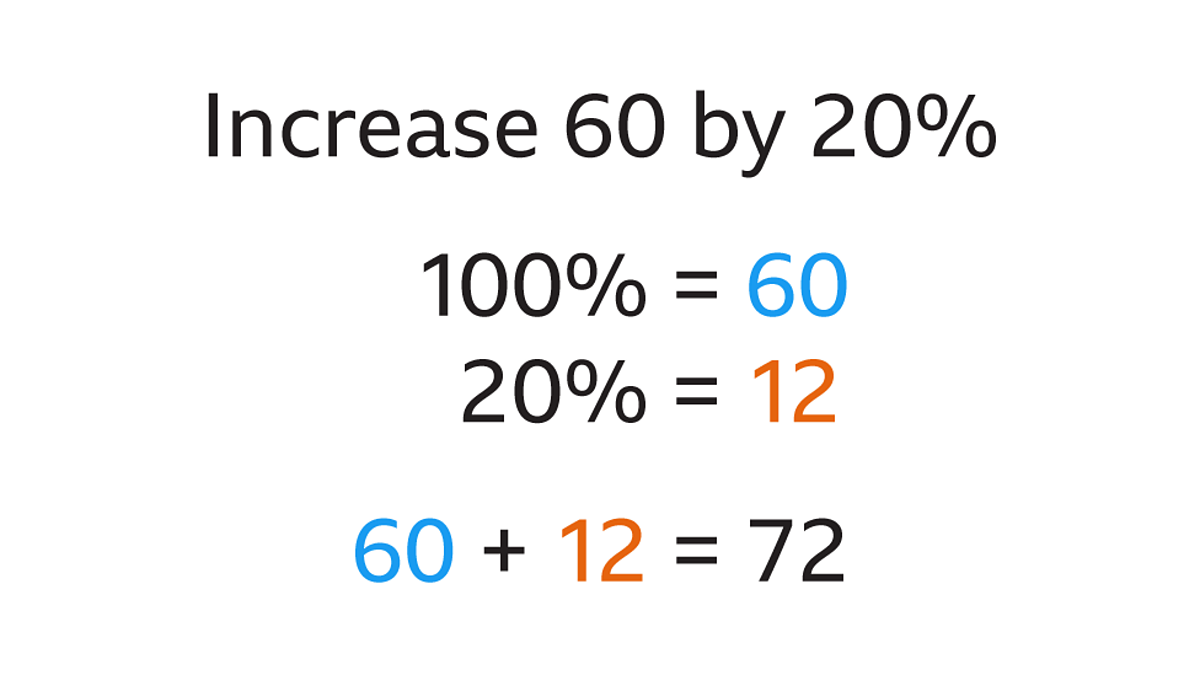
Before diving into complex market analysis or multi-year revenue projections, one must have a rock-solid grasp of the basic formula. In finance, percentage increase represents the relative change between an initial value and a final value, expressed as a fraction of 100. This allow for a “level playing field” when comparing different assets or time periods.
The Standard Percentage Increase Formula
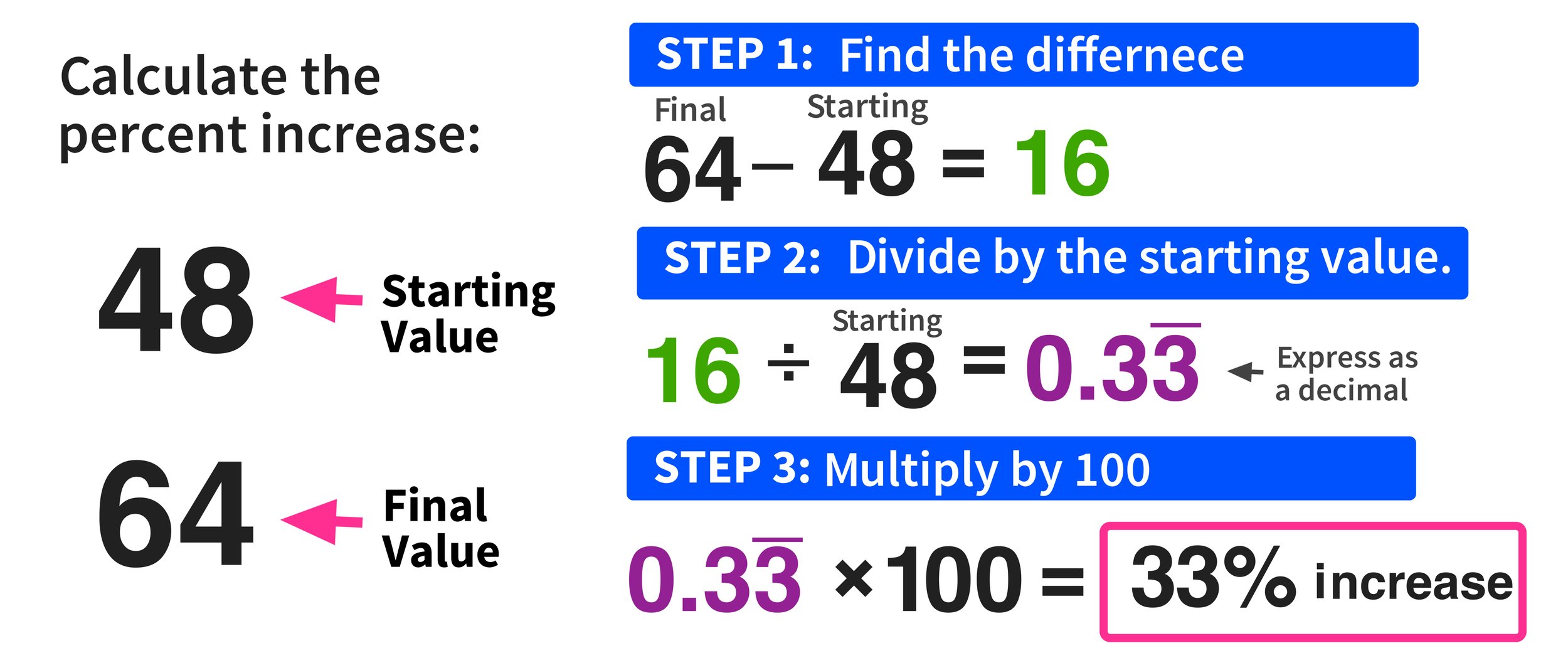
The formula to calculate percentage increase is straightforward but requires careful attention to the order of operations. To find the percentage increase, you follow these steps:
- Subtract the original value (the starting amount) from the new value (the current amount). This gives you the “absolute increase.”
- Divide that absolute increase by the original value.
- Multiply the resulting decimal by 100 to convert it into a percentage.
Mathematically, it looks like this:
Percentage Increase = [(New Value – Original Value) / Original Value] x 100
For example, if you purchased a share of a company for $150 and its price rose to $180, your absolute increase is $30. Dividing $30 by the original $150 gives you 0.20. Multiplying by 100 results in a 20% increase.
Why Context Matters in Business Finance
While the math remains the same, the interpretation of a percentage increase changes depending on what you are measuring. In a financial setting, a percentage increase in “Revenue” is generally celebrated, whereas a percentage increase in “Cost of Goods Sold” (COGS) might signal a need for operational adjustments.
Effective financial management requires looking beyond the raw number. A 10% increase in sales might seem positive, but if it was achieved by a 50% increase in marketing spend, the “growth” may actually be detrimental to the company’s bottom line. Therefore, the calculation serves as a starting point for deeper inquiry into business efficiency.
Applying Percentage Calculations to Investing and Portfolio Management
For the individual investor, percentage increase is the primary yardstick for performance. Whether you are tracking the S&P 500 or monitoring a high-yield savings account, knowing how to quantify your gains allows you to compare different asset classes objectively.
Analyzing ROI and Capital Gains
Return on Investment (ROI) is essentially a percentage increase calculation applied to capital. When you evaluate the success of a stock pick or a real estate venture, you are looking at how much the value has increased relative to your initial outlay.
Consider a real estate scenario: You purchase a rental property for $300,000. Five years later, the market value has risen to $450,000. Using our formula:
- ($450,000 – $300,000) = $150,000
- $150,000 / $300,000 = 0.50
- 0.50 x 100 = 50%
While the $150,000 gain is impressive, the 50% figure allows you to compare this investment to a stock market index that might have grown by 60% in the same period. This comparison helps you decide where your capital is most productive.
Factoring in Inflation and Real Returns
Professional investors often distinguish between “nominal” percentage increase and “real” percentage increase. The nominal increase is the raw calculation we’ve discussed. The “real” increase, however, adjusts for inflation.
If your investment portfolio saw a 7% increase over a year where inflation (the percentage increase in the Consumer Price Index) was 3%, your “real” growth is approximately 4%. Understanding this distinction prevents the “money illusion,” where investors feel wealthier because they have more currency, even though that currency’s purchasing power has diminished.
Percentage Increase in Business Operations and Revenue Strategy
In a corporate or entrepreneurial setting, percentage increase is used to track “Key Performance Indicators” (KPIs). It provides a snapshot of the health of the company and is a critical component of quarterly and annual reports.
Measuring Year-over-Year (YoY) Growth
One of the most common applications of percentage increase in business is Year-over-Year (YoY) growth. This metric compares a financial statistic for one period to the same period the previous year. It is particularly useful because it accounts for seasonality.
For instance, a retail business might see a massive increase in sales in December compared to November. However, a more meaningful metric is whether December sales increased compared to the previous December. If last year’s holiday revenue was $1.2 million and this year’s is $1.5 million, the 25% YoY increase suggests the brand is gaining market share and growing its customer base, rather than just experiencing a typical holiday surge.
Optimizing Profit Margins and Markup
Businesses also use percentage increase to determine pricing strategies. “Markup” is the percentage increase applied to the cost of a product to arrive at its selling price. If a wholesaler buys a widget for $10 and wants a 40% markup, they must calculate the increase ($4) and set the price at $14.
Conversely, managers must keep a close eye on the percentage increase of overhead costs. If rent, utilities, and payroll increase at a faster percentage rate than revenue, the business’s profit margins will shrink. By monitoring these percentages, financial officers can intervene early—perhaps by renegotiating supplier contracts or increasing prices—to maintain the company’s financial equilibrium.
Common Pitfalls and Advanced Financial Contexts
Calculating percentage increase seems simple, yet even seasoned financial analysts can fall into traps if they don’t respect the nuances of the mathematics involved.
The Difference Between Percentage Points and Percentages
A frequent error in financial reporting is confusing a “percentage increase” with an “increase in percentage points.” This distinction is crucial when discussing interest rates or tax brackets.
Suppose a central bank raises the interest rate from 3% to 4%.
- The increase in percentage points is 1 (4 – 3 = 1).
- The percentage increase in the rate itself, however, is 33.3% [(4 – 3) / 3 = 0.333].
In a financial context, saying a rate “increased by 1%” when you mean it went from 3% to 4% is mathematically incorrect and can lead to significant errors in debt servicing projections or investment valuations.
Compound Growth vs. Simple Increase
When looking at growth over multiple periods, a simple percentage increase can be misleading. This is where the concept of the Compound Annual Growth Rate (CAGR) comes into play.
If a business grows by 10% in Year 1 and 10% in Year 2, the total increase over two years is not 20%, but 21%. This is because the 10% increase in the second year is calculated based on the new, higher value at the end of Year 1. This “growth on growth” is the engine of wealth creation in compounding interest. Understanding how to calculate these sequential increases is vital for long-term retirement planning and corporate forecasting.
The Asymmetry of Losses and Gains
One of the most important insights in finance regarding percentage change is the “asymmetry of returns.” If an investment portfolio loses 50% of its value, it requires a 100% increase to return to its original “break-even” point.
- Start: $100
- 50% Decrease: $50
- To get back to $100, the $50 must increase by $50.
- $50 / $50 = 1.00 (or 100% increase).
This mathematical reality is why risk management is so heavily emphasized in personal finance. Avoiding a large percentage decrease is often more important for long-term wealth than chasing a large percentage increase, because the path to recovery is exponentially harder.

Conclusion: Turning Math into Financial Mastery
Figuring out percentage increase is a foundational skill that serves as the bedrock of financial literacy. By mastering this simple yet powerful calculation, you gain the ability to strip away the noise of raw data and see the true trajectory of your financial health. Whether you are evaluating the performance of a stock, measuring the growth of a business, or simply trying to stay ahead of inflation, the percentage increase formula provides the clarity needed for strategic decision-making.
In the professional world of money, those who understand the math of growth are better equipped to navigate volatility and capitalize on opportunities. By consistently applying these principles to your revenue, investments, and expenses, you move beyond mere “number crunching” and into the realm of true financial insight.
aViewFromTheCave is a participant in the Amazon Services LLC Associates Program, an affiliate advertising program designed to provide a means for sites to earn advertising fees by advertising and linking to Amazon.com. Amazon, the Amazon logo, AmazonSupply, and the AmazonSupply logo are trademarks of Amazon.com, Inc. or its affiliates. As an Amazon Associate we earn affiliate commissions from qualifying purchases.