
In the realm of personal and business finance, the ability to look beyond the surface level of a bank balance is what separates passive earners from successful wealth builders. Numbers are the language of money, and understanding “how to calculate” the key metrics of your financial health is the first step toward long-term security and growth. While many rely on intuition, professional financial management requires a structured approach to quantifying performance, risk, and potential.
This guide explores the fundamental calculations necessary to navigate the complexities of modern finance, from determining your true net worth to evaluating the efficiency of your investment portfolio.
1. Determining Your Financial Baseline: The Net Worth and Liquidity Framework
Before one can plot a course toward a financial goal, they must first identify their current coordinates. The most comprehensive way to do this is by calculating your net worth and assessing your liquidity.
The Net Worth Equation
At its simplest, net worth is the “scoreboard” of your financial life. To calculate it, you must list all assets—everything you own that has monetary value—and subtract all liabilities—everything you owe to others.
- Assets: Cash, savings, brokerage accounts, retirement funds (401k, IRA), real estate equity, and valuable personal property.
- Liabilities: Mortgages, car loans, student debt, credit card balances, and personal loans.
The formula is: Total Assets – Total Liabilities = Net Worth.
A professional approach to this calculation involves updating it quarterly. This allows you to see the “trend line” of your wealth, which is often more important than the absolute number at any given moment.
The Liquidity Ratio
While net worth shows total wealth, the Liquidity Ratio (or Emergency Fund Ratio) calculates how long you can survive without new income. This is calculated by dividing your liquid assets (cash and equivalents) by your monthly expenses.
Liquid Assets / Monthly Expenses = Liquidity Ratio (in months).
Financial experts generally recommend a ratio of 3 to 6 months. Calculating this regularly ensures that your wealth isn’t just growing, but that it is also structured safely enough to withstand market volatility or personal setbacks.
2. Measuring Growth: ROI, CAGR, and Performance Metrics
Once a baseline is established, the focus shifts to how effectively your capital is working for you. Measuring investment performance requires more than just looking at a gain in dollar terms; it requires understanding the efficiency of that gain relative to time and cost.
Return on Investment (ROI)
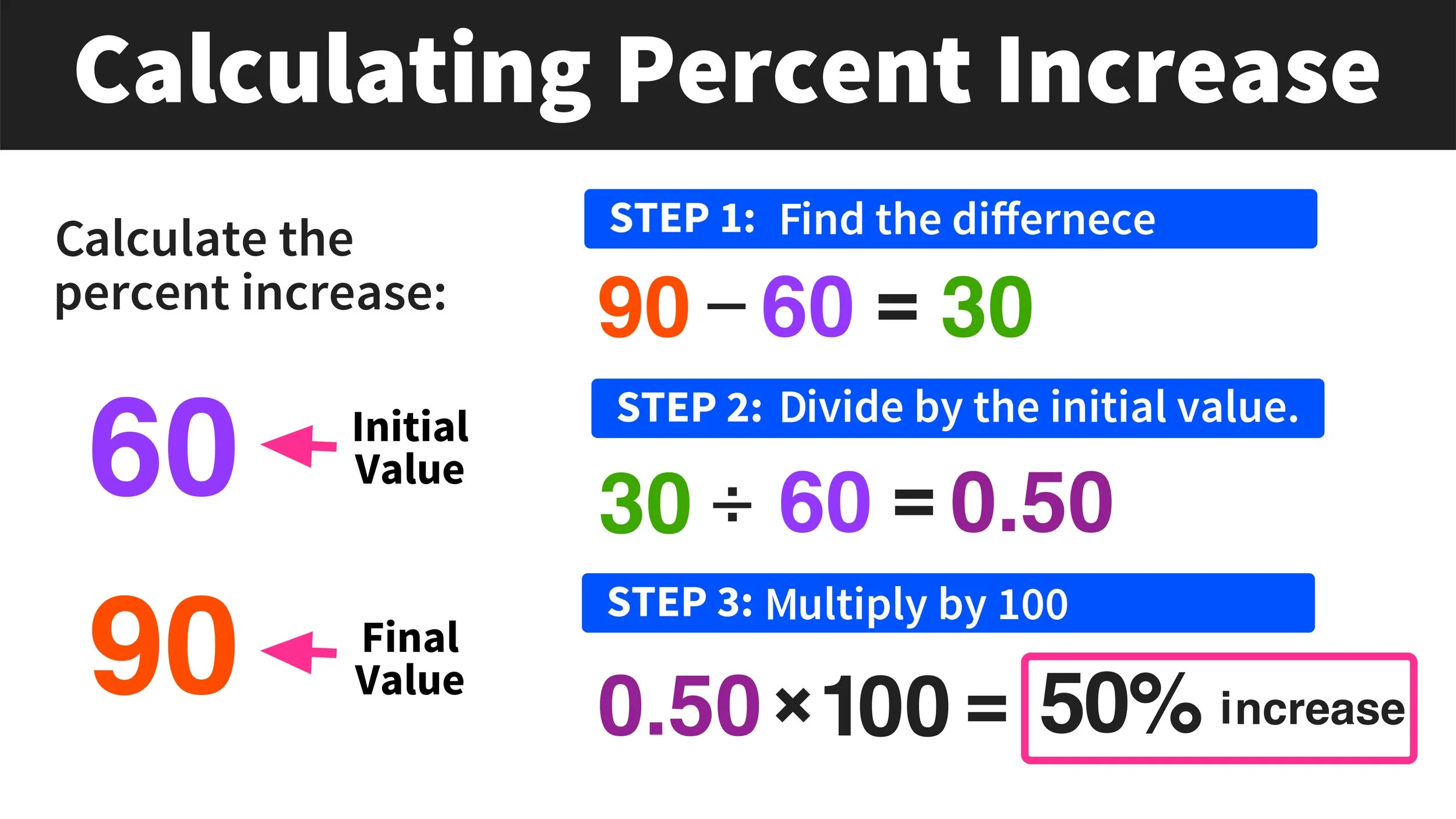
The most fundamental calculation in finance is ROI. It measures the percentage increase or decrease of an investment relative to its initial cost.
ROI = [(Current Value – Initial Cost) / Initial Cost] x 100.
While ROI is excellent for a “snapshot” of a completed trade or business venture, it has a significant flaw: it does not account for the passage of time. A 20% ROI achieved in one year is vastly superior to a 20% ROI achieved over five years.
Compound Annual Growth Rate (CAGR)
To compare investments held over different time periods, professionals use the Compound Annual Growth Rate (CAGR). This calculation provides a “smoothed” annual rate of return, representing the geometric progression ratio that provides a constant rate of return over the time period.
CAGR = [(Ending Value / Beginning Value)^(1 / Number of Years)] – 1.
Calculating CAGR allows an investor to compare the performance of a volatile asset, like a tech stock, against a stable one, like a bond, on an “apples-to-apples” basis over a specific duration.
The Sharpe Ratio: Risk-Adjusted Returns
A high return is less impressive if it required taking extreme risks. The Sharpe Ratio helps investors calculate whether their “excess” returns are due to smart investment decisions or simply taking on too much risk. It is calculated by subtracting the risk-free rate (usually the yield on government bonds) from the portfolio’s return and dividing the result by the portfolio’s standard deviation (volatility).
3. The Power of Time: Compounding and Future Value Calculations
Financial planning is essentially an exercise in time travel—predicting what current actions will yield in the future. To do this accurately, one must master the calculations of interest and inflation.
Calculating Compound Interest
Compound interest is the interest calculated on the initial principal, which also includes all of the accumulated interest from previous periods. The formula for the future value of an investment is:

A = P (1 + r/n)^(nt)
- A = the future value of the investment
- P = the principal balance
- r = the annual interest rate (decimal)
- n = the number of times interest is compounded per year
- t = the number of years the money is invested
Understanding how to calculate this allows you to see the staggering difference between starting to save in your 20s versus your 30s. Small changes in “n” (compounding frequency) or “r” (rate) lead to massive disparities in “A” over long time horizons.
The Rule of 72
For a quick mental calculation, the “Rule of 72” is an invaluable tool for estimating how long it will take for an investment to double at a fixed annual rate of interest. By dividing 72 by the annual rate of return, you get the approximate number of years for doubling.
72 / Interest Rate = Years to Double.
For example, an investment with a 6% return will double in roughly 12 years. This calculation is a powerful reality check when evaluating “get rich quick” schemes versus stable, long-term market index funds.
4. Debt Management and Cash Flow Efficiency
Wealth is not just built through investing; it is also built by optimizing the “leakage” in your financial system, primarily debt and inefficient spending.
Debt-to-Income (DTI) Ratio
Lenders and savvy individuals use the DTI ratio to calculate financial “breathing room.” This is calculated by dividing total monthly debt payments by gross monthly income.
Total Monthly Debt Payments / Gross Monthly Income = DTI Ratio.
In professional finance, a DTI of 36% or less is considered healthy. If your calculation yields a higher number, it indicates that a significant portion of your “Money In” is immediately spoken for, limiting your ability to take advantage of new investment opportunities.
The Break-Even Analysis for Business and Side Hustles
For those generating income through business or side hustles, calculating the break-even point is essential. This identifies the moment when total revenue equals total costs.
Break-Even Point (Units) = Fixed Costs / (Sales Price per Unit – Variable Cost per Unit).
Knowing “how to calculate” this point ensures that you aren’t just “staying busy,” but are actually moving toward a profitable enterprise. It forces an objective look at margins and overhead.
5. The Reality Check: Inflation and Tax-Adjusted Returns
The most dangerous mistake a person can make in financial calculation is ignoring the “invisible” costs: inflation and taxes. These two factors can significantly erode the purchasing power of your gains.
Calculating the Real Rate of Return
The “nominal” return is what your brokerage statement shows you. The “real” return is what you actually get after accounting for the rising cost of goods and services.
Real Return = [(1 + Nominal Rate) / (1 + Inflation Rate)] – 1.
If your savings account offers a 4% interest rate but inflation is running at 5%, your “real” return is negative. You are effectively losing purchasing power despite having more dollars. Calculating real returns is vital for retirement planning, where the goal is to maintain a standard of living decades into the future.
After-Tax Yield
Taxation is often the largest single expense for an investor. To compare a tax-advantaged investment (like a municipal bond) with a taxable one (like a corporate bond), you must calculate the after-tax yield.
After-Tax Yield = Pre-Tax Yield x (1 – Tax Rate).
By running this calculation, you might discover that a lower-yielding tax-free asset actually puts more money in your pocket than a higher-yielding taxable asset.
Conclusion: Turning Calculations into Strategy
Mastering “how to calculate” these financial metrics transforms the way you interact with money. It shifts the perspective from emotional reacting to strategic managing. When you can quantify your net worth, the efficiency of your investments, the impact of compounding, and the reality of inflation, you gain a level of control that intuition cannot provide.
Financial literacy is, at its core, numerical literacy. By applying these formulas to your personal or business finances, you create a data-driven roadmap. Whether you are aiming for early retirement, scaling a business, or simply ensuring your family’s security, the path is paved with accurate calculations. Numbers do not lie; they reveal the strengths and weaknesses of your strategy, allowing you to pivot, optimize, and ultimately thrive in an ever-changing economic landscape.
aViewFromTheCave is a participant in the Amazon Services LLC Associates Program, an affiliate advertising program designed to provide a means for sites to earn advertising fees by advertising and linking to Amazon.com. Amazon, the Amazon logo, AmazonSupply, and the AmazonSupply logo are trademarks of Amazon.com, Inc. or its affiliates. As an Amazon Associate we earn affiliate commissions from qualifying purchases.