
The allure of generating your own clean electricity, reducing utility bills, and contributing to a sustainable future has never been stronger. For many homeowners, the idea of installing solar panels conjures images of significant cost savings and newfound energy independence. But beyond the dream, a practical question emerges: can you realistically install your own solar panels, or is it a job best left to the professionals? This article delves into the intricate world of DIY solar installation, weighing the substantial benefits against the inherent challenges and risks, offering a comprehensive guide for those considering taking the plunge into self-sufficient energy.
Navigating the landscape of home energy generation requires more than just good intentions. It demands a blend of technical acumen, careful planning, and an understanding of both the “tech” behind solar energy and the “money” saved (or spent). While the prospect of saving thousands on labor costs is a powerful motivator, it’s crucial to approach a DIY solar project with eyes wide open, recognizing the complexities involved and assessing whether your personal skill set and risk tolerance align with the demands of such an undertaking.
The Compelling Case for Going DIY Solar
For the intrepid homeowner, the decision to embark on a do-it-yourself solar panel installation project is often driven by a powerful combination of financial incentives, a desire for knowledge, and the deep satisfaction of creating something impactful with their own hands. It’s a venture that speaks to the core of self-reliance and the modern homeowner’s pursuit of smart, sustainable living.
Significant Financial Savings
Undoubtedly, the most prominent motivator for DIY solar installation is the potential for substantial cost reductions. Professional solar installers factor in not only their equipment and travel but also significant labor costs, which can account for anywhere from 10% to 20%—and sometimes even more—of the total system price. By eliminating these labor expenses, a homeowner can dramatically lower the upfront investment required for a solar energy system.
Consider a typical 6kW solar system, which might cost between $15,000 and $25,000 for a professional installation before incentives. If labor constitutes 15% of that, a DIY installer could potentially save $2,250 to $3,750 right off the bat. These savings directly impact the system’s return on investment (ROI), shortening the payback period and increasing the long-term financial benefits. For those with a keen eye on “Money” and personal finance, this immediate reduction in expenditure is a compelling argument. Moreover, these savings multiply over the system’s lifespan, contributing to greater overall profitability from the generated electricity, especially in areas with robust net metering programs or rising electricity prices. The freed-up capital could also be re-invested into higher-quality components, additional battery storage, or other home efficiency upgrades, further enhancing the system’s value proposition.
An Unparalleled Learning Experience
Beyond the financial dividends, a DIY solar project offers an invaluable opportunity for personal growth and technological understanding. Embarking on this journey means diving deep into the principles of renewable energy, learning about photovoltaic technology, electrical systems, and the intricate workings of grid-tied or off-grid setups. Homeowners gain hands-on experience with everything from structural mounting to complex electrical wiring, system optimization, and the practicalities of energy management.
This in-depth exposure to “Tech” not only empowers the individual with a newfound skill set but also fosters a deeper appreciation for sustainable living. Troubleshooting minor issues becomes less daunting when you understand the system’s architecture, and making future upgrades or expansions is simplified by your foundational knowledge. For many, the intellectual challenge and the satisfaction of mastering a complex project provide a sense of accomplishment that transcends mere monetary savings, contributing positively to one’s “Brand” as a capable and resourceful individual. It’s a tangible way to connect with the technology that powers your home and plays a part in the global energy transition.
Empowering Control and Customization
Opting for a DIY approach grants homeowners a level of control and flexibility that is often unattainable with professional installations. From the initial system design to the selection of specific components and the timeline of the project, every decision rests with the homeowner. This means you can meticulously research and choose the exact solar panels, inverters (string inverters, micro-inverters, or hybrid inverters), racking systems, and battery storage solutions that best fit your energy needs, aesthetic preferences, and budget.
This control extends to the scheduling of the project. Unlike professional installations that operate on fixed schedules, DIYers can work at their own pace, integrating the project into their existing commitments. This flexibility is particularly valuable for those who can dedicate weekends or evenings to the installation, spreading the workload over a period that suits them. Furthermore, the ability to customize the system allows for future-proofing – incorporating smart home “Tech” integrations, designing for potential EV charging needs, or ensuring expandability for additional panels or battery capacity down the line. This personalization ensures the solar array isn’t just a generic installation but a system truly tailored to the homeowner’s unique requirements, reflecting their personal approach to sustainable living and energy management.
Navigating the Complexities: Risks and Realities of Self-Installation
While the benefits of DIY solar are enticing, it’s critical to acknowledge that this path is fraught with significant challenges and potential risks. Solar panel installation is not a trivial weekend project; it involves working with high voltage electricity, heavy equipment, and often at considerable heights. A clear understanding of these complexities is paramount before committing to a self-installation.
The Steep Learning Curve: Technical Expertise and Safety Imperatives
The most formidable barrier to DIY solar installation is the sheer technical complexity and the associated safety risks. A solar energy system involves multiple disciplines: electrical engineering, structural mechanics, roofing, and general construction. Homeowners must possess a solid understanding of electrical circuits, wiring diagrams, grounding requirements, and the specific characteristics of different solar components like panels, inverters, and charge controllers. Missteps in electrical wiring can lead to system inefficiencies, equipment damage, or, more dangerously, fire hazards and electrocution. High-voltage DC currents generated by solar panels are extremely dangerous, and proper safety protocols are non-negotiable.
Working on a roof presents its own set of significant hazards, including falls, which are a leading cause of construction-related injuries. Lifting heavy solar panels and racking equipment, often in awkward positions, requires physical strength and a commitment to using proper lifting techniques and safety gear. The “Tech” aspect here is crucial – understanding how to safely handle and install components, how to use specialized tools like multimeters, wire strippers, and torque wrenches, and how to implement comprehensive fall protection (harnesses, safety ropes) are not optional extras, but essential prerequisites. Without adequate training and experience, the risks to personal safety and property damage are unacceptably high.
Permitting, Codes, and Warranties: Bureaucracy and Bảo hành
Beyond the practical installation, homeowners must navigate a dense thicket of regulatory requirements. Every solar installation, whether professional or DIY, must comply with local building codes, electrical codes (like the National Electrical Code – NEC in the US), and specific utility company requirements for grid connection. This process typically involves submitting detailed system designs and schematics for approval, obtaining various permits (electrical, building), and undergoing rigorous inspections by local authorities. These bureaucratic hurdles can be time-consuming and frustrating, often requiring revisions to plans and a deep understanding of complex legal and technical jargon. Many municipalities may even require plans stamped by a licensed engineer, adding another layer of complexity and cost.
A significant “Money” and “Brand” concern arises with warranties. Many solar panel manufacturers and inverter suppliers stipulate that their product warranties are contingent upon professional installation by certified technicians. Attempting a DIY installation could void these crucial warranties, leaving the homeowner solely responsible for repair or replacement costs if a component fails prematurely. This loss of warranty coverage can negate much of the initial cost savings and undermine the long-term financial viability of the system. Furthermore, improperly installed systems might make it difficult to secure adequate home insurance coverage or could negatively impact the resale value of your property, as potential buyers may be wary of non-professionally installed electrical systems.
Time Commitment and Tooling Investment
A DIY solar project is not a quick endeavor. From initial research and energy assessment to planning, design, permitting, component sourcing, actual installation, and final inspections, the entire process can easily span several weeks or even months. This requires a significant investment of personal time, which may be a luxury for many homeowners balancing work and family commitments. Underestimating the time required often leads to rushed work, increased stress, and a higher likelihood of errors.

Moreover, while saving on labor, a DIY installer will need to invest in a range of specialized tools and safety equipment. This includes, but is not limited to, a high-quality multimeter, wire strippers and crimpers, various wrenches (including a torque wrench for precise mounting), drills, conduit benders, proper fall protection gear (harness, ropes, anchor points), and potentially lifting equipment for panels. While some tools might be rented, purchasing others represents an additional upfront “Money” investment that needs to be factored into the overall budget. The cumulative cost of these specialized tools, if not already owned, can diminish the financial savings gained from avoiding professional labor. This aspect ties into the “Tech” theme, as understanding and operating these tools correctly is vital for both efficiency and safety.
The Step-by-Step Journey: What a DIY Solar Project Entails
For those who decide that the rewards outweigh the risks, embarking on a DIY solar panel installation is a structured process that demands meticulous planning and execution. It’s a project that unfolds in several distinct stages, each requiring attention to detail and a commitment to quality. Understanding this journey is key to a successful self-installation.
From Concept to Blueprint: Assessment and System Design
The foundation of any successful solar project, professional or DIY, lies in thorough assessment and precise system design. This initial phase involves understanding your current energy consumption by analyzing past electricity bills to determine your daily and annual energy needs. A comprehensive site survey is then crucial: evaluating your roof’s suitability (angle, orientation, available space, shading from trees or nearby structures), its structural integrity to support the additional weight of the panels, and assessing potential ground mount locations if a rooftop installation isn’t feasible or desired.
With this data, you’ll size your system, determining the number of panels required to meet your energy goals. This also involves selecting the appropriate inverter technology (e.g., string inverters for simpler systems or micro-inverters for panel-level optimization, a key “Tech” consideration) and deciding whether to integrate battery storage for energy independence or backup power. The detailed system design will include electrical schematics, a precise panel layout plan, mounting strategies, and wire runs. For “Money” considerations, this stage is also where you budget for every component, permit fee, and potential tool rental, forming your overall financial blueprint. This blueprint will likely need professional review or approval for permitting, emphasizing the need for accuracy.
Sourcing and Securing: Acquiring Quality Components
Once the design is finalized and permits are underway, the next critical step is to source and procure all the necessary components. This involves selecting high-quality solar panels, inverters, racking systems, wiring, conduits, circuit breakers, disconnects, and safety equipment. This is where your research into “Tech” comes to the forefront. It’s vital to choose reputable brands known for their reliability and performance. Consider factors like panel efficiency, temperature coefficient, and warranty length.
Buying components can be done through specialized solar distributors, online retailers, or sometimes even directly from manufacturers, particularly for larger orders. Carefully compare prices, shipping costs, and availability. Ensure all components are compatible with each other and meet local electrical codes. Bulk purchasing can often lead to better pricing, contributing to your “Money” savings, but requires careful planning for storage and logistics. Resist the temptation to cut corners on quality for critical components, as cheap alternatives can lead to inefficiencies, premature failures, and safety risks, ultimately costing more in the long run.
The Hands-On Phase: Installation and Wiring
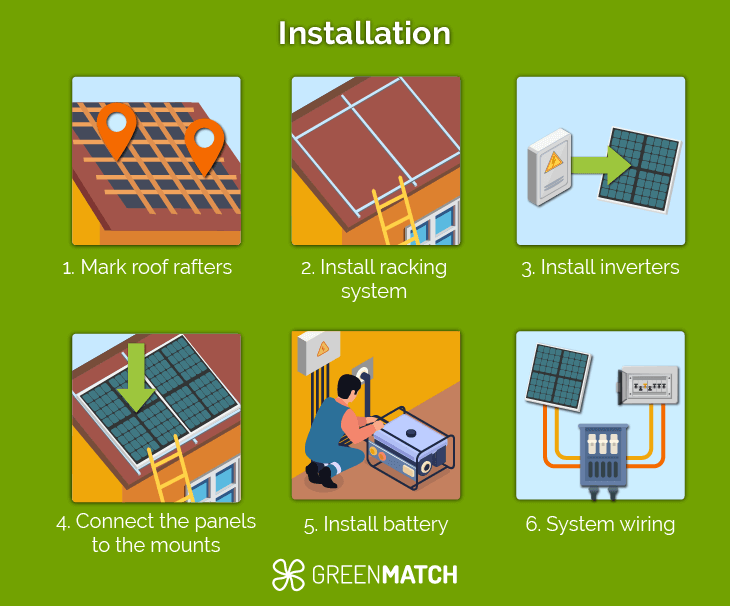
With permits in hand and components on site, the physical installation begins. This is the most demanding and potentially dangerous phase, requiring adherence to safety protocols at every step.
- Mounting Racks: Securely attach the racking system to your roof rafters or ground anchors. This involves drilling into the roof, ensuring proper waterproofing, and verifying the structural integrity of the attachment points. Accurate measurements and leveling are crucial here.
- Panel Installation: Carefully lift and mount the solar panels onto the racking system. Panels are heavy and unwieldy, so proper lifting techniques and possibly assistance are essential. Secure them according to manufacturer instructions, ensuring correct spacing and alignment.
- Wiring: This is the most critical electrical work. Panels are connected in series or parallel, depending on the system design and inverter type. DC wiring runs from the panels to the inverter, and AC wiring connects the inverter to your home’s main service panel. All wiring must be properly sized, routed through conduit, and securely connected. Grounding is absolutely essential for safety and must be meticulously implemented according to code. This is where expertise in “Tech” and electrical safety is paramount. Utilizing smart wiring practices and proper connections ensures the longevity and efficiency of the system.
- Inverter and Disconnects: Install the inverter in an accessible, well-ventilated location, typically near the main service panel. Install all required AC and DC disconnect switches for safety and maintenance.
The Green Light: Inspection and Grid Connection
After the physical installation is complete, your work will be subject to a series of mandatory inspections. A local electrical inspector will review the entire system to ensure it meets all applicable building and electrical codes, including verifying proper wiring, grounding, component installation, and safety features. This inspection is a crucial safeguard, ensuring the system is safe and compliant.
Once your system passes inspection, you will typically need to obtain final approval from your utility company. This process involves submitting necessary documentation and may include a final utility inspection. Upon approval, the utility will install or activate a special meter (often a net meter) that measures both the electricity you draw from the grid and the excess electricity your solar panels feed back into it. Only then can you switch on your system and begin generating your own clean power, effectively completing your “Money” saving venture and fully leveraging your “Tech” investment. This final step marks the culmination of your efforts, transforming your home into a renewable energy hub.
Hybrid Approaches and Final Considerations
While the concept of a full DIY solar installation is appealing, it’s not the only path to self-sufficiency. Many homeowners find a middle ground, combining their own efforts with professional expertise to mitigate risks and ensure compliance. Moreover, assessing whether DIY solar aligns with your broader homeownership philosophy is an important final consideration.
Blending Expertise: When to Call in the Pros
Recognizing the significant challenges, a hybrid approach to solar installation can be a wise decision for many. This strategy involves tackling parts of the project yourself while hiring licensed professionals for the most critical or dangerous aspects. For instance, a homeowner might handle the initial assessment, system design, component procurement, and even the mechanical mounting of the racking system and panels. However, they might then engage a licensed electrician specifically for the high-voltage DC and AC wiring, the inverter connection, the critical grid tie-in, and the final inspection prep.
This “Tech” and “Money” balanced approach allows homeowners to still achieve substantial labor cost savings while ensuring that the most hazardous and code-sensitive electrical work is performed by certified experts. It dramatically reduces the risk of electrical mishaps, ensures compliance with intricate codes, and often preserves manufacturer warranties. Additionally, a professional can offer invaluable advice during the design and permitting stages, streamlining what can be a complex bureaucratic process. This blending of DIY spirit with professional precision offers a practical and safer alternative to a purely self-installed system, giving peace of mind without entirely sacrificing the financial benefits.

Is DIY Solar Right for Your “Brand” of Homeownership?
Ultimately, the decision to install your own solar panels comes down to a personal assessment of your skills, time, financial situation, and risk tolerance. Are you an experienced DIYer with a strong background in electrical work, comfortable with heights, and dedicated to meticulous research and adherence to codes? Do you have the sustained time commitment necessary for a project that could span months? Can you afford the upfront investment in specialized tools, and are you prepared for potential troubleshooting and maintenance down the line, especially if warranties are voided?
For some, the challenge and reward of building their own energy system aligns perfectly with their “Brand” – a resourceful, independent, and environmentally conscious homeowner. For others, the complexities, safety risks, and potential for costly mistakes might outweigh the financial savings. It’s crucial to be honest about your capabilities and limitations. If there’s any doubt, consulting with multiple professional solar installers, even if you ultimately decide to go DIY, can provide valuable insights and comparative quotes.
In conclusion, installing your own solar panels is indeed possible, but it is far from a simple endeavor. It requires significant technical knowledge, adherence to stringent safety protocols, careful navigation of regulatory frameworks, and a substantial investment of time and effort. While the financial savings and the deep satisfaction are compelling, a clear-eyed understanding of the complexities and risks is essential. For many, a hybrid approach or even full professional installation will offer the best balance of cost-effectiveness, safety, and long-term peace of mind, ensuring your investment in clean energy truly shines.
aViewFromTheCave is a participant in the Amazon Services LLC Associates Program, an affiliate advertising program designed to provide a means for sites to earn advertising fees by advertising and linking to Amazon.com. Amazon, the Amazon logo, AmazonSupply, and the AmazonSupply logo are trademarks of Amazon.com, Inc. or its affiliates. As an Amazon Associate we earn affiliate commissions from qualifying purchases.