
In the fast-paced world of finance, timing is often just as critical as the assets you choose to hold. For the modern investor, the question “when do markets open?” is not merely about a clock striking a certain hour; it is about understanding the rhythmic heartbeat of global capital. Whether you are a day trader looking for high volatility or a long-term investor placing a strategic order, knowing when the world’s major exchanges breathe life into the economy is fundamental to your success.
The global financial system is a relay race that never truly stops. As one sun sets over the skyscrapers of New York, it is already rising over the trading floors of Tokyo. This continuous cycle ensures that liquidity flows across borders, but it also requires a sophisticated understanding of time zones, session overlaps, and the specific nuances of different asset classes.
The Epicenter of Global Finance: North American Market Hours
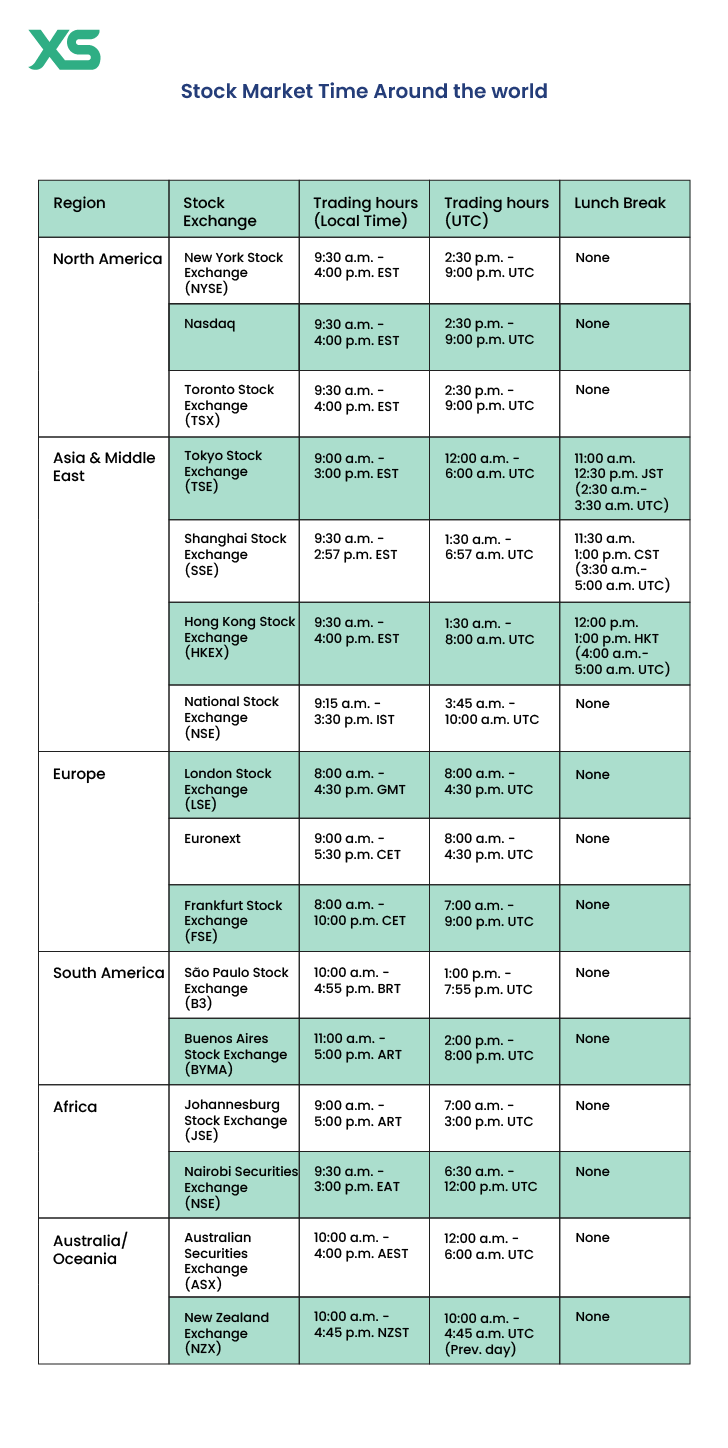
For a significant portion of the investing world, the North American markets—specifically the New York Stock Exchange (NYSE) and the NASDAQ—represent the standard for “market hours.” These exchanges are the engines of the global economy, housing the world’s largest corporations.
The Standard Trading Session (NYSE and NASDAQ)
In the United States, the standard trading session opens at 9:30 AM Eastern Time (ET) and closes at 4:00 PM ET, Monday through Friday. This six-and-a-half-hour window is when the highest volume of trading occurs. During these hours, liquidity is at its peak, and bid-ask spreads (the difference between the price a buyer is willing to pay and a seller is willing to accept) are typically at their narrowest. This is the optimal window for most retail investors to execute trades.
The Mechanics of Pre-Market and After-Hours Trading
While the “opening bell” at 9:30 AM is the official start, the markets are active long before that. Electronic Communication Networks (ECNs) allow for “extended-hours trading.”
- Pre-Market: Typically runs from 4:00 AM to 9:30 AM ET.
- After-Hours: Typically runs from 4:00 PM to 8:00 PM ET.
Trading during these sessions carries significantly higher risk. Because there are fewer participants, prices can be incredibly volatile. A single large trade can cause a massive price swing that wouldn’t happen during regular hours. For the savvy investor, these hours are often used to react to breaking news, such as quarterly earnings reports or geopolitical shifts, but they require a high degree of caution and the use of limit orders to avoid “slippage.”
The “Golden Hour” of the Open
The first 30 to 60 minutes after 9:30 AM ET are often referred to as the most volatile and lucrative time of the day. This is when the market “prices in” all the news and overnight developments from overseas. For seasoned traders, this is the time to capitalize on price discovery. For beginners, however, it is often wise to wait until the initial frenzy subsides around 10:30 AM, as the market begins to establish a clearer trend for the day.
A Tour of the World: Major International Exchanges
Capital is global, and the markets reflect this. If you are diversifying your portfolio into international equities or ETFs, you must track when the major hubs in Europe and Asia are active.
The European Powerhouses (LSE and Euronext)
Europe bridges the gap between the Asian and American sessions. The London Stock Exchange (LSE), one of the oldest and most prestigious in the world, opens at 8:00 AM Greenwich Mean Time (GMT) and closes at 4:30 PM GMT.
The importance of the LSE cannot be overstated, particularly its overlap with the New York session. Between 8:00 AM and 11:30 AM ET, both the New York and London markets are open simultaneously. This “overlap” represents the period of highest liquidity in the entire global financial system, especially for currency pairs like the EUR/USD and the GBP/USD.
The Asian Markets: Tokyo, Hong Kong, and Shanghai
The trading day technically begins in the East. The Tokyo Stock Exchange (TSE) opens at 9:00 AM Japan Standard Time (JST). One unique aspect of many Asian markets is the “lunch break.” Unlike Western markets that trade continuously, the TSE closes for an hour between 11:30 AM and 12:30 PM.
Hong Kong and Shanghai follow similar patterns, opening shortly after Tokyo. These markets are critical barometers for global manufacturing and tech hardware sectors. When a major tech company in California reports a supply chain issue, the reaction often happens first in the Hong Kong or Shanghai sessions before the US markets even open.
The Impact of Time Zone Overlaps
The transition periods—when one market is closing and another is opening—are vital for price action. The “European-US Overlap” is the most significant, but the “Tokyo-London Overlap” also provides a surge in volume that can set the tone for the European trading day. Understanding these windows allows investors to understand why certain stocks might “gap up” or “gap down” at the open based on what happened in a previous time zone.
Specialized Markets: When Forex and Crypto Never Sleep
Not all markets adhere to the rigid 9-to-5 schedule of a traditional stock exchange. In the modern era, “money” is increasingly digital and decentralized, leading to markets that operate almost indefinitely.
The 24/5 Universe of Forex
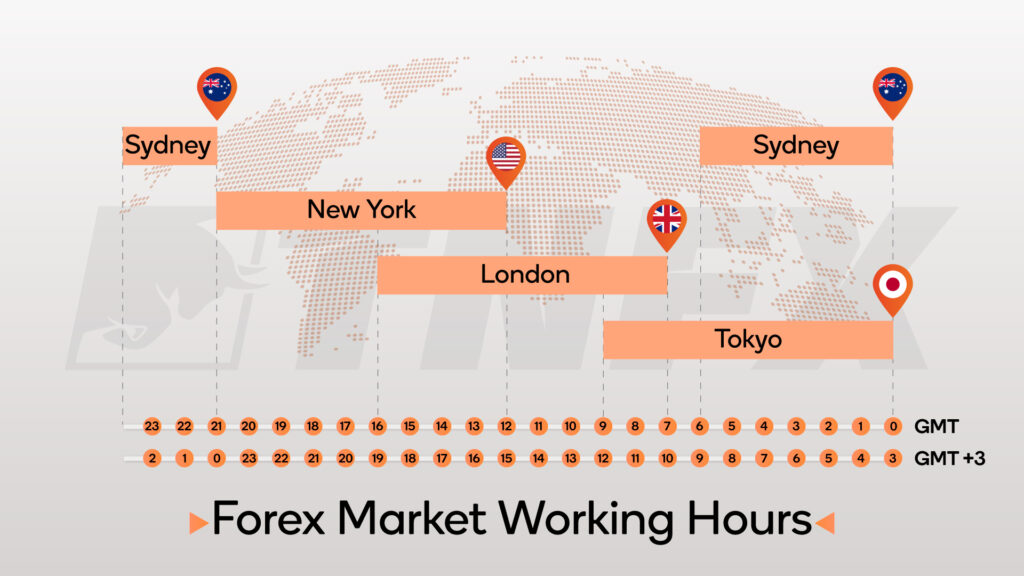
The Foreign Exchange (Forex) market is the largest and most liquid financial market in the world. It does not have a central physical location; instead, it is a global network of banks and brokers. Forex markets are open 24 hours a day, five days a week.
The session begins on Sunday at 5:00 PM ET (as the Sydney, Australia market opens) and runs continuously until Friday at 5:00 PM ET. This 24/5 accessibility allows investors to trade currencies in real-time as political and economic events unfold. However, just because you can trade at 3:00 AM doesn’t mean you should. Volatility is highest when the major sessions (London and New York) overlap.
The 24/7/365 Cryptocurrency Landscape
The rise of digital assets has introduced a market that truly never sleeps. Bitcoin, Ethereum, and thousands of other cryptocurrencies trade on decentralized and centralized exchanges every second of every day—weekends and holidays included.
The lack of an “opening” or “closing” bell in the crypto market creates a unique psychological environment. Prices are susceptible to “weekend pumps” or “Sunday dumps” when traditional liquidity from institutional players (who mostly operate during bank hours) is absent. For the crypto-involved investor, the concept of “market hours” shifts toward monitoring “liquidity windows” when institutional desks are active, rather than relying on a literal opening bell.
Market Closures: Navigating Holidays and Weekends
While the digital world might seem like it runs forever, traditional financial infrastructure still observes the calendar. Understanding when the doors are locked is essential for managing margin requirements and avoiding unexpected price gaps.
The Weekend Gap
For stocks, bonds, and most commodities, the markets are closed on Saturdays and Sundays. This creates the “weekend gap” risk. If a major world event occurs on a Saturday, investors cannot react until the markets open on Sunday evening (Forex) or Monday morning (Stocks). This gap can lead to significant price jumps, where a stock that closed at $100 on Friday might open at $90 on Monday morning without any trading happening in between.
Major Market Holidays to Watch
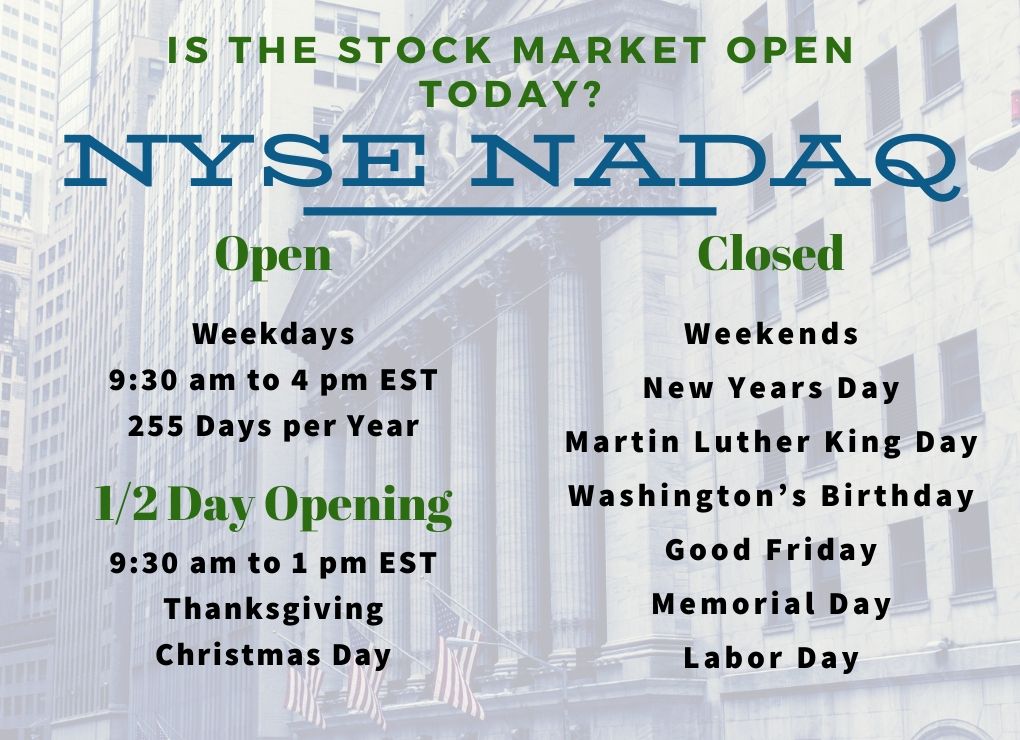
Each country has its own set of bank holidays that halt trading. In the United States, the NYSE and NASDAQ observe holidays such as:
- New Year’s Day
- Martin Luther King Jr. Day
- Presidents’ Day
- Good Friday
- Memorial Day
- Juneteenth
- Independence Day
- Labor Day
- Thanksgiving (with an early close the following Friday)
- Christmas Day
Investors must be aware that while the US market might be closed for Thanksgiving, the London or Tokyo markets remain open. This “partial closure” of the global system can lead to thin trading volumes and erratic price movements in international assets.
Strategic Timing: When Should You Actually Trade?
Knowing when the markets open is the first step; knowing when to engage is the second. In finance, volume is the lifeblood of price stability.
Liquidity vs. Volatility
High liquidity (high volume) generally means more stable prices and easier entry/exit. High volatility means prices are moving rapidly.
- The Open (9:30–10:30 AM ET): High volatility, moderate liquidity. Best for active traders.
- The Mid-day Lull (12:00–2:00 PM ET): Low volatility, lower liquidity. Often called the “Lunch Hour,” prices tend to drift, and large moves are rare.
- The Power Hour (3:00–4:00 PM ET): High volatility, high liquidity. This is when institutional “big money” moves to square their positions for the day.
The Closing Auction
The final minutes of the trading day are among the most important. The “closing auction” determines the official closing price of a security. Many mutual funds and ETFs are required to trade at the closing price, leading to a massive surge in volume in the final seconds before 4:00 PM ET. Understanding this mechanism can help investors avoid getting “caught” in the final minute price swings.
Conclusion: Mastery of the Financial Clock
The question “when do markets open” is the gateway to a deeper understanding of global economics. For the disciplined investor, the market clock is a tool for risk management. By aligning your trading activities with peak liquidity hours, respecting the dangers of extended-hours trading, and maintaining an awareness of the global relay race between New York, London, and Tokyo, you position yourself to make more informed, rational decisions.
In the world of money, the sun never truly sets; it simply moves to a different exchange. Mastering this cycle ensures that you are never caught off guard by the opening bell, but rather, you are ready to ring it yourself.
aViewFromTheCave is a participant in the Amazon Services LLC Associates Program, an affiliate advertising program designed to provide a means for sites to earn advertising fees by advertising and linking to Amazon.com. Amazon, the Amazon logo, AmazonSupply, and the AmazonSupply logo are trademarks of Amazon.com, Inc. or its affiliates. As an Amazon Associate we earn affiliate commissions from qualifying purchases.