
In the realm of complex simulation software, Cities: Skylines stands as a pinnacle of urban planning and infrastructure management. For any developer or player navigating this digital environment, the “installation” and management of water systems represent the first critical technical hurdle. Unlike traditional city-builders, Cities: Skylines utilizes a dynamic fluid physics engine, meaning that water isn’t just a static texture—it is a functional utility that requires precise placement, directional flow management, and electrical integration.
This guide provides an exhaustive technical breakdown of how to install, configure, and optimize water systems within the Cities: Skylines ecosystem, ensuring your urban simulation remains sustainable and efficient.

Understanding the Fundamentals of the Cities: Skylines Water Simulation Engine
Before deploying infrastructure, one must understand the underlying software logic that governs water behavior in the game. The simulation treats water as a physical entity influenced by gravity, pressure, and source points.
The Mechanics of Water Sources and Sinks
In the software’s architecture, water is managed through two primary interaction points: sources and sinks. A source is where the water enters your utility grid—typically through Pumping Stations placed on riverbanks or Water Towers placed on land. Conversely, a sink (or outlet) is where processed or waste water exits the system.
The technical challenge lies in the “Water Source” logic of the map. Natural bodies of water in the game have “capacity.” If you over-pump a small lake, the water level will physically drop, potentially grounding your pumps. Understanding the volume of your source is the first step in technical planning.
Managing Elevation and Terrain Topography
The fluid dynamics engine calculates flow based on terrain height. This is particularly relevant when installing Sewage Outlets. If an outlet is placed downstream from a pump, the simulation will naturally carry waste away. However, if the terrain causes a backflow or if the current is too weak, the “installation” of your water system will fail as pollution seeps into the intake valves.
Professionals in the simulation space use the “Terrain Contour” view to identify the highest and lowest points of the map. Installing water towers on higher elevations doesn’t provide a gravity-fed pressure bonus in the base game’s logic, but it does protect the infrastructure from potential flooding caused by erratic dam placement or rising sea levels.
Step-by-Step Infrastructure Installation Guide
The actual “installation” of water is a multi-tiered process involving source acquisition, grid distribution, and waste management. Follow these technical steps to establish a functional grid.
Implementing Pumping Stations and Water Towers
To begin the installation, navigate to the Water and Sewage menu. You have two primary technical options for sourcing:
- Water Pumping Stations: These must be placed on a shoreline. The technical requirement is that the “intake” pipe must be submerged in a clean water source.
- Water Towers: These are terrestrial installations. They are ideal for maps with limited water bodies or for isolating specific districts. However, they must never be placed on “polluted” ground (near industry), as the software will simulate ground-source contamination, leading to a city-wide healthcare crisis.
Developing the Pipeline Network
Once the source is installed, you must build the distribution layer. In Cities: Skylines, water pipes act as a dual-conduit system: they carry both fresh water to buildings and sewage away from them.
- Grid Layout: Pipes have a specific radius of effect (represented by a blue highlight). For maximum efficiency and cost-effectiveness, pipes should be spaced so that their radii just touch, rather than overlap.
- Node Connections: Every pumping station and water tower must be manually connected to the pipe network. Ensure that the blue “node” at the base of the building is snapped to the pipe to complete the circuit.
Waste Management and Sewage Treatment Systems
The “installation” of water is incomplete without a disposal mechanism. Without a sewage outlet, the system will back up, causing buildings to be abandoned.
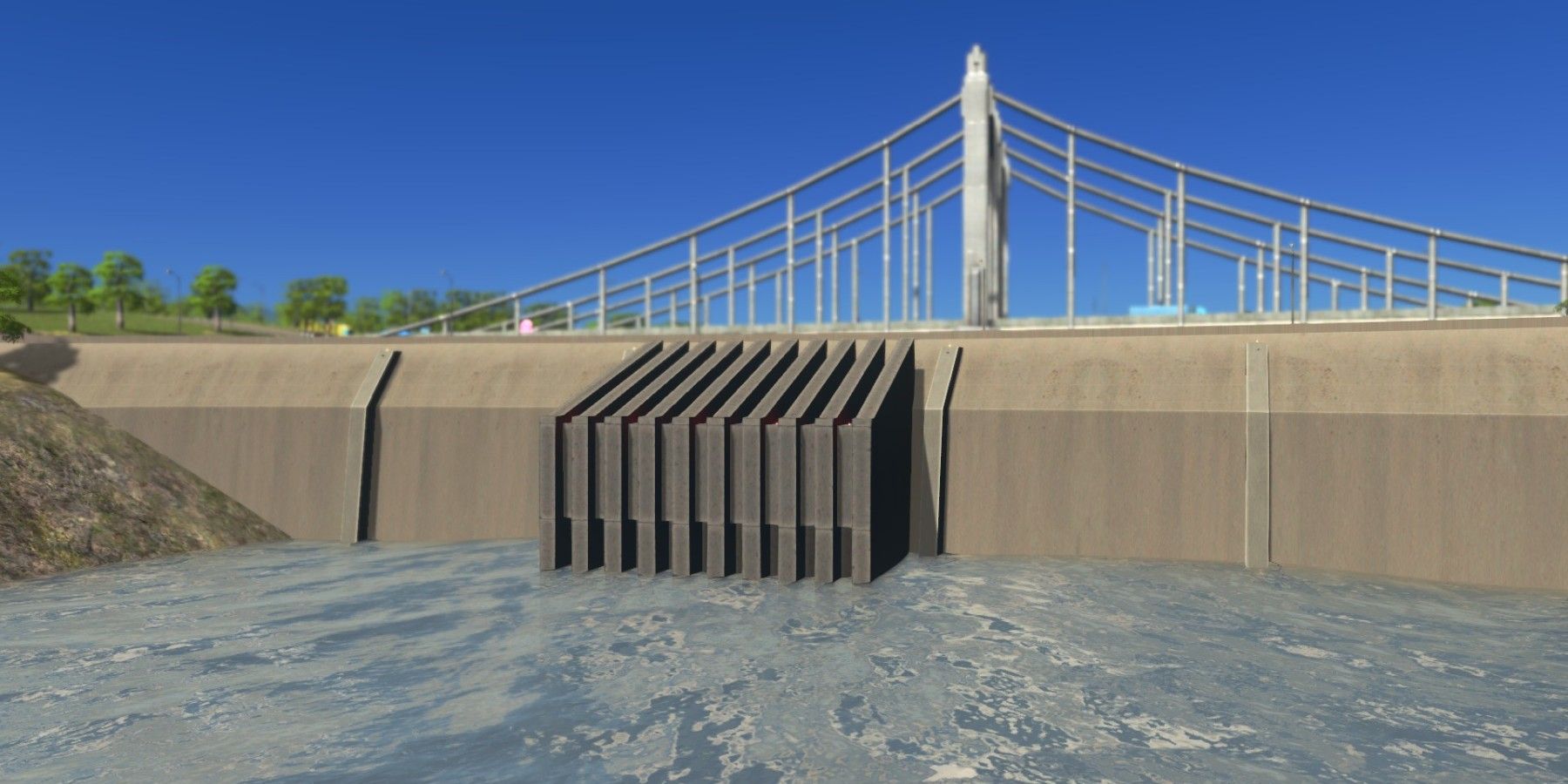
- Water Drain Pipes: The most basic technical solution. These should always be placed downstream from your pumps.
- Water Treatment Plants: A more advanced software asset that filters 85% to 100% of pollutants before the water is returned to the environment. Installing these is critical for long-term ecological stability within the simulation.
Advanced Technical Solutions for Large-Scale Urban Hydro-Management
As your simulation scales from a small village to a sprawling metropole, the basic pipe-and-pump installation will no longer suffice. You must implement advanced technical optimizations.
Optimizing Electricity Distribution for Water Utilities
A common technical failure in Cities: Skylines is the “Dead Loop,” where a water pump fails because it has no power, and the power plant fails because it has no water for cooling. To prevent this, your water infrastructure installation should include a redundant power supply.
- Technical Tip: Place a dedicated wind turbine or solar panel next to your primary pumping cluster. By hard-wiring these directly to the pumps, you ensure that even during a city-wide blackout, the water pressure remains constant, allowing your power plants to reboot.
Utilizing Modding Tools for Custom Water Placement
For users looking to go beyond the vanilla software constraints, the Steam Workshop offers technical mods that change how water is “installed.”
- Extra Landscaping Tools: This mod allows you to place “Water Sources” manually on the map. This is a powerful tool for developers who want to create artificial lakes or decorative fountains that function within the physics engine.
- Pipe-Free Mods: Some advanced users opt for “Remove Need for Pipes” mods. While this simplifies the visual clutter, it fundamentally changes the simulation’s resource management logic, reducing the CPU load on the pathfinding algorithm but removing the topographical challenge of the game.
Troubleshooting Common Water Infrastructure Failures
Even with a perfect installation, the simulation can present technical anomalies. Resolving these requires a systematic approach to the game’s data overlays.
Resolving Pollution Contamination in the Grid
If your “Health” overlay shows a sudden spike in illness, the technical cause is almost always water contamination.
- Check the Current: Use the Water Info View to see the direction of the arrows in the river. If a sewage pipe is “upstream” of a pump, you must relocate the pump immediately.
- Ground Pollution: If using Water Towers, check the “Pollution” overlay. If the ground has turned brown/purple, the tower is sucking up toxins.
- The Solution: Immediately relocate the intake source. The “flushing” of the pipes is instantaneous in the software logic once the source is clean.
Addressing Flow Capacity and Pressure Bottlenecks
As a city grows, you may notice buildings flickering the “No Water” icon even if they are connected to pipes. This indicates a capacity bottleneck.
- Data Analysis: Open the Water Info View and look at the “Production vs. Consumption” bar. If the needle is in the yellow or red, you are not producing enough volume.
- Technical Fix: Do not just add one pump; check the “Electricity” connection of existing pumps. Often, a single disconnected power line at the edge of the map can disable an entire pumping cluster, leading to a systemic drop in pressure.

Conclusion: The Technical Art of Hydrology in Simulation
Installing water in Cities: Skylines is far more than a simple aesthetic choice; it is a rigorous exercise in systems engineering and software management. By understanding the fluid dynamics of the engine, the logical requirements of the pipe grid, and the environmental impact of waste management, you can create a robust infrastructure capable of supporting millions of simulated citizens.
Whether you are sticking to the core mechanics of pumps and pipes or utilizing advanced mods to reshape the very terrain of your digital world, the principles remain the same: precision, redundancy, and a deep understanding of the simulation’s technical constraints. Mastery of the water system is the foundation upon which every great digital skyline is built.
aViewFromTheCave is a participant in the Amazon Services LLC Associates Program, an affiliate advertising program designed to provide a means for sites to earn advertising fees by advertising and linking to Amazon.com. Amazon, the Amazon logo, AmazonSupply, and the AmazonSupply logo are trademarks of Amazon.com, Inc. or its affiliates. As an Amazon Associate we earn affiliate commissions from qualifying purchases.