
For millions of investors, the first question of the business day is almost always the same: “How is the Dow doing today?” The Dow Jones Industrial Average (DJIA) is perhaps the most famous stock market index in the world. Despite the rise of more complex indices like the S&P 500 or the tech-heavy Nasdaq, the Dow remains the ultimate “bellwether” for the American economy. To understand how the Dow is doing today is to understand the current state of consumer confidence, corporate health, and the broader economic trajectory of the United States.

However, interpreting the daily fluctuations of the Dow requires more than just looking at a green or red number on a screen. It requires a deep dive into the mechanics of the market, the psychological drivers of investors, and the macroeconomic forces that dictate the flow of capital.
Decoding the Dow: What It Is and Why It Matters Today
To understand the Dow’s performance, one must first understand its unique structure. Unlike most modern indices that are market-capitalization-weighted, the Dow is a price-weighted index. This historical quirk means that companies with higher stock prices have a more significant impact on the index’s movement than those with lower prices, regardless of their total market value.
The Composition of the Dow Jones Industrial Average (DJIA)
The Dow consists of 30 “blue-chip” companies—reputable, stable, and industry-leading corporations. These are the giants of the American economy, spanning sectors from healthcare and technology to retail and energy. When you ask how the Dow is doing, you are essentially asking how companies like Apple, Goldman Sachs, UnitedHealth, and Coca-Cola are performing collectively. Because these firms represent such a massive portion of the domestic GDP, their collective health is often synonymous with the health of the American consumer.
Why Investors Track the “Price-Weighted” Index
Critics often argue that the price-weighted nature of the Dow is an antiquated method of measuring the market. For instance, a $1 move in a stock priced at $400 has the same impact on the Dow as a $1 move in a stock priced at $40. However, the Dow persists because it offers a simplified, high-level snapshot of the industrial and commercial heart of the country. For the average investor, it provides an accessible entry point into market sentiment. When the Dow climbs, it signals that the “old guard” of the economy is flourishing; when it dips, it suggests that institutional investors are growing cautious.
Factors Influencing the Dow’s Daily Performance
The Dow does not move in a vacuum. Its daily performance is the result of a complex interplay of data points, emotional reactions, and global events. When a trader looks at the Dow’s trajectory today, they are looking at the market’s reaction to the latest news cycle.
Macroeconomic Indicators and Interest Rates
Perhaps the most significant driver of the Dow in the current era is the Federal Reserve’s monetary policy. Interest rates are the “gravity” of the financial markets. When the Fed raises rates to combat inflation, it becomes more expensive for the 30 companies in the Dow to borrow money and expand. High rates also make fixed-income assets like bonds more attractive, often drawing capital away from the stock market. Consequently, on days when inflation data (such as the Consumer Price Index) comes in higher than expected, the Dow often reacts with a sharp decline as investors price in the likelihood of further rate hikes.
Corporate Earnings and Sector Rotations
Four times a year, during “earnings season,” the Dow becomes particularly volatile. Each of the 30 member companies releases its quarterly financial results. If a heavyweight like Microsoft or Boeing misses its revenue targets or provides weak guidance for the next quarter, it can drag the entire index down. Furthermore, we often see “sector rotation” within the Dow. Investors might move money out of growth-oriented tech stocks and into defensive “value” stocks like Procter & Gamble if they anticipate an economic slowdown. This internal shifting determines whether the Dow outperforms or lags behind other indices on any given day.
Geopolitical Events and Market Sentiment
The Dow is also a sensitive barometer for global stability. Trade tensions, international conflicts, or sudden shifts in oil prices can send shockwaves through the index. Because many Dow components are multinational corporations, a stronger dollar or a trade embargo in overseas markets directly impacts their bottom line. Beyond the hard data, “market sentiment”—the collective psychological state of investors—plays a massive role. Fear and greed often cause the Dow to overshoot in either direction, moving more on emotion than on fundamental financial reality.

Interpreting the Numbers: Is the Market Bullish or Bearish?
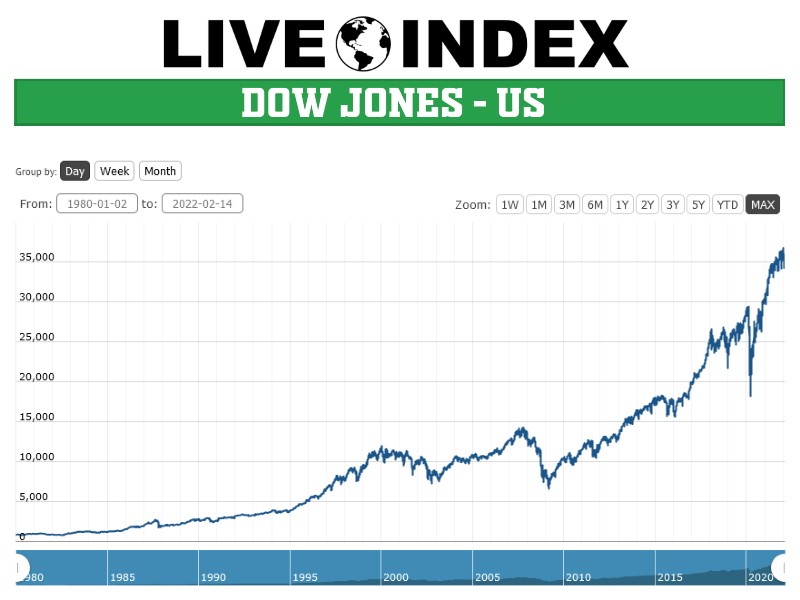
When you see that the Dow is up or down 300 points today, what does that actually mean for your portfolio? Context is everything in finance. A 300-point drop in a market sitting at 35,000 is a minor fluctuation (less than 1%), whereas the same drop decades ago would have signaled a catastrophe.
Analyzing Daily Volatility vs. Long-Term Trends
Professional investors distinguish between “noise” and “signal.” Daily volatility is often noise—temporary fluctuations caused by high-frequency trading algorithms or knee-jerk reactions to news headlines. To truly understand how the Dow is doing, one must look at its moving averages (such as the 50-day or 200-day average). If the index remains above these levels, the long-term “bullish” (upward) trend is likely intact. If it consistently breaks below them, we may be entering a “bearish” (downward) market, signaling a period of prolonged contraction.
The Role of Support and Resistance Levels
Technical analysts look at “support” and “resistance” levels to predict the Dow’s next move. Support is a price level where the index has historically had difficulty falling below, as buyers step in to “buy the dip.” Resistance is the ceiling that the index struggles to break through. When the Dow is “testing” these levels, today’s performance becomes a crucial indicator of future momentum. A breakout above a long-standing resistance level often leads to a sustained rally, while a breakdown below support can trigger a sell-off.
Strategic Moves for the Modern Investor
Knowing how the Dow is doing today is only useful if you know how to apply that information to your personal financial strategy. The goal of any investor should be to use market data to make informed, rational decisions rather than emotional ones.
Avoiding the “Market Noise” Trap
The greatest danger of tracking the Dow daily is the temptation to over-trade. For the long-term investor, the daily “zig-zag” of the market is irrelevant to a 20-year retirement plan. If you find yourself stressed by a red day on the Dow, it may be a sign that your portfolio’s risk profile is too aggressive for your temperament. Financial success is often found not by timing the market perfectly today, but by “time in the market”—allowing the compounding power of the Dow’s top companies to work over decades.
Diversification Beyond the Blue-Chip Stocks
While the Dow is an excellent indicator, it should not be your entire strategy. Because it only tracks 30 companies, it misses the explosive growth of mid-cap stocks and the specialized movements of emerging industries. A robust financial plan involves using the Dow as a reference point while diversifying across various asset classes, including international stocks, real estate, and bonds. If the Dow is struggling because of industrial stagnation, your exposure to other sectors can provide a necessary buffer.
The Future of the Dow in an Evolving Economy
The Dow Jones is not a static list; it evolves to reflect the changing face of business. As we look at how the index is performing today, we must also consider how it will look tomorrow. The transition from an industrial-based economy to one driven by information and services has fundamentally changed the composition of the index.
The Impact of Technological Disruption on Legacy Brands
In recent years, we have seen “old economy” companies removed from the Dow to make room for tech giants. This shift is a recognition that software and data are the new engines of growth. When analyzing the Dow today, one must consider how artificial intelligence, automation, and the green energy transition are affecting the 30 member companies. Those that fail to innovate risk being delisted, while those that lead the charge will drive the index to new all-time highs.
Navigating a Shifting Global Financial Landscape
The Dow’s future performance will also be dictated by the “de-globalization” trend and the shifting geopolitical landscape. As companies move supply chains closer to home and navigate a multi-polar world, their profit margins will be tested. An investor who understands these macro-trends will be better equipped to interpret why the Dow is moving the way it is on any given Tuesday.
In conclusion, “how the Dow is doing today” is a question that provides a window into the soul of the global economy. By understanding its composition, the factors that drive its movement, and the difference between short-term volatility and long-term trends, you can move beyond being a passive observer. Instead, you can become a strategic participant in the market, using the Dow as a compass to navigate the complex but rewarding world of personal finance and investing. Whether the index is up or down today, the key is to stay informed, stay disciplined, and keep your eyes on the horizon.
aViewFromTheCave is a participant in the Amazon Services LLC Associates Program, an affiliate advertising program designed to provide a means for sites to earn advertising fees by advertising and linking to Amazon.com. Amazon, the Amazon logo, AmazonSupply, and the AmazonSupply logo are trademarks of Amazon.com, Inc. or its affiliates. As an Amazon Associate we earn affiliate commissions from qualifying purchases.