
In the modern financial landscape, few assets have captured the public imagination and the attention of Wall Street quite like Tesla, Inc. (ticker: TSLA). For many, “Tesla stocks” represent more than just a share in a car company; they are seen as a high-stakes bet on the future of sustainable energy, artificial intelligence, and global infrastructure. To understand what Tesla stocks are, an investor must look beyond the physical vehicles and examine the financial mechanisms, market dynamics, and valuation theories that drive one of the most volatile and debated equities in history.
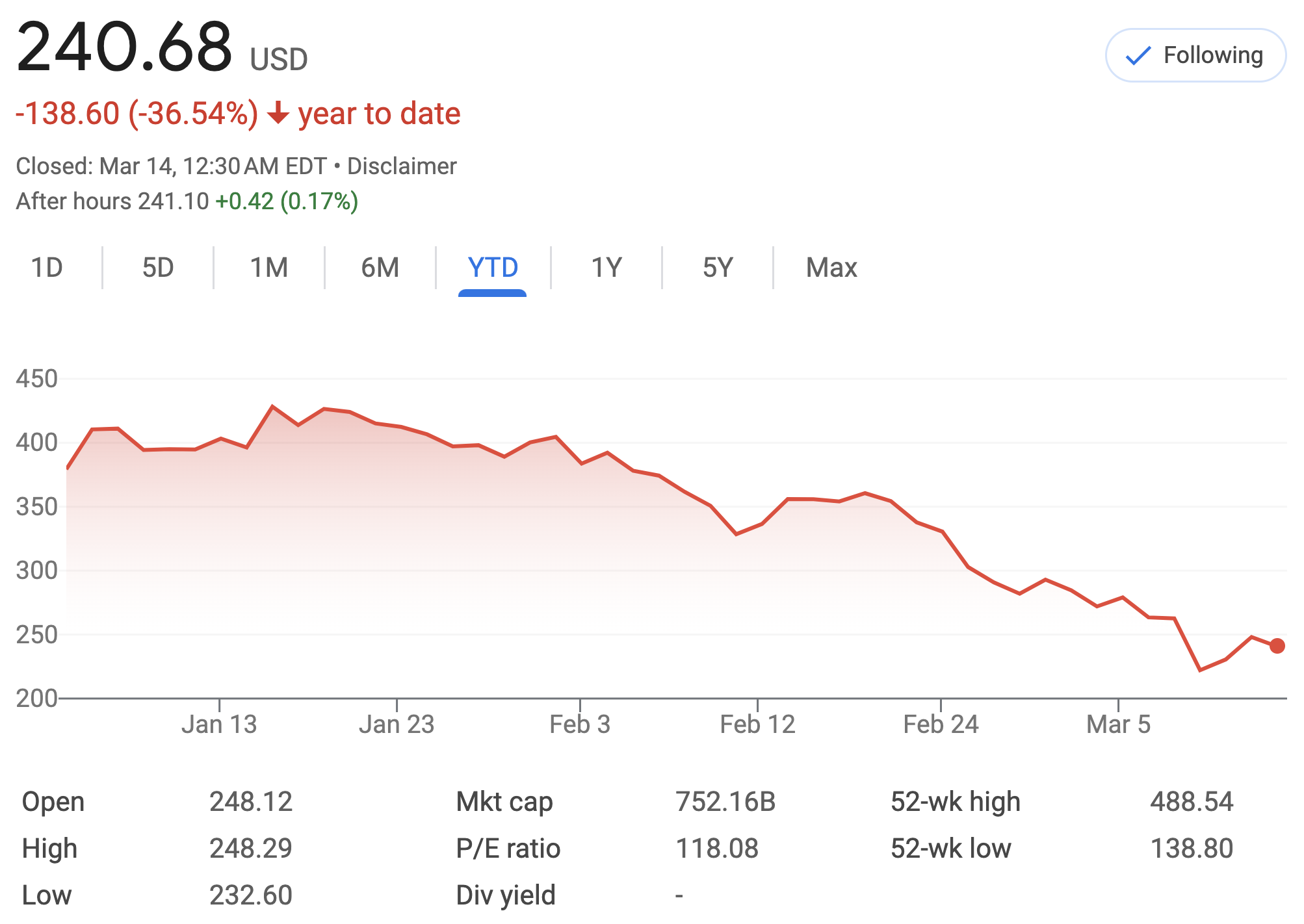
Understanding Tesla (TSLA) as a Financial Asset
Tesla stocks represent equity ownership in Tesla, Inc., a company that went public on the NASDAQ exchange on June 29, 2010. Since its Initial Public Offering (IPO), the stock has evolved from a speculative niche investment into a cornerstone of the S&P 500 and the Nasdaq-100. Investing in TSLA means participating in the company’s capital structure, giving shareholders a claim on its future earnings and assets.
The Basics of the Ticker Symbol and Exchange
Tesla is listed under the ticker symbol TSLA on the NASDAQ Global Select Market. As a “common stock,” it provides investors with voting rights (typically one vote per share) and the potential for capital appreciation. Unlike legacy automotive companies like Ford or General Motors, Tesla has historically prioritized reinvesting its profits into research, development, and scaling its “Gigafactories” rather than paying out dividends. Therefore, the primary financial return for a Tesla shareholder comes from the growth in the stock’s price over time.
Historical Performance and Stock Splits
The trajectory of TSLA has been characterized by extreme volatility and exponential growth. One of the most critical aspects of Tesla’s financial history is its use of stock splits. Tesla has executed multiple splits—notably a 5-for-1 split in 2020 and a 3-for-1 split in 2022. While a split does not change the intrinsic value of the company (it is essentially cutting the same “economic pizza” into more slices), it lowers the price per share, making the stock more accessible to retail investors and increasing liquidity in the market.
Key Factors Driving Tesla’s Market Valuation
What makes Tesla stocks unique in the financial world is how they are valued. While traditional automakers are often valued based on a small multiple of their current earnings, Tesla has frequently commanded a “growth premium.” This is because investors are not just buying a car company; they are buying a multifaceted energy and software enterprise.
Revenue Streams: Beyond Just Electric Vehicles
To understand the value of Tesla stocks, one must analyze the company’s diverse revenue segments. While the majority of revenue comes from automotive sales (Model 3, Y, S, X, and Cybertruck), Tesla also generates significant income from:
- Energy Generation and Storage: This includes Powerwall, Megapack, and solar roof installations. As the global economy shifts toward renewable energy, this sector is increasingly viewed as a massive “sleeper” hit for the stock’s long-term value.
- Services and Other: This encompasses non-warranty after-sales vehicle services, used vehicle sales, and retail merchandise.
- Software-as-a-Service (SaaS): Tesla’s Full Self-Driving (FSD) subscriptions represent a high-margin revenue stream that mimics the business models of tech giants like Apple or Microsoft.
The Role of Profit Margins and Operational Efficiency
Investors track Tesla’s “Gross Auto Margins” with eagle eyes. Tesla’s ability to manufacture vehicles more efficiently than its competitors—using innovations like large-scale castings (Giga Press) and vertical integration of battery supply chains—allows it to maintain higher margins than most legacy OEMs. When Tesla cuts prices on its vehicles, the stock often reacts based on how the move will impact these margins versus how much it will increase market share.
Regulatory Credits: The Hidden Bottom Line
A unique feature of Tesla’s financial reports is the sale of Zero-Emission Vehicle (ZEV) credits. Other automakers who fail to meet environmental regulations must buy these credits from companies like Tesla. This provides Tesla with a pure-profit revenue stream that requires no manufacturing cost, often helping the company beat earnings expectations during quarters where vehicle deliveries might have been lower than anticipated.
Fundamental and Technical Analysis of TSLA
Because Tesla is both a “momentum stock” and a “disruptor,” analyzing it requires a blend of traditional fundamental analysis and an understanding of market psychology.

Evaluating Price-to-Earnings (P/E) Ratios
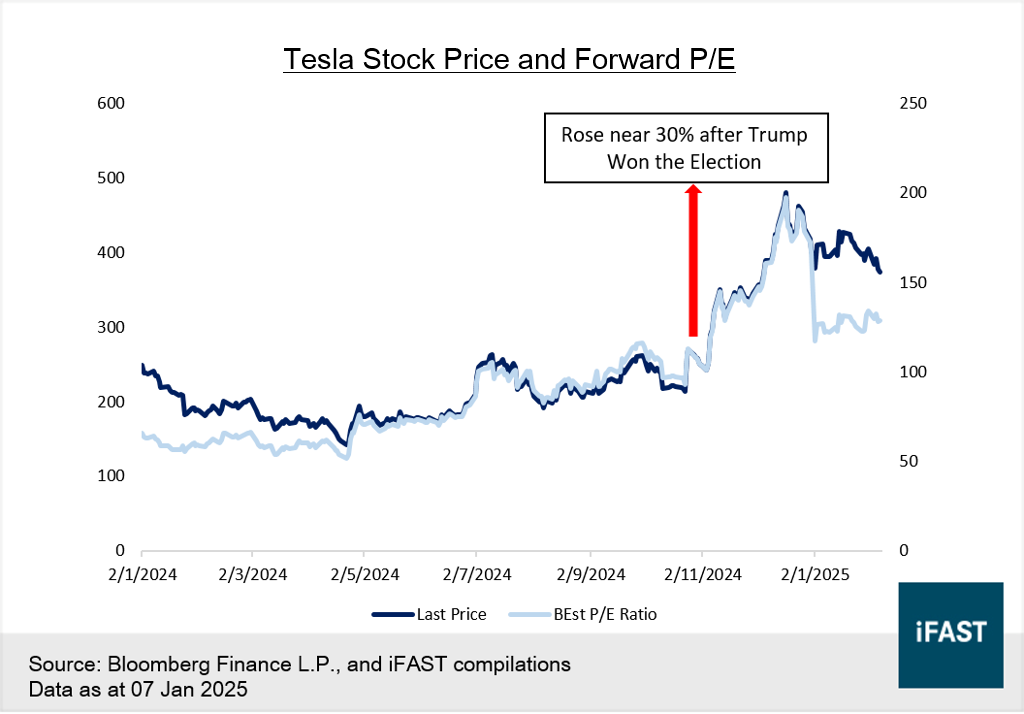
Tesla’s P/E ratio has historically been much higher than the average for the S&P 500. A high P/E ratio indicates that investors expect the company to grow significantly in the future. Critics argue that Tesla is overvalued when compared to its current production capacity, while bulls argue that the P/E ratio is justified because Tesla is an AI and robotics company that happens to build cars. Understanding this divide is essential for anyone looking to trade or hold TSLA.
Market Sentiment and the “Musk Premium”
The stock is inextricably linked to the persona and actions of its CEO, Elon Musk. The “Musk Premium” refers to the added value investors place on the stock due to his track record of innovation. Conversely, his outside ventures (such as X, formerly Twitter) and public statements can cause “key person risk,” leading to sudden swings in stock price that are independent of the company’s fundamental financial health.
Institutional vs. Retail Ownership
Tesla is unique because it has a massive and vocal “retail” following—individual investors who buy shares through apps like Robinhood or Fidelity. However, its inclusion in the S&P 500 means that institutional investors (pension funds, ETFs, and mutual funds) are also forced to hold the stock. This mix creates a unique liquidity profile where the stock can experience massive “gamma squeezes” or rapid sell-offs based on options trading activity.
Risks and Opportunities for the Modern Investor
No investment is without risk, and Tesla stocks are often cited as a prime example of a high-reward, high-risk asset. Financial success in TSLA requires a clear understanding of the obstacles the company faces.
Macroeconomic Pressures and Interest Rates
As a growth stock, Tesla is sensitive to interest rate changes. When the Federal Reserve raises interest rates, the “present value” of future earnings decreases, which typically puts downward pressure on growth stocks. Furthermore, high interest rates make car loans more expensive for consumers, which can dampen demand for Tesla’s vehicles.
Competition in the Global EV Market
The “first-mover advantage” that Tesla enjoyed for a decade is being challenged. In China, companies like BYD are producing high-quality EVs at lower price points. In Europe and the US, legacy giants like Volkswagen and Hyundai are catching up. Investors must monitor whether Tesla can maintain its market share or if it will be forced into a “price war” that erodes the very margins that make the stock so attractive.
Long-term Growth Catalysts: AI and Robotics
The “bull case” for Tesla often rests on two emerging technologies: Optimus (Tesla Bot) and Robotaxis. If Tesla successfully solves autonomous driving, analysts suggest the company could transition into a transportation-as-a-service (TaaS) provider. This would shift the company from a hardware manufacturer to a platform provider, potentially unlocking trillions of dollars in market capitalization.
How to Incorporate Tesla into a Diversified Portfolio
Deciding “what Tesla stocks are” in the context of your own portfolio depends on your financial goals and risk tolerance. It is rarely viewed as a “widows and orphans” stock (a safe, conservative investment); rather, it is a growth engine.
Growth vs. Value Investing Perspectives
From a “Value” perspective, Tesla often looks expensive. From a “Growth” perspective, it looks like a leader in a multi-trillion dollar energy transition. Most financial advisors suggest that if you believe in the long-term electrification of the global economy, Tesla may serve as a core growth holding. However, because of its volatility, it is often limited to a certain percentage of a diversified portfolio to avoid over-exposure.
Dollar-Cost Averaging into Volatile Assets
Because TSLA is prone to 20% or 30% price swings in a single month, many savvy investors utilize a strategy called Dollar-Cost Averaging (DCA). Instead of buying a large amount at once, they invest a fixed dollar amount at regular intervals. This reduces the risk of buying at a “peak” and allows the investor to benefit from the stock’s inherent volatility by acquiring more shares when the price is low.
The Role of ETFs
For those who want exposure to Tesla without the risk of holding a single stock, many Exchange-Traded Funds (ETFs) hold significant positions in TSLA. Technology-focused ETFs (like QQQ) or Clean Energy ETFs provide a way to benefit from Tesla’s growth while spreading the risk across other companies in the sector.
In summary, Tesla stocks are a complex financial instrument that tracks the success of a company attempting to disrupt multiple global industries simultaneously. Whether viewed as an over-hyped tech stock or the greatest investment opportunity of the 21st century, TSLA remains a pivotal asset for any modern investor to understand. By focusing on the fundamentals of its revenue, the reality of its market competition, and the potential of its future technology, investors can make informed decisions about how this “stock of the future” fits into their financial present.
aViewFromTheCave is a participant in the Amazon Services LLC Associates Program, an affiliate advertising program designed to provide a means for sites to earn advertising fees by advertising and linking to Amazon.com. Amazon, the Amazon logo, AmazonSupply, and the AmazonSupply logo are trademarks of Amazon.com, Inc. or its affiliates. As an Amazon Associate we earn affiliate commissions from qualifying purchases.