
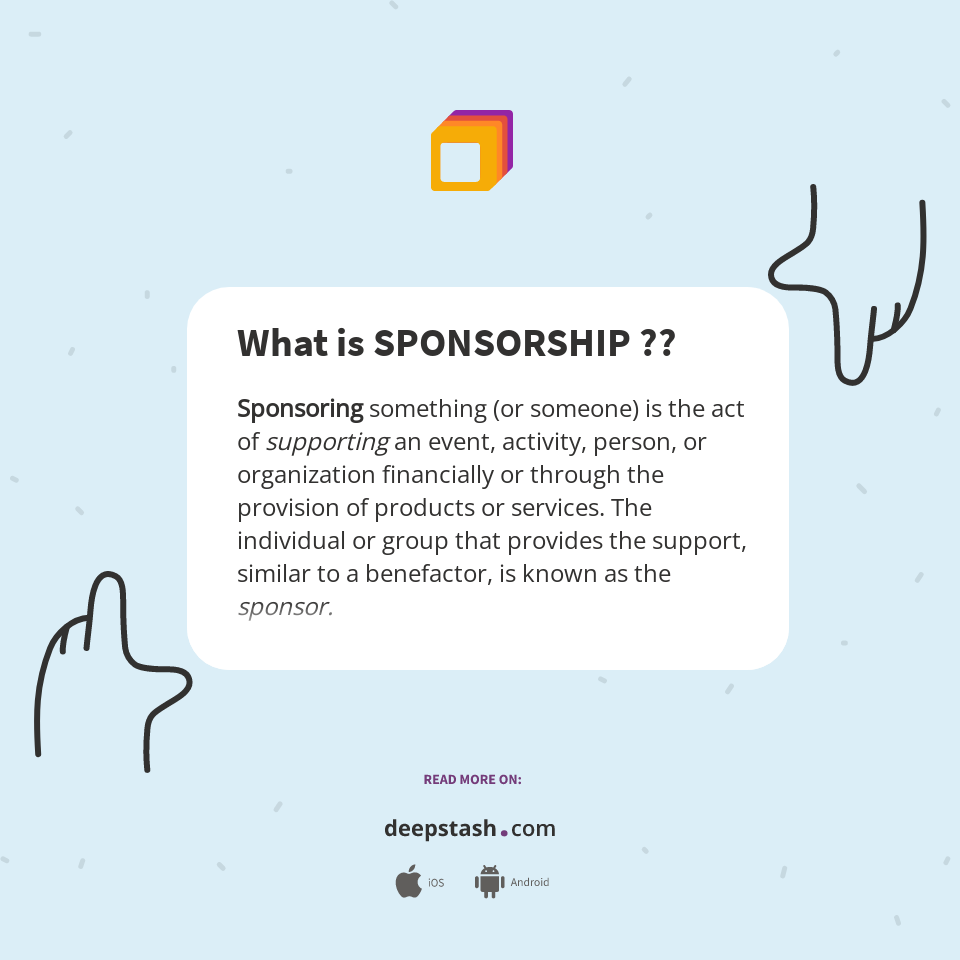
In the contemporary commercial landscape, the term “sponsor” has evolved far beyond its humble origins as a simple act of financial patronage. Today, asking “what does a sponsor mean” requires an exploration of complex brand strategies, psychological associations, and high-stakes marketing investments. For a brand, a sponsor is not merely a benefactor; they are a strategic partner whose identity becomes inextricably linked with an event, an individual, or an organization.
Sponsorship is a sophisticated marketing tool designed to build brand equity by association. Whether it is a tech giant’s logo on a Formula 1 car or a local business supporting a community festival, the underlying mechanism remains the same: the transfer of prestige and values from the sponsored entity to the sponsor. This article delves into the nuances of sponsorship within the branding niche, examining how these partnerships function as pillars of modern corporate identity and market positioning.

The Strategic Framework: Defining Sponsorship in Modern Branding
To understand what a sponsor means, one must first distinguish it from traditional advertising. While advertising is a direct “buy-and-tell” medium where a brand purchases space to broadcast a specific message, sponsorship is a “link-and-associate” medium. It is an investment in an activity or entity in return for access to the commercial potential associated with that entity.
Beyond Philanthropy: The Commercial Shift
In decades past, sponsorship was often viewed as a form of corporate social responsibility (CSR) or philanthropy—a way for companies to “give back.” However, in the modern brand economy, sponsorship is a calculated business decision. It is an exchange of resources (usually capital, products, or services) for brand leverage. When a brand acts as a sponsor, it is seeking to “borrow” the lifestyle, emotions, and loyalty that fans or consumers have for the sponsored party. For instance, when Rolex sponsors a prestigious tennis tournament, they aren’t just helping the event run; they are reinforcing their brand identity as a symbol of precision, excellence, and timeless luxury.
The Difference Between Sponsorship and Advertising
The primary differentiator lies in the depth of the connection. Advertising is often perceived as intrusive, whereas sponsorship is seen as supportive. When a consumer sees a brand sponsoring their favorite podcast or sports team, the brand is perceived as an enabler of the content they love. This creates a “halo effect,” where the positive feelings toward the event or creator are transferred to the sponsor. This psychological nuance is why sponsorship is a critical component of brand strategy; it builds trust and rapport in a way that a 30-second television spot rarely can.
The Mechanics of Brand Alignment and Selection
Choosing what to sponsor is one of the most critical decisions a brand manager can make. A mismatch between a sponsor and the sponsored entity can lead to brand dilution or, in the worst cases, a public relations backlash. The “meaning” of a sponsor is defined by the synergy between the two parties.
Audience Synergy: Finding the Right Match
The first rule of strategic sponsorship is demographic and psychographic alignment. A brand must ask: “Does the audience of this event or individual overlap with my target consumer?” If a high-end investment bank sponsors a grassroots heavy metal festival, the disconnect may be too great to yield a return. Conversely, a brand like Red Bull has mastered the art of sponsorship by aligning itself exclusively with extreme sports and high-energy events. For Red Bull, being a sponsor means personifying the “gives you wings” lifestyle, ensuring that every partnership reinforces the brand’s core promise of energy and adrenaline.
Values-Based Partnerships: Authenticity at the Core
In the age of the “conscious consumer,” brand values have become the currency of sponsorship. Modern audiences are quick to sniff out inauthenticity. If a corporation with a poor environmental record sponsors an Earth Day summit, the sponsorship is often labeled as “greenwashing.” Therefore, a sponsor today must ensure that the partnership is an authentic reflection of their corporate identity. When Patagonia supports environmental activists, the sponsorship feels “right” to the consumer because it aligns with the brand’s established history of environmentalism. This authenticity deepens brand loyalty and turns the sponsorship into a powerful narrative tool.
Measuring the ROI of a Sponsorship Agreement
Because sponsorship is often about “soft” metrics like brand awareness and sentiment, measuring its return on investment (ROI) has historically been a challenge. However, as branding becomes more data-driven, the meaning of a sponsor is increasingly tied to quantifiable outcomes.
Quantitative Metrics: Brand Reach and Impressions
The most immediate way brands measure the success of a sponsorship is through visibility. This includes “media equivalency” (how much would the same amount of exposure have cost in traditional advertising?) and “share of voice.” For example, during a televised sporting event, a sponsor will calculate the total minutes their logo was visible on screen. In the digital realm, this extends to social media mentions, hashtag usage, and website traffic spikes during the sponsored event. These metrics provide a baseline for the sponsorship’s reach.
Qualitative Impact: Sentiment and Brand Perception
While reach is important, the true value of a sponsor lies in how it changes public perception. Brands use pre- and post-sponsorship surveys to measure “brand lift.” They look for increases in brand favorability, purchase intent, and brand recall. If a consumer previously viewed a financial services firm as “stodgy” but begins to see them as “innovative” after they sponsor a major tech conference, the sponsorship has succeeded in its primary branding goal: shifting the corporate identity in the minds of the public.
The Evolution of Influence: From Traditional to Digital Sponsorship
The landscape of what it means to be a sponsor has shifted dramatically with the rise of digital media and the creator economy. We are no longer limited to stadium naming rights or logo placement on jerseys; the new frontier is digital and highly personal.
Sports and Entertainment: The Traditional Gold Standard
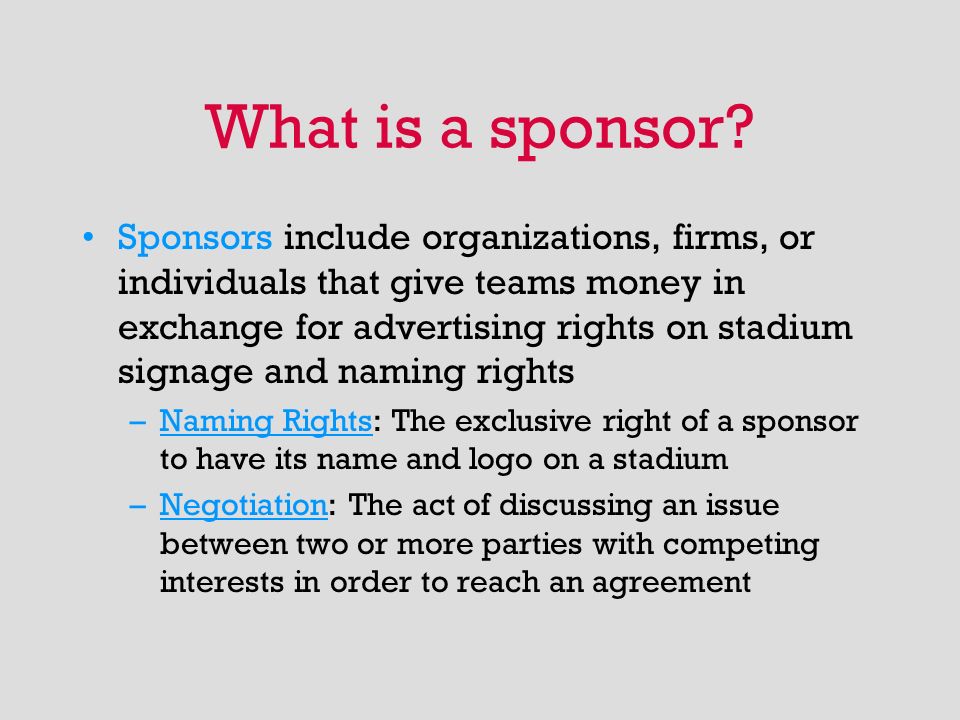
Traditional sponsorship still commands the highest budgets. Naming rights for stadiums, such as the Crypto.com Arena or the SoFi Stadium, represent a massive investment in brand presence. These long-term deals ensure that the brand name becomes part of the local geography and daily vocabulary. In these instances, the sponsor becomes a permanent fixture in the consumer’s environment, achieving a level of ubiquity that traditional advertising cannot match.
Content Creators and Digital Influence
In the last decade, the definition of a sponsor has expanded to include the sponsorship of individual content creators on platforms like YouTube, Twitch, and Instagram. This is “influencer marketing” at its most strategic. Here, a sponsor is often a partner in the content creation process. For a brand, sponsoring a YouTuber provides a level of intimacy and direct communication with a niche audience that was previously impossible. The creator’s endorsement acts as a powerful “social proof,” making the brand feel more accessible and human.
The Future of Sponsorship: Hyper-Personalization and Digital Integration
As we look toward the future, the meaning of a sponsor will continue to be reshaped by technology. The integration of Augmented Reality (AR) and Artificial Intelligence (AI) is set to revolutionize how brand partnerships are activated.
Virtual advertising already allows broadcasters to change the digital billboards in a stadium based on the region where the game is being viewed. This means a sponsor can be hyper-local, showing one brand to viewers in Tokyo and another to viewers in New York, all within the same match. Furthermore, as the Metaverse and virtual environments grow, brands will find new ways to act as sponsors within digital spaces—sponsoring virtual concerts, digital skins in gaming, or exclusive NFT-based fan experiences.
Ultimately, “what a sponsor means” is defined by the bridge it builds between a company and a community. It is a commitment to a shared experience. In the world of branding, a successful sponsor is one that doesn’t just put their name on a product, but adds value to the experience, creating a lasting, positive association that transcends the transaction. Sponsorship, at its best, is a testament to the power of alignment, turning a simple business arrangement into a cultural touchstone.
aViewFromTheCave is a participant in the Amazon Services LLC Associates Program, an affiliate advertising program designed to provide a means for sites to earn advertising fees by advertising and linking to Amazon.com. Amazon, the Amazon logo, AmazonSupply, and the AmazonSupply logo are trademarks of Amazon.com, Inc. or its affiliates. As an Amazon Associate we earn affiliate commissions from qualifying purchases.