
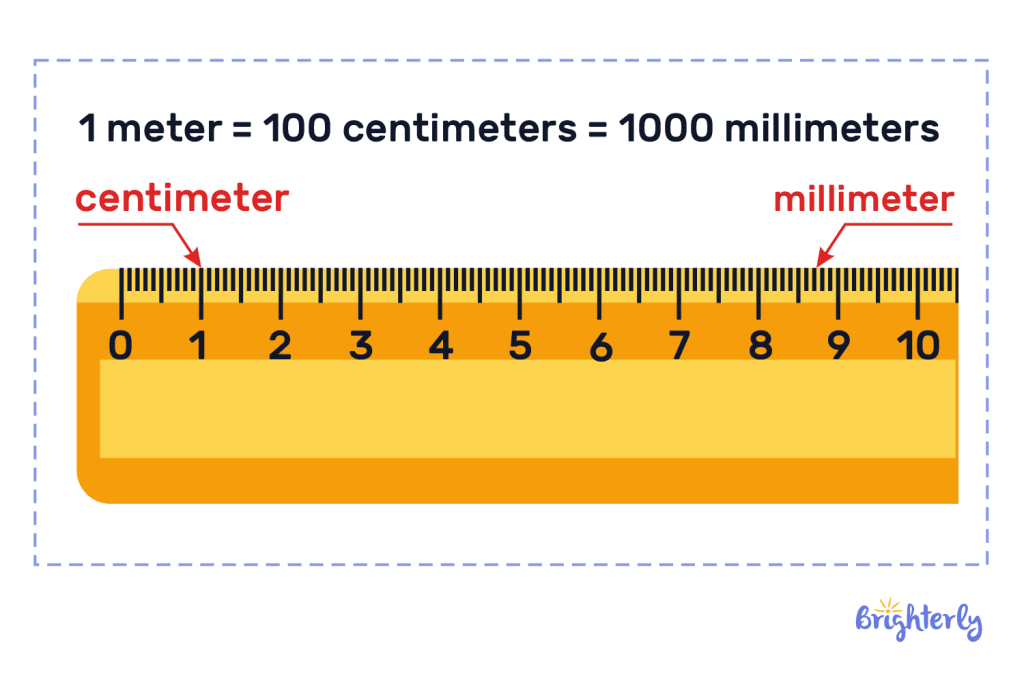
In its simplest definition, a meter is the fundamental unit of length in the International System of Units (SI). However, in the rapidly evolving landscape of technology, the question “what does a meter measure” transcends simple distance. It encompasses the precision of semiconductor manufacturing, the spatial awareness of autonomous vehicles, the latency of global fiber-optic networks, and the granular data tracking of the Internet of Things (IoT).
As we move deeper into the fourth industrial revolution, the meter has evolved from a physical bar of platinum-iridium kept in a vault in France to a digital constant defined by the speed of light. For tech professionals, engineers, and digital enthusiasts, understanding what a meter measures today is essential to grasping how our modern world is built, mapped, and secured.
The Hardware Perspective: Measuring the Physical World with Digital Precision
In the realm of hardware and robotics, the meter is the primary language of spatial awareness. Tech systems no longer just “see” the world; they measure it with sub-millimeter accuracy to interact with human environments safely and efficiently.
Lidar and the Geometry of Autonomous Navigation
One of the most prominent uses of “metering” in modern tech is Lidar (Light Detection and Ranging). Found in self-driving cars and high-end smartphones, Lidar sensors pulse laser light to measure the exact distance to an object. Here, the meter measures the “safety buffer” between a vehicle and a pedestrian. By calculating the time it takes for light to bounce back, these systems create 3D “point clouds.” The precision of these measurements—often accurate to within centimeters over a hundred-meter range—is what allows an autonomous system to distinguish between a paper bag and a concrete bollard.
IoT Sensors and the Metric of Proximity
In the world of the Internet of Things (IoT), the meter measures proximity and environmental interaction. Smart factories use ultrasonic and infrared sensors to measure the movement of components on a light-speed assembly line. In these environments, a “meter” is broken down into micrometers. If a robotic arm is off by even a fraction of a millimeter, the entire production chain of a modern gadget can fail. Thus, in tech manufacturing, the meter measures the threshold between a functional product and expensive electronic waste.
Augmented Reality (AR) and Spatial Computing
With the rise of spatial computing headsets like the Apple Vision Pro or Meta Quest, the meter measures the bridge between digital overlays and physical reality. These devices use “inside-out tracking” to measure the dimensions of a room. For AR to feel “real,” the software must measure the distance from the user’s eyes to the floor or walls in meters, ensuring that a digital object sits convincingly on a physical table.
The Infrastructure Perspective: Measuring the Flow of Data and Energy
When we move away from physical length, the concept of a “meter” in technology often refers to the measurement of consumption, flow, and velocity. In the tech industry, “metering” is the process of monitoring resources to optimize performance and cost.
Bandwidth and the “Metered” Connection
In networking, we often encounter the term “metered connection.” Here, the meter measures data throughput—the volume of bits and bytes crossing a digital threshold over a specific distance. While we measure data in gigabytes, the physical infrastructure that carries this data is measured in meters of fiber-optic cable. The physics of these cables is crucial; signal degradation occurs over specific lengths, meaning engineers must measure every meter of glass fiber to determine where signal boosters (repeaters) are required. In this context, the meter measures the physical limits of our global connectivity.
Smart Grids and Energy Metering
The “smart meter” is perhaps the most ubiquitous tech tool in modern utility management. In this niche, the meter measures the flow of electricity in real-time, sending data back to providers via cellular or mesh networks. This tech allows for “demand-response” systems, where the meter measures the total load on a city’s power grid and adjusts distribution to prevent blackouts. It represents the transition from “dumb” analog dials to an intelligent, data-driven energy ecosystem.
Cloud Computing and Resource Measurement
In cloud architecture (AWS, Azure, Google Cloud), “metering” refers to the precise measurement of compute power, storage, and API calls. While not a measurement of physical length, it follows the same logical principle: providing a standardized unit to quantify usage. Just as a physical meter allows for standardized construction, cloud metering allows for standardized billing and resource scaling, ensuring that startups and enterprises pay exactly for what they “measure” out of the data center.
The Micro-Scale: From Meters to Nanometers in Semiconductor Tech
As technology advances, we have become obsessed with the fractions of a meter. The most significant tech battles of the 21st century are being fought at the scale of the nanometer (one-billionth of a meter).
The Shrinking Transistor
When tech companies discuss “3nm” or “5nm” process nodes for CPUs and GPUs, they are using the meter as a benchmark for innovation. What does a meter measure here? It measures the density of computational power. By fitting more transistors into a smaller fraction of a meter, chipmakers like TSMC and Intel can increase processing speed while reducing power consumption. The precision required to measure and manufacture at this scale is the pinnacle of human engineering, involving Extreme Ultraviolet (EUV) lithography.
Quantum Metrology and the New Definition of the Meter
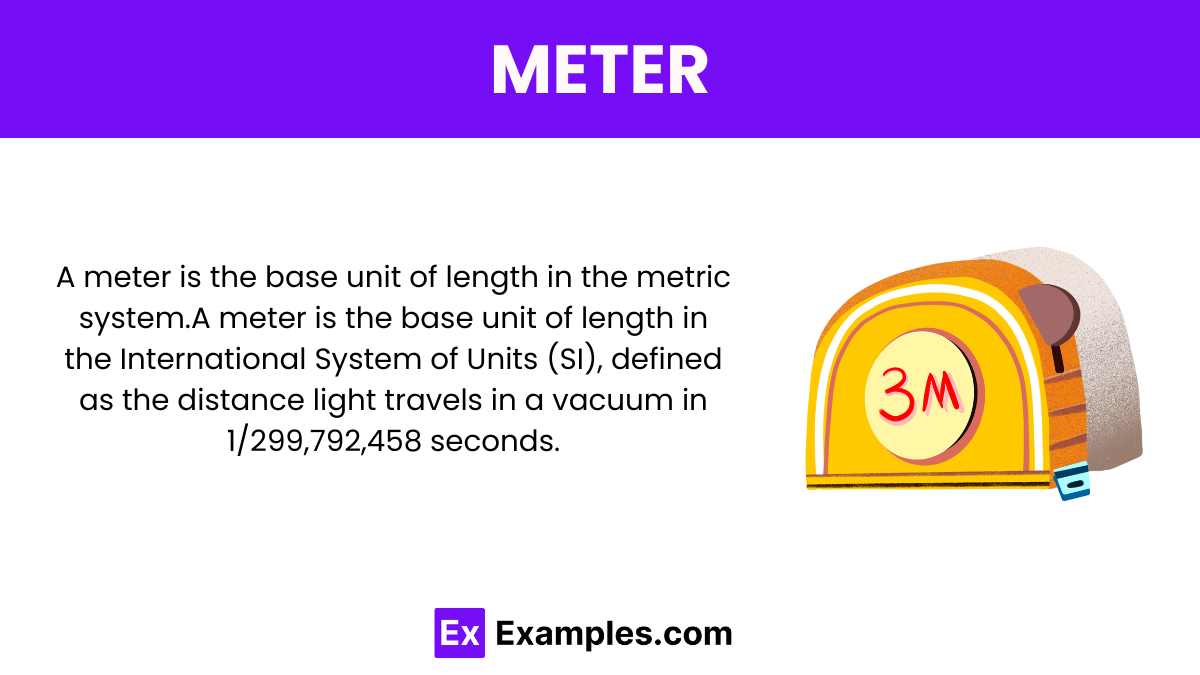
In 1983, the General Conference on Weights and Measures redefined the meter as the distance traveled by light in a vacuum during a time interval of 1/299,792,458 of a second. This shift from a physical object to a universal constant was a turning point for tech. It allowed for the development of GPS technology. GPS satellites measure the time it takes for a signal to travel to your phone; by using the constant of the meter, the system can triangulate your position anywhere on Earth with incredible accuracy. Without this tech-centric definition of the meter, global logistics, Uber, and Google Maps would be impossible.
Measurement in Digital Security and Biometrics
In digital security, specifically biometrics, the meter measures the unique geometry of the human body. Facial recognition tech (like FaceID) measures the distance between “landmarks” on a face—the distance between eyes, the bridge of the nose, and the contour of the jaw—in millimeters. These measurements are converted into a mathematical hash. Here, the meter measures identity. If the sensors detect a discrepancy in these measurements, the security protocol denies access.
The Future: Predictive Measurement and AI
The future of “what a meter measures” lies in the integration of Artificial Intelligence with sensory data. We are moving from reactive measurement (measuring what is there) to predictive measurement (measuring what will happen).
Digital Twins and Urban Planning
Architects and tech-driven urban planners are now creating “Digital Twins” of entire cities. Every meter of a city—from the height of a skyscraper to the depth of a subway tunnel—is mapped into a digital simulation. AI then uses these measurements to predict how a new building will affect wind patterns or how a flood will move through the streets. In this scenario, the meter measures the probability of future events, allowing for more resilient tech-driven infrastructure.
The Role of 6G and Sub-Centimeter Positioning
As we look toward 6G technology, the “meter” will become even more granular. 6G aims to provide “localization as a service,” where the network itself can measure the position of objects within centimeters. This will enable high-precision industrial automation and the seamless integration of robots into human workspaces. The network will effectively become a giant measuring tape, constantly monitoring the physical coordinates of every connected device.

Conclusion: The Meter as the Foundation of the Tech Stack
Whether it is the length of a trans-Atlantic data cable, the proximity of a self-driving car to an obstacle, or the width of a gate on a silicon chip, the meter remains the ultimate constant. In the tech world, “what a meter measures” is much more than distance; it is a measurement of progress, safety, and efficiency.
As we continue to push the boundaries of what is possible—moving from the macro-world of hardware to the nano-world of quantum computing—the meter remains our most reliable tool for translating the chaos of the physical universe into the structured, actionable data that defines our digital age. Precision measurement is the silent engine of the tech industry, and as our tools become more sophisticated, our ability to measure the world around us with metric accuracy will continue to be the primary driver of innovation.
aViewFromTheCave is a participant in the Amazon Services LLC Associates Program, an affiliate advertising program designed to provide a means for sites to earn advertising fees by advertising and linking to Amazon.com. Amazon, the Amazon logo, AmazonSupply, and the AmazonSupply logo are trademarks of Amazon.com, Inc. or its affiliates. As an Amazon Associate we earn affiliate commissions from qualifying purchases.