
In the realm of digital media, cinematography, and artificial intelligence, the quest for perfect color reproduction is an ongoing battle. While a medical professional might look at “gray skin” as a symptom of health issues, a software engineer or a digital imaging specialist views it through a completely different lens. In the tech world, “gray skin color” refers to a phenomenon where digital sensors, rendering engines, or AI models fail to accurately capture the vibrancy and subsurface complexities of human tissue.
Whether it is a video call on a high-end laptop, a character in a triple-A video game, or an AI-generated portrait, the “graying” effect is a technical hurdle that involves physics, mathematics, and hardware limitations. Understanding what causes gray skin color in a digital context requires a deep dive into how technology perceives light, processes data, and displays pixels to the human eye.

1. Digital Sensor Limitations and Signal-to-Noise Ratios
The journey of a pixel begins at the image sensor. Whether it is a CMOS or CCD sensor found in professional cameras or smartphones, the hardware is responsible for converting photons into electrical signals. When skin appears gray or “muddy” in digital photography or video, the cause is often rooted in how these sensors handle light.
The Physics of Underexposure and Noise
When a digital sensor does not receive enough light, the signal-to-noise ratio (SNR) decreases. In low-light environments, the sensor attempts to amplify the weak signal, which introduces digital noise. This noise often manifests as a grainy, desaturated overlay. Because human skin has a complex texture, this noise “fills in” the natural variations of the skin, resulting in a flat, grayish appearance. This is technically known as “chrominance noise,” where the color information is lost to random fluctuations in the electrical signal.
The Role of Auto White Balance (AWB) Algorithms
Digital cameras do not “see” color the way humans do; they calculate it. The Auto White Balance algorithm is designed to identify what “white” looks like under a specific light source (such as tungsten, daylight, or fluorescent). If the algorithm miscalculates the color temperature, it can strip the warmth (reds and yellows) from skin tones. This results in an ashen, gray cast. In technical terms, the “gray world assumption”—a common algorithm used in computer vision—assumes that the average of a scene is neutral gray. If the tech over-corrects, it forces vibrant skin tones toward that neutral gray center.
2. The “Uncanny Valley”: Why AI and 3D Rendering Struggle with Skin
In the world of CGI and AI-generated imagery, creating skin that doesn’t look like gray clay is one of the most difficult tasks. This is primarily due to the complex way light interacts with biological matter, a process that software must simulate with immense computational power.
The Absence of Subsurface Scattering (SSS)
Human skin is translucent. Light does not simply bounce off the surface; it penetrates the epidermis, scatters through the dermis, and reflects back out. This is what gives skin its “glow.” In 3D rendering (used in gaming and film), if the software only calculates “Lambertian” or surface-level reflection, the skin looks like painted plastic or gray stone.
To solve this, developers use Subsurface Scattering (SSS) shaders. If these shaders are improperly configured—or if the hardware lacks the ray-tracing capabilities to calculate them in real-time—the skin loses its internal red and pink hues, defaulting to a lifeless, gray appearance. This is a common technical limitation in older gaming consoles and low-end mobile graphics chips.
Algorithmic Bias and Training Data Gaps
In Generative AI (like Midjourney or DALL-E), “gray skin” can be caused by the data the AI was trained on. If an AI model is trained on a dataset that lacks high-quality, well-lit images of diverse skin tones, the neural network may fail to understand the saturation levels required for different ethnicities. The AI essentially “guesses” the color by averaging the pixels it has seen. When an AI averages a wide range of colors without sufficient specific data, the mathematical result is often a desaturated, grayish mid-tone. This is a significant area of research in “Fair Tech” and “Ethical AI,” where engineers work to ensure that skin tone representation is technically accurate across all demographics.
3. Display Technology and Color Management Systems
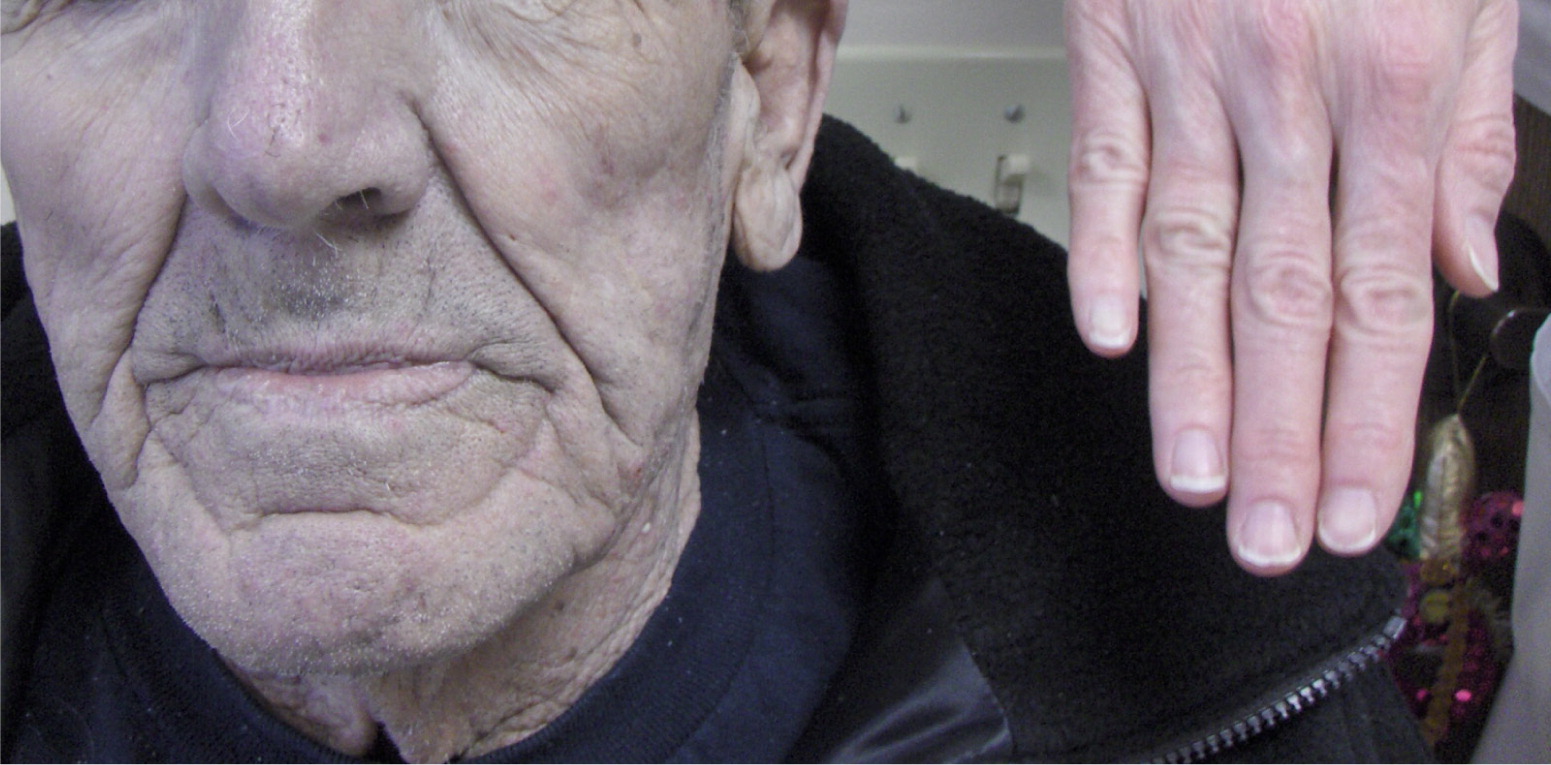
Even if an image is captured or rendered perfectly, the technology used to display it can cause skin to appear gray. This involves the intersection of hardware (the monitor) and software (the color profile).
OLED vs. LCD: The Contrast Struggle
LCD monitors rely on a backlight that often “bleeds” through the liquid crystals. This creates “raised blacks,” where what should be dark, warm shadows in the skin become a washed-out gray. Conversely, OLED technology allows for individual pixel dimming. However, if the “tone mapping” software is not optimized, the transition from highlight to shadow can be too aggressive, leading to “crushing” the mid-tones. When mid-tones are crushed in a digital display, the subtle oranges and pinks of the skin are the first to disappear, leaving behind a dull, gray residue.
The Complexity of Bit Depth and Banding
Color depth is measured in bits. A standard 8-bit display can show 16.7 million colors. While this sounds like a lot, it is often insufficient for the smooth gradients found in human skin. When a device lacks the “bit depth” to display the subtle transition from a highlight to a shadow, “banding” occurs. The software is forced to choose the nearest available color, which is often a more neutral, desaturated version of the original hue. This technical limitation makes the skin look “steely” or gray, particularly in high-definition HDR (High Dynamic Range) content where the range between light and dark is stretched to the limit.
4. Software Post-Processing and Compression Artifacts
In the era of streaming and social media, most of the images we see have been heavily processed by algorithms designed to save bandwidth. These “codecs” are often the silent culprits behind gray skin color.
The Impact of Chroma Subsampling
To reduce file sizes, video compression software often uses a technique called “chroma subsampling” (such as 4:2:0). This process keeps all the “luma” (brightness) information but throws away a significant portion of the “chroma” (color) information, assuming the human eye won’t notice. However, the human eye is highly sensitive to skin tones. When the color data is stripped away to save megabytes, the skin loses its richness and vibrancy, resulting in a “flat” and gray look that is particularly noticeable in video conferencing tools like Zoom or Teams.
Aggressive Noise Reduction Algorithms
Modern smartphones use “computational photography” to clean up images. When you take a photo in a medium-light environment, the software applies a noise reduction filter. These filters work by blurring pixels to hide grain. Unfortunately, these algorithms often struggle to distinguish between “noise” and the “natural texture” of skin. By smoothing out the red and yellow color variations in the skin’s texture, the software effectively “averages out” the color. Mathematically, the average of diverse skin textures often trends toward a desaturated gray, making the subject look sickly or artificial in the final output.
5. The Future: Computational Solutions to “Gray Skin”
The tech industry is not blind to these issues. Significant investments are being made to fix the “gray skin” problem through both hardware and software innovation.
Real Tone Technology and Spectral Imaging
Companies like Google have introduced “Real Tone” software, which uses revamped algorithms to ensure that the camera sensor and the image processor work together to preserve the natural warmth of all skin tones. This involves using more sophisticated face detection that adjusts exposure and white balance specifically for the skin, rather than the background.
Looking further ahead, the development of spectral sensors—which capture more than just the Red, Green, and Blue (RGB) channels—could revolutionize this. By capturing a wider spectrum of light, these sensors can detect the actual hemoglobin and melanin levels in the skin, allowing the software to reconstruct the color with 100% accuracy, eliminating the “gray” effect entirely.
High-Fidelity Neural Rendering
In the world of 3D graphics, “Neural Rendering” is replacing traditional shaders. By using AI to predict how light should bounce off a specific texture, software can now simulate the warmth of human skin with much less processing power. This tech ensures that even in lower-end devices, the “gray skin” phenomenon is replaced by vibrant, lifelike digital humans.

Conclusion
What causes gray skin color in the digital age is rarely a single factor; it is a combination of sensor limitations, algorithmic shortcuts, and display constraints. As our lives move increasingly into digital spaces—from the metaverse to remote work—the technology used to represent our physical selves must become more sophisticated. By solving the technical puzzles of subsurface scattering, bit depth, and AI training bias, the tech industry is moving toward a future where “gray skin” is a relic of the past, replaced by digital representations that are as vibrant and diverse as the people they portray.
aViewFromTheCave is a participant in the Amazon Services LLC Associates Program, an affiliate advertising program designed to provide a means for sites to earn advertising fees by advertising and linking to Amazon.com. Amazon, the Amazon logo, AmazonSupply, and the AmazonSupply logo are trademarks of Amazon.com, Inc. or its affiliates. As an Amazon Associate we earn affiliate commissions from qualifying purchases.