
In the modern landscape of business finance and personal wealth creation, efficiency is the ultimate currency. Whether you are managing a Fortune 500 corporation, a growing mid-sized enterprise, or a high-leverage side hustle, the ability to eliminate waste and optimize output directly dictates your bottom line. Among the most prestigious and effective methodologies for achieving this level of financial precision is Six Sigma.
While often perceived as a dry statistical tool used by manufacturing giants, Six Sigma is, at its core, a financial strategy. It is a disciplined, data-driven approach designed to eliminate defects in any process—from banking transactions to product assembly—aiming for near-perfection. In the world of business finance, “near-perfection” translates to “minimal waste” and “maximum profit.”
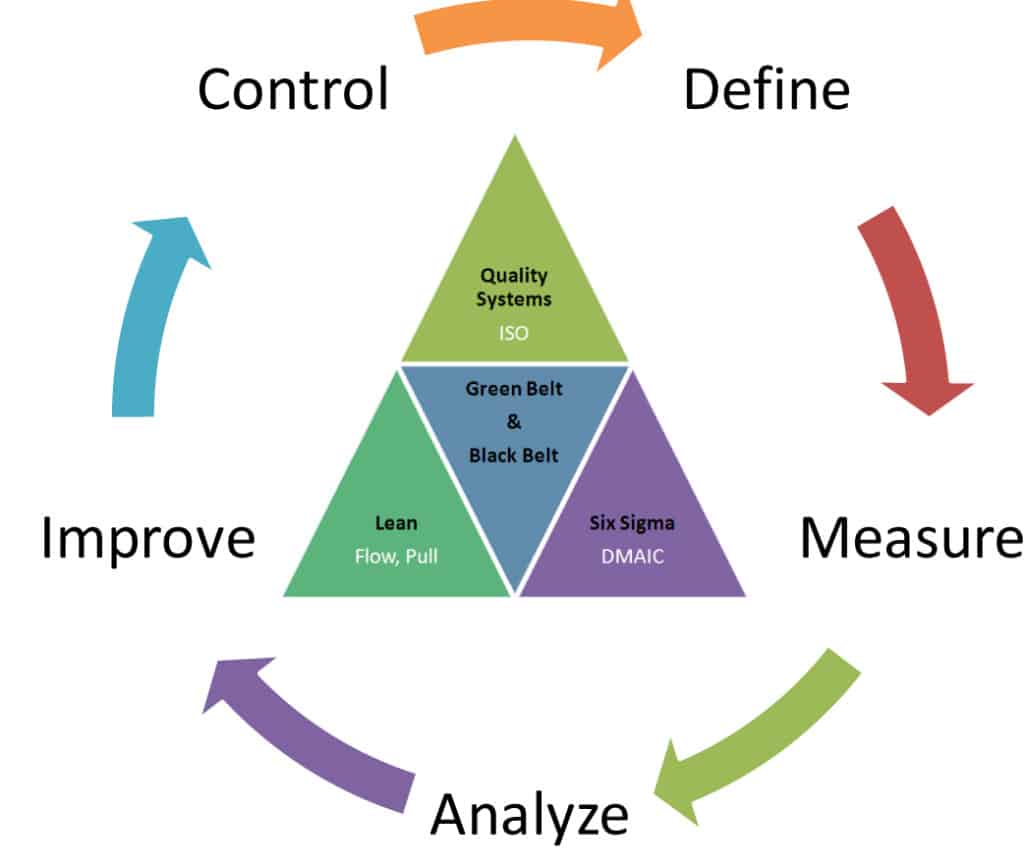
1. The Financial Core of Six Sigma: Beyond the Statistics
To understand Six Sigma from a money-centric perspective, one must look past the Greek symbols and focus on the “Cost of Poor Quality” (COPQ). Every time a process fails, a customer returns a product, or a service requires a “do-over,” money is leaking out of the organization. Six Sigma is the plug for that leak.
The Mathematics of Profitability
The term “Six Sigma” refers to a statistical goal: a process that produces only 3.4 defects per million opportunities. In financial terms, this represents a level of efficiency where operational costs are minimized because the “rework” factor is virtually eliminated. For a business, moving from a Three Sigma level (approximately 66,807 defects per million) to Six Sigma can save millions of dollars in operational overhead, logistics, and customer service costs.
Reducing the Cost of Poor Quality (COPQ)
Business finance experts categorize COPQ into internal failures (scrap, rework, delays) and external failures (warranty claims, lost reputation, returns). Six Sigma provides the analytical tools to quantify these losses. By identifying the root causes of these failures, businesses can redirect capital from “fixing mistakes” to “investing in growth.” This shift is fundamental for any entity looking to increase its valuation or improve its cash flow.
Enhancing Return on Investment (ROI)
Every project undertaken within a Six Sigma framework is expected to yield a measurable financial return. Unlike vague “improvement initiatives,” Six Sigma projects are traditionally chartered with a specific budgetary goal. By using rigorous data to validate improvements, stakeholders can see exactly how a change in process leads to a direct increase in the net profit margin.
2. The DMAIC Framework: A Strategic Blueprint for Business Finance
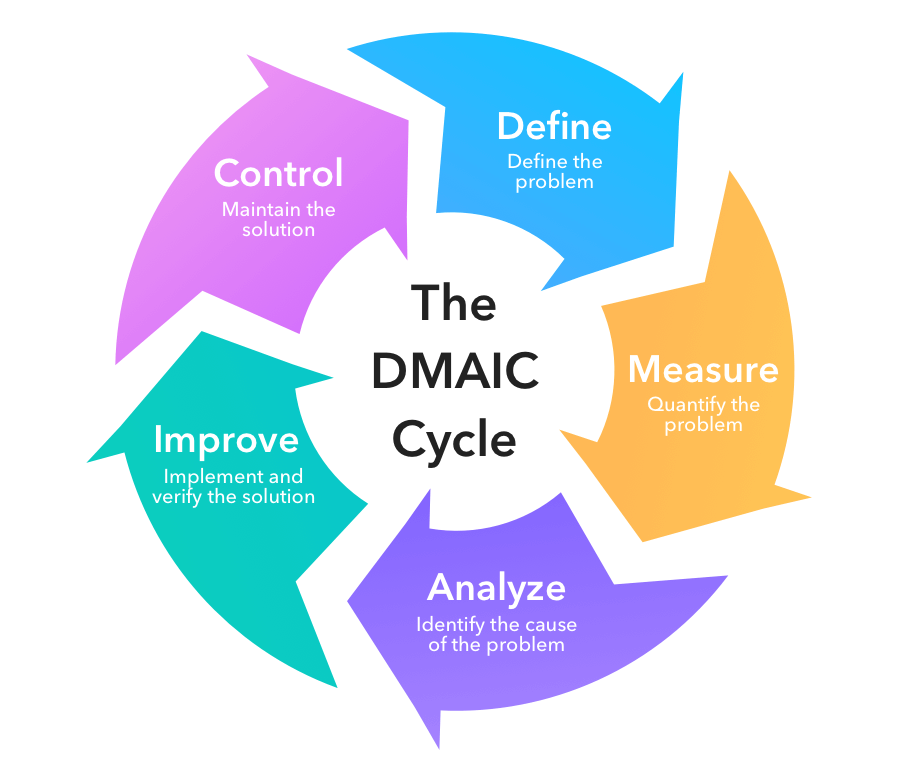
The primary engine of Six Sigma is the DMAIC roadmap. While it stands for Define, Measure, Analyze, Improve, and Control, it serves as a sophisticated financial management tool for identifying where a business is losing money and how to recover it.
Define and Measure: Identifying Financial Leakage
In the initial stages, the focus is on the “Voice of the Business” and the “Voice of the Customer.” From a financial perspective, this means defining what a “defect” costs in actual dollars. Is it the cost of a lost lead? The interest lost on delayed invoicing? By measuring the current baseline performance, a business owner or financial manager can put a price tag on inefficiency. This creates a compelling case for change backed by hard data rather than intuition.
Analyze: Root Cause Financial Analysis
The “Analyze” phase is where the “Money” niche truly thrives. Using tools like the Pareto Principle (the 80/20 rule), Six Sigma practitioners identify the 20% of causes that lead to 80% of the financial waste. For a side hustle or an online business, this might reveal that a specific marketing channel has a high cost-per-acquisition but a low lifetime value, allowing the entrepreneur to reallocate funds to more profitable avenues.
Improve and Control: Scaling for Sustainable Profit
Once the waste is identified and the process is improved, the “Control” phase ensures the financial gains are permanent. This involves setting up monitoring systems—financial dashboards and KPIs—that alert management the moment a process begins to drift back into inefficiency. In business finance, this “Control” is what separates a one-time windfall from sustainable, long-term profitability.
3. Human Capital as an Asset: The Belt Hierarchy and Personal Income
Six Sigma is not just a corporate strategy; it is a significant tool for personal branding and income growth. The methodology uses a martial arts-inspired “Belt” system to signify levels of expertise, and each level corresponds to a significant increase in market value for the professional.
The “Green” and “Black” Belts: Investing in Yourself
From a personal finance perspective, obtaining a Six Sigma certification is one of the highest-ROI investments a professional can make.
- Green Belts typically work on projects part-time, saving their companies tens of thousands of dollars annually.
- Black Belts are masters of the craft, often leading multi-million dollar improvement projects.
The financial incentive for these certifications is clear: professionals with Six Sigma credentials often command salaries 20% to 30% higher than their non-certified peers. It is a form of “career insurance” that makes an individual indispensable during economic downturns when cost-cutting becomes a priority.
The Master Black Belt: Strategic Financial Leadership
At the highest level, Master Black Belts act as internal consultants for an organization’s executive leadership. They don’t just fix processes; they influence corporate strategy. They help decide which business units are worth the investment and which should be divested based on operational viability. For those looking to move into high-level business finance or private equity, the analytical rigor of Six Sigma is an invaluable skill set.
4. Implementing Six Sigma in Small Businesses and Side Hustles
A common misconception is that Six Sigma is only for manufacturing giants like General Electric or Motorola. In reality, the principles of Lean Six Sigma (a hybrid that combines Six Sigma’s precision with Lean’s speed) are perfect for small businesses and online income streams where margins are thin.
Maximizing Margins with Minimal Waste
For a solopreneur or a small e-commerce business, time is the most expensive resource. Six Sigma helps identify “non-value-added” activities—tasks that take time but don’t add money to the bank account. By applying a “Lean” lens, a business owner can eliminate redundant software subscriptions, streamline shipping processes, and automate customer service, thereby significantly widening their profit margins without needing to increase sales volume.
Data-Driven Decision Making for Solopreneurs
Many side hustles fail because they are managed based on “gut feelings.” Six Sigma introduces the concept of statistical significance. Before a small business owner spends $5,000 on a new ad campaign, Six Sigma tools can help analyze small-scale test data to predict the likelihood of success. This risk-mitigation aspect is crucial for personal finance management, ensuring that capital is only deployed when there is a high statistical probability of a return.
Scaling Online Income through Process Standardization
As an online business grows, the complexity increases. Six Sigma teaches the importance of Standard Operating Procedures (SOPs). By standardizing the way a service is delivered or a product is sourced, an entrepreneur can outsource tasks to virtual assistants or automated tools with minimal errors. This consistency is what allows a business to scale from a few thousand dollars a month to a high-six-figure enterprise.

Conclusion: The Long-Term Wealth Impact of Six Sigma
Six Sigma is more than a quality control methodology; it is a philosophy of financial excellence. In an era where inflation is high and competition is global, the ability to operate with surgical precision is a massive competitive advantage.
By focusing on reducing the Cost of Poor Quality, utilizing the DMAIC framework to secure business finance, and investing in the “Belt” certifications to increase personal earning power, individuals and organizations can build a foundation for lasting wealth. Whether you are looking to trim the fat from a corporate budget or optimize your personal side hustle for maximum ROI, Six Sigma provides the roadmap to turn operational efficiency into cold, hard cash. In the final analysis, Six Sigma is the gold standard for anyone who believes that in business, every decimal point counts toward the bottom line.
aViewFromTheCave is a participant in the Amazon Services LLC Associates Program, an affiliate advertising program designed to provide a means for sites to earn advertising fees by advertising and linking to Amazon.com. Amazon, the Amazon logo, AmazonSupply, and the AmazonSupply logo are trademarks of Amazon.com, Inc. or its affiliates. As an Amazon Associate we earn affiliate commissions from qualifying purchases.