
The rapid evolution of modern technology—from the semiconductors powering artificial intelligence to the atomic clocks enabling global positioning systems—relies on a singular, invisible foundation: the International System of Units (SI). While many view measurement as a basic schoolroom concept, for the tech professional, it is the language of interoperability. Without a standardized, universally accepted system of units, the global tech supply chain would collapse, software would fail to sync, and the hardware that defines our digital age would be impossible to manufacture.
In this deep dive, we explore the SI base units through the lens of technology, examining how these seven pillars of measurement have been redefined for the digital era and why they are essential for the next generation of technological breakthroughs.
The Digital Bedrock: Why SI Units Matter to Modern Technology
In the realm of software engineering and hardware manufacturing, precision is not a luxury; it is a requirement. The SI system provides a common framework that allows a developer in Silicon Valley, an engineer in Tokyo, and a manufacturer in Berlin to work on the same piece of technology with absolute consistency.
From Sensors to Software: The Need for Universal Standards
Every piece of hardware we interact with is essentially a collection of sensors and actuators that translate physical reality into digital data. Whether it is an accelerometer in a smartphone or a temperature sensor in a smart thermostat, these devices must output data in a format that other systems can interpret. By adhering to SI units, tech developers ensure that their “Digital Twins” and IoT (Internet of Things) ecosystems can communicate without error. If one system measured force in a proprietary unit and another used Newtons, the resulting computational friction would lead to catastrophic failures in automated systems, such as self-driving cars or industrial robotics.
The 2019 Redefinition: Moving from Physical Artifacts to Quantum Constants
A pivotal moment in technological history occurred on May 20, 2019, when the scientific community officially redefined the SI base units. Previously, units like the kilogram were defined by physical objects—specifically, a platinum-iridium cylinder stored in a vault in France. For the tech industry, this was a liability. Physical objects can change over time, lose atoms, or be damaged.
Today, all seven SI base units are defined by fundamental constants of nature, such as the speed of light and the Planck constant. This shift to “quantum-based” measurement allows tech companies to realize high-precision measurements anywhere in the universe without needing to refer back to a physical “master” object. This level of stability is what allows for the creation of ultra-precise sensors used in quantum computing and nanotechnology.
Breaking Down the Seven Pillars of Measurement
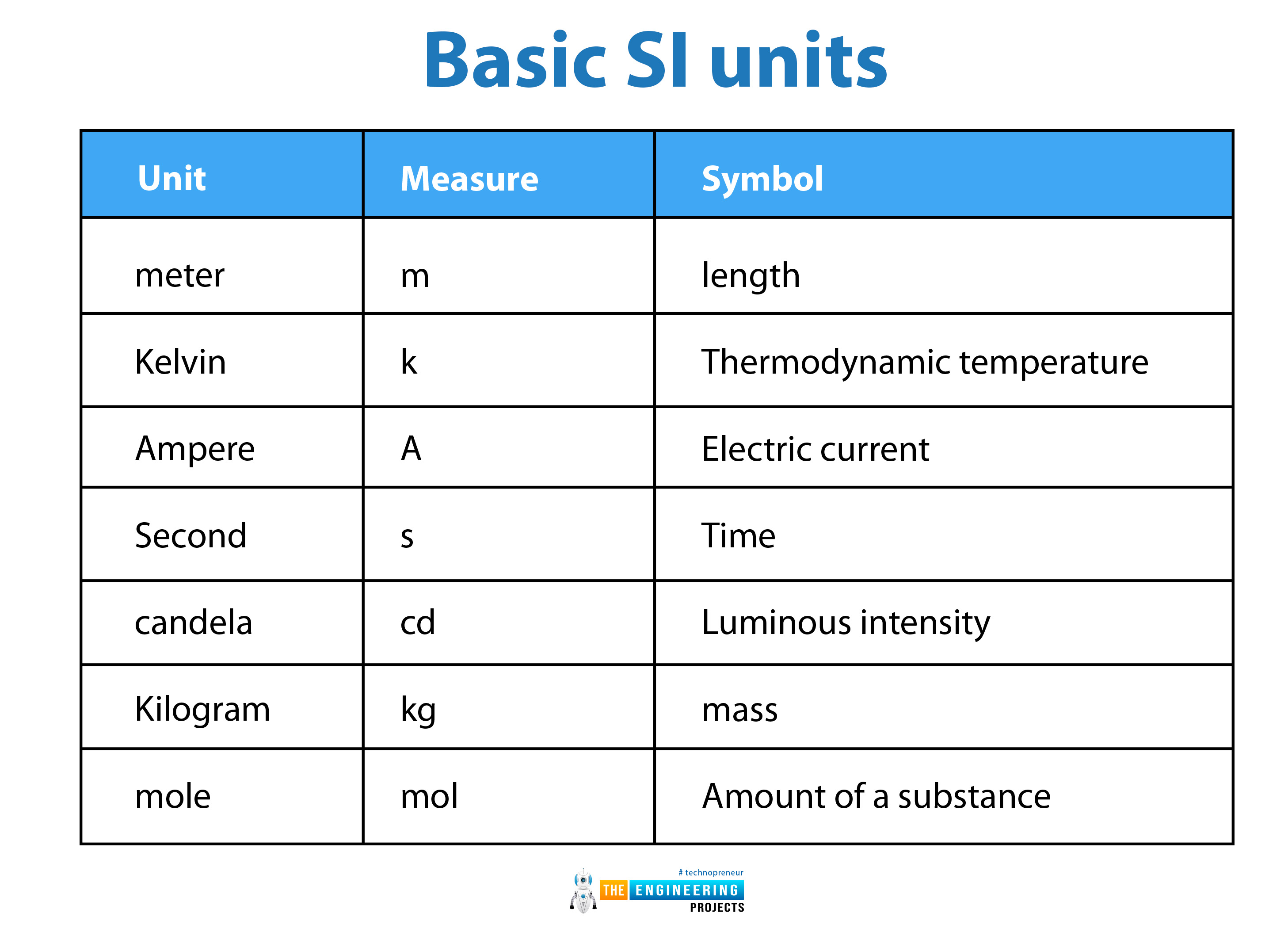
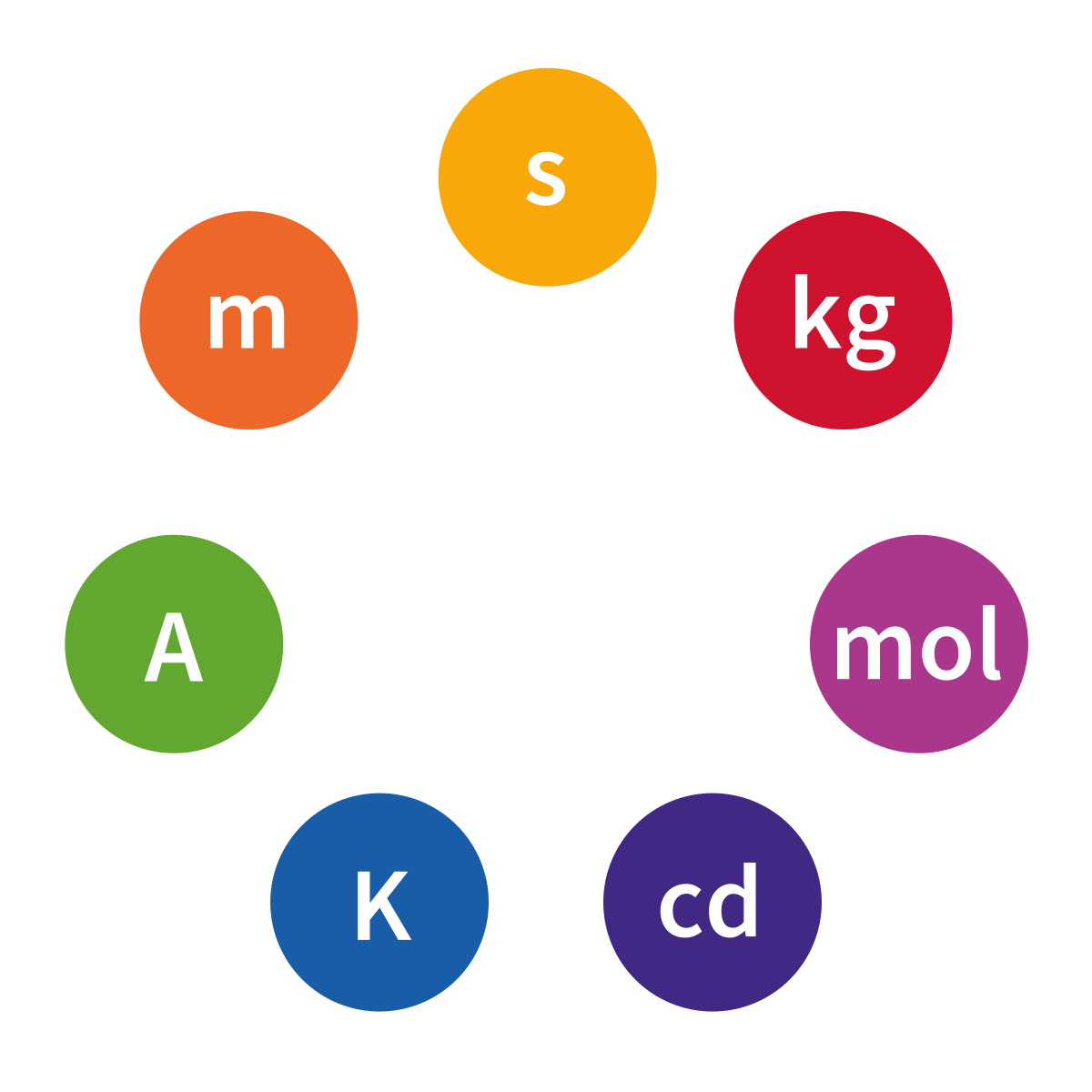
To understand the architecture of modern tech, one must understand the seven base units upon which all other measurements (derived units) are built.
Time and Length: The Second and the Metre
The second (s) is arguably the most important unit in the digital world. It is currently defined by the vibration frequency of the cesium-133 atom. In tech, time is the heartbeat of the CPU. The gigahertz (GHz) ratings of our processors are derived directly from the second. Furthermore, high-frequency trading and blockchain synchronization depend on nanosecond-level accuracy.
The metre (m) is defined by the distance light travels in a vacuum in 1/299,792,458 of a second. In the semiconductor industry, we deal with “process nodes” measured in nanometres (nm). As we move toward 2nm and 1nm chips, the ability to measure length with sub-atomic precision—linked directly to the constant speed of light—is what allows companies like TSMC and Intel to push the boundaries of Moore’s Law.
Mass and Substance: The Kilogram and the Mole
The kilogram (kg) is now defined by the Planck constant ($h$). This is crucial for high-end tech manufacturing, particularly in the production of micro-electromechanical systems (MEMS). When creating components so small that gravity and microscopic mass fluctuations impact performance, having a mass definition rooted in quantum physics ensures consistency across production lines.
The mole (mol) measures the amount of substance. While it sounds like a chemistry term, it is vital in the tech sector for battery chemistry and material science. Developing the next generation of lithium-ion or solid-state batteries requires precise “molecular bookkeeping” to optimize energy density and thermal stability.

Energy and Environment: The Ampere, Kelvin, and Candela
The ampere (A) measures electric current and is defined by the elementary charge ($e$). Everything in tech, from the power consumption of data centers to the charging speed of an EV, is governed by the ampere.
The kelvin (K) is the unit of thermodynamic temperature. In the world of overclocking, server cooling, and aerospace tech, managing “thermal envelopes” is a daily challenge. The kelvin allows engineers to calculate the efficiency of heat sinks and liquid cooling systems with absolute precision.
Finally, the candela (cd) measures luminous intensity. This is the gold standard for the display industry. When Apple or Samsung tout the “nits” (candelas per square metre) of their latest OLED screens, they are using the candela to quantify the visual performance of the hardware.
SI Units in Action: Powering AI, Robotics, and IoT
The abstract definitions of these units find concrete applications in the most advanced tech sectors today. Without the rigorous application of SI standards, the integration of complex systems would be impossible.
Nanotechnology and the Metre: Precision at the Atomic Scale
In the production of hardware, we have moved beyond the “millimetre” era. We are now in the era of atomic-layer deposition. To build the transistors that power AI accelerators like the NVIDIA H100, engineers must manipulate matter at a scale where the “metre” must be subdivided into billionths. The SI system provides the mathematical framework for the laser interferometry used to align these microscopic patterns, ensuring that billions of transistors can fit onto a single thumb-sized chip.
The Role of Time (The Second) in Global Positioning Systems
The GPS technology in your smartphone is a masterclass in SI unit application. GPS satellites carry onboard atomic clocks that measure time (the second) with incredible stability. Because the satellites are moving and are further from Earth’s gravity, engineers must use Einstein’s theory of relativity to adjust the time. If the “second” were not defined with such extreme precision, GPS location data would drift by several kilometres every single day, rendering ride-sharing apps, autonomous drones, and digital mapping tools useless.
Implementing Precision: Tools and Tutorials for Technical Accuracy
For tech professionals, understanding the units is only the first step. The second step is implementing that precision through software and hardware tools.
Calibration Software and Digital Twin Technology
In modern “Smart Factories,” engineers use Digital Twin technology—a virtual replica of a physical system. For these twins to be accurate, they must ingest sensor data that is calibrated to SI standards. Tech tools like LabVIEW or MATLAB allow engineers to process these units in real-time. Calibration software ensures that a robotic arm’s movement (length/metres) and pressure (derived from mass and length) are perfectly synchronized. Regular calibration against NIST-traceable (National Institute of Standards and Technology) sources ensures that tech products maintain their quality and safety standards over time.
Best Practices for Developers and Engineers
In software development, particularly in C++ or Python for scientific computing, “unit errors” have historically caused multi-million dollar failures (such as the Mars Climate Orbiter crash). Best practices now suggest using libraries that handle unit conversions automatically.
- Strict Typing: Use types that include unit metadata.
- Standardization: Always default to SI units in the backend (e.g., store time in seconds, not minutes; store mass in kilograms, not pounds).
- Documentation: Clearly state the SI base units used in API documentation to prevent integration errors between different software modules.
The Future of Measurement in the Quantum Computing Era
As we transition from classical computing to quantum computing, our reliance on the SI system will only deepen. Quantum bits (qubits) are incredibly sensitive to their environment. Measuring the decoherence of a qubit requires timing and temperature measurements (kelvin and seconds) that push the very limits of our current SI definitions.
Toward Even Greater Resolution
Scientists are already discussing the possibility of redefining the “second” using optical clocks, which are even more precise than the current cesium clocks. For the tech industry, this would mean even faster data transfer speeds and more secure quantum cryptography. As our technology becomes more “granular,” our units of measurement must keep pace, providing the high-resolution map we need to navigate the frontier of the infinitesimal.
By anchoring our technological advancements in the immutable constants of the SI base units, we ensure that the digital world remains stable, scalable, and interconnected. Whether you are coding a simple app or engineering a spacecraft, these seven units are the silent partners in every innovation you create.
aViewFromTheCave is a participant in the Amazon Services LLC Associates Program, an affiliate advertising program designed to provide a means for sites to earn advertising fees by advertising and linking to Amazon.com. Amazon, the Amazon logo, AmazonSupply, and the AmazonSupply logo are trademarks of Amazon.com, Inc. or its affiliates. As an Amazon Associate we earn affiliate commissions from qualifying purchases.