
In the world of finance, whether you are managing a multinational corporation or a private investment portfolio, the margin for error is often razor-thin. The term “Critical Control Points” (CCPs) traditionally finds its roots in manufacturing and food safety, but its application within the “Money” sector—encompassing business finance, investing, and personal wealth management—is perhaps its most vital evolution.
In a financial context, a Critical Control Point is a specific stage in a process where a control can be applied to prevent, eliminate, or reduce a financial risk to an acceptable level. Without these points of intervention, a minor clerical error or a slight market shift can cascade into a catastrophic loss. Understanding and identifying these points is the difference between a resilient financial strategy and one that collapses under pressure.
Understanding Critical Control Points in the Financial Landscape
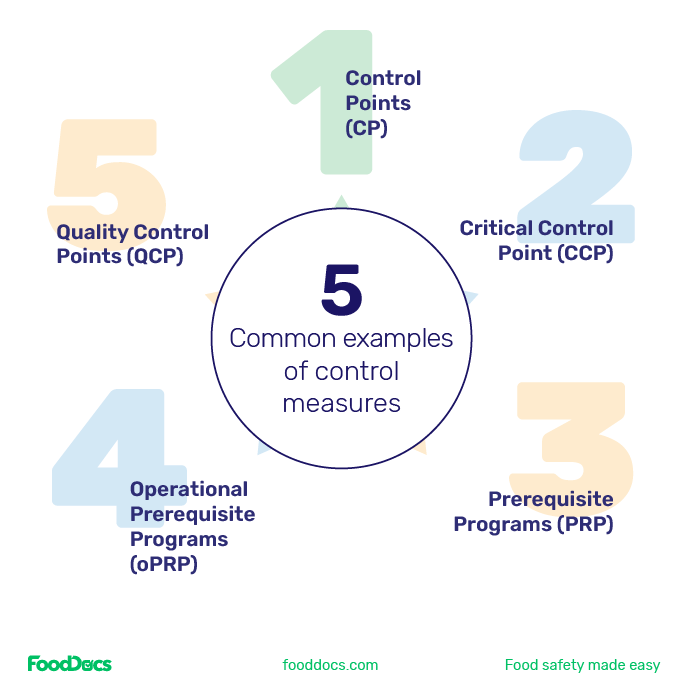
To effectively manage money, one must first recognize that financial systems are inherently prone to “leakage” and volatility. Critical Control Points serve as the valves and sensors within these systems, ensuring that resources flow where they are intended and that risks are mitigated before they become unmanageable.
Defining CCPs within a Business Finance Context
In business finance, a CCP is not merely a checkpoint; it is a decisive juncture. Unlike a general administrative task, a CCP is a high-stakes moment where a failure to monitor or act will result in a measurable financial loss. For example, in a supply chain finance model, the moment a purchase order is matched against an invoice is a CCP. If the control fails here, the company may pay for goods never received, directly impacting the bottom line.
Identifying these points requires a granular view of the “Money Cycle.” This cycle begins with capital acquisition and ends with the realization of profit. At every stage—from accounts payable to tax compliance—there are specific moments where the potential for error or fraud is highest. These are your Critical Control Points.
The Difference Between Monitoring and Controlling
It is a common mistake to confuse general monitoring with a Critical Control Point. Monitoring is the act of observing a process; controlling is the act of intervening based on specific criteria. A CCP requires three components: a defined limit (the “critical limit”), a method of measurement, and a pre-planned corrective action.
For an investor, “monitoring” is checking the stock market daily. A “Critical Control Point,” however, is the implementation of a stop-loss order at 10%. The limit is the 10% drop, the measurement is the real-time ticker price, and the corrective action is the automated sale of the asset. By defining these points, you remove emotion from the equation, ensuring that financial decisions are driven by logic and predetermined risk tolerances.
Identifying CCPs in Corporate Finance and Internal Auditing
For a corporation, the stakes of financial oversight involve fiduciary responsibility to shareholders and the long-term viability of the brand. Internal auditing departments focus heavily on CCPs to prevent embezzlement, ensure regulatory compliance, and optimize operational efficiency.
Cash Flow and Liquidity Management
Cash flow is the lifeblood of any business, and it is also where the most critical control points reside. A company can be profitable on paper but still face bankruptcy if it lacks liquidity. A CCP in this area involves the “Cash Conversion Cycle.”
Managers must establish control points at the intervals where cash is tied up in inventory or outstanding receivables. By setting a critical limit on “Days Sales Outstanding” (DSO), a finance team can trigger aggressive collection actions if the limit is exceeded. This ensures that the company always maintains a sufficient “liquidity buffer” to meet its short-term obligations.
Procurement and Accounts Payable Oversight
The procurement process is rife with opportunities for financial leakage. Critical Control Points must be established at the vendor onboarding stage and the payment authorization stage.
A key CCP here is the “Three-Way Match.” This process involves verifying that the Purchase Order, the Receiving Report, and the Vendor Invoice all align perfectly before a payment is released. If any of these three elements do not match, the “control” is triggered, and the payment is halted. This prevents overpayment, payment for substandard goods, and fraudulent billing—common issues that can drain a company’s capital.
Revenue Recognition and Accounts Receivable
How and when a company records its income is a major CCP, especially for publicly traded entities. Revenue recognition must follow strict accounting standards (such as ASC 606). A control point is established to ensure that revenue is only recognized when the “performance obligation” is met.
If a company recognizes revenue too early, it misleads investors and risks legal repercussions. If it recognizes it too late, its financial health appears worse than it is. The CCP here involves a rigorous review of contracts and delivery confirmations to ensure that the financial statements reflect the economic reality of the business.
Critical Control Points in Investment Management and Portfolio Security
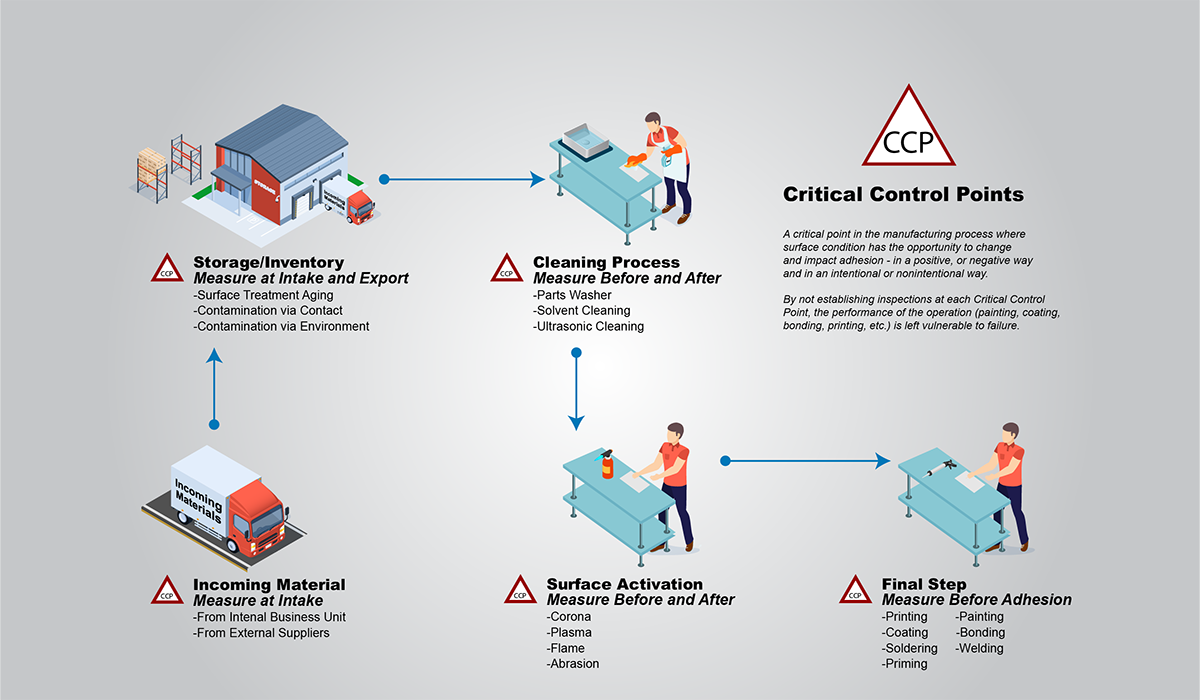
Individual and institutional investors face a different set of challenges. In the world of “Money,” market volatility is the primary threat. Identifying CCPs in an investment strategy allows an investor to navigate turbulent waters without losing their principal capital.
Risk Tolerance and Asset Allocation Thresholds
Every investment strategy begins with an asset allocation—a mix of stocks, bonds, real estate, and cash. Over time, as certain assets outperform others, the portfolio will naturally drift. This drift is a risk.
A Critical Control Point should be set for “Allocation Deviation.” For instance, if your target allocation for equities is 60%, a CCP might be established at a 5% deviation. If the market rises and your equity holding reaches 65%, the control is triggered, prompting you to sell some stocks and buy bonds to return to your target. This forced “sell high, buy low” mechanism is a fundamental CCP for long-term wealth preservation.
Stop-Loss Orders and Exit Strategies
One of the hardest things for an investor to do is admit they were wrong. CCPs remove the ego from the investment process. An “Exit Strategy” is a pre-defined control point that answers the question: “At what point is this investment no longer viable?”
Whether it is a trailing stop-loss or a fundamental change in a company’s debt-to-equity ratio, these control points protect the investor from the “sunk cost fallacy.” By identifying the critical limit of a loss before entering a trade, the investor ensures that a single bad decision does not wipe out their entire portfolio.
Diversification Rebalancing
Diversification is often called the “only free lunch in finance,” but it requires active maintenance. A CCP must be established to monitor geographic and sector concentration. If a portfolio becomes too heavily weighted in a single sector—such as technology or energy—the CCP triggers a rebalancing. This prevents the investor from being over-exposed to a localized market crash, ensuring that the “Money” is distributed across various risk factors.
Implementing a CCP Framework for Personal Wealth Building
On a personal level, managing money requires the same discipline as a corporate treasury. By identifying the CCPs in your household finances, you can move from living paycheck-to-paycheck to building sustainable wealth.
The Emergency Fund as a Primary Control
In personal finance, the most critical control point is the “Cash Reserve” or Emergency Fund. This is the ultimate safety net. A critical limit should be set based on monthly expenses—typically 3 to 6 months.
If the fund drops below this limit due to an unforeseen expense (like a medical bill or car repair), the CCP triggers a “Financial Lockdown.” This means all discretionary spending is halted, and every available dollar is redirected to replenishing the fund. This control prevents the individual from turning to high-interest credit card debt, which is the leading cause of long-term financial instability.
Debt-to-Income Ratio Monitoring
Debt can be a tool, but without control points, it becomes a trap. A CCP should be established for your Debt-to-Income (DTI) ratio. Most financial experts suggest keeping this below 36%.
When your DTI approaches or exceeds this limit, the control point dictates that no new credit should be sought, and a debt-snowball or debt-avalanche strategy should be initiated. By treating the DTI ratio as a Critical Control Point, you ensure that your “Money” is working for you through investments rather than working for a bank through interest payments.
Tax Liability and Optimization
Many people view taxes as an annual event, but for those focused on wealth, it is a constant CCP. A control point should be set for “Taxable Events.” This involves reviewing realized gains and losses toward the end of the fiscal year.
If your capital gains are high, the CCP triggers “Tax-Loss Harvesting”—the practice of selling losing investments to offset the gains. This control ensures that you keep as much of your money as possible, leveraging the tax code to enhance your net return.
Conclusion: Integrating CCPs for Long-Term Financial Stability
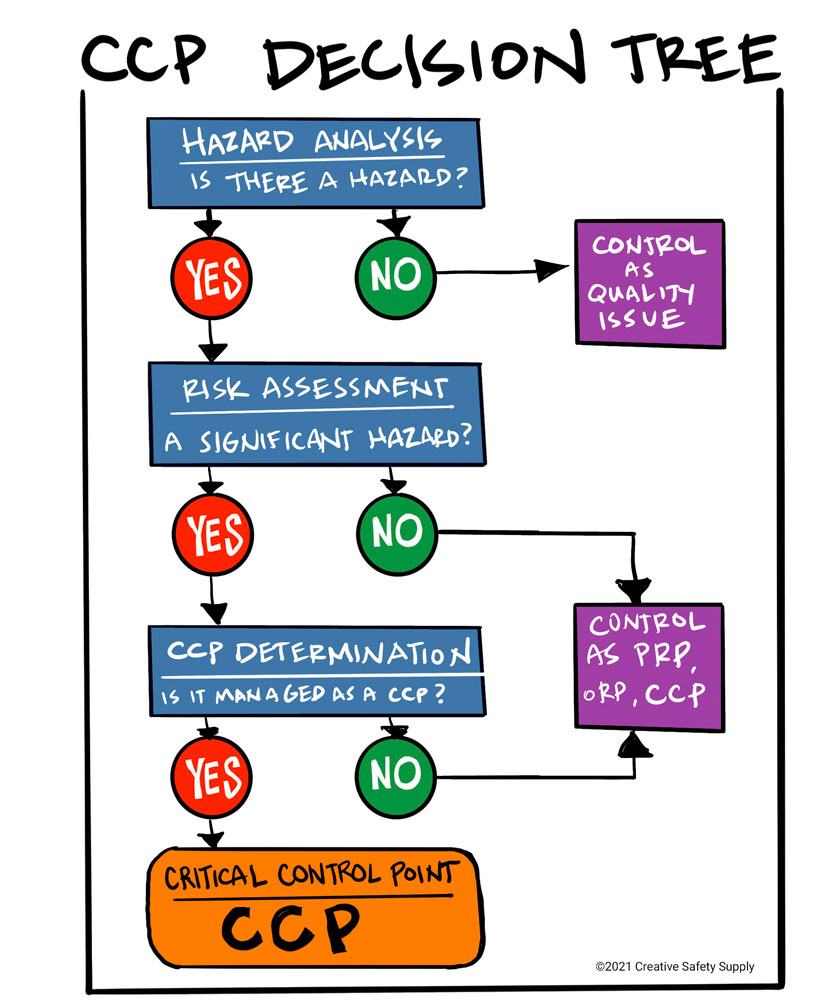
The concept of Critical Control Points is not just an academic exercise; it is a practical necessity for anyone serious about managing money. By identifying the specific junctures where financial risk is highest—whether in corporate liquidity, investment allocation, or personal debt—you create a roadmap for security.
Financial success is rarely the result of one great decision or a single lucky break. Instead, it is the result of thousands of small processes being managed correctly. Critical Control Points provide the framework for this management. They allow you to automate your discipline, minimize your risks, and maximize your growth. Whether you are overseeing a corporate budget or your own retirement account, remember that what is not controlled is eventually lost. Establish your CCPs today to ensure your financial future is not left to chance.
aViewFromTheCave is a participant in the Amazon Services LLC Associates Program, an affiliate advertising program designed to provide a means for sites to earn advertising fees by advertising and linking to Amazon.com. Amazon, the Amazon logo, AmazonSupply, and the AmazonSupply logo are trademarks of Amazon.com, Inc. or its affiliates. As an Amazon Associate we earn affiliate commissions from qualifying purchases.