
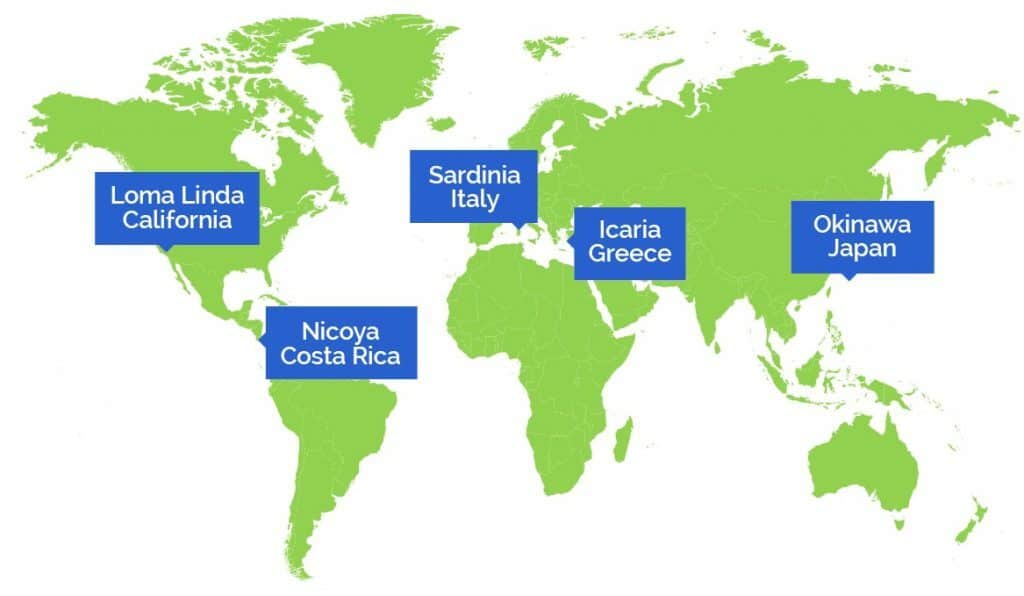
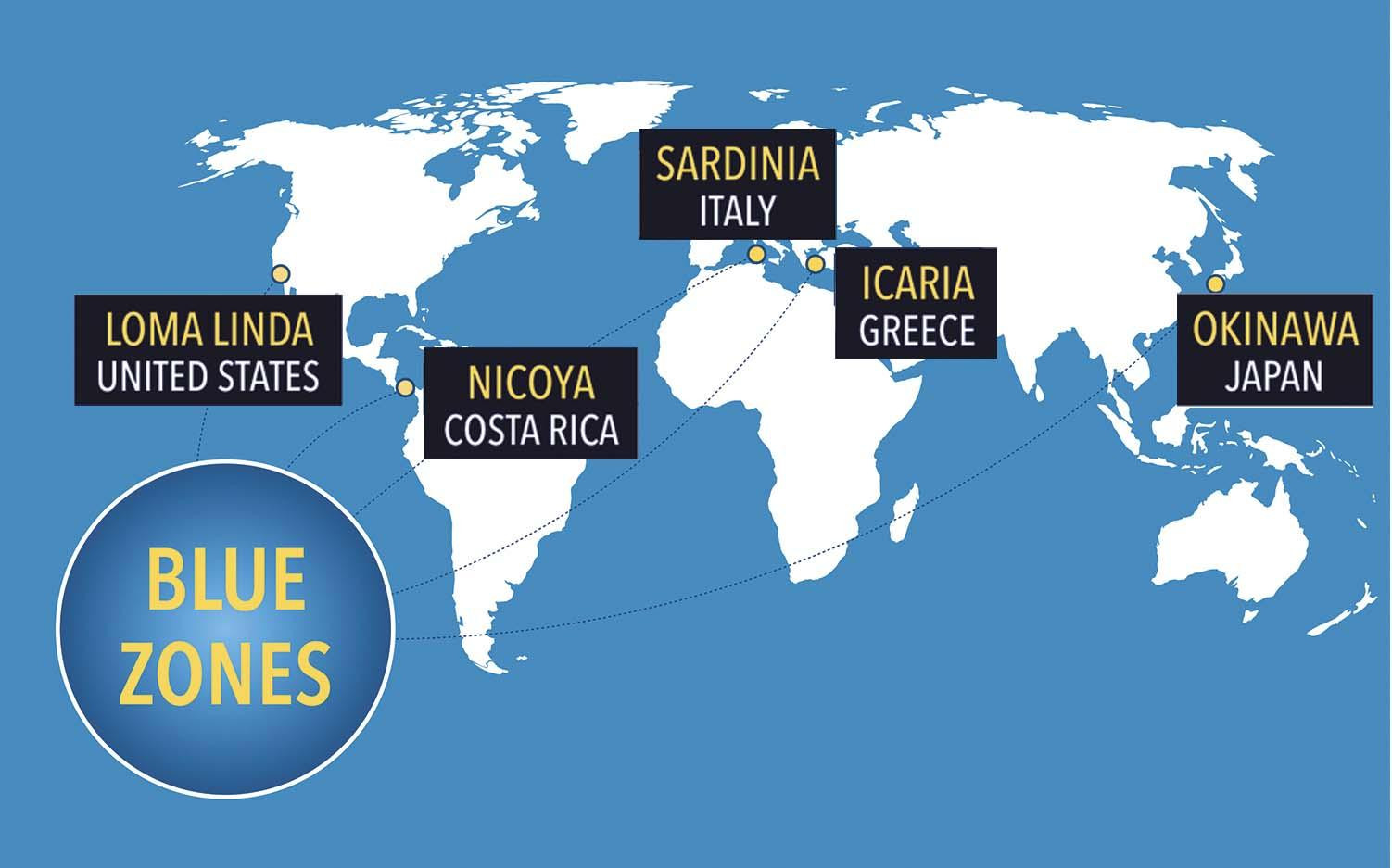
The term “Blue Zones” traditionally refers to geographic regions where people live significantly longer lives than the global average. These are pockets of the world—like Okinawa, Japan, or Sardinia, Italy—where lifestyle, diet, and community converge to create biological longevity. However, in the realm of global economics and personal finance, the concept of a “Blue Zone” takes on a different, yet equally vital, meaning.
A Financial Blue Zone is a region, a market sector, or a strategic framework where capital doesn’t just grow; it survives and thrives across generations. These are the environments characterized by institutional stability, low volatility, and structural integrity. Just as a centenarian in Icaria avoids the “lifestyle diseases” of the modern world, capital in a Financial Blue Zone avoids the “market diseases” of hyperinflation, systemic corruption, and catastrophic loss. Understanding where these zones exist and how to replicate their principles in your personal portfolio is the key to achieving true financial longevity.

Defining Financial Blue Zones: The Architecture of Longevity
Before we can map these zones, we must define the characteristics that allow wealth to endure. Financial longevity is rarely the result of high-risk, high-reward speculation. Instead, it is the byproduct of an ecosystem designed for resilience.
Predictability and Risk Mitigation
The primary marker of a Financial Blue Zone is predictability. For an investor or a corporation, the greatest threat is not a market downturn, but the “unknown unknowns”—sudden regulatory shifts, the seizure of assets, or the collapse of the legal system. Blue Zones are defined by a transparent rule of law and a judicial system that protects property rights. When an investor puts capital into a Blue Zone, they are essentially buying a “volatility dampener.” This predictability allows for long-term compounding, which is the financial equivalent of a healthy diet and daily movement in the biological Blue Zones.
The Role of Institutional Stability
Financial longevity requires strong institutions. This includes central banks with a track record of price stability, a robust banking sector that survives global shocks, and political systems that avoid radical, disruptive swings. In these zones, the “biological age” of capital remains young because it is not being weathered by the stress of systemic instability. These regions serve as the world’s “safe havens,” attracting capital during times of global turmoil because they offer a sanctuary where the purchasing power of money is preserved over decades, not just fiscal quarters.
The Global Map of Wealth Longevity: Identifying Key Economic Blue Zones
Just as Dan Buettner identified specific cities for human longevity, the global economy has specific jurisdictions that function as “wealth magnets” due to their enduring stability.
Traditional Safe Havens: Switzerland and Singapore
Switzerland has long been the quintessential Financial Blue Zone. Its commitment to neutrality, a decentralized political system, and a storied history of private banking has made it the “Sardinia” of the financial world. It is a place where capital goes to age gracefully. Similarly, Singapore has emerged as the premier Blue Zone of the East. Through rigorous regulatory standards, low corporate tax rates, and a strategic position in global trade, Singapore has built an ecosystem where wealth is not only generated but meticulously protected. These regions prioritize “defensive” finance, focusing on the preservation of value as much as its creation.
Emerging Hubs: The Rise of Tech-Driven Financial Ecosystems
While traditional zones rely on historical prestige, new Financial Blue Zones are emerging through technological infrastructure. Jurisdictions like Estonia have pioneered “e-Residency” and digital governance, creating a streamlined, low-friction environment for business finance. These are the “modern Blue Zones,” where the longevity of a company is supported by digital transparency and ease of operation. These hubs attract a younger generation of wealth—entrepreneurs and digital nomads who seek environments where capital is liquid, global, and unencumbered by the bureaucratic “senescence” of older, more rigid economies.
Building Your Personal Financial Blue Zone: Strategies for Sustainable Growth
You do not need to live in Zurich or Singapore to benefit from the principles of a Blue Zone. Much like someone in a busy metropolis can adopt the Mediterranean diet, an individual investor can build a “Personal Blue Zone” by structuring their assets according to the principles of longevity.
The Power of Compounded Diversification
In biological Blue Zones, people don’t just eat one healthy food; they have a diverse diet of legumes, greens, and healthy fats. In finance, this translates to asset allocation. A Personal Blue Zone is built on a foundation of diversified index funds, real estate, and perhaps a portion of high-quality bonds or commodities. Diversification is the only “free lunch” in finance, acting as an insurance policy against the death of any single industry or asset class. By spreading risk, you ensure that your total net worth can survive the “heart attack” of a single market crash.
Defensive Investing in Volatile Markets
Longevity in finance is often about what you don’t do. It’s about avoiding the “junk food” of the financial world: excessive leverage, day-trading on margin, and chasing speculative bubbles (FOMO). A Blue Zone strategy prioritizes high-quality assets with “moats”—companies with strong balance sheets and consistent cash flows. These assets are the centenarians of the stock market; they have survived wars, depressions, and technological shifts, and they continue to pay dividends. Investing in these entities creates a “low-stress” portfolio that requires minimal intervention, allowing the investor to focus on the long game.
The Psychology of Financial Longevity: Habits of Wealthy Centenarians
The most overlooked aspect of Blue Zones, both biological and financial, is the mindset of the participants. Longevity is a behavioral challenge as much as it is a structural one.
Delayed Gratification and the Long Game
The residents of Okinawa don’t eat until they are full; they practice “Hara Hachi Bu,” eating until they are 80% full. In finance, this is the discipline of living below one’s means and reinvesting the surplus. The goal is not to look wealthy today, but to be wealthy forever. This mindset shifts the focus from “income” to “equity.” Financial longevity is built on the ability to delay gratification, allowing the mathematical miracle of compounding to work its magic over twenty, thirty, or fifty years.
Asset Allocation vs. Speculation
A key psychological trait of the long-term investor is the ability to distinguish between “investing” and “gambling.” Speculation is a sprint; investing is a marathon. Those who treat the market as a casino rarely survive long enough to see their wealth mature. In contrast, those who view their portfolio as a garden—requiring patient tending, occasional pruning (rebalancing), and seasonal patience—are the ones who reach the “hundred-year” mark of financial success. The psychological “Blue Zone” is a state of mind where market noise is filtered out in favor of fundamental signals.
The Future of Financial Blue Zones in a Digital Economy
As we move further into the 21st century, the definition of a Financial Blue Zone is expanding beyond physical borders. The digital transformation is creating new “zones” of stability that aren’t tied to a specific piece of land.
Decentralized Finance (DeFi) as a New Frontier
For some, the ultimate Financial Blue Zone is the blockchain. By removing the “human error” of centralized banking and political interference, decentralized protocols offer a form of algorithmic stability. While currently volatile, the underlying technology aims to create a “trustless” Blue Zone where the rules are written in code and cannot be changed by a whim. This represents a radical shift in how we think about the longevity of assets, moving from institutional trust to cryptographic proof.
ESG and Sustainable Investing as Long-term Drivers
Finally, the “Blue Zones” of the future are increasingly defined by sustainability. Environmental, Social, and Governance (ESG) criteria are becoming the new metrics for financial health. Companies that ignore their environmental impact or social responsibility are seen as having “pre-existing conditions” that make them high-risk for the long term. Conversely, companies that prioritize sustainability are positioning themselves to survive in a world of changing regulations and consumer preferences. Investing in these sectors is a way of “future-proofing” your wealth, ensuring that your capital is aligned with the long-term health of the global economy.
In conclusion, “What are the Blue Zones in the world?” is a question that leads us to the heart of financial security. Whether they are geographic havens like Switzerland, strategic frameworks like diversified indexing, or psychological habits like delayed gratification, these zones provide the blueprint for wealth that lasts. By identifying and entering these zones, investors can ensure that their financial life is not just a brief flash of prosperity, but a long, stable, and thriving journey.
aViewFromTheCave is a participant in the Amazon Services LLC Associates Program, an affiliate advertising program designed to provide a means for sites to earn advertising fees by advertising and linking to Amazon.com. Amazon, the Amazon logo, AmazonSupply, and the AmazonSupply logo are trademarks of Amazon.com, Inc. or its affiliates. As an Amazon Associate we earn affiliate commissions from qualifying purchases.