
In the rapidly evolving landscape of biotechnology and materials science, the question “what are polysaccharides made of?” has transitioned from a fundamental query of organic chemistry to a pivotal concern for tech innovators. As we move away from traditional silicon-based paradigms and toward the “bio-digital” era, polysaccharides are being viewed not just as biological structures, but as complex, programmable polymers. These macromolecules, which form the structural basis of everything from plant cell walls to the exoskeletons of insects, are becoming the “code” upon which a new generation of sustainable technology and computational biology is built.
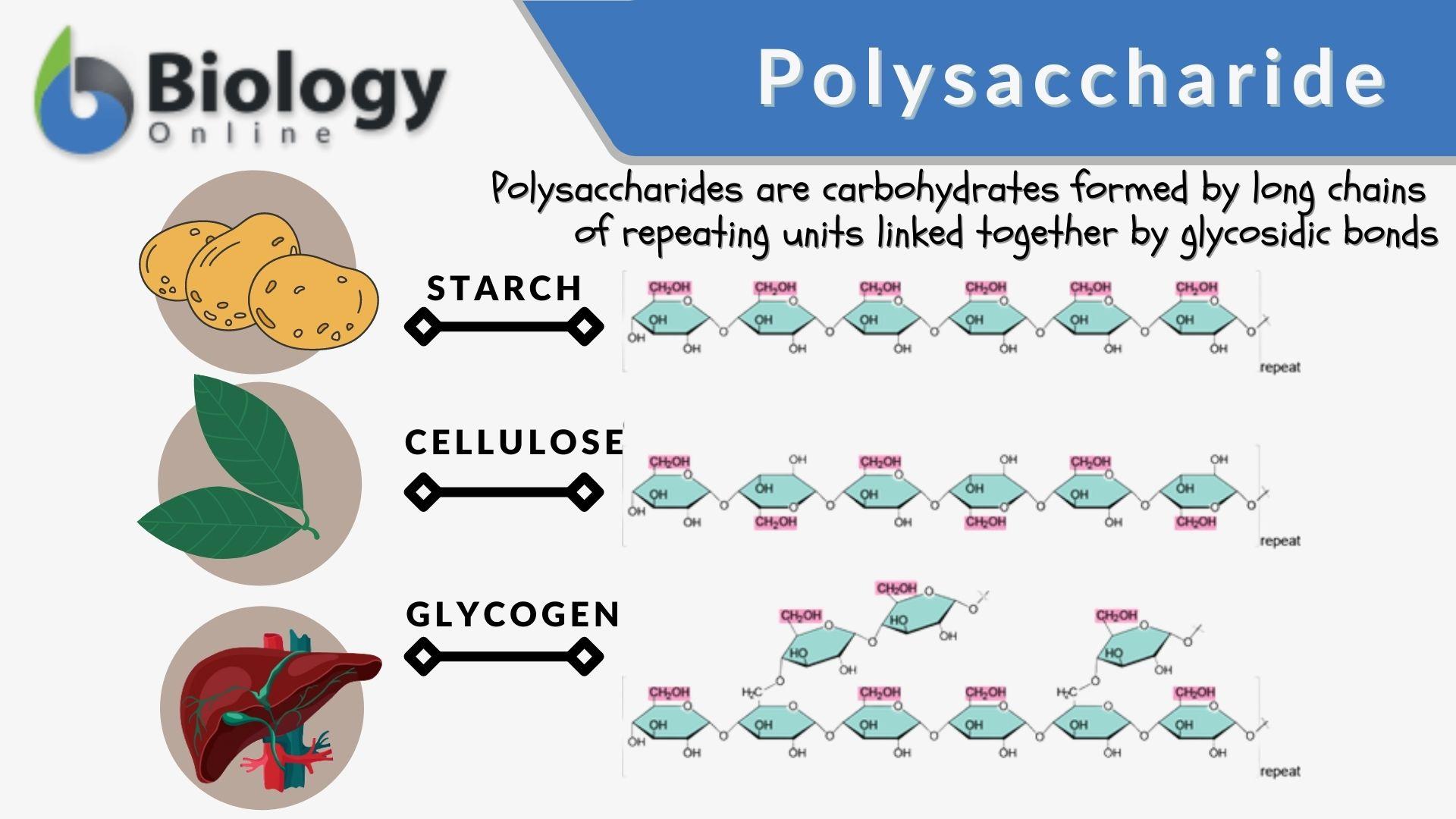
Understanding what these substances are made of—and how we can manipulate their sequence—is the key to unlocking the next frontier of green tech, drug delivery systems, and even organic data storage.
Decoding the Building Blocks: The Monosaccharide Units as Biological Data
At their most fundamental level, polysaccharides are long-chain polymeric carbohydrates composed of monosaccharide units. If we were to use a computing analogy, the monosaccharide is the “bit”—the smallest unit of information in the molecular chain. However, unlike the binary system of 0s and 1s, biological systems utilize a diverse array of “bits,” such as glucose, fructose, and galactose, to build vastly more complex structures.
The Fundamental Units of Carbohydrate Information
Polysaccharides are synthesized through the repetitive linking of monosaccharides. The most common of these is glucose. In the tech world, we look at these units as standardized components. Depending on how these units are arranged, the resulting “program” changes. For instance, a long, linear chain of glucose units forms cellulose—the structural backbone of the plant world. Conversely, a branched chain of the same units results in starch or glycogen, serving as energy storage. This variation in architecture is what allows the same basic “code” to perform radically different functions within a biological or technological system.
Glycosidic Bonds: The ‘Logic Gates’ of Molecular Chains
What truly defines a polysaccharide is not just its components, but how those components are connected. This connection is made via glycosidic bonds. In engineering terms, these bonds act as logic gates that determine the physical properties of the molecule. A bond can be “alpha” or “beta,” a distinction that seems minor but dictates whether a substance is a soft, digestible starch or a rigid, structural wood fiber. For tech innovators, mastering the glycosidic bond is equivalent to mastering the syntax of a programming language; it is the mechanism that allows for the precise engineering of bio-plastics and carbon-neutral materials.
The Technological Evolution of Polysaccharide Synthesis
Historically, we were limited to what nature could provide. We harvested cellulose from trees and starch from corn. However, the modern tech sector is now looking at “Synthetic Biology” to manufacture these molecules from the ground up. By understanding what polysaccharides are made of, we can now “print” them or grow them in bioreactors, bypassing the inefficiencies of traditional agriculture.
From Natural Extraction to Lab-Grown Polymers
The shift from extraction to synthesis is a major trend in “Deep Tech.” Companies are now using genetically modified bacteria to secrete specific polysaccharides. This process, known as microbial fermentation, allows for the creation of high-purity polymers that are “designed” for specific industrial uses. For example, bacterial cellulose is being developed as a high-performance membrane for speakers and high-end headphones due to its incredible strength-to-weight ratio and acoustic properties. This isn’t just biology; it is precision hardware engineering using organic molecules.
3D Bioprinting and the Polysaccharide Matrix
One of the most exciting applications of polysaccharide engineering is in the field of 3D bioprinting. Polysaccharides like alginate (derived from seaweed) and chitosan (from crustacean shells) are used as “bio-inks.” These materials provide the structural scaffolding—the “chassis”—within which living cells can be printed to create tissues or organs. By manipulating the monosaccharide composition of these inks, engineers can control the “stiffness” or “porosity” of the printed object, effectively programming the environment in which the cells live.

Computational Glycobiology: Modeling Complex Chains with AI
If polysaccharides are biological code, then the field of Glycobiology is the ultimate debugging exercise. Unlike DNA or proteins, which are linear and follow a predictable template, polysaccharides are often branched and non-linear. This makes them incredibly difficult to map. This is where Artificial Intelligence and Machine Learning enter the frame, turning “what are polysaccharides made of” into a data science problem.
The Challenge of Glycan Complexity
The “Glycome”—the totality of all sugars in an organism—is orders of magnitude more complex than the Genome. Because polysaccharides can branch at multiple points on a single monosaccharide unit, the number of possible configurations is astronomical. For traditional tech, this complexity was a barrier. But for modern AI, it is an opportunity. High-throughput sequencing and mass spectrometry are now generating massive datasets that require neural networks to decode.
Neural Networks in Predicting Molecular Behavior
Tech startups are currently utilizing AI to predict how specific polysaccharide chains will behave in different environments. By inputting the “recipe” (the monosaccharide types and bond positions), AI models can simulate the structural integrity, solubility, and reactivity of the resulting polymer. This accelerated R&D cycle is crucial for developing new drug delivery systems, where polysaccharides are used to “cloak” medication, allowing it to bypass the human immune system and reach its target precisely.
Future Applications: Polysaccharides in Digital and Green Tech
As we look toward the 2030s, the “Tech” sector is increasingly synonymous with “Sustainability.” Polysaccharides are at the heart of this transition. By understanding the molecular makeup of these carbohydrates, we are finding ways to replace petroleum-based plastics and even explore new forms of computing.
Sustainable Hardware: Biodegradable Circuits and Housing
The electronics industry faces a massive “e-waste” crisis. Tech giants are now experimenting with polysaccharide-based substrates for circuit boards. Unlike traditional epoxy resins, cellulose-based boards can be designed to break down in specific enzymatic environments. This creates a vision for “disposable tech” that doesn’t harm the planet. Imagine a smartphone casing made of a chitin-polysaccharide composite that is as durable as plastic but compostable at the end of its three-year lifecycle.
Bio-Data Storage: Beyond DNA to Complex Sugars
While DNA data storage has captured headlines, some researchers are looking at the dense information-carrying capacity of polysaccharides. Because of their branching nature, a single polysaccharide molecule can theoretically hold more “states” than a linear DNA strand. While this technology is in its infancy, the concept of using the varied monosaccharide building blocks to encode binary or even quinary data is a burgeoning field of “Molecular Informatics.”

Conclusion: Engineering the Future, One Chain at a Time
So, what are polysaccharides made of? On the surface, they are made of simple sugars like glucose and linked by glycosidic bonds. But through the lens of modern technology, they are made of possibility. They are the building blocks of a sustainable industrial revolution, the scaffolding for 3D-printed medicine, and the complex data structures of the biological world.
For tech leaders and innovators, the mastery of polysaccharide chemistry represents a shift from “Silicon Valley” to “Carbon Valley.” As we refine our ability to sequence, synthesize, and simulate these complex molecules, we move closer to a future where our gadgets, our medicines, and our materials are grown rather than mined. The “code” of the future isn’t just written in Python or C++; it is written in the intricate, branching chains of the polysaccharide, the world’s most versatile and sustainable programmable matter.
aViewFromTheCave is a participant in the Amazon Services LLC Associates Program, an affiliate advertising program designed to provide a means for sites to earn advertising fees by advertising and linking to Amazon.com. Amazon, the Amazon logo, AmazonSupply, and the AmazonSupply logo are trademarks of Amazon.com, Inc. or its affiliates. As an Amazon Associate we earn affiliate commissions from qualifying purchases.