
In the modern digital landscape, the healthcare industry functions less like a collection of paper files and more like a sophisticated data network. At the core of this network lies a complex system of alphanumeric strings known as medical codes. To the uninitiated, these codes might look like random gibberish, but in the realm of HealthTech, they are the essential source code that allows disparate software systems, healthcare providers, and diagnostic tools to communicate. Medical coding is the process of transforming healthcare diagnoses, procedures, medical services, and equipment into universal medical alphanumeric codes.

As we move deeper into the era of big data and artificial intelligence, understanding medical codes is no longer just for billers and clinicians; it is a fundamental requirement for software developers, data scientists, and digital security experts working within the healthcare vertical. These codes represent the primary data points used for everything from electronic health record (EHR) management to predictive health analytics.
The Architecture of Medical Data: ICD, CPT, and HCPCS
To understand medical codes from a technical perspective, one must view them as standardized data protocols. Just as the internet relies on protocols like HTTP or TCP/IP to ensure information is transferred correctly, healthcare relies on specific coding sets to ensure clinical information is standardized across the globe.
ICD-10 and ICD-11: The Global Standard for Diagnosis
The International Classification of Diseases (ICD) is maintained by the World Health Organization (WHO) and serves as the primary language for clinical diagnoses. In the United States and many other regions, the transition from ICD-9 to ICD-10 represented a massive leap in data granularity, expanding the number of available codes from roughly 14,000 to over 70,000.
Technically, the ICD-11 is the latest iteration, designed specifically for a digital-first environment. It features a sophisticated ontology that allows for better integration with electronic systems. ICD codes categorize every known medical condition, from a common cold to complex genetic disorders. For software engineers, these codes are the “keys” in a database that link a patient’s record to a specific clinical state, enabling large-scale epidemiological tracking and software-driven diagnostic support.
CPT and HCPCS: Coding for Procedures and Supplies
While ICD codes describe the “why” (the diagnosis), Current Procedural Terminology (CPT) and Healthcare Common Procedure Coding System (HCPCS) codes describe the “what” (the action taken). Developed by the American Medical Association (AMA), CPT codes are the industry standard for reporting medical, surgical, and diagnostic services.
From a tech standpoint, CPT codes function as the service identifiers in an API. When a surgeon performs a laparoscopic procedure or a technician runs an MRI, the corresponding CPT code is logged into the system. HCPCS Level II codes extend this by identifying products, supplies, and services not included in the CPT codes, such as ambulance services and durable medical equipment. Together, these code sets create a structured dataset that describes the entire lifecycle of a patient encounter.
The Role of Medical Coding in Electronic Health Records (EHR)
The integration of medical codes into Electronic Health Records (EHR) systems like Epic, Cerner, and Oracle Health has revolutionized how patient data is stored and retrieved. The transition from physical charts to digital records necessitated a way to make clinical notes “machine-readable.”
Interoperability and Data Exchange
One of the greatest challenges in HealthTech is interoperability—the ability of different software systems to exchange and use information. Medical codes are the glue that holds these systems together. When a patient moves from a primary care physician to a specialist, their medical history must be transferred seamlessly.
By utilizing standardized code sets, EHRs ensure that a diagnosis recorded in one system is perfectly understood by another. This is facilitated by technical standards like FHIR (Fast Healthcare Interoperability Resources). FHIR utilizes medical codes as standardized data elements within its “resources,” allowing developers to build apps that can pull specific data points—such as all patients with a specific ICD-10 code—without needing to parse unstructured clinical text.
APIs and the Standardization of Health Information
Modern healthcare apps rely heavily on APIs to pull data from EHRs. These APIs use medical codes to filter and organize data. For example, a fitness app designed for diabetics might use an API to look for specific ICD codes related to Type 1 or Type 2 diabetes in a patient’s record to tailor its recommendations. Without these codes, the software would have to rely on Natural Language Processing (NLP) to read doctor’s notes, which, while improving, is still prone to higher error rates than direct code-based queries.
AI and Automation: The Next Frontier of Medical Coding
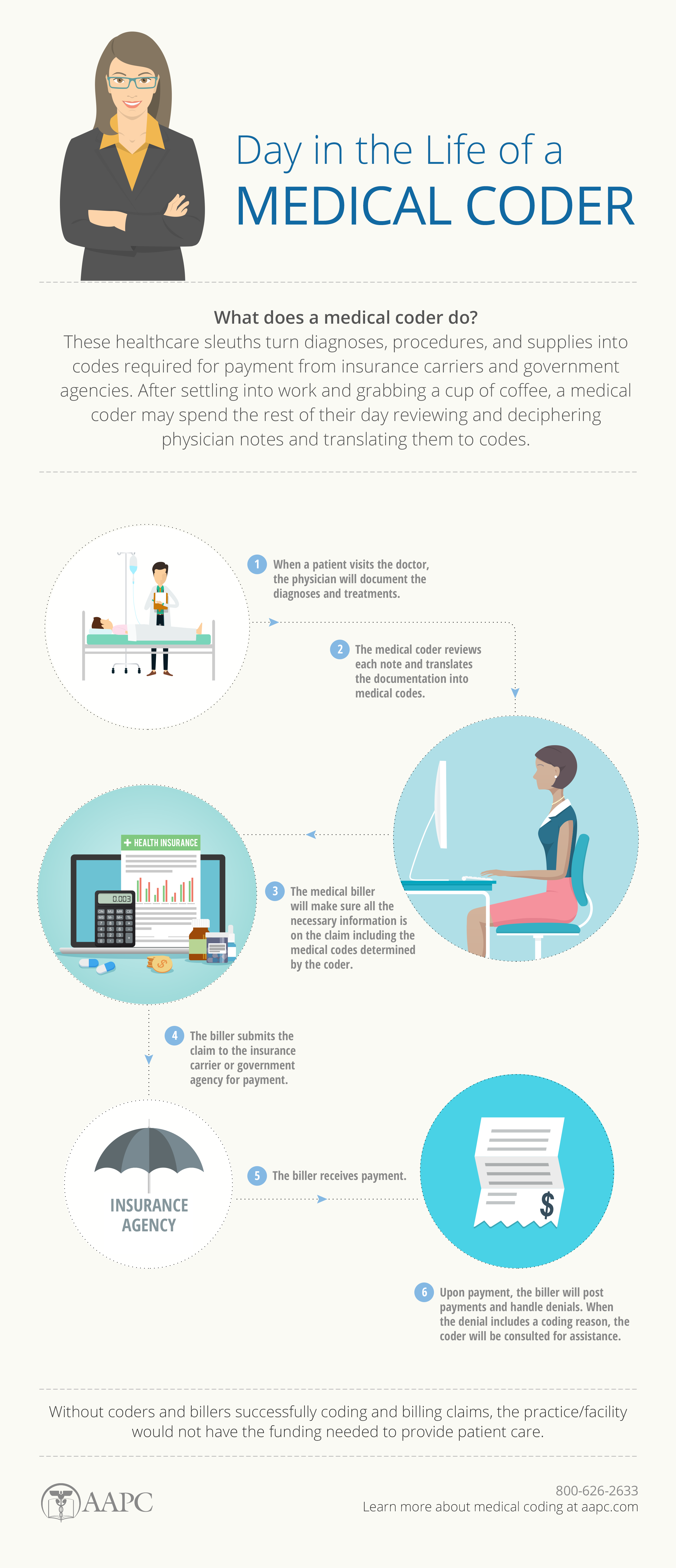
The most significant technological trend in medical coding today is the shift toward automation. Traditionally, medical coding was a manual process where human coders read through clinical documentation and assigned the appropriate codes. Today, Artificial Intelligence and Machine Learning are transforming this into a high-speed, automated workflow.
Computer-Assisted Coding (CAC) Software
Computer-Assisted Coding (CAC) software uses logic-based engines and machine learning to “suggest” codes to human operators. These tools analyze the digital documentation within an EHR and highlight potential CPT and ICD codes. The goal is to increase “coder productivity” and reduce the backlog of unbilled claims. As these algorithms ingest more data, they become more accurate, eventually moving toward “autonomous coding,” where simple, routine visits are coded entirely by AI without human intervention.
Natural Language Processing (NLP) in Clinical Documentation
The “holy grail” of medical coding technology is the perfect Natural Language Processing (NLP) engine. Doctors often speak or type in a “free-text” format, using shorthand, nuances, and context that are difficult for basic software to parse. Advanced NLP models, powered by Large Language Models (LLMs), are now capable of understanding the context of a clinical note.
For instance, if a doctor writes “patient exhibits symptoms of acute myocardial infarction,” the NLP engine must correctly map this to the specific ICD-10 code for a heart attack, while also distinguishing it from “family history of myocardial infarction.” This level of semantic understanding is a massive tech hurdle that is currently being solved by deep learning architectures, allowing for more precise data capture and reducing the risk of “information loss” during the coding process.
Cybersecurity and Data Integrity in Coding Systems
Because medical codes are the foundation of healthcare data, they are also a high-value target for cyberattacks and digital fraud. Ensuring the integrity of these codes is a critical component of digital security in the healthcare sector.
Protecting Sensitive Data (HIPAA and Beyond)
In the United States, the Health Insurance Portability and Accountability Act (HIPAA) mandates the protection of sensitive patient health information (PHI). Because medical codes are inextricably linked to a patient’s identity and clinical history, they are classified as PHI.
Digital security protocols must ensure that when medical codes are transmitted—whether for billing, research, or clinical care—they are encrypted both in transit and at rest. Security architects must implement robust Access Control Lists (ACLs) to ensure that only authorized software and personnel can view or modify the codes associated with a patient’s record. A breach that allows an attacker to alter medical codes could result in incorrect treatments or large-scale fraudulent billing.
Ensuring Accuracy to Prevent Digital Fraud
“Upcoding” and “unbundling” are forms of healthcare fraud that have moved from paper-based schemes to sophisticated digital exploits. Upcoding involves changing a code to a more expensive procedure than what was actually performed. Modern “Claim Scrubber” software uses algorithmic audits to detect these anomalies. By analyzing patterns across millions of records, these AI tools can identify “outlier” coding patterns that suggest a software system has been compromised or is being used for fraudulent purposes. Maintaining the “truth” of the data within the coding system is essential for the financial and clinical integrity of the entire healthcare ecosystem.
The Future of Digital Health: Predictive Analytics and Coding
As we look toward the future, medical codes will serve as the training data for the next generation of predictive health tools. The transition from “retrospective” coding (coding what happened in the past) to “predictive” insights is where HealthTech is headed.
From Retrospective Coding to Real-time Insights
Currently, coding usually happens after the patient has left the clinic. However, new software tools are beginning to perform “real-time” coding. As a physician types their notes, the software suggests codes and, more importantly, flags potential gaps in care. If a certain ICD code is entered that suggests a high risk of a secondary condition, the system can prompt the doctor to order a specific test (linked to a CPT code) in real-time.
Predictive Modeling and Population Health
By aggregating anonymized medical codes across millions of patients, data scientists can build predictive models for population health. If a cluster of specific ICD-10 codes for a rare respiratory illness begins to appear in a specific geographic area, tech-driven surveillance systems can alert public health officials to a potential outbreak before it becomes a crisis. In this context, medical codes are the “sensors” of the global health network, providing the raw data necessary for machine learning models to predict trends, allocate resources, and improve patient outcomes on a massive scale.
In conclusion, medical codes are far more than just administrative labels; they are the fundamental data units of modern healthcare technology. From the interoperability of EHRs and the power of AI-driven coding to the rigors of cybersecurity and the promise of predictive analytics, these alphanumeric strings are the engine driving the digital transformation of medicine. For anyone navigating the intersection of technology and healthcare, mastering the logic of medical codes is the first step toward building the future of HealthTech.
aViewFromTheCave is a participant in the Amazon Services LLC Associates Program, an affiliate advertising program designed to provide a means for sites to earn advertising fees by advertising and linking to Amazon.com. Amazon, the Amazon logo, AmazonSupply, and the AmazonSupply logo are trademarks of Amazon.com, Inc. or its affiliates. As an Amazon Associate we earn affiliate commissions from qualifying purchases.