
For decades, the sight of white plumes stretching across the horizon behind high-altitude aircraft has sparked a wide array of public discourse. While popular culture often refers to these as “chemtrails,” the technological and scientific reality behind these atmospheric streaks is far more complex and grounded in the fields of aerospace engineering, meteorology, and geoengineering. In the modern era, as we face unprecedented climate challenges and rapid advancements in aviation software and hardware, understanding what these trails represent is essential for anyone following technology trends.
To answer the question of “what are chemtrails for” from a technical perspective, we must look past the myths and examine the actual technologies in play: persistent contrails, cloud seeding, and the emerging field of Solar Radiation Management (SRM).
Understanding the Science Behind Persistence Trails (Contrails)
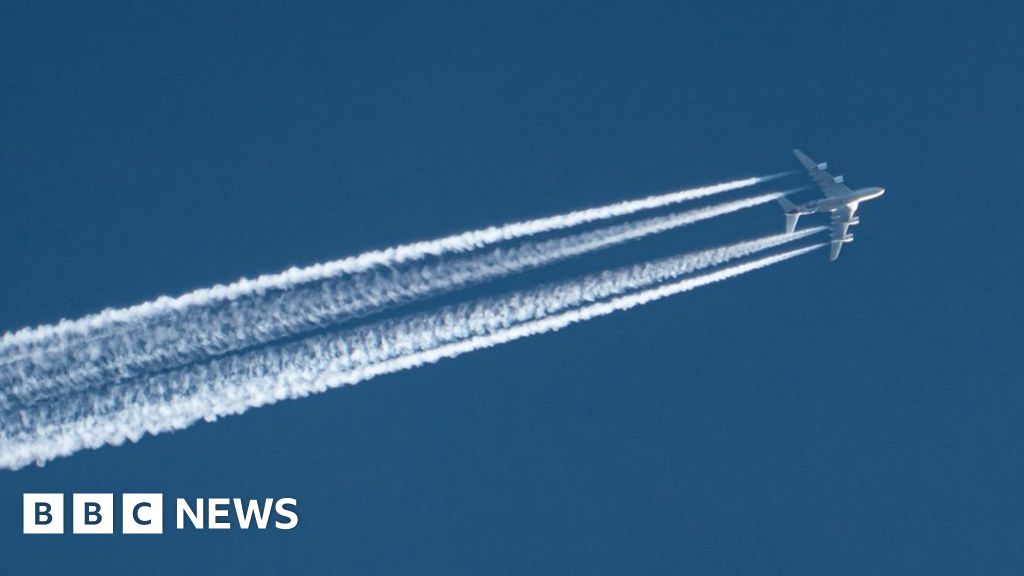
The most common “trails” seen in the sky are not the result of secret agendas but are a well-documented byproduct of high-performance jet engines. To understand their function, we must look at the physics of aviation propulsion and atmospheric thermodynamics.
The Physics of Condensation and Combustion
At its core, a jet engine is a sophisticated heat engine. When aviation fuel (kerosene) burns, it releases water vapor and carbon dioxide as primary byproducts, along with trace amounts of soot and sulfur. At cruising altitudes—typically between 30,000 and 40,000 feet—the ambient temperature is often below -40 degrees Celsius.
When the hot, moist exhaust meets this freezing air, it undergoes a rapid phase change. The water vapor condenses around the soot particles, freezing into ice crystals. This is the exact same process that occurs when you see your breath on a cold winter morning. These are “condensation trails,” or contrails.
High-Altitude Atmospheric Conditions and Persistence
The reason some trails disappear instantly while others linger and spread—leading to the “chemtrail” misnomer—is entirely dependent on atmospheric humidity and pressure. In dry air, the ice crystals sublimate (turn back into gas) almost immediately. However, if the atmosphere is “ice-supersaturated,” the contrails will persist for hours, eventually spreading out to form cirrus-like clouds.
Modern aviation tech is now focusing on “Contrail Avoidance Software.” By using AI-driven weather modeling and real-time sensor data, pilots can adjust their altitude by just a few thousand feet to find drier air, preventing the formation of persistent trails and reducing the aviation industry’s overall climate footprint.
Cloud Seeding and Modern Weather Modification Systems
While most trails are accidental byproducts of flight, there is a specific branch of technology dedicated to intentional atmospheric intervention: cloud seeding. This is a targeted tech solution used to manage water resources and mitigate agricultural risks.
Silver Iodide and Aerosol Injection Tech
Cloud seeding involves the dispersal of “glaciogenic” materials—most commonly silver iodide or dry ice—into clouds to encourage precipitation. The technology works by providing a “scaffold” for moisture to cling to. When these particles are introduced into supercooled clouds, they force the water to freeze and fall as snow or rain.
The delivery systems for this technology are highly specialized. They include silver iodide flares mounted on the wings of specialized aircraft, as well as ground-based generators that use high-pressure nozzles to loft particles into the updrafts of mountain ranges.
Precision Agriculture and Drought Mitigation
In regions like the United Arab Emirates, China, and the Western United States, cloud seeding is a critical part of the infrastructure. The “purpose” of these interventions is purely economic and utilitarian. By increasing snowfall in the mountains, tech-driven water management districts can ensure higher reservoir levels during the summer months.
Furthermore, “Hail Suppression” tech is used to protect high-value crops. By seeding nascent storm cells, technicians can force a storm to release its moisture as small slush or rain before it has the chance to develop into large, destructive hail stones that could wipe out millions of dollars in produce.

Solar Radiation Management (SRM): The Future of Tech-Driven Climate Intervention
Perhaps the most controversial and cutting-edge aspect of atmospheric technology is Solar Radiation Management (SRM). While not currently deployed on a global scale, it represents the theoretical technological evolution of what many mistakenly call “chemtrails.”
Stratospheric Aerosol Injection (SAI)
The most discussed SRM technology is Stratospheric Aerosol Injection (SAI). The concept involves using high-altitude aircraft to release small amounts of reflective particles (such as sulfur dioxide or calcium carbonate) into the stratosphere. These particles would act as a “sunshade” for the Earth, reflecting a small percentage of incoming solar radiation back into space to cool the planet.
The engineering challenges here are immense. Standard commercial aircraft cannot fly high enough to reach the stratosphere effectively. Therefore, tech firms are researching “High-Altitude Long-Endurance” (HALE) platforms and specialized nozzle technologies that can ensure the particles are dispersed at the precise size (roughly 0.5 micrometers) to maximize reflection without causing atmospheric heating.
The Role of AI and Modeling in Geoengineering
One cannot discuss the “for” of geoengineering without discussing the software. The deployment of SAI would be impossible without hyper-advanced AI and machine learning models. These tools simulate “Earth System Models” to predict how injecting aerosols in one region might affect rainfall patterns in another.
Before a single gram of material is ever released, petabytes of data are processed through supercomputers to map out “termination shocks” and unintended side effects. In this niche, the “chemtrail” is actually a digital experiment, a series of algorithms designed to determine if we can technically hack the climate to prevent ecological collapse.
Digital Monitoring and the Tech Used to Track Atmospheric Changes
To differentiate between a standard contrail and a potential geoengineering test, scientists and tech enthusiasts rely on a massive global infrastructure of monitoring hardware.
Satellite-Based Remote Sensing
The most powerful tools in this niche are multispectral imaging satellites. Satellites like NASA’s Terra and Aqua carry an instrument called MODIS (Moderate Resolution Imaging Spectroradiometer). This tech allows researchers to distinguish between natural clouds and man-made trails by analyzing the specific infrared signatures of the particles.
When people ask what these trails are for, data scientists look at the “Optical Depth” of the trails. By measuring how much light is blocked or scattered, they can quantify the technological impact of aviation on the Earth’s “Albedo” (reflectivity).
IoT Sensors and High-Altitude Drones
At a more granular level, the “Internet of Things” (IoT) has moved into the sky. Modern research involves deploying “dropsonde” sensors—small, disposable tech packages dropped from aircraft—that transmit real-time data on humidity, temperature, and particle concentration as they fall through the atmosphere.
Additionally, high-altitude drones (UAVs) are being developed to fly directly into these trails. Equipped with mass spectrometers and laser-based particle counters, these drones provide the hard data needed to move past speculation and into a clear-eyed understanding of how human technology is altering the upper atmosphere.
Ethical Frameworks and the Tech Security of Our Skies
As we develop the capability to manipulate the atmosphere, the conversation shifts from “what are they for” to “who controls them.” This introduces the critical niche of regulatory technology and digital security.
Regulatory Tech and Policy Infrastructure
The “tech” of the sky isn’t just hardware; it’s the legal and digital frameworks that govern it. Proposals for “Open-Source Geoengineering” are gaining traction, suggesting that any atmospheric intervention must be tracked on a transparent, blockchain-based ledger. This would ensure that every flight and every dispersal is logged, preventing any single nation or corporation from “hacking” the weather without global consensus.

Cyber-Security in Aviation and Atmospheric Data
As aviation becomes more autonomous and dependent on satellite links, the security of atmospheric data is paramount. If a rogue actor were to spoof the data fed into climate-control AI, they could theoretically trigger a misinformed geoengineering response. Therefore, the “security” of the trails we see in the sky is increasingly a matter of cybersecurity, requiring robust encryption and decentralized data verification to ensure that our attempts to tech-fix the climate don’t become a liability.
In conclusion, while the term “chemtrails” belongs to the realm of folklore, the technologies it describes—from the thermodynamics of jet exhaust to the precision of cloud seeding and the high-stakes potential of SRM—are at the very forefront of modern tech innovation. These trails are for propulsion, for water management, for climate research, and potentially, for the survival of our biosphere in a warming world. Understanding the hardware, software, and science behind them is the only way to navigate the complex future of our skies.
aViewFromTheCave is a participant in the Amazon Services LLC Associates Program, an affiliate advertising program designed to provide a means for sites to earn advertising fees by advertising and linking to Amazon.com. Amazon, the Amazon logo, AmazonSupply, and the AmazonSupply logo are trademarks of Amazon.com, Inc. or its affiliates. As an Amazon Associate we earn affiliate commissions from qualifying purchases.