
In the modern digital era, the quest to quantify human intelligence has transitioned from the clinical psychologist’s office to the palm of our hands. For decades, determining one’s Intelligence Quotient (IQ) was a cumbersome process involving physical booklets, stopwatches, and expensive proctored sessions. Today, technology has democratized access to cognitive assessment, introducing sophisticated software, artificial intelligence, and cloud-based platforms designed to measure logical reasoning, spatial awareness, and verbal proficiency.
Understanding how to find your IQ in the current landscape requires navigating a sea of digital tools. While the internet is flooded with “quick-fix” quizzes, the intersection of technology and psychometrics has birthed professional-grade digital instruments that offer precision previously unimaginable. This article explores the technological pathways available to discover your IQ, the role of machine learning in modern testing, and the digital security considerations inherent in personal cognitive data.
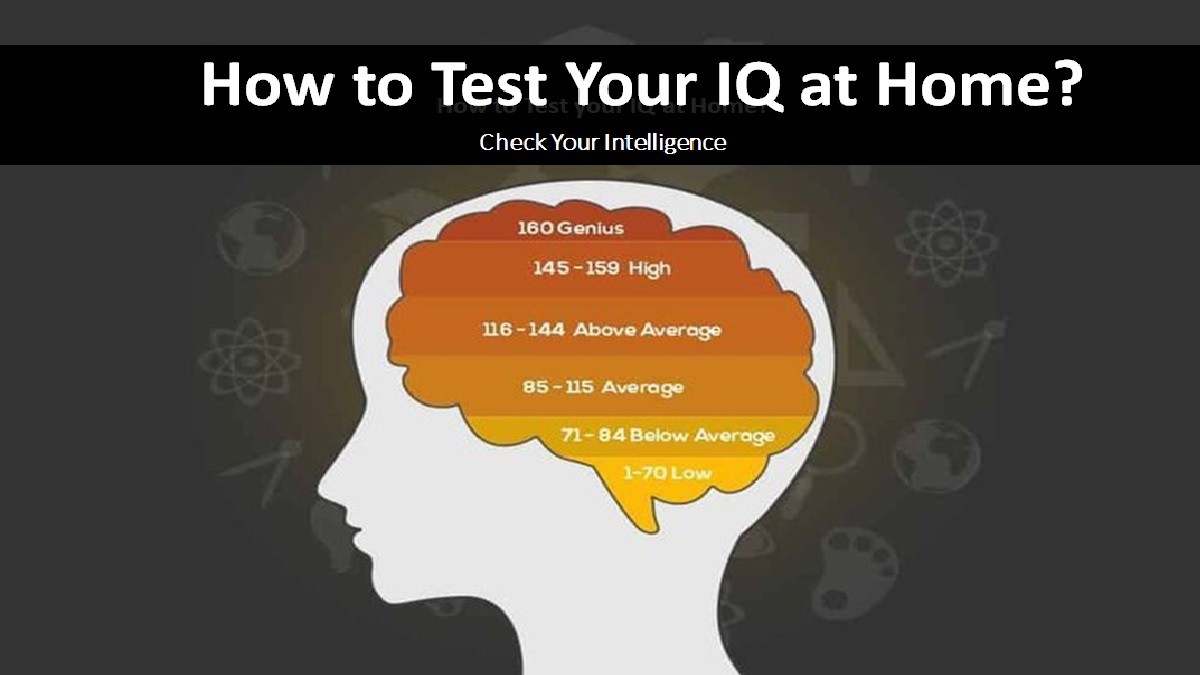
The Digital Frontier: Online IQ Testing Platforms and Software
The most accessible way to find out your IQ today is through dedicated web platforms and mobile applications. However, not all software is created equal. The tech industry distinguishes between “entertainment-grade” apps and “psychometrically validated” digital tools.
The Rise of Specialized Cognitive Apps
In the app store ecosystem, cognitive assessment has become a multi-million dollar niche. Developers have moved beyond simple multiple-choice questions to create immersive environments that test working memory and fluid intelligence. These apps utilize high-resolution graphics and low-latency touch interfaces to measure reaction times—a critical component of many modern IQ theories. Software like the Raven’s Progressive Matrices has been adapted into digital formats, allowing users to engage with non-verbal reasoning tasks that are culturally neutral and algorithmically scored.
Distinguishing Between Gamified Apps and Validated Psychometric Software
When seeking an accurate IQ score, it is essential to look for software that adheres to the International Test Commission (ITC) guidelines for digital testing. Validated software uses “norming” data—massive datasets collected from thousands of users—to ensure your score is relative to a statistically significant population. Unlike casual brain-training games, professional-grade assessment software utilizes standardized timing and prevents “practice effects” by using massive item banks, ensuring that no two test-takers see the same sequence of problems.
The Role of Cloud-Based Testing Environments
Cloud computing has revolutionized the administration of IQ tests. By hosting assessment engines on the cloud, developers can ensure that the heavy computational load required to calculate complex psychometric models happens server-side. This allows users on low-spec hardware or mobile devices to participate in high-level assessments without lag, which could otherwise skew results in timed sections. Furthermore, cloud-based systems allow for real-time updates to the “norming” groups, meaning your IQ score is always compared against current global or local averages.
Leveraging AI and Machine Learning in Intelligence Assessment
The integration of Artificial Intelligence (AI) has shifted the paradigm of intelligence testing from static to dynamic. No longer is a test a fixed set of questions; it is now a responsive digital experience.
Computerized Adaptive Testing (CAT) Algorithms
One of the most significant tech advancements in IQ discovery is Computerized Adaptive Testing (CAT). Driven by sophisticated algorithms, CAT adjusts the difficulty of the next question based on the accuracy of your previous answer. If you answer a high-difficulty logic puzzle correctly, the AI skips several “easy” questions and moves directly to a more challenging tier. This reduces the time required to find your “ceiling” and provides a much more precise measurement of your cognitive limits than a linear paper test ever could.
Neural Networks and Pattern Recognition Performance
Modern IQ platforms are beginning to utilize neural networks to analyze not just what answer you chose, but how you arrived at it. In digital environments, the software can track mouse movements, hesitation patterns, and the order in which a user interacts with elements of a puzzle. This “process data” provides a deeper layer of insight into an individual’s problem-solving strategy, allowing AI to differentiate between a lucky guess and a calculated logical deduction.
Data Security and Privacy in Personal Cognitive Data
As we move toward digital IQ discovery, the security of the resulting data becomes a primary tech concern. An IQ score is a highly sensitive piece of personal information. Leading tech platforms now employ end-to-end encryption and anonymized data silos to protect users. When choosing a digital tool to find your IQ, it is vital to examine the platform’s data governance policy. Does the provider sell your cognitive profile to third-party advertisers or HR firms? Robust tech solutions prioritize GDPR compliance and allow users to delete their cognitive footprints after the assessment is complete.
Professional Tech-Enabled Pathways to IQ Discovery
For those seeking a formal, legally or clinically recognized IQ score, technology acts as an intermediary, bridging the gap between traditional psychology and digital convenience.
Telehealth and Remote Clinical Evaluations
The COVID-19 pandemic accelerated the adoption of “tele-neuropsychology.” You can now find out your IQ through a proctored clinical exam conducted via high-definition video conferencing software. In this setup, a licensed psychologist uses specialized screen-sharing tools to administer tests like the Wechsler Adult Intelligence Scale (WAIS-IV). This hybrid approach combines the rigor of professional oversight with the technological convenience of remote access, utilizing digital whiteboards and secure document transfer protocols to maintain the integrity of the test.
Mensa Digital Entrance Pathways
Mensa, the high-IQ society, has embraced digital transformation by offering supervised testing sessions that utilize digital tablets rather than paper. In many regions, they also provide “home-test” software that serves as a preliminary indicator. These digital precursors use calibrated algorithms to give users a high-probability estimate of their performance on the official exam, helping them decide whether to invest in the formal proctored session.
Integrating Wearable Tech Data for Cognitive Insights
A burgeoning area of tech involves using wearable devices to supplement IQ testing. While a smartwatch cannot give you an IQ score on its own, biometrics such as heart rate variability (HRV) and sleep quality data are being integrated into cognitive assessment platforms. The tech logic is that “state” affects “trait”; by understanding your physiological readiness via wearable data, software can suggest the optimal time for you to take an IQ test to ensure your digital performance reflects your true cognitive potential.
The Future of Intelligence Measurement: Beyond the Digital Score
As we look toward the next decade, the technology used to find your IQ will move beyond two-dimensional screens and into immersive, multi-sensory environments.
VR and AR in Contextual Intelligence Testing
Virtual Reality (VR) and Augmented Reality (AR) represent the next frontier in psychometric tech. Traditional IQ tests struggle to measure “spatial navigation” and “fluid reasoning” in three dimensions. VR headsets allow for the creation of complex, 360-degree environments where a user’s ability to manipulate objects and solve spatial puzzles can be measured with millimetric precision. This offers a more holistic view of intelligence that purely text-based or 2D-image tests cannot capture.

Ethical Considerations in Algorithmic IQ Profiling
As AI becomes more involved in determining IQ, the tech community must grapple with algorithmic bias. If an AI is trained on a specific subset of data, it may inadvertently penalize users from different cultural or linguistic backgrounds. The future of finding your IQ relies on “Transparent AI”—algorithms that can explain their scoring logic and demonstrate they are free from socio-technical biases. Developers are currently working on “Fairness-by-Design” frameworks to ensure that as we use tech to discover our intelligence, we are using tools that are equitable for all.
In conclusion, finding out what your IQ is has evolved from a rare clinical event into a sophisticated digital journey. By leveraging validated software, adaptive AI algorithms, and secure cloud platforms, individuals can gain deep insights into their cognitive architecture. However, the responsibility lies with the user to choose professional-grade tech tools over casual entertainment apps. As we move toward VR-driven and bio-integrated assessments, the intersection of technology and human intelligence will only grow more profound, offering us a clearer, data-driven window into the capabilities of the human mind.
aViewFromTheCave is a participant in the Amazon Services LLC Associates Program, an affiliate advertising program designed to provide a means for sites to earn advertising fees by advertising and linking to Amazon.com. Amazon, the Amazon logo, AmazonSupply, and the AmazonSupply logo are trademarks of Amazon.com, Inc. or its affiliates. As an Amazon Associate we earn affiliate commissions from qualifying purchases.