
If you look up in many urban and suburban environments today, you are increasingly likely to spot a small, buzzing silhouette against the clouds. What was once the exclusive domain of high-budget military operations or niche hobbyists has transformed into a ubiquitous element of the modern technological landscape. The question “what’s up with the drones in the sky” isn’t just a casual observation; it is a gateway into a complex discussion about the rapid convergence of aerospace engineering, artificial intelligence, and digital connectivity.
The proliferation of Unmanned Aerial Vehicles (UAVs) represents one of the most significant shifts in consumer and industrial tech over the last decade. From high-resolution cinematography to autonomous delivery systems and precision agriculture, drones are no longer toys; they are sophisticated edge-computing platforms. To understand why the sky is suddenly so busy, we must examine the underlying technology that has made this vertical revolution possible.

The Hardware Evolution: From Novelty to Precision Engineering
The current state of drone technology is the result of decades of miniaturization in hardware. The “drone” as we know it—specifically the multi-rotor quadcopter—relies on a delicate balance of physics and electronic speed controllers. Unlike traditional helicopters, which rely on complex mechanical linkages to change blade pitch, drones use software to modulate the RPM of fixed-pitch propellers. This shift from mechanical complexity to electronic precision has lowered the barrier to entry while increasing reliability.
The Powerhouse: Battery Density and Brushless Motors
The most significant hardware bottleneck for drones has always been the energy-to-weight ratio. The transition to high-density Lithium Polymer (LiPo) and Lithium-Ion batteries has allowed for flight times that have moved from a mere five minutes to nearly an hour in professional-grade enterprise models. Complementing this is the advancement in brushless DC motors. These motors are more efficient, produce less heat, and offer a much higher power-to-weight ratio than their brushed predecessors. This allows drones to carry heavier payloads, such as high-end thermal cameras or LiDAR sensors, without sacrificing stability.
Sensor Fusion and the “Digital Brain”
What truly keeps a drone in the sky is not the pilot, but the flight controller. Modern UAVs utilize a process called sensor fusion, where data from an Inertial Measurement Unit (IMU)—consisting of accelerometers and gyroscopes—is combined with GPS data, barometric pressure sensors, and ultrasonic altimeters. This constant stream of data allows the drone to maintain a “rock-steady” hover even in high winds. The integration of Magnetometers (digital compasses) ensures the drone knows its orientation relative to the Earth, facilitating the “Return to Home” (RTH) features that have become standard in the industry.
Artificial Intelligence and the Rise of Autonomous Flight
The most profound change in recent years isn’t just that drones can fly, but that they can “see” and “think.” The integration of Artificial Intelligence (AI) and Computer Vision has transitioned drones from remotely piloted vehicles to truly autonomous robots.
Computer Vision and Obstacle Avoidance
Early consumer drones were prone to “fly-aways” and crashes. Today, high-end models are equipped with omnidirectional obstacle sensing. Using a suite of monocular and binocular vision sensors, drones build a real-time 3D map of their surroundings. AI algorithms, often running on specialized chips like the NVIDIA Jetson or proprietary DJI processors, analyze these maps to identify trees, wires, and buildings. This allows for “active tracking,” where a drone can follow a subject through a dense forest, autonomously navigating obstacles at high speeds without human intervention.
Swarm Intelligence and Collaborative Autonomy
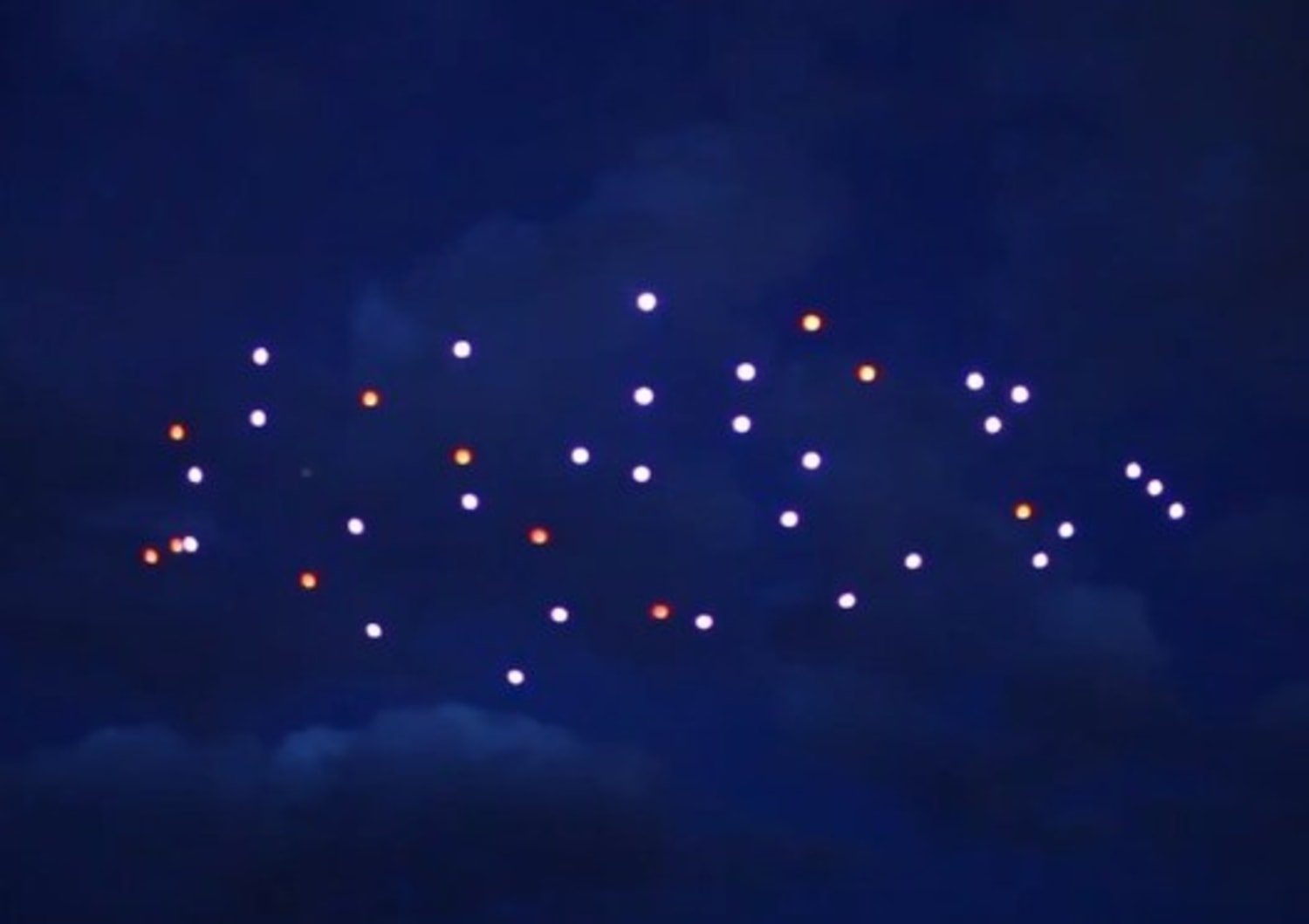
Looking forward, the “swarms” are perhaps the most exciting—and technically challenging—development. Swarm intelligence involves multiple drones communicating with one another to perform a coordinated task. In the tech sector, this is being applied to massive light shows that replace traditional fireworks, but the industrial applications are more significant. In search and rescue operations, a swarm of drones can cover a grid much faster than a single unit, using mesh networking to share data in real-time. If one drone identifies a target, the entire swarm can pivot to support the recovery effort, showcasing a level of collective AI that was science fiction only a decade ago.
The Software Ecosystem: Connectivity, 5G, and Digital Security
As drones become more capable, they have effectively become flying IoT (Internet of Things) devices. This shift has moved the focus from the hardware itself to the software ecosystems that manage them and the data they collect.
5G Integration and Ultra-Low Latency
The limitation of traditional radio frequency (RF) control is the line-of-sight requirement and limited bandwidth. The integration of 5G connectivity is a game-changer for the drone industry. 5G’s ultra-low latency allows for “Beyond Visual Line of Sight” (BVLOS) operations, where a pilot—or an autonomous system—can control a drone from hundreds of miles away via the cellular network. This is the foundational technology for long-distance delivery services and remote infrastructure inspection. With 5G, the drone can stream high-definition 4K video to a command center in real-time, allowing for instant decision-making in critical scenarios.
Data Security and Remote ID Protocols
With the sky becoming a crowded digital corridor, security has become a primary concern. Most modern drones are now required to support “Remote ID,” which acts as a digital license plate. This broadcast protocol allows authorities to identify the drone’s location, its serial number, and the location of the pilot. From a digital security standpoint, the encryption of the command link is paramount. Tech companies are now implementing AES-256 encryption to prevent “hijacking” or signal jamming, ensuring that the data harvested—whether it’s sensitive agricultural yield maps or structural integrity scans of a bridge—remains secure from cyber-interference.
Expanding Use Cases: The Industrialization of the Sky
While many people associate drones with photography, the “tech” story of drones is increasingly moving toward specialized industrial applications. We are seeing a move away from general-purpose drones toward highly specialized tools designed for specific data-gathering tasks.
LiDAR and Photogrammetry
One of the most powerful tech stacks currently being deployed on drones is LiDAR (Light Detection and Ranging). By firing thousands of laser pulses per second, a drone can create highly accurate 3D topographical maps, even through dense vegetation. This has revolutionized civil engineering, archaeology, and forestry. Similarly, photogrammetry software can take hundreds of 2D images and “stitch” them into a 3D model with centimeter-level accuracy. The heavy lifting here isn’t just in the flight, but in the post-processing software that handles terabytes of visual data to create “digital twins” of real-world assets.
Automated Inspection and “Drone-in-a-Box”
The next phase of drone technology is the “Drone-in-a-Box” (DiaB) solution. These are autonomous docking stations that house a drone, charge it, and protect it from the elements. At scheduled intervals, the box opens, the drone performs a pre-programmed inspection of a power plant or a construction site, returns to the box to upload data and recharge, and the entire process happens without a human ever touching a controller. This represents the ultimate integration of robotics, cloud computing, and automated scheduling software.
The Future of Urban Air Mobility (UAM)
When we ask “what’s up with the drones,” we are ultimately looking toward a future where drones carry more than just cameras—they carry people and cargo. Urban Air Mobility (UAM) is the final frontier of this technology.
Electric Vertical Take-Off and Landing (eVTOL)
The transition from small camera drones to “flying taxis” is being driven by eVTOL technology. These vehicles utilize the same multi-rotor principles as consumer drones but scaled up for human transport. The tech challenge here is twofold: battery energy density and airspace management software. For UAM to become a reality, we need sophisticated Unmanned Traffic Management (UTM) systems—essentially an automated, AI-driven air traffic control that can manage thousands of flight paths simultaneously without human error.

Conclusion: A Sky Full of Intelligence
The drones in the sky are not merely passing fads; they are the visible manifestation of a massive leap in multi-disciplinary technology. We are witnessing the maturation of autonomous systems that can navigate the three-dimensional world with a precision that humans cannot match.
As battery technology improves, as 5G networks expand, and as AI continues to evolve, the drone will move from being an “eye in the sky” to a fundamental pillar of our industrial and digital infrastructure. The “buzz” we hear above us is the sound of a new era of connectivity and automation taking flight, signaling a future where the boundary between the digital world and the physical atmosphere continues to blur. Whether it is delivering a life-saving defibrillator or mapping the effects of climate change, the tech behind the drone is just beginning to show us what is possible when we look up.
aViewFromTheCave is a participant in the Amazon Services LLC Associates Program, an affiliate advertising program designed to provide a means for sites to earn advertising fees by advertising and linking to Amazon.com. Amazon, the Amazon logo, AmazonSupply, and the AmazonSupply logo are trademarks of Amazon.com, Inc. or its affiliates. As an Amazon Associate we earn affiliate commissions from qualifying purchases.