
In the realm of modern engineering, architecture, and digital manufacturing, the ability to calculate the spatial properties of objects is a fundamental requirement. Among these, the cylinder remains one of the most ubiquitous shapes—found in everything from micro-components in consumer electronics to massive fuel silos in industrial complexes. While the basic mathematical formula for the volume of a cylinder is a staple of secondary education, the digital transformation of industry has shifted how we apply this formula. In a tech-centric world, calculating volume is no longer just a pen-and-paper exercise; it is a core function integrated into sophisticated software suites, AI-driven computer vision systems, and automated industrial workflows.
Decoding the Mathematical Blueprint for Tech Applications
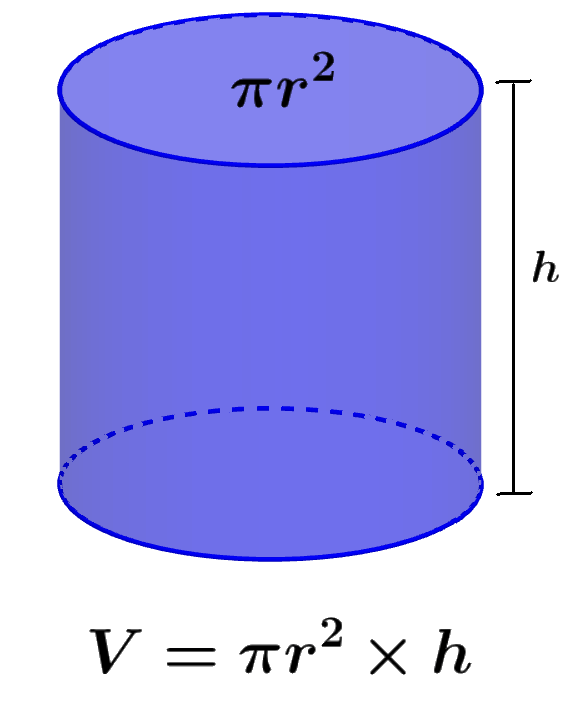
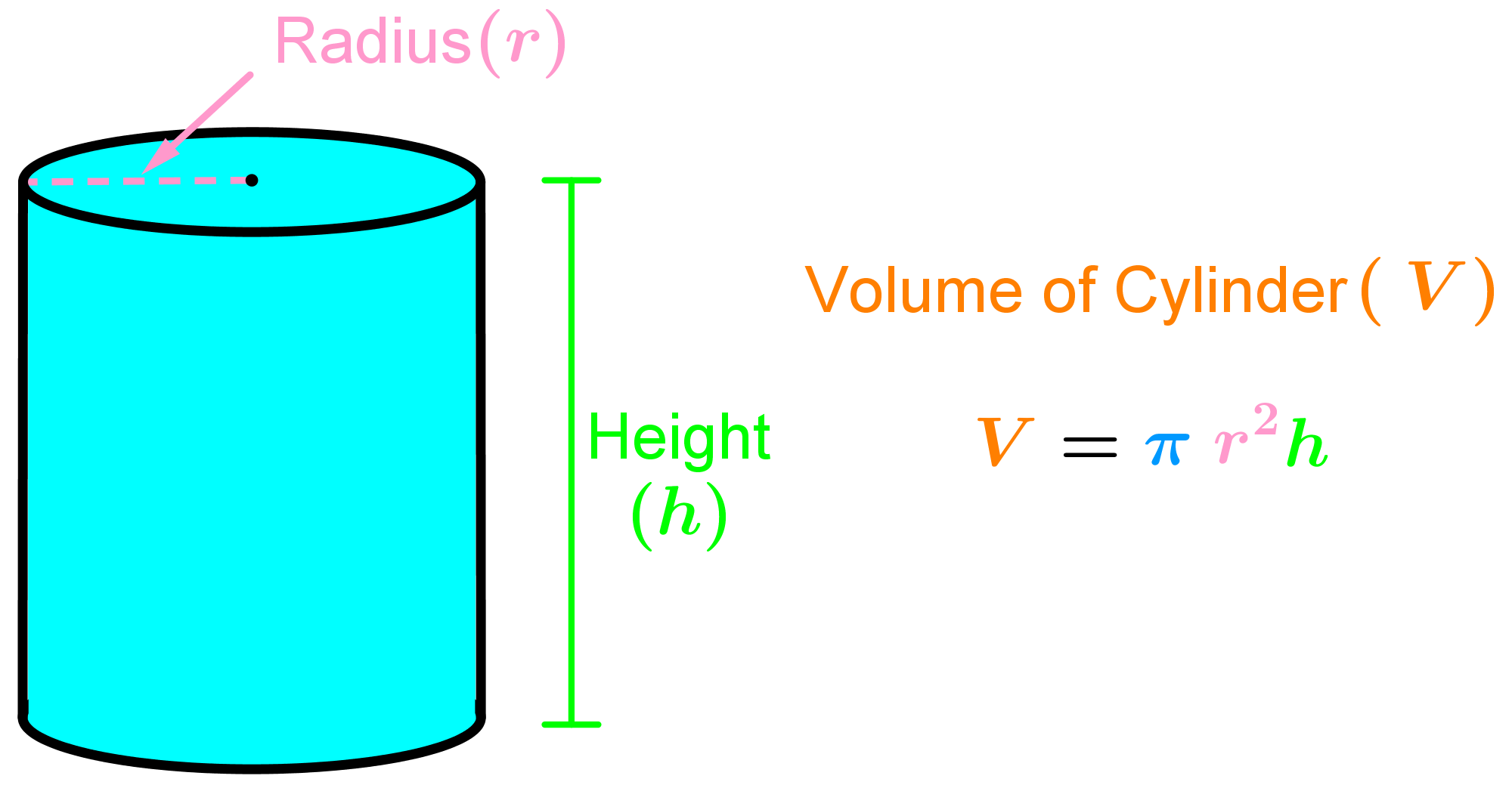
At its core, the formula for the volume of a cylinder is expressed as $V = pi r^2 h$. In this equation, $V$ represents the volume, $r$ stands for the radius of the circular base, $h$ denotes the height of the cylinder, and $pi$ (Pi) is the mathematical constant approximately equal to 3.14159. While this seems straightforward, the tech industry approaches this formula with a focus on precision, data types, and algorithmic efficiency.
The Fundamental Algorithm: $V = pi r^2 h$
In digital environments, the cylinder volume formula is treated as an algorithm. Software developers must consider the precision of $pi$ when hardcoding these calculations. While a student might use 3.14, a high-precision CAD (Computer-Aided Design) program utilizes floating-point representations of $pi$ to sixteen or more decimal places. The “radius squared” component ($r^2$) is often processed through optimized power functions within programming languages like C++ or Python to ensure that the computational overhead is minimized, especially when a system needs to calculate the volume of thousands of cylindrical components simultaneously in a complex assembly.
Precision and Floating-Point Arithmetic in Digital Workspaces
In the tech sector, especially within the field of digital twins and aerospace engineering, “close enough” is never sufficient. When calculating the volume of a cylinder, software must account for “floating-point errors”—minuscule inaccuracies that occur when computers represent real numbers in binary. For tech professionals, the formula is not just about the variables; it is about the environment in which the calculation occurs. Ensuring that a 3D model of a hydraulic piston has an accurate volume calculation determines the simulated pressure and performance limits of that component before it ever reaches a physical factory floor.
Implementing Volume Formulas in CAD and 3D Modeling Software
The transition from a theoretical formula to a practical tool happens most prominently within CAD software. Tools like AutoCAD, SolidWorks, and Autodesk Fusion 360 have revolutionized how we interact with geometric formulas. Instead of manually inputting $r$ and $h$, users define parameters, and the software handles the volumetric calculus in real-time.
Parametric Design and Automated Volume Calculation
Modern tech utilizes “parametric design,” where the volume of a cylinder is linked to other variables in a project. In this context, if a designer changes the height of a cylindrical support beam, the software instantly recalculates the volume and, by extension, the weight and cost of materials. This automation is powered by the underlying $V = pi r^2 h$ formula, but it is embedded within a relational database. This allows for rapid prototyping, where tech teams can iterate through hundreds of design variations, with the software providing instant feedback on the spatial requirements of each cylinder-based component.
Computational Geometry in Modern CAD Suites
Beyond simple cylinders, tech professionals often deal with “hollow cylinders” (tubes) or “truncated cylinders.” The software uses variations of the base formula—such as subtracting the inner volume from the outer volume ($V = pi(R^2 – r^2)h$)—to provide complex data. Computational geometry algorithms allow the computer to “slice” these shapes into infinitesimal layers to calculate volume even when the cylinder is distorted or part of a non-standard geometric mesh. This level of technical sophistication is what enables the design of high-performance engines and medical devices.
The Role of AI and Machine Learning in Volumetric Analysis
We are currently witnessing a shift where Artificial Intelligence (AI) and Machine Learning (ML) are taking the lead in geometric calculations. In fields like logistics, agriculture, and construction, AI tools are being used to estimate the volume of cylindrical objects using nothing but visual data.
Computer Vision and Real-Time Volume Estimation
Using LiDAR (Light Detection and Ranging) and computer vision, AI-powered devices can scan a cylindrical object—such as an oil tank or a grain silo—and determine its volume without manual measurements. The AI identifies the edges of the cylinder to determine the height and uses depth-sensing technology to find the radius. Once these parameters are captured, the software applies the $V = pi r^2 h$ formula at the “edge” (on-device) to provide an instant volumetric report. This tech is crucial for drone-based inventory management, where a fleet of drones can fly over a facility and calculate the total storage volume of hundreds of cylindrical containers in minutes.
Predictive Modeling for Industrial Storage
Machine learning algorithms go a step further by using historical volume data to predict future needs. By understanding the volume of a cylindrical container and tracking the rate at which its contents are depleted, AI can optimize supply chains. The formula for the volume of a cylinder becomes a variable in a larger predictive model that helps companies minimize waste and automate the reordering process. In this scenario, math meets Big Data, transforming a simple geometric principle into a powerful business intelligence tool.
Software Solutions and Specialized Tools for Complex Calculations
For developers and engineers, the manual calculation of volume is often replaced by specialized libraries and high-performance computing frameworks. These tools allow for the integration of geometric formulas into larger software ecosystems.
Python Libraries and Open-Source Mathematical Frameworks
In the world of data science and software engineering, libraries such as NumPy and SciPy are the standard for handling mathematical operations. A developer building a logistics app wouldn’t write the formula from scratch; they would use vectorized operations to calculate the volumes of an entire array of cylinders at once. For instance, using NumPy, one can apply the formula across a dataset of 10,000 cylinder dimensions in a single line of code. This scalability is what defines modern technology—taking a 2,000-year-old formula and applying it at the scale of Big Data.
High-Performance Computing (HPC) for Fluid Dynamics
In specialized tech fields like Computational Fluid Dynamics (CFD), the volume of a cylinder is just the starting point. Engineers use high-performance computing to simulate how liquids or gases move through cylindrical pipes. Here, the volume calculation is essential for determining flow rates and pressure drops. The software breaks the cylindrical volume into a “mesh” of millions of small cells, applying the volume formula to each cell to solve complex differential equations. This is how tech allows us to design more efficient water systems, cooling units for data centers, and even aerospace propulsion systems.

The Future of Volumetric Tech: From 3D Printing to Digital Twins
As we look toward the future, the application of the cylinder volume formula will become even more integrated into the fabric of “Industry 4.0.” Two major trends—3D printing (Additive Manufacturing) and Digital Twins—rely heavily on these calculations.
In 3D printing, the slicer software must calculate the volume of the cylindrical layers to determine the exact amount of filament or resin required. An error in the volume calculation could lead to structural failure or wasted material. Meanwhile, in the world of Digital Twins—where a virtual replica of a physical asset is created—the volume of every cylindrical pipe and valve is mapped in a virtual space. This allows technicians to run simulations on a “digital cylinder” to see how it will react to heat, pressure, or wear before the physical part even exists.
The formula for the volume of a cylinder ($V = pi r^2 h$) may be simple, but its role in the technology sector is incredibly complex. It serves as a bridge between the physical and digital worlds, allowing us to quantify space with pinpoint accuracy. Whether it is encoded into a CAD program, analyzed by an AI vision system, or scaled through a Python library, this formula remains a vital piece of the technological puzzle, proving that even the most basic mathematical truths are essential for the most advanced innovations.
aViewFromTheCave is a participant in the Amazon Services LLC Associates Program, an affiliate advertising program designed to provide a means for sites to earn advertising fees by advertising and linking to Amazon.com. Amazon, the Amazon logo, AmazonSupply, and the AmazonSupply logo are trademarks of Amazon.com, Inc. or its affiliates. As an Amazon Associate we earn affiliate commissions from qualifying purchases.